

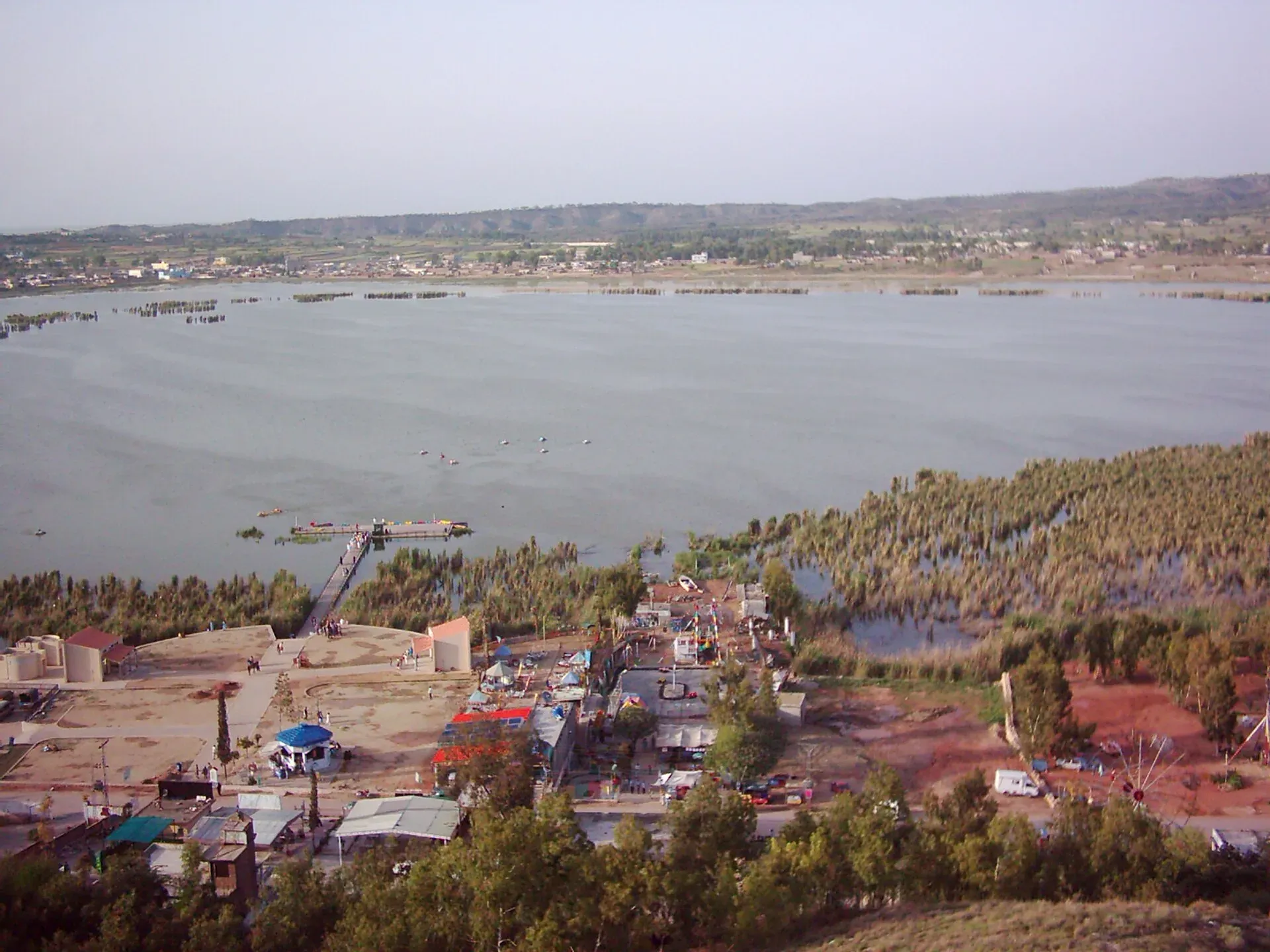
Photo: Mannadeem, with thanks · CC BY-SA 3.0 · via Wikimedia Commons · temporary stand-in photo

Kallar Kahar Peacock Garden
There is no known distinct peacock garden at Kallar Kahar. Peacocks roam freely around the lake. Bagh-e-Safa, the old Mughal garden, was reported neglected by Dawn in 2016. See the lake and Takht-e-Babri pages.
What is known, plainly
There is no known distinct peacock garden at Kallar Kahar, and no official page, news report or visitor source describing one. Peacocks live around the lake and roam freely, so you may see them without paying for entry to anything.
Plan your visit
- Nearest town
- Kallar Kahar
- Getting there
Kallar Kahar is beside the Lahore-Islamabad motorway (M-2); leave at the Kallar Kahar interchange. See the Kallar Kahar Lake page for distances. More
Best months
Oct – Mar
Overview
Kallar Kahar is a town in Chakwal District, Punjab, about 26 km south-west of Chakwal city and beside the Lahore-Islamabad motorway. Dawn's 2016 report calls it the "crown of the Salt Range" and the only tourist spot in Chakwal district. It describes a large natural lake, an old garden, Takht-e-Babri, a Sufi shrine and a habitat for peacocks. Commuters on the motorway and the Chakwal-Sargodha road often stop there, and it draws crowds at Eid.
Peacocks around the lake
Wikipedia says the area was once a natural sanctuary for peacocks, and that numbers have fallen because of settlement around the hill and illegal hunting. No count is given. No published count exists, and no separate peacock garden or sanctuary is described.
Bagh-e-Safa
Dawn says the garden was laid out by Babur's soldiers on the lake shore, as the first Mughal garden in the subcontinent. It reports that no trace of the original construction remains, and that fruit trees along the south-western shore mark the site. The district administration auctions the loquat crop when it ripens, and grapes, pomegranates and apricots are often wasted to birds or visitors. Dawn found the garden untidy in 2016, with weeds, plastic bags and fruit peel and no attendant. The garden's present condition is not known.
Takht-e-Babri
Beside the garden, on its left, is a rough stone pedestal cut from the mountain, which locals call Babur's throne. Dawn says a king could address soldiers from it, and that it still draws hundreds of visitors a year. Babur crossed the Indus on 17 February 1519 and reached the Kallar Kahar area around 20 February; he called the place a "child of Kashmir" in his memoirs, according to Wikipedia. For both sites in more detail see Takht-e-Babri and Bagh-e-Safa.
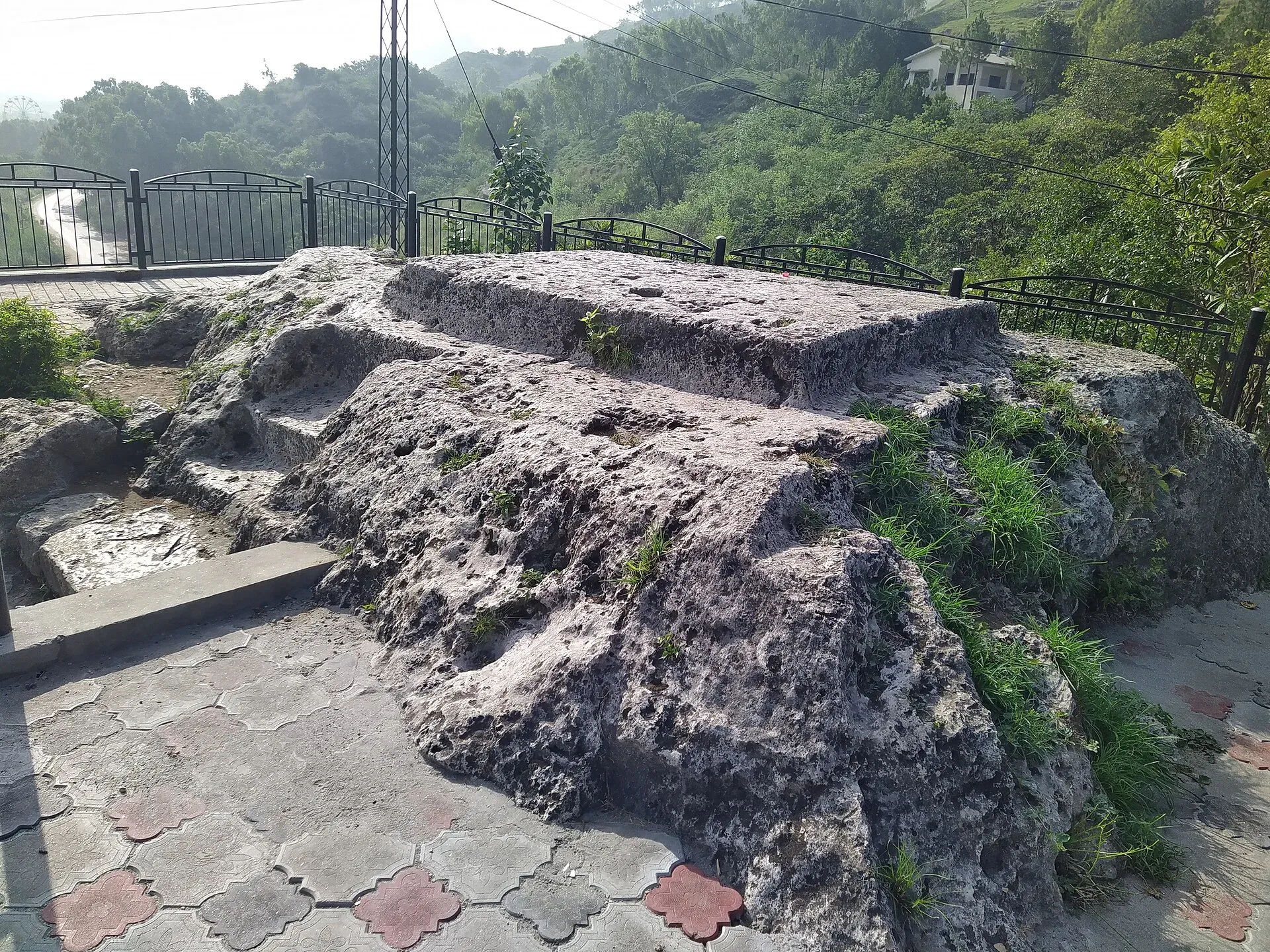
Photo: Tahir mq, with thanks · CC BY-SA 4.0 · via Wikimedia Commons · temporary stand-in photo

The lake
The lake is fed by springs and runoff from the hills, and reeds along the banks shelter coots. Dawn reports pollution, with sewage from hotels beside it. The land around the lake is common property (shamlaat) of local residents, which officials say blocks large development schemes. See Kallar Kahar Lake.
What to see and do
- Kallar Kahar Lake. A shallow salt lake and the centre of the area; see its page.
- Takht-e-Babri and Bagh-e-Safa. The stone platform and garden site on the shore; see their page.
- Peacocks. Watch from a distance, early or late in the day. Sightings cannot be promised.
When to visit
October to March is comfortable. Summer is hot. Weekends are busy.
Where to stay and eat
The town has small eating places; Islamabad and Chakwal have hotels. See the Kallar Kahar Lake page.
Good to know
- Fees: none known; there is no known garden charging entry.
- Behaviour: do not feed peacocks or leave litter.
- Travel advice: Kallar Kahar is in Punjab, which the UK FCDO page (updated 27 October 2026, checked 17 November 2026) does not advise against except named areas such as Dera Ghazi Khan; check the live page.
Highlights
- No separate peacock garden documented
- Peacocks roam freely around Kallar Kahar Lake
- Bagh-e-Safa, the Mughal garden site, was reported neglected in 2016
Getting there
Kallar Kahar is beside the Lahore-Islamabad motorway (M-2); leave at the Kallar Kahar interchange. See the Kallar Kahar Lake page for distances.
Tips
- Go early in the morning or near sunset for the best chance of seeing peacocks.
- Never feed or chase the birds.
- Take your litter with you.
Photos we still need: a peacock at Kallar Kahar; Bagh-e-Safa garden site. Send us yours
Sources and last checked
Last checked Confidence low3 sources3 still to check
- Last checked
- Method
- Desk research from published sources
- Confidence
- low
- Checked by
- trek.pk research team
Researched from published sources; not yet checked on the ground by our team. Spot something out of date? Report a mistake.
Sources
- Kallar Kahar: blessed by nature, neglected by rulers (28 February 2016) · Dawn · checked
- Pakistan travel advice: warnings and insurance (updated 27 October 2026) · UK Foreign, Commonwealth & Development Office · checked
- Kallar Kahar · Wikipedia · checked
Still to be checked on the ground (3)
- Whether any enclosed or managed peacock garden exists in Kallar Kahar
- Current condition of Bagh-e-Safa (Dawn report is from 2016)
- Current peacock numbers: no count found
Nearby and related

Kallar Kahar Lake
A shallow salt lake beside the town of Kallar Kahar in the Salt Range, minutes from the M-2 motorway. Known for its peacocks and the Mughal-era Takht-e-Babri.

Takht-e-Babri and Bagh-e-Safa, Kallar Kahar
A rock-cut platform and the site of an orchard garden on the shore of Kallar Kahar Lake, linked to the first Mughal emperor, Babur, who camped here in 1519. Simple and often untidy, but easy to add to a trip along the M-2.

Chakwal
District capital on the Pothohar plateau, about 125 km from Islamabad, and a base for the Salt Range sights at Kallar Kahar and Katas Raj.

Salt Range: Katas Raj, Khewra, Kallar Kahar
A two-day, about 360 km loop from Islamabad by the M-2 to Kallar Kahar, the Katas Raj temples and the Khewra Salt Mine. Khewra stopped receiving visitors in August 2026 until after the monsoon, so check first.