

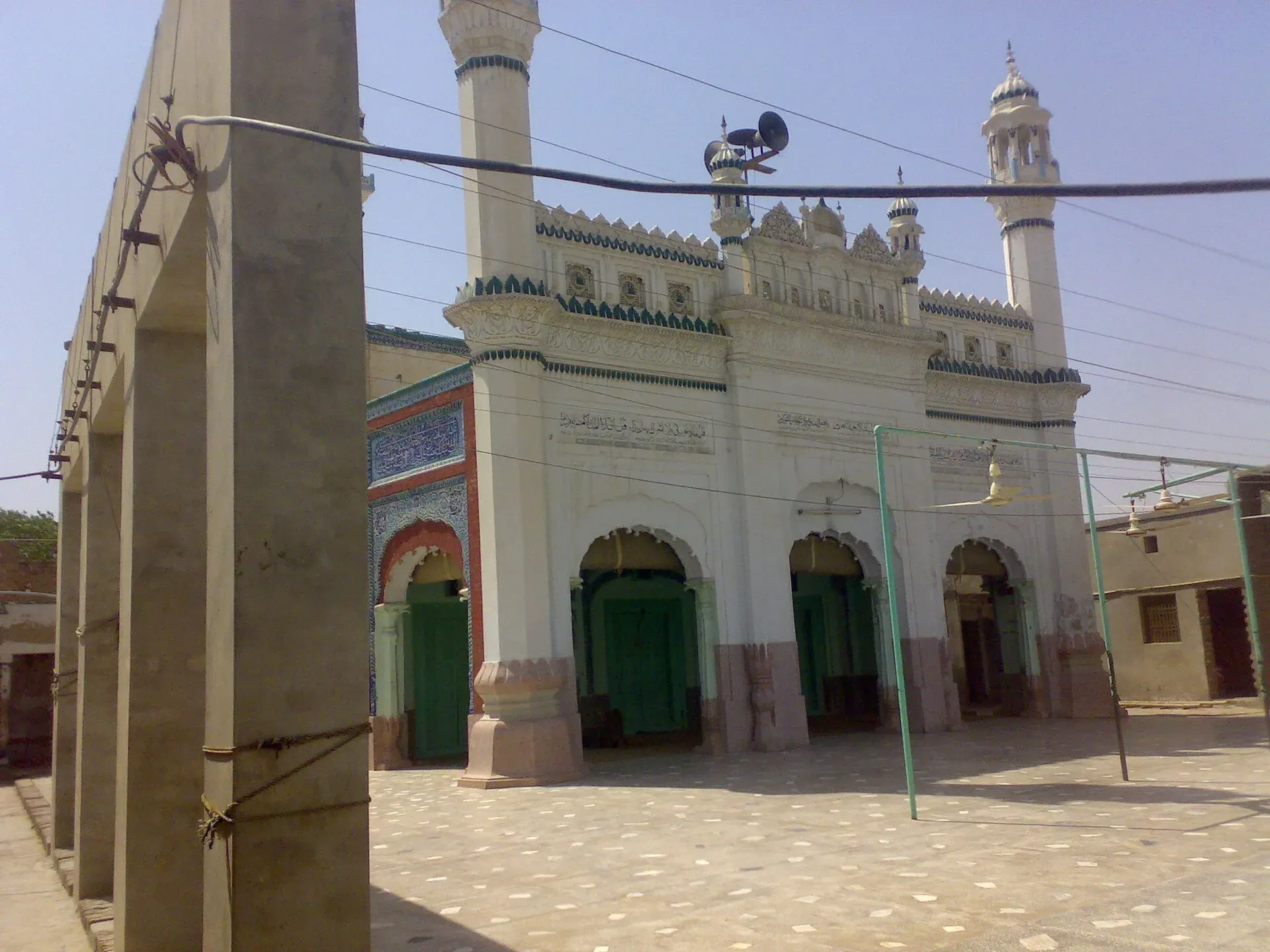
Photo: junaiddaha1, with thanks · CC BY 3.0 · via Wikimedia Commons · temporary stand-in photo

Khanewal
A railway junction town 54 km from Multan. Khanewal Junction is one of Pakistan's largest railway junctions; few other sights.
Overview
Khanewal is the capital of Khanewal District in southern Punjab, at about 129 m above sea level. It is a railway town: the settlement grew around a junction on the Lahore-Multan line, and most of what is known about its past is tied to the tracks. At the 2023 census the city had 281,890 people. Punjabi is the largest first language (54.4%), followed by Urdu (37.3%) and Saraiki (7.4%).
Plan your visit
- Getting there
Road: Multan is about 54 km and roughly 45 minutes by road (OSRM, checked 16 November 2026). Rail: Khanewal Junction has connections in several directions; check current timetables with Pakistan Railways. More
Best months
Oct – Mar
- Khanewal
- Related places nearby: Multan, Shrine of Bahauddin Zakariya, Mian Channu
How the railway made the town
Wikipedia traces the story in dates. The Multan-Lahore-Amritsar line was approved in 1858 and opened on 24 April 1865. A flag station stood here on that line. The Khanewal-Lodhran chord line, built between 1874 and 1885, shortened the route to Lodhran to about 90 km, against about 135 km by way of Multan. A railway station and a post and telegraph office followed in 1876. The Khanewal-Toba Tek Singh line opened on 4 April 1900, which linked Khanewal with the Faisalabad side. The same article describes the town as one of the largest junctions of its day.
A railway colony, locoshed quarters and waterworks were added in 1904, and a railway hospital in 1912. The town was granted city status in 1911 and became a tehsil in 1917. Khanewal became a district in 1985, with tehsils taken from Multan District, among them Kabirwala and Mian Channu.
Land and farming
Before about 1900 the area was largely sand dunes. It was known as Gunji Bar or Kabirwala Bar. A bar is high, dry land between rivers, and this one was once the southern bank of the Ravi. Silt left by the river later made the soil fertile. The Lower Bari Doab Canal, started in 1906 and inaugurated in 1913, brought irrigation, and cotton followed. A British cotton-ginning company was allotted 7,221 acres in 1921 and began operating a factory in 1923. Other cotton factories were built in 1926, 1931 and 1940. Ginning (separating cotton fibre from seed) and textiles remain the best-documented industries.
What to see and do
There are no major sights, and the town works best as a stop.
- Khanewal Junction. The station is the reason the town exists. Check the station's photography rules before taking pictures.
- Old mosque. Jamia Masjid Kohna Khanewal is described as the town's first mosque, built around 1820 and rebuilt in brick in 1900.
- Gora Qabarstan. This British cemetery dates from 1865 and belongs to the railway period. Ask locally about access.
For a longer day out, Multan has the shrines, bazaars and food that Khanewal lacks, and Mian Channu is in the same district.
When to visit
October to March is most comfortable. Climate records for the town show a mean daily maximum of about 21 C in January and about 42 C in June, with a record high of 49.2 C. Rainfall is low, about 187 mm a year, and July is the wettest month.
Where to stay and eat
Khanewal has a few hotels and roadside restaurants, but no verified names are available. Multan, about an hour away, has much more choice.
Good to know
Expect banks, pharmacies, fuel and a district hospital. Confirm on arrival. Check current advice before you travel. Ask the district administration or local police about current conditions before you go. For foreign visitors: the UK FCDO Pakistan page (updated 27 October 2026, checked 16 November 2026) advises against all travel to Balochistan and to a long list of Khyber Pakhtunkhwa districts, and against all but essential travel within 5 miles of the India border. Dera Ghazi Khan is the only Punjab district it lists. Khanewal is not named on that page.
Highlights
- Khanewal Junction, a major Pakistan Railways junction
- Railway town laid out by the British
- Easy stop between Multan and Faisalabad
- Cotton and farm country
Getting there
Road: Multan is about 54 km and roughly 45 minutes by road (OSRM, checked 16 November 2026). Rail: Khanewal Junction has connections in several directions; check current timetables with Pakistan Railways. Air: Multan International Airport.
Hotels, food, fuel and services in Khanewal
Places to stay
- Circuit HouseMap of Circuit House in Google Maps
- Canal Rest House Khanewal کینال ریسٹ ہاؤس خانیوالCall Canal Rest House Khanewal کینال ریسٹ ہاؤس خانیوالMap of Canal Rest House Khanewal کینال ریسٹ ہاؤس خانیوال in Google Maps
Places to eat
- Fort RestaurantCall Fort RestaurantMap of Fort Restaurant in Google Maps
- Last Exit RestaurantCall Last Exit RestaurantMap of Last Exit Restaurant in Google Maps
- Addiction Pizza KitchenCall Addiction Pizza KitchenMap of Addiction Pizza Kitchen in Google Maps
- TEA VALLEY ☕Call TEA VALLEY ☕Map of TEA VALLEY ☕ in Google Maps
- Crust Bros - KhanewalCall Crust Bros - KhanewalMap of Crust Bros - Khanewal in Google Maps
- Railway station khanewalMap of Railway station khanewal in Google Maps
Essential services fuel stations, mechanics, ATMs, pharmacies, hospitals and clinics and Rescue 1122
Fuel
- PSO Petrol PumpMap of PSO Petrol Pump in Google Maps
- Agrimall petroleum serviceCall Agrimall petroleum serviceMap of Agrimall petroleum service in Google Maps
- Aramco PetroleumCall Aramco PetroleumMap of Aramco Petroleum in Google Maps
- Moon PetroleumCall Moon PetroleumMap of Moon Petroleum in Google Maps
- Ahmad Petroleum ServiceCall Ahmad Petroleum ServiceMap of Ahmad Petroleum Service in Google Maps
- ASKAR Patrol StationCall ASKAR Patrol StationMap of ASKAR Patrol Station in Google Maps
Mechanics and tyre shops
- Habib Auto Mobile WorkshopCall Habib Auto Mobile WorkshopMap of Habib Auto Mobile Workshop in Google Maps
ATMs
- Faysal Bank ATMCall Faysal Bank ATMMap of Faysal Bank ATM in Google Maps
- UBL ATMMap of UBL ATM in Google Maps
- The Bank of Punjab Taqwa Islamic BankingCall The Bank of Punjab Taqwa Islamic BankingMap of The Bank of Punjab Taqwa Islamic Banking in Google Maps
- HBL Lahore More BranchCall HBL Lahore More BranchMap of HBL Lahore More Branch in Google Maps
- IBB NBP Main Branch Khanewal 0349Map of IBB NBP Main Branch Khanewal 0349 in Google Maps
- ATM, NBP DC KhanewalMap of ATM, NBP DC Khanewal in Google Maps
Pharmacies
- NASEEM LATIF PHARMACYCall NASEEM LATIF PHARMACYMap of NASEEM LATIF PHARMACY in Google Maps
- PARACHA PHARMACYCall PARACHA PHARMACYMap of PARACHA PHARMACY in Google Maps
- Ideal pharmacy And super storeCall Ideal pharmacy And super storeMap of Ideal pharmacy And super store in Google Maps
- Life Care PharmacyCall Life Care PharmacyMap of Life Care Pharmacy in Google Maps
- Paradise pharmacyCall Paradise pharmacyMap of Paradise pharmacy in Google Maps
- Zain Pharmacy KhanewalCall Zain Pharmacy KhanewalMap of Zain Pharmacy Khanewal in Google Maps
Hospitals and clinics
- DHQ KhanewalCall DHQ KhanewalMap of DHQ Khanewal in Google Maps
- Ibrahim clinic Dr Ayesha JaleesCall Ibrahim clinic Dr Ayesha JaleesMap of Ibrahim clinic Dr Ayesha Jalees in Google Maps
- Noreen Nishat Welfare HospitalCall Noreen Nishat Welfare HospitalMap of Noreen Nishat Welfare Hospital in Google Maps
- LRBT Khanewal - Free Eye HospitalMap of LRBT Khanewal - Free Eye Hospital in Google Maps
- BAIRAM KHAN MEDICAL COMPLEXCall BAIRAM KHAN MEDICAL COMPLEXMap of BAIRAM KHAN MEDICAL COMPLEX in Google Maps
- City Care HospitalCall City Care HospitalMap of City Care Hospital in Google Maps
Rescue 1122
- Rescue 1122 Office, KhanewalCall Rescue 1122 Office, KhanewalMap of Rescue 1122 Office, Khanewal in Google Maps
- Rescue 1122Map of Rescue 1122 in Google Maps
Listings come from Google Maps data and are unverified: phone numbers, opening months and prices may have changed. Report a problem · Own one of these? Claim it
Tips
- Treat Khanewal as a transfer stop; Multan is the better base.
- Check train times on the Pakistan Railways website.
- Visit October to March.
- Carry cash for local shops.
Photos we still need: Khanewal Junction station and platforms; Gora Qabarstan (British cemetery). Send us yours
Sources and last checked
Last checked Confidence medium4 sources5 still to check
- Last checked
- Method
- Desk research from published sources
- Confidence
- medium
- Checked by
- trek.pk research team
Researched from published sources; not yet checked on the ground by our team. Spot something out of date? Report a mistake.
Sources
- Khanewal · Wikipedia · checked
- OSRM driving routes (road distances and times, optimistic) · Project OSRM · checked
- Pakistan travel advice: warnings and insurance · UK FCDO (GOV.UK) · checked
- Khanewal District · Wikipedia · checked
Still to be checked on the ground (5)
- Current train services
- Photography rules at the junction
- Hotels and services
- Present state of Jamia Masjid Kohna and access to the British cemetery
- The claim that Khanewal was the largest junction in India in 1900 (Wikipedia only)
Nearby and related

Multan
The City of Saints in southern Punjab: blue-tiled Sufi shrines, a crowded old city, blue pottery, sohan halwa and mangoes.

Faisalabad
Pakistan's textile capital: a planned colonial city built around a clock tower with eight bazaars, plus gardens, a wildlife park, and the old wood-carving town of Chiniot nearby.

Shrine of Bahauddin Zakariya
The 13th-century shrine of the Sufi saint Bahauddin Zakariya in Multan, built in 1262 and a model for later Multani tomb architecture. A working shrine with blue tiles and nightly devotional music.

Mian Channu
Agricultural town on the Grand Trunk Road and main rail line in Khanewal District, with 140,112 people at the 2023 census.