

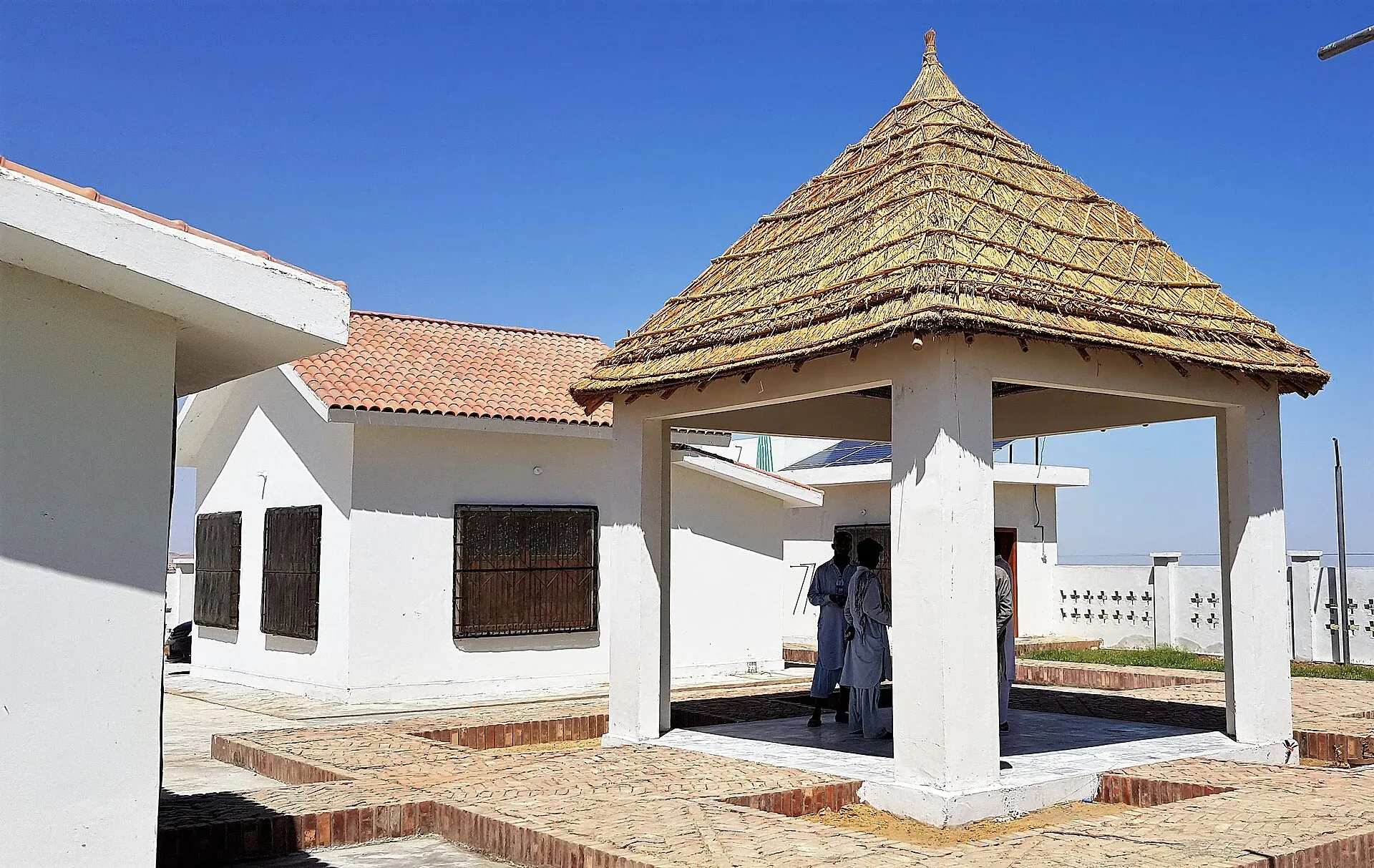
Photo: Indusian1236, with thanks · CC BY-SA 4.0 · via Wikimedia Commons · temporary stand-in photo

Manchar Lake
One of South Asia's largest freshwater lakes, about 18 km from Sehwan Sharif. Its size changes with the seasons, and it is home to the Mohana boat people.
Overview
Manchar Lake lies about 18 km from Sehwan Sharif, west of the Indus, in the Jamshoro and Dadu districts of Sindh. Wikipedia calls it the largest natural freshwater lake in Pakistan and one of the largest in South Asia. It collects water from streams in the Kirthar Mountains and empties into the Indus. The southern end lies at the foot of the Laki Hills, a branch of the Kirthar range.
The lake is shallow, with an average depth of only 2.5 to 3.75 m, and it sits about 6 m lower than the bed of the Indus. In flood the Indus can spill into it. In winter, when the river is low, water flows from the lake back into the Indus. Its area changes with the season: from as little as about 36 sq km to as much as 500 sq km in the monsoon.
The lake supports thousands of fishing families, and the Mohana people, sometimes called the Boat People, live on it.
Plan your visit
- Nearest town
- Sehwan Sharif
- Getting there
Manchar Lake is about 18 km from Sehwan Sharif. Sehwan is on the N-55 Indus Highway, reached by road from Hyderabad or Karachi, and also by train. From Sehwan, hire a taxi or rickshaw to the lake. More
Best months
Nov – Mar
- Manchar Lake
- Related places nearby: Sehwan Sharif (Lal Shahbaz Qalandar), Dadu
History and floods
The banks hold old settlements. Ghazi Shah, Wahi Pandhi and Ali Murad Mound are archaeological sites near the lake, and Lal Chatto, Mashak Lohri and Lakhiyo on its banks date from the Harappan period.
The lake was fed by a branch of the Indus. In 1921 it was linked to Hamal Lake to the north by the Main Nara Valley Drain, which also brought in sewage and saline drainage. It dried out completely in the drought of 1958. In August 2009 about 20 cubic metres a second of Indus water was let into it.
In the 2010 floods the Indus broke its banks and sent water over farmland west of the river, forming a second channel that ended in Manchar. NASA published a satellite image of the flooded lake on 5 September 2010. In 2022 floods, engineers cut a breach in the lake to drain it and protect the city of Sehwan and the town of Bhan Syedabad. Wikipedia says this protected up to 500,000 people at the cost of flooding villages with about 150,000 residents.
What to see and do
- Boat trip. Hire a boat to see the houseboats and fishing communities. Agree on the route first.
- Birds. The lake is on the Indus flyway. Counts of wintering birds fell from 25,000 in 1988 to 2,800 in 2002 as fish stocks declined and a saline reed took over. Winter is still the best time.
- Archaeological mounds. The Harappan-period sites on the banks are not set up for visitors; ask locally before heading out.
- Sehwan Sharif. The Sufi shrine town is nearby; see Sehwan Sharif.
When to visit
November to March. Summer is extremely hot, and flood season (July to September) can change the lake and its roads. The lake flooded in 2010 and 2022.
Where to stay and eat
Stay in Sehwan Sharif or Jamshoro/Dadu. Meals at the lake are simple fish dishes. Be respectful when visiting the boat communities and ask before taking photos of people.
Good to know
- Water quality: sewage and saline farm drainage have harmed the lake. Reduced freshwater inflow, because of diversions from the Indus and weaker runoff from the Kirthar hills, has made some water salty and killed fish. A Right Bank Outfall Drain is being built to keep sewage out. Do not drink or swim.
- Flooding: the lake overflowed in 2010 and again in 2022. In flood season (July to September) its area and the roads around it can change quickly.
- Dams: the proposed Nai Gaj Dam upstream would release fresh water into the lake all year instead of seasonally, which should improve the water.
- Fees: boat hire is negotiated locally. Current fees will be added soon.
Highlights
- One of South Asia's largest freshwater lakes
- Mohana boat communities
- Winter birds on the Indus flyway
- Close to Sehwan Sharif
Getting there
Manchar Lake is about 18 km from Sehwan Sharif. Sehwan is on the N-55 Indus Highway, reached by road from Hyderabad or Karachi, and also by train. From Sehwan, hire a taxi or rickshaw to the lake. A routing check from the centre of Sehwan to the lake point on this page gave about 20 km and 26 minutes, but the lake edge and the boat landings vary with the season, so ask locally. See Sehwan Sharif.
Tips
- Visit between November and March
- Agree boat price and route before setting out
- Ask permission before photographing people
- Avoid flood season
Wildlife
Photos we still need: floating villages and birdlife on the lake today. Send us yours
Sources and last checked
Last checked Confidence low4 sources4 still to check
- Last checked
- Method
- Desk research from published sources
- Confidence
- low
- Checked by
- trek.pk research team
Researched from published sources; not yet checked on the ground by our team. Spot something out of date? Report a mistake.
Sources
- Manchar Lake · Wikipedia · checked
- Pakistan Tourism Guide 2021 · TDAP · checked
- List of Ramsar sites in Pakistan (Wikipedia) · Wikipedia · checked
- Indus River and Manchhar Lake (5 September 2010) · NASA Earth Observatory · checked
Still to be checked on the ground (4)
- Water quality and whether boat tours operate (Wikipedia says sewage, drainage and low inflow have made the water saline; no source on current boat tours)
- Bird counts after the 2022 floods (Wikipedia gives only 25,000 in 1988 and 2,800 in 2002)
- Ramsar status: Wikipedia's list of Pakistan's Ramsar sites does not include Manchar Lake; not checked on the Ramsar site itself
- Lake area when lowest: Wikipedia gives 36 sq km in one place and 200 sq km in another
Nearby and related

Sehwan Sharif (Lal Shahbaz Qalandar)
An ancient town on the Indus and home to the shrine of the Sufi saint Lal Shahbaz Qalandar, one of Pakistan's most visited shrines, with a gold-plated dome, nightly devotion and the dhamal trance dance.

Jamshoro
District capital across the Indus from Hyderabad, known as Sindh's education city for its universities. Handy base for Ranikot Fort and Keenjhar Lake.

Dadu
District capital on the west bank of the Indus in northern Sindh, famous for its tea. A hot, working town and a base for the Kirthar hills and Manchar Lake.
Drigh Lake
A 164-hectare lake in Qambar Shahdadkot District, Sindh, about 29 km from Larkana. A Ramsar wetland of international importance since 23 July 1976 and a wildlife sanctuary, with winter ducks, herons and eagles.
Lakki Shah Saddar Hot Springs
Sulphur springs and ponds in the Lakki hills near Sehwan, Sindh, long a pilgrimage and bathing site. Little current visitor information exists. For foreign visitors, FCDO advises against all but essential travel to much of northern Sindh.