

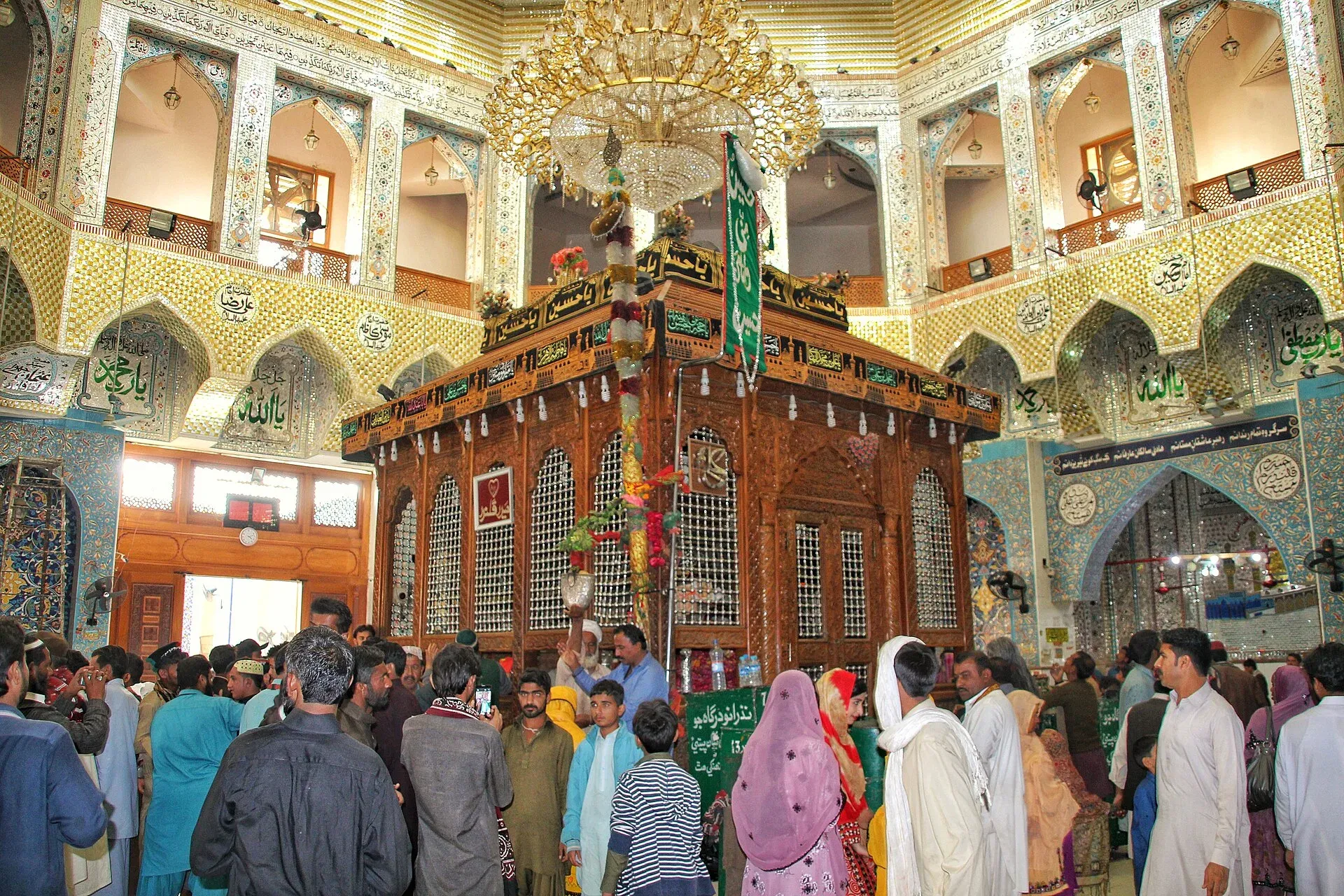
Photo: Fassifarooq, with thanks · CC BY-SA 4.0 · via Wikimedia Commons · temporary stand-in photo

Sehwan Sharif (Lal Shahbaz Qalandar)
An ancient town on the Indus and home to the shrine of the Sufi saint Lal Shahbaz Qalandar, one of Pakistan's most visited shrines, with a gold-plated dome, nightly devotion and the dhamal trance dance.
Overview
Sehwan Sharif is a town in Jamshoro District, on the west bank of the Indus, about 130 km north-west of Hyderabad by Wikipedia's account. It is one of the oldest towns in Sindh and the home of the shrine of Lal Shahbaz Qalandar, a 13th-century Sufi saint. The shrine is a major pilgrimage place for Muslims and is also visited by Hindus, who know the saint under other names. Wikipedia says it attracts up to a million visitors a year.
Plan your visit
- Nearest town
- Sehwan
- Getting there
Sehwan is about 144 km (about 2 hours 10 minutes) by road from Hyderabad and about 135 km (about 2 hours) from Jamshoro (OSRM, checked 16 November 2026). Buses and vans run from Hyderabad and Karachi; More
Best months
Nov – Feb
- Sehwan Sharif (Lal Shahbaz Qalandar)
- Related places nearby: Manchar Lake, Ranikot Fort, Kai Caves, Naig Valley
History
The town has Hindu, Greek and Arab-era stories: tradition links it to Shiva, to the ancient city called Sindomana that Alexander met in 326 BC, and to the conquest of Sindh by Muhammad bin Qasim in 711 CE. A mound north of town, Kafir Qila, is linked to that earlier city. Sehwan later served as capital of the Thatta kingdom.
The shrine was begun in 1356 under Firuz Shah Tughlaq and greatly enlarged in 1639 by Mirza Jani Beg Tarkhan. The gold-plated main door was a gift of the last Shah of Iran in the 1970s. After part of the dome collapsed in 1994, a new gilded dome was built. In February 2017 a suicide attack at the shrine killed 88 people; the dhamal resumed the next evening.
UNESCO status
Sehwan Sharif is not on UNESCO's World Heritage list or on Pakistan's tentative list (checked against Wikipedia's list, 16 November 2026).
The shrine
The central dome is about 110 feet (33 m) high and 56 feet (17 m) across on the outside. After the 1994 collapse it was rebuilt as a gilded dome. Wikipedia says the outer tiles are gold-plated and came from the United Arab Emirates, and the interior tilework is from Iran. The complex has four minarets and blends Perso-Islamic style with features that resemble the Shia shrines at Najaf and Karbala. The outer walls carry Sindhi-style tilework, and a courtyard for the dhamal was built in the 1990s. Small earthen oil lamps light the tomb.
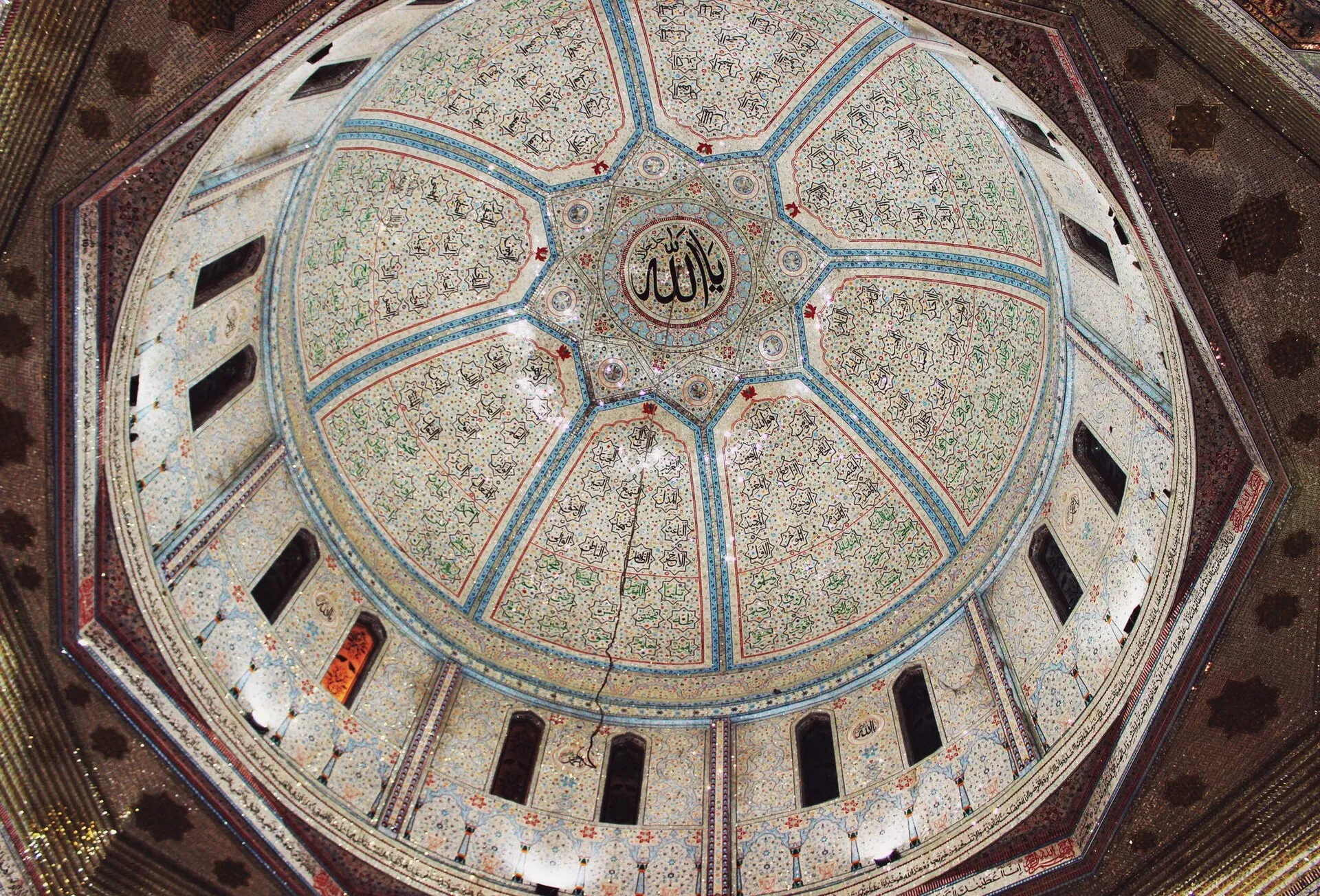
Photo: Ibaadnaqvi, with thanks · CC BY-SA 4.0 · via Wikimedia Commons · temporary stand-in photo

Ibn Battuta mentions the shrine in the mid-14th century. A caretaker rings the shrine's bell at 3:30 am each day, a practice he kept up after the 2017 attack.
What to see and do
- The shrine. White marble, glazed tile and mirror work surround the saint's tomb under the main dome.
- The dhamal. Drumming and trance-like dancing take place in the courtyard, usually in the evening. Men and women have separate roped-off areas.
- The annual Urs. The saint's death anniversary is on 18 Shaban in the Islamic calendar. The 774th Urs began on 7 February 2026 and lasts three days. It is extremely crowded. Wikipedia says it draws more than half a million pilgrims, with folk-singing groups (mandali), Sindhi wrestling (malakhro) and dhamal sessions. Hindu devotees perform the mehndi ritual at the opening.
- Langar. Free community kitchens serve food all day.
- Sehwan Fort / Kafir Qila. Mounds and ruins on the town's north side, with limited facilities.
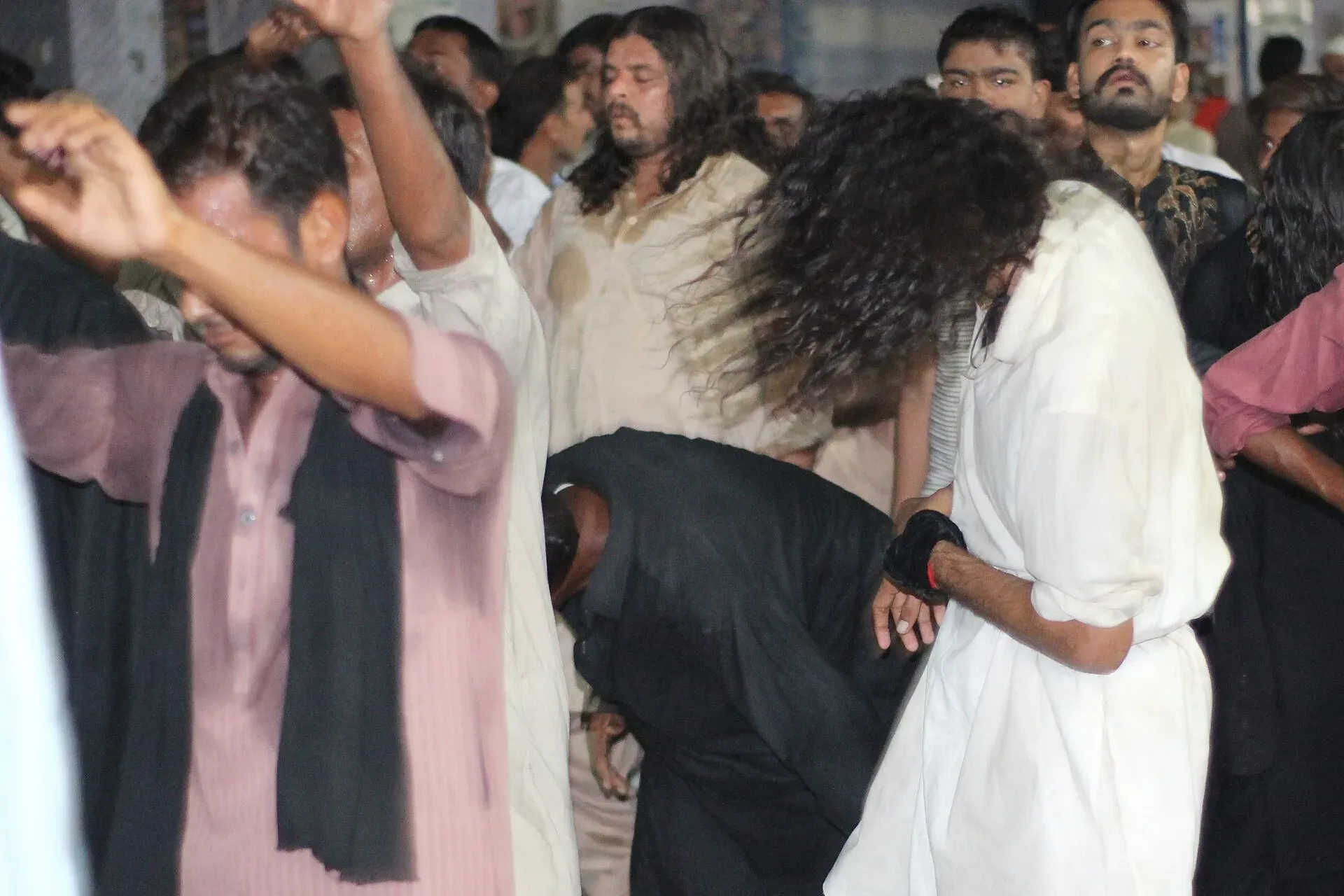
Photo: Naeemcanon, with thanks · CC BY-SA 4.0 · via Wikimedia Commons · temporary stand-in photo

A day in Sehwan
A workable day from Hyderabad leaves early, because OSRM estimates about 2 hours 10 minutes each way. Visit the shrine and its courtyard in the morning. Eat at one of the langar kitchens or the stalls in the market outside the shrine, then walk to the mounds of Kafir Qila in the afternoon. The dhamal is usually in the evening, so a visitor who wants to see it needs to stay late or overnight.
When to visit
The Urs is the most dramatic time, but also the busiest and most demanding. Winter (November to February) is the most comfortable season for an ordinary visit.
Where to stay and eat
Simple guesthouses and food stalls are around the shrine. Many visitors come as a day trip from Hyderabad or Jamshoro.
Good to know
- Etiquette. Remove shoes before the shrine. Dress modestly, with covered arms and legs, and women should cover their hair. Do not point your feet at the tomb. Photograph only with permission, especially at the dhamal. Stay out of the roped-off areas for the other gender.
- Faith. Muslims and Hindus both come to the shrine. If you are not a Muslim, ask at the entrance what is open to you and follow what other worshippers do.
- Ask the district administration or local police about current conditions before you go. Safety. For foreign visitors: the UK FCDO advises against all but essential travel to Sindh north of and including Nawabshah (updated 27 October 2026, checked 16 November 2026). Sehwan lies north of Nawabshah. Read the live page and check with local contacts before you travel. Avoid the crowds at the Urs if you are not used to them.
- Hours and fees. The shrine is open for worship; no fee is charged for worship. There is no known official visiting-hours notice.
Highlights
- Shrine of Lal Shahbaz Qalandar, built 1356 and expanded in 1639
- Gold-plated dome and Iranian-gift door
- Evening dhamal trance dance
- Annual Urs on 18 Shaban
Getting there
Sehwan is about 144 km (about 2 hours 10 minutes) by road from Hyderabad and about 135 km (about 2 hours) from Jamshoro (OSRM, checked 16 November 2026). Buses and vans run from Hyderabad and Karachi; Sehwan Sharif also has a railway station.
Tips
- Dress modestly and remove shoes.
- Ask before you photograph worshippers.
- Check the FCDO advice for Sindh before you travel.
- Avoid the Urs if crowds are a concern.
Sources and last checked
Last checked Confidence medium8 sources4 still to check
- Last checked
- Method
- Desk research from published sources
- Confidence
- medium
- Checked by
- trek.pk research team
Researched from published sources; not yet checked on the ground by our team. Spot something out of date? Report a mistake.
Sources
- Shrine of Lal Shahbaz Qalandar · Wikipedia · checked
- Sehwan · Wikipedia · checked
- 774th annual Urs of Lal Shahbaz Qalandar begins today · ARY News · checked
- Mystic music, folk wisdom performances steal the show at Qalandar shrine · Dawn · checked
- List of World Heritage Sites in Pakistan (tentative list table) · Wikipedia (UNESCO site whc.unesco.org returned HTTP 403) · checked
- Pakistan Tourism Guide 2021 · TDAP (Trade Development Authority of Pakistan) · checked
- OSRM driving route calculation · OSRM (OpenStreetMap routing) · checked
- Pakistan travel advice (warnings and insurance), updated 27 October 2026 · UK Foreign, Commonwealth & Development Office · checked
Still to be checked on the ground (4)
- Annual Urs dates for 2027 (18 Shaban 1448; no official announcement found; Wikipedia gives only the Islamic date, and moon sighting decides the day)
- Visiting hours and any rules for non-Muslim visitors (Wikipedia: the shrine attracts Hindu devotees, who perform the mehndi ritual at the Urs; no official hours or rules found)
- Current security situation in Sehwan
- Road and rail services
Nearby and related

Hyderabad
Sindh's second-largest city, founded in 1768 and famous for its glass bangles, Pacco Qillo fort and Talpur tombs, about 160 km from Karachi.

Manchar Lake
One of South Asia's largest freshwater lakes, about 18 km from Sehwan Sharif. Its size changes with the seasons, and it is home to the Mohana boat people.

Ranikot Fort
A huge hill-top wall in the Kirthar hills of Sindh, often called the Great Wall of Sindh, with four gates and a smaller inner fort. On Pakistan's UNESCO tentative list since 1993.
Lahoot Lamakan Cave Shrine
A cave shrine in Balochistan where Shia pilgrims honour Ali. Thousands visit each year on a pilgrimage that starts at Sehwan Sharif. FCDO advises against all travel to Balochistan.
Kai Caves
Two groups of caves in the Kai valley south of Sehwan Sharif, Jamshoro District, Sindh, in the Kirthar range. The lower group is known locally as Satt Ghariyoon (Seven Caves). Access is by a narrow, difficult track.
Naig Valley
A valley and hill stream in the Kirthar hills of Sindh, about 45 km from Sehwan, with a Buddhist-era stupa, a Chalcolithic mound and a Sufi shrine. Few visitors and no facilities.
Lakki Shah Saddar Hot Springs
Sulphur springs and ponds in the Lakki hills near Sehwan, Sindh, long a pilgrimage and bathing site. Little current visitor information exists. For foreign visitors, FCDO advises against all but essential travel to much of northern Sindh.