

Photo: King Eliot, with thanks · CC BY-SA 4.0 · via Wikimedia Commons · temporary stand-in photo

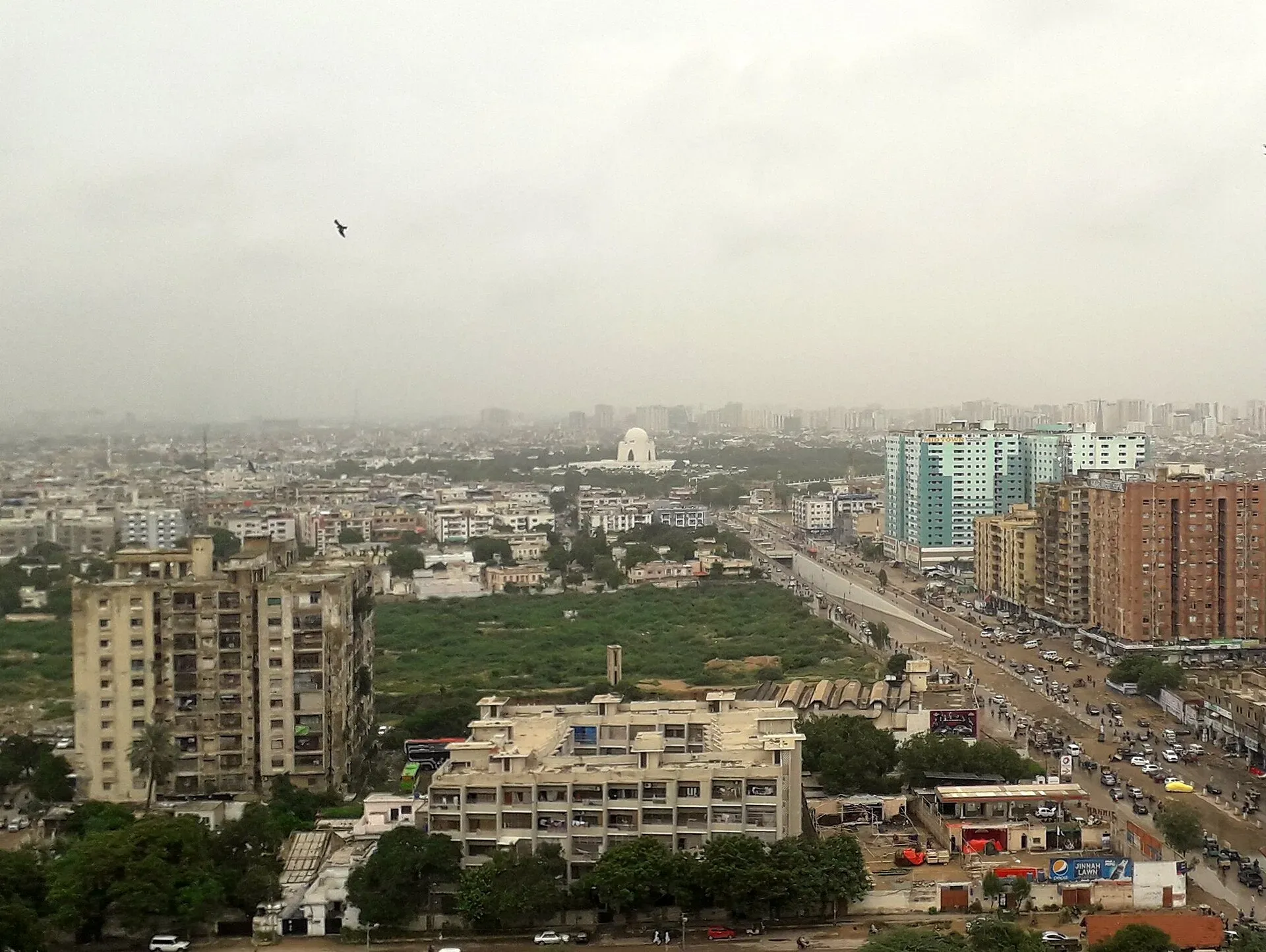
Mazar-e-Quaid
The white marble mausoleum of Muhammad Ali Jinnah, founder of Pakistan, in central Karachi: its design, gardens, relic museum, guard-changing ceremonies and visiting etiquette.
Overview
Mazar-e-Quaid is the mausoleum of Muhammad Ali Jinnah, the Quaid-e-Azam ("Great Leader") and founder of Pakistan, who died on 11 September 1948. It stands on a rise at the end of Muhammad Ali Jinnah Road in central Karachi and is the city's best-known landmark. Fatima Jinnah, Liaquat Ali Khan, Sardar Abdur Rab Nishtar, Nurul Amin and Begum Ra'ana Liaquat Ali Khan are buried in the complex.
The site is run by the Quaid-i-Azam Mazar Management Board (QMMB), which began as the Quaid-i-Azam Memorial Fund and took its present form in 1972.
Plan your visit
- Nearest town
- Karachi
- Opening hours
- Check before you go: no hours are confirmed by an official source. Third-party guides disagree. Contact the Quaid-i-Azam Mazar Management Board (QMMB) on +92 21 99230171 or info@qmmb.gov.pk.
- Getting there
The mausoleum stands at the end of Muhammad Ali Jinnah Road in the Jamshed Quarters area of central Karachi, set in its own gardens. A taxi or ride-hailing car from Saddar, Clifton or the airport is the simplest way; More
Best months
Nov – Mar
- Mazar-e-Quaid
- Related places nearby: Karachi, Mazar-e-Quaid Museum, Quaid-e-Azam House Museum (Flagstaff House), Frere Hall, Empress Market, Clifton and Sea View
The building
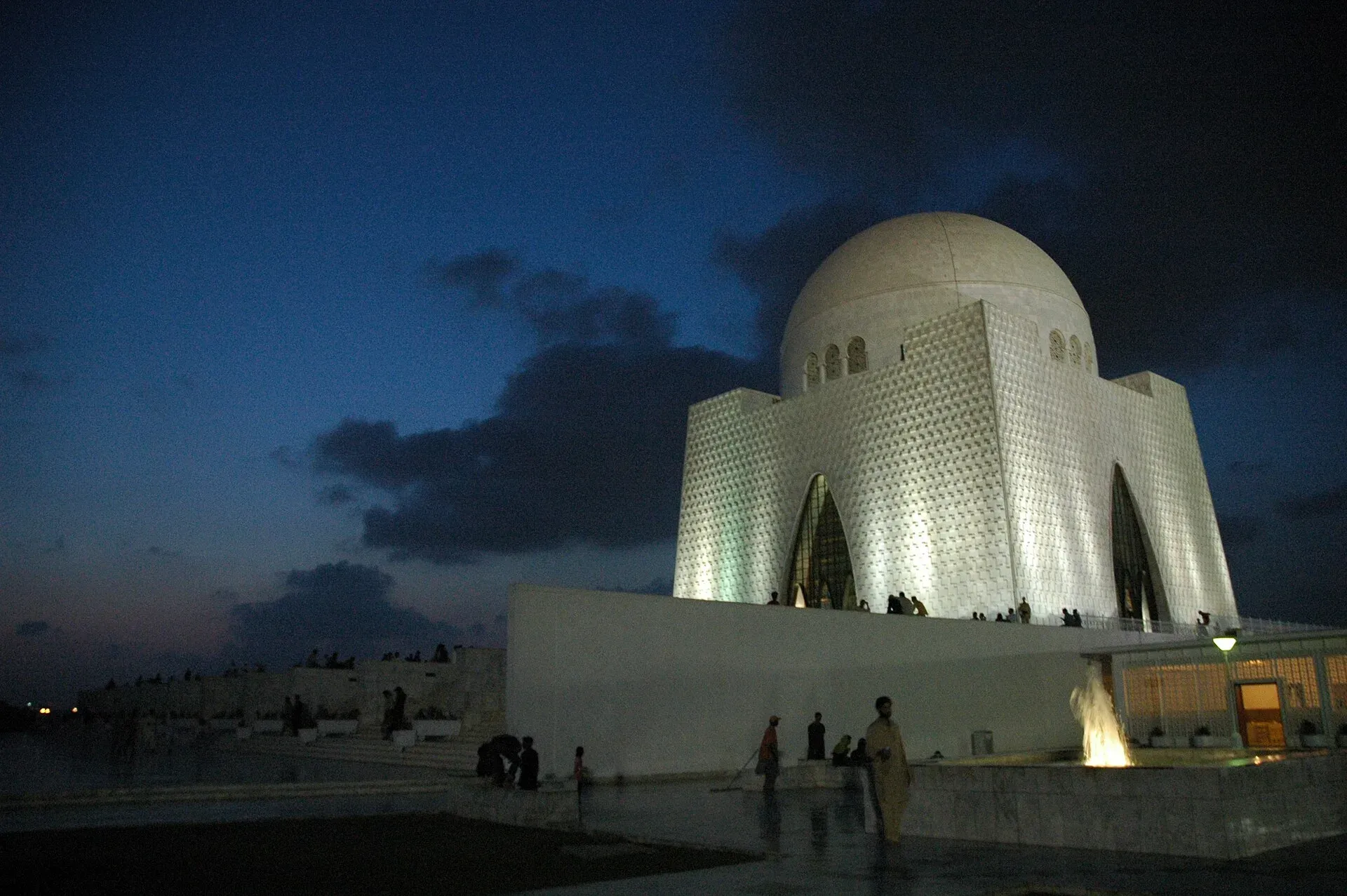
Photo: Besal1966, with thanks · CC BY-SA 4.0 · via Wikimedia Commons · temporary stand-in photo

The architect was Yahya C. Merchant, an Indian architect who was a friend of Jinnah. His design was submitted in December 1959 and chosen at the wish of Fatima Jinnah; entries from Turkish, Indian and British architects were not taken forward. The QMMB records the main dates:
- 31 July 1960: foundation stone laid by President Ayub Khan.
- 1962 to 1966: the upper structure built.
- 2 June 1970: construction completed.
- 15 January 1971: opened to the public by President Yahya Khan.
Construction began in February 1960, with piling from March 1961, the basement in 1961 to 1962 and marble work from August 1966. It cost Rs 14.8 million, according to the QMMB. The money came from the Quaid-i-Azam Memorial Fund, set up after Jinnah's death.
The building stands on a square plinth of 116 ft by 116 ft. Its outer walls are faced in white Mullaghori marble set in an offset pattern, and the inner walls carry a green onyx pattern. The octagonal main chamber is 22 ft across and 36 ft high, under a reinforced-concrete dome of 70 ft. The QMMB describes the design as a blend of traditional Muslim and modern architecture. Four staircases rise from the corners of the chamber and descend to the basement.
A replica of the grave stands in the main chamber behind a bronze and silver fence, while the grave itself is in the basement. A gold-leaf chandelier, a gift from the Muslims Association of the People's Republic of China, hangs from the dome. It is about 81 ft long, with 48 shaded lights in four tiers.
The gardens
Bagh-e-Quaid-i-Azam surrounds the mausoleum. It follows the four-part Chahar Bagh idea, was inspired by Lahore's Shalimar Garden, and was opened on 24 December 2000. The gardens were announced in 1986 and built from March 2000. They have a formal Chahar Bagh area with water channels and fountains, and an informal woodland area. The QMMB counts about 5,000 trees of 38 varieties and 125 lawns or terraces. The mausoleum and gardens occupy about 61 acres of a 131-acre site. In the evening local families come to walk and sit.
What to see and do
- The mausoleum chamber and the tomb. Visit quietly; guards stand at the entrance.
- Quaideen Grave Hall on the east side, with the graves of the other leaders.
- Aiwan-e-Nawadrat-e-Quaid-i-Azam on the west side: a hall of relics donated by Jinnah's sister, Shireen Bai. The QMMB lists Qurans, clothing, his 1931 passport, furniture, golf clubs and arms. Its current opening hours are not confirmed.
- Audio-visual hall. The board opened a 169-seat hall in 2013, but there is no known sign of public opening. Treat it as not available.
- Guard-changing ceremonies. Cadets of the armed services take over the ceremonial guard on set occasions, with a wreath and prayers. Recent reports show the Pakistan Military Academy, Kakul, taking over on 25 December (Quaid's birthday; reported for 2025) and the Pakistan Air Force Academy on 6 September (Defence Day; reported for 2024). Official ceremonies are also held on 23 March, 14 August and 11 September. Ceremony times are not published here; ask the QMMB.
When to visit
November to March is cooler and best for the gardens. Avoid the national days above unless you want to see a ceremony. A weekday morning is quieter.
Where to stay and eat
Hotels and restaurants are within a short drive in Saddar, Clifton and along Shahrah-e-Faisal. Street food is plentiful nearby; choose busy, clean stalls.
A half-day outline
Visit the mausoleum and gardens in the morning on a weekday, then ride to the older city centre for Quaid-e-Azam House Museum, Frere Hall and Empress Market. For the sea, finish in Clifton.
Good to know
- Hours and charges: not confirmed by an official source. The QMMB site lists no visiting hours, and guides disagree. Phone or email the board. Any fee will be added when confirmed.
- Etiquette: dress modestly, cover shoulders and knees, keep your voice low, do not climb on structures or walk on flower beds, and follow guard instructions. Ask before photographing guards or inside the chamber. The board's rules page offers a photography licence form, but states no rules for ordinary visitors.
- Security: expect bag checks and a metal detector at entry.
- Nearby: the separate Quaid-e-Azam House Museum, Frere Hall and Empress Market are in the older city centre.
- Travel advice: Karachi is in Sindh south of Nawabshah, which is not among the areas the UK Foreign, Commonwealth & Development Office (FCDO) advises against (page updated 27 October 2026, checked 16 November 2026). Karachi has street crime and sometimes strikes or protests that close roads, so use ride-hailing or a trusted driver and check the FCDO page before you travel.
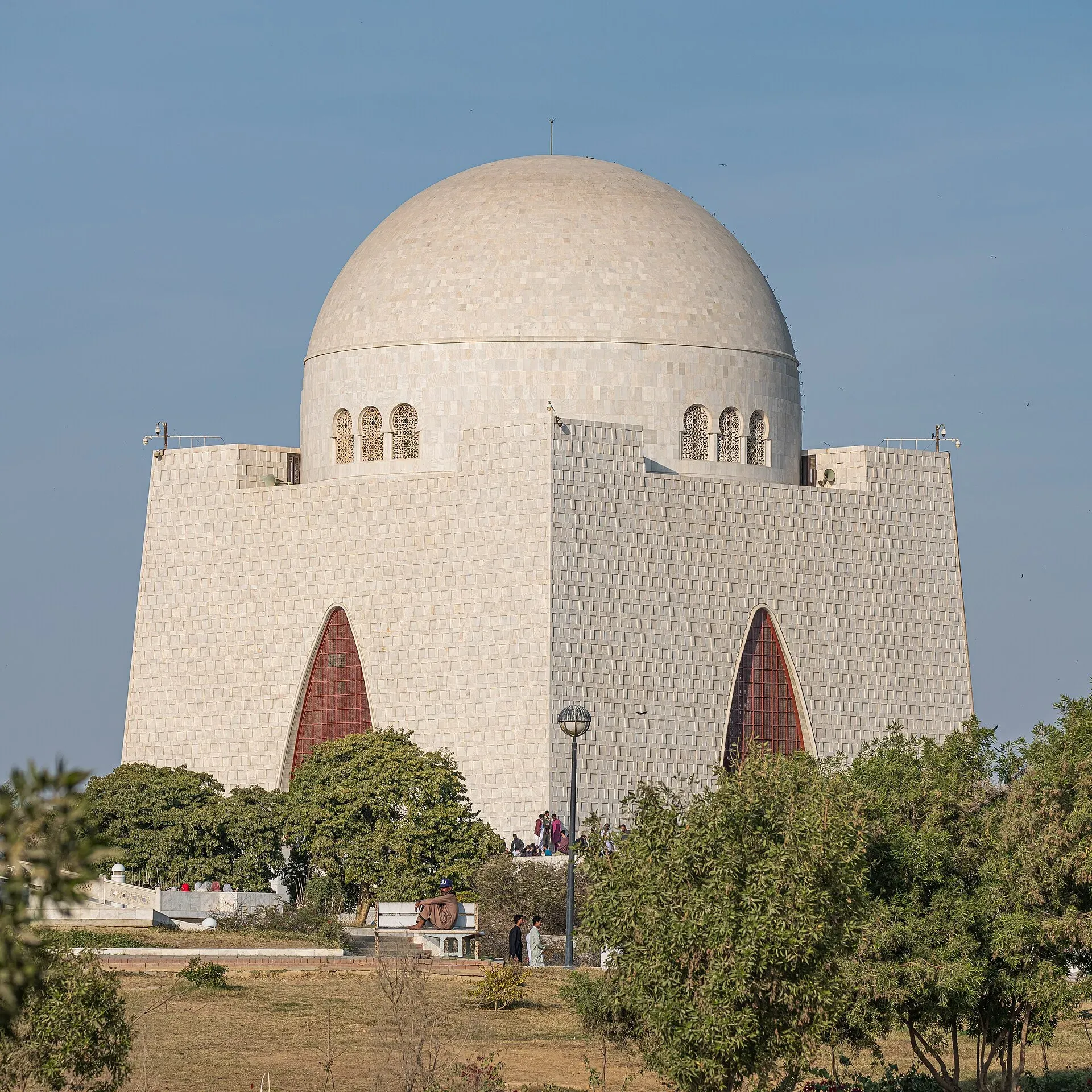
Photo: A.Savin, with thanks · Public domain (CC0) · via Wikimedia Commons · temporary stand-in photo

Highlights
- White marble mausoleum designed by Yahya Merchant, opened to the public on 15 January 1971
- Tomb of Jinnah, with the graves of Fatima Jinnah, Liaquat Ali Khan and other leaders alongside
- Bagh-e-Quaid-i-Azam, a terraced garden opened in December 2000
- Aiwan-e-Nawadrat, a hall of Jinnah's relics on the west side
- Ceremonial guard changes by the armed services' cadets on set dates
Getting there
The mausoleum stands at the end of Muhammad Ali Jinnah Road in the Jamshed Quarters area of central Karachi, set in its own gardens. A taxi or ride-hailing car from Saddar, Clifton or the airport is the simplest way; allow extra time in traffic. The board's office is behind the mausoleum on Preedy Street (Extension).
Tips
- Dress modestly, speak quietly and follow the guards' instructions; this is a national memorial.
- Expect security checks and carry photo ID.
- Opening hours are not confirmed from an official source; ask the board before you go.
- National days (23 March, 14 August, 11 September, 25 December) bring crowds and road closures nearby.
- Cars and ride-hailing are the easy way to arrive; traffic is heavy, so allow extra time.
Photos we still need: the main chamber with the chandelier, and the Quaideen Grave Hall. Send us yours
Sources and last checked
Last checked Confidence medium10 sources4 still to check
- Last checked
- Method
- Desk research from published sources
- Confidence
- medium
- Checked by
- trek.pk research team
Researched from published sources; not yet checked on the ground by our team. Spot something out of date? Report a mistake.
Sources
- Mausoleum Complex · Quaid-i-Azam Mazar Management Board (QMMB) · checked
- Quaid-i-Azam Mazar Management Board (home page) · Quaid-i-Azam Mazar Management Board (QMMB) · checked
- Contact · Quaid-i-Azam Mazar Management Board (QMMB) · checked
- Mazar-e-Quaid · Wikipedia · checked
- Aiwan-e-Nawadrat-e-Quaid-i-Azam · Wikipedia · checked
- Change of guard ceremony at Mazar-i-Quaid on 25 December 2025 · Dawn · checked
- Change of guards ceremony at Mazar-e-Quaid on Sept 6 (2024) · The Express Tribune · checked
- Pakistan travel advice (updated 27 October 2026) · UK Foreign, Commonwealth & Development Office · checked
- Rules and Regulations · Quaid-i-Azam Mazar Management Board (QMMB) · checked
- Activities · Quaid-i-Azam Mazar Management Board (QMMB) · checked
Still to be checked on the ground (4)
- Opening hours and any ticket or parking charge (QMMB home, rules and activities pages list none)
- Whether the Aiwan-e-Nawadrat relic hall is open and its hours (not stated on QMMB or Wikipedia)
- Photography rules for ordinary visitors inside the mausoleum (QMMB has a licence form only; its PDF was not opened)
- Exact times of the guard-changing ceremonies (QMMB activities page gives none)
Nearby and related

Karachi
Pakistan's largest city and main port: colonial buildings, museums, beaches, busy bazaars and some of the country's best food.

Mazar-e-Quaid Museum
The white marble mausoleum of Muhammad Ali Jinnah in central Karachi, finished in 1971. Visitor accounts mention a small display of his belongings, but its status is unconfirmed.

Quaid-e-Azam House Museum (Flagstaff House)
The Karachi house Muhammad Ali Jinnah bought in 1943, now a museum of his furniture and belongings. Fatima Jinnah lived here until 1964. It opened to the public in 1993.
Frere Hall
A Venetian-Gothic hall from 1865 in Karachi's Saddar district, set in Bagh-e-Jinnah gardens. It holds a library and exhibition space and murals by the artist Sadequain.

Empress Market
A big Indo-Gothic market hall in Karachi's Saddar, built 1884 to 1889 with a clock tower. Still used for fruit, vegetables, meat, spices and more.

Clifton and Sea View
Karachi's most visited city beach, open day and night, with camel rides, food stalls and seaside restaurants. Strong currents make the sea risky, and swimming is often banned.