

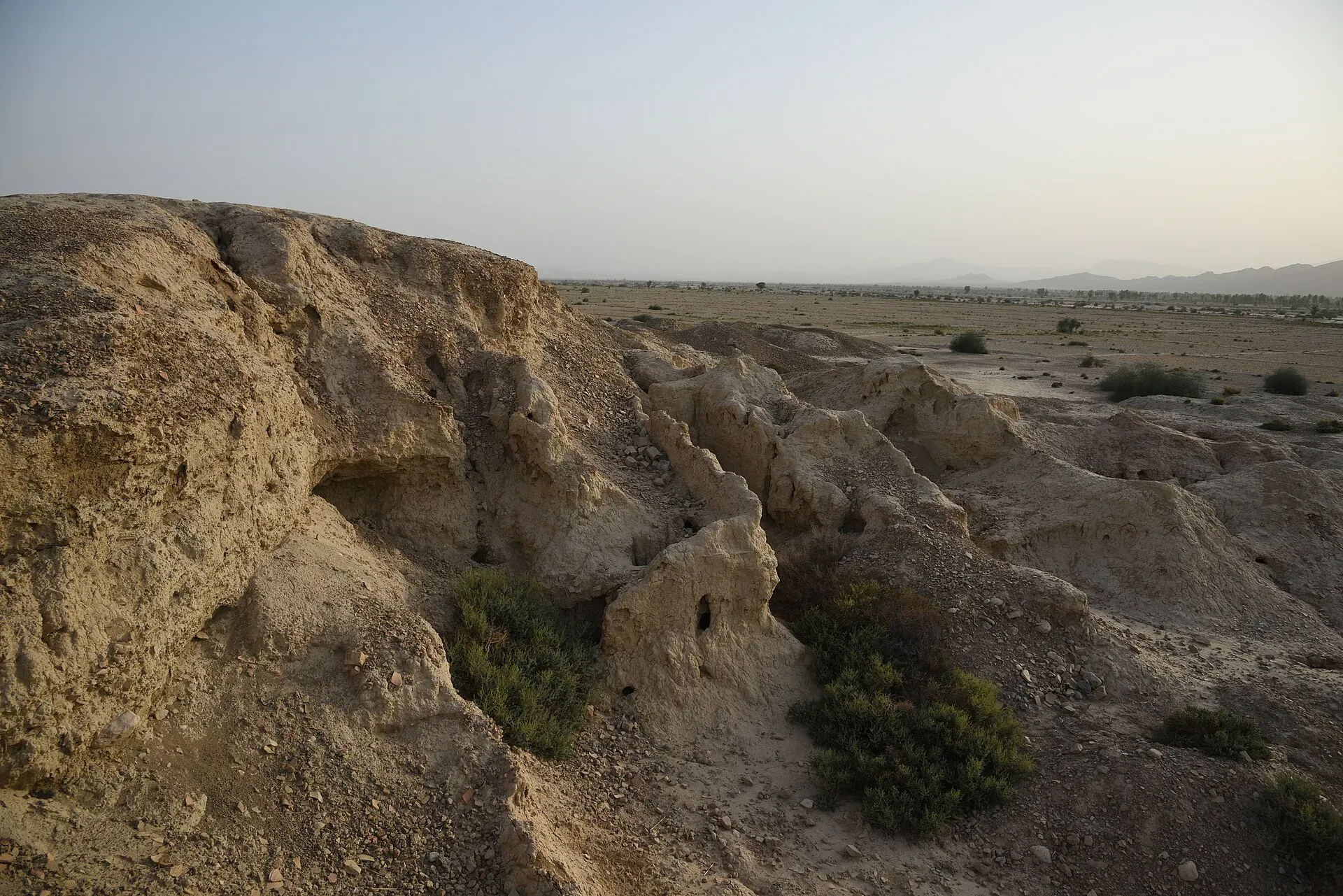
Photo: mhtoori, with thanks · CC BY-SA 4.0 · via Wikimedia Commons · temporary stand-in photo

Mehrgarh
One of the oldest farming villages in South Asia, on the Kachhi Plain near the Bolan Pass in Balochistan. People lived here from about 7000 BCE, and the site is on Pakistan's UNESCO tentative list (2004).
Overview
Mehrgarh is an archaeological site on the Kachhi Plain of Balochistan, near the mouth of the Bolan Pass and west of the Indus. It lies between Quetta, Kalat and Sibi. It is one of the earliest known places in South Asia with evidence of farming and herding, and it helps explain how the later Indus civilisation began. Most of what was found is mud-brick foundations, graves and small objects, so this is a place for people who care about archaeology rather than for sightseeing.
Plan your visit
- Nearest town
- Sibi
- Getting there
Mehrgarh is near the Bolan Pass, about 47 km (about 1 hour) by road from Sibi and about 143 km (about 2 hours 15 minutes) from Quetta (OSRM, checked 16 November 2026; other sources say about 130 km from Quetta). More
Best months
Mar – May, Oct – Nov
- Mehrgarh
- Related place nearby: Sibi
History
French archaeologists Jean-François and Catherine Jarrige found the site in 1974. Digging went on from 1974 to 1986 and again from 1997 to 2000. The settlement covers about 495 acres (2 sq km) in six mounds, and about 32,000 objects have been collected.
Archaeologists divide the occupation into periods:
- Period I: an early farming village, with unbaked mud-brick houses and no pottery. Recent radiocarbon work on teeth dates it to about 5250–4650 BCE; the original estimate was 7000–5500 BCE. People grew wheat and barley and kept sheep, goats and cattle.
- Periods II and III (about 4650–3500 BCE): pottery appears, with copper working, kilns, button seals and finely made figurines.
- Later periods: the town grows, and Mehrgarh is thought to have been abandoned around 2600–2000 BCE, as larger towns of the Indus civilisation rose.
Burials contained beads of shell, turquoise and lapis lazuli, showing trade with distant places. In 2006 the journal Nature reported drilled molar teeth from the Neolithic graveyard here, the oldest known evidence of dentistry on living people.
Life at Mehrgarh
Houses were of mud brick. In Period I most had four internal compartments. Grain was kept in granaries, and large baskets were lined with bitumen. Crops included six-row barley, einkorn and emmer wheat, jujubes and dates, and people kept sheep, goats and cattle. Craft work covered flint knapping, tanning, bead making and metal working. Updraft kilns and copper-melting crucibles were found, and a copper amulet of about 6,000 years ago is the oldest known lost-wax casting.
Burials were of two kinds: single graves in narrow mud walls, and collective graves holding up to six skeletons, laid on their sides, usually east to west. Children were buried in large jars in the later period (about 4000 to 3300 BCE). Early graves often held baskets, tools, beads and bangles, with more goods in male burials. Some male burials included animal sacrifices. Shell and lapis lazuli beads suggest contact as far as Badakhshan in Afghanistan. No writing has been found, and little is known about religious belief.
Where it fits
Archaeologists still disagree about the link with the Indus civilisation. Asko Parpola argues the Mehrgarh culture moved into the Indus valley and became the Bronze Age civilisation. Jean-François Jarrige argues for a local origin and points to Mehrgarh's long local background. In its last phase (about 2600 to 2000 BCE) people moved to the fortified town of Nausharo, about five miles away, and a cemetery of a later period lies at Sibri, about 8 km from Mehrgarh.
UNESCO status
Mehrgarh has been on Pakistan's UNESCO tentative list since 2004. It is not an inscribed World Heritage Site (checked on Wikipedia's list, 16 November 2026).
What to see and do
- The mounds and mud-brick walls. The exposed foundations show the layout of the earliest houses.
- Condition of the site. A May 2019 Express Tribune report says the site lies buried under layers of earth, and a speaker at a heritage seminar called for an awareness campaign to protect historic sites in Balochistan. Expect low earthworks rather than standing walls.
- Finds. Objects from the dig, such as the early figurines, are held away from the site. What is on show locally has not been confirmed; ask before you go.
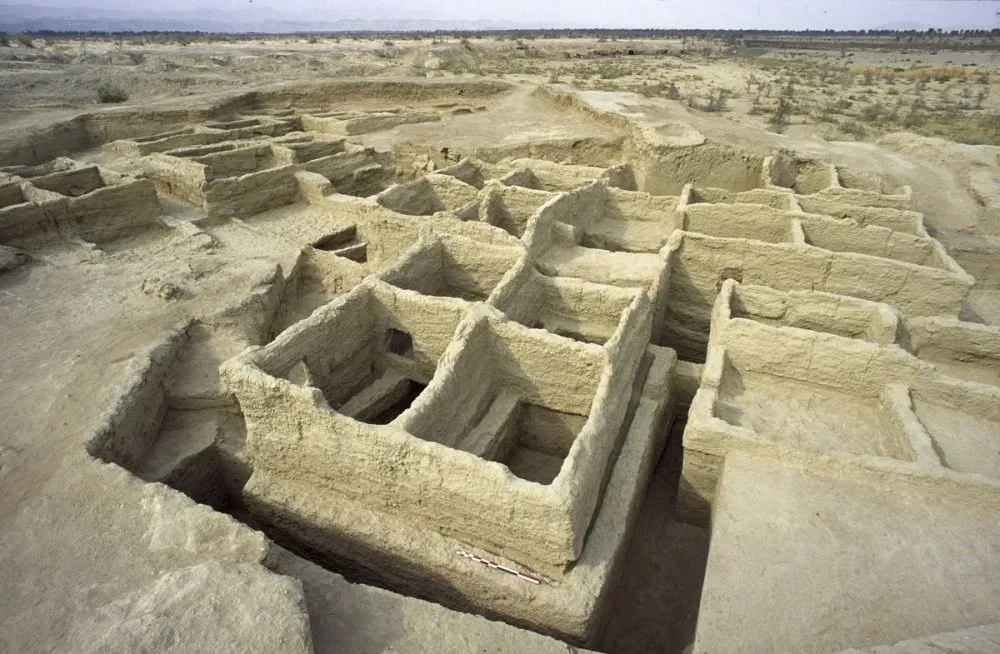
Photo: Ashish_Premier, with thanks · CC BY-SA 3.0 · via Wikimedia Commons · temporary stand-in photo

When to visit
Spring (March to May) and autumn (September to November) are the most comfortable. Summers on the plain are very hot.
Where to stay and eat
There are no known visitor services at the site. Plan to base yourself in a larger town and bring water.
Good to know
- The site is in Balochistan. Ask the district administration or local police about current conditions before you go. For foreign visitors: the UK FCDO advises against all travel to Balochistan (updated 27 October 2026, checked 17 November 2026). Do not travel without current local advice.
- There are no known official opening hours, entry fee or visitor facilities. Current fees will be added soon; check with the Department of Archaeology and Museums, Government of Balochistan.
- Do not pick up pottery or stones. Everything on the surface belongs to the record.
Highlights
- Among the oldest farming settlements in South Asia
- Occupied from about 7000 BCE (earlier estimate) or 5250 BCE (recent dating)
- Evidence of early dentistry and long-distance trade
- On Pakistan's UNESCO tentative list since 2004
Getting there
Mehrgarh is near the Bolan Pass, about 47 km (about 1 hour) by road from Sibi and about 143 km (about 2 hours 15 minutes) from Quetta (OSRM, checked 16 November 2026; other sources say about 130 km from Quetta). Road conditions and any security escort requirements must be confirmed locally. For foreign visitors: the UK FCDO advises against all travel to Balochistan.
Tips
- Check the current security situation in Balochistan before you plan a visit.
- Contact the provincial archaeology department about access before you travel.
- Bring water and sun protection; there is no shade on the plain.
- Read about the finds first; the site itself is mostly low foundations.
Photos we still need: excavated mud-brick rooms or the mound in Period I; finds such as the Neolithic figurines (museum, with open licence). Send us yours
Sources and last checked
Last checked Confidence medium6 sources3 still to check
- Last checked
- Method
- Desk research from published sources
- Confidence
- medium
- Checked by
- trek.pk research team
Researched from published sources; not yet checked on the ground by our team. Spot something out of date? Report a mistake.
Sources
- Mehrgarh · Wikipedia · checked
- 9000-year-old Mehrgarh needs to be preserved · The Express Tribune (6 May 2019) · checked
- List of World Heritage Sites in Pakistan (tentative list table) · Wikipedia (UNESCO site whc.unesco.org returned HTTP 403) · checked
- Pakistan Tourism Guide 2021 · TDAP (Trade Development Authority of Pakistan) · checked
- OSRM driving route calculation · OSRM (OpenStreetMap routing) · checked
- Pakistan travel advice (warnings and insurance), updated 27 October 2026 · UK Foreign, Commonwealth & Development Office · checked
Still to be checked on the ground (3)
- Whether the site is open to visitors, and any local museum or guide (no official source found)
- Current condition of the exposed mounds (a May 2019 Tribune report says the site is largely buried under earth and needs protection; nothing more recent found)
- Site_Location_of_Mehrgarh.jpg: confirm it shows the excavated remains and not only a location view
Nearby and related

Quetta
Balochistan's high-valley capital, the Fruit Garden of Pakistan: bazaars, sajji, orchard valleys and the base for Hanna Lake and Ziarat.

Sibi
A hot town at the mouth of the Bolan Pass in eastern Balochistan, famous for the Sibi Mela, a cultural and livestock fair held since 1885.

Balochistan
Pakistan's largest and least populated province: Quetta's high valleys, Ziarat's juniper forest, the Makran coast, Hingol and Gwadar. Security and permission rules need checking first.