

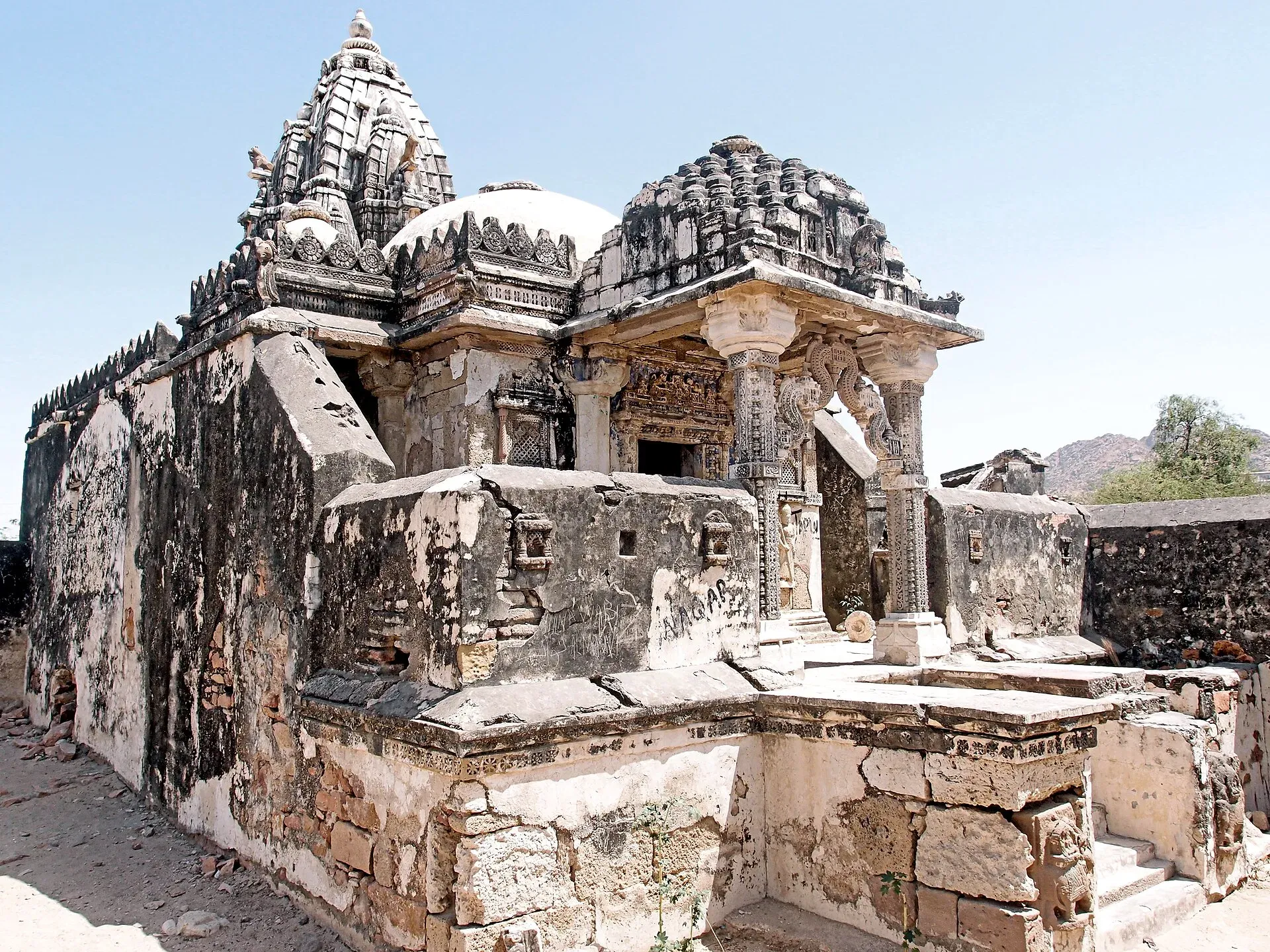
Photo: Saqib Qayyum, with thanks · CC BY-SA 3.0 · via Wikimedia Commons · temporary stand-in photo

Nagarparkar Jain Temples
Ruined Jain temples and a marble mosque around Nagarparkar in the Karoonjhar hills of Tharparkar, from about the 12th to 15th centuries. The Nagarparkar Cultural Landscape is on Pakistan's UNESCO tentative list (2016).
Overview
Nagarparkar is a small town in the far south-east of Sindh, at the foot of the Karoonjhar hills, in Tharparkar district. The area has several groups of abandoned Jain temples, a marble mosque with Jain-style domes and a Hindu pilgrimage temple, set in dry hills that turn green after rain. Most of the Jain buildings date from about the 12th to the 15th centuries. The Hindu community still uses some of the temples.
Plan your visit
- Nearest town
- Nagarparkar
- Getting there
Nagarparkar is about 131 km (about 2 hours) by road from Mithi (OSRM, checked 16 November 2026). There is no scheduled tourist transport; most visitors arrive by car or van from Mithi or Umerkot. More
Best months
Nov – Feb
The temples in brief
There are about 14 Jain temples in the area, mostly of the Svetambara tradition and built between roughly the 12th and 15th centuries. They stand in several groups: Gori, Bhodesar, Virawah and the town itself. The Gori temple is the largest and best known. Bhodesar has the oldest ruins and the mosque. The sections below take them in the order a visitor would usually drive them.
History
Nagarparkar was a Jain centre for centuries. A 1650 poem called the region the most glorious of all India. Changes in the coast and the Indus delta weakened the region's trade in the 19th century and many Jains moved away; the rest left after 1947 (Wikipedia).
UNESCO status
Pakistan's UNESCO tentative list includes the "Nagarparkar Cultural Landscape", added in 2016. It is not an inscribed World Heritage Site (checked against Wikipedia's list on 16 November 2026).
Gori Temple
Gori was built in 1375 to 1376 in the Gujarati style. It is of marble on a raised platform reached by carved stone steps, and measures about 125 by 60 feet. It has three mandapas (pillared halls), 52 small domes, finely carved marble pillars and a canopied entrance painted with Jain stories. Along the walls are 24 small cells, which may once have held images of the 24 Tirthankaras (the teachers of Jainism). Its frescoes are described as the oldest surviving Jain frescoes in northern India.
Gori was a major Jain pilgrimage place, and local Hindus also revere its image of Parshvanath. The image is reported to have disappeared in 1835, and British troops pursuing a Sodha chief are said to have damaged the temple. Distances to Gori are given inconsistently; ask locally.
Bhodesar temples and mosque
Bhodesar lies at the foot of the Karoonjhar hills, about 4 miles from Nagarparkar, and was the Sodha capital. Three ruined temples stand here. Two were used as cattle sheds, and the third was already in disrepair by 1897. The oldest is traditionally put in about the 9th century and is said to have been built without mortar by a Jain woman, Poni Daharo. It stands on a high platform with rock-cut steps and large carved columns, but its walls are unstable and partly collapsed, and local people took parts of it for building material. The two later temples, dated to 1375 and 1449, are of kanjur (a local stone) and red stone, with fine carving and corbelled domes. The Bhodesar Talao, a water tank, is nearby.
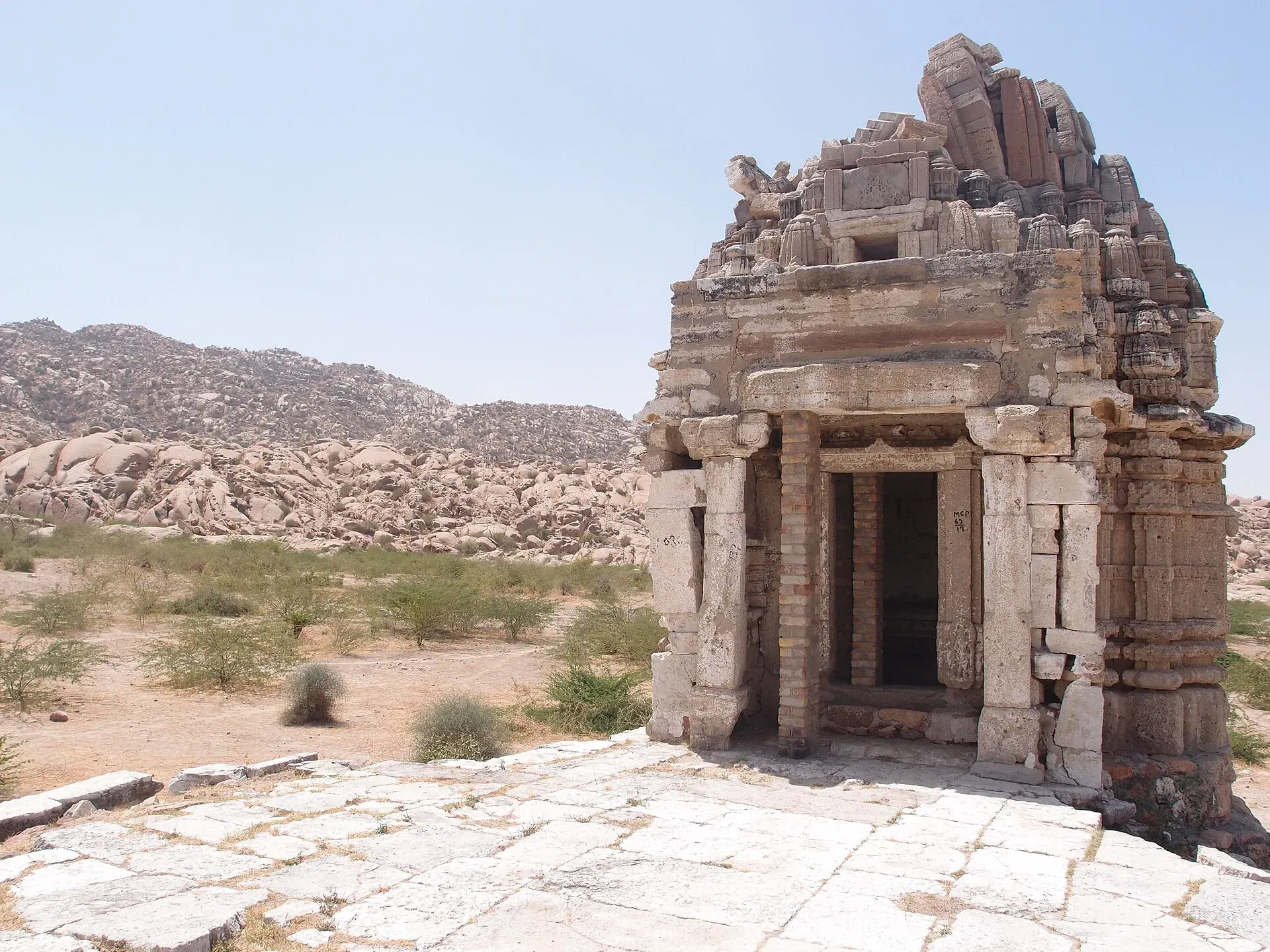
Photo: Saqib Qayyum, with thanks · CC BY-SA 3.0 · via Wikimedia Commons · temporary stand-in photo

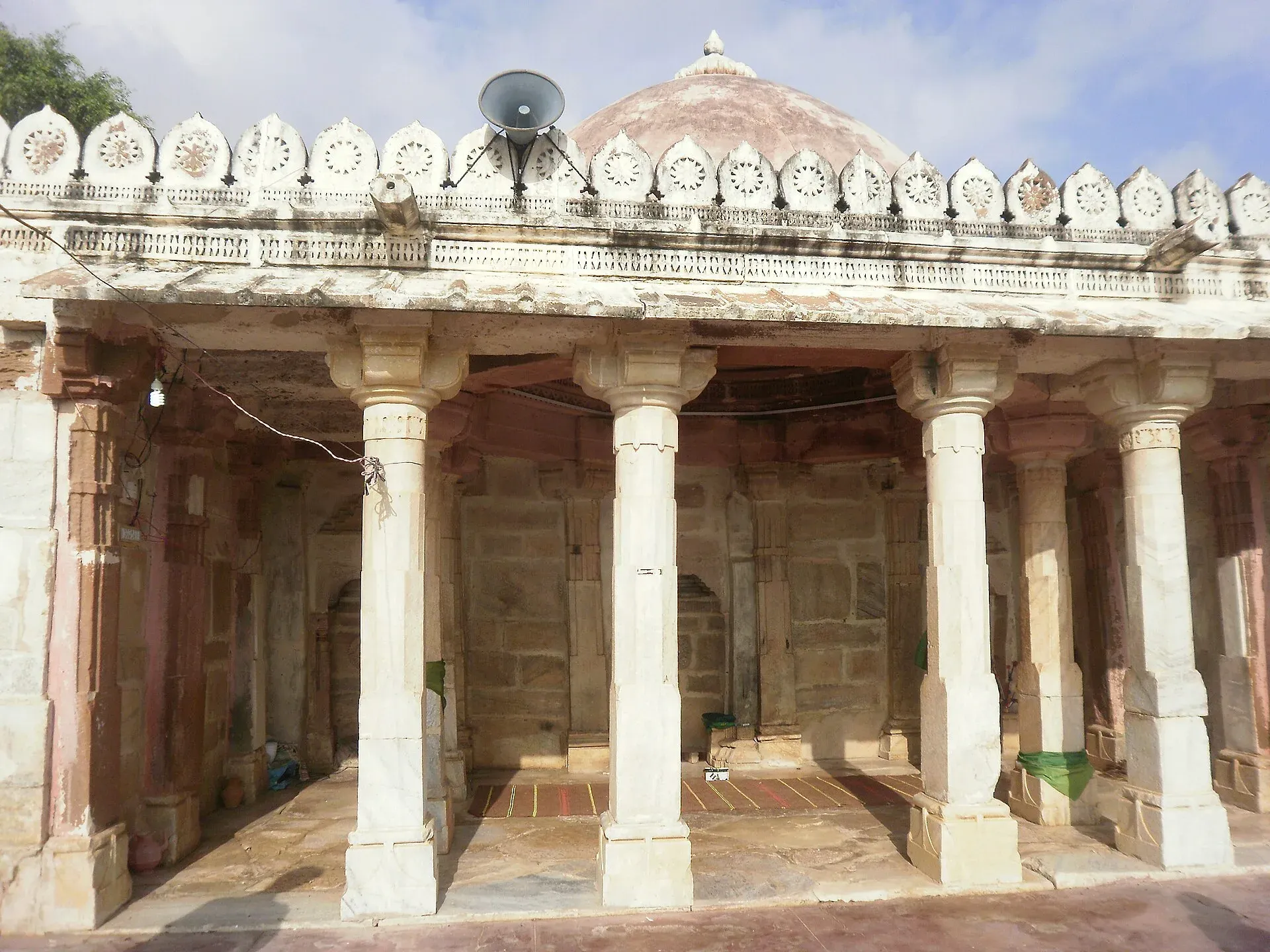
Photo: Rajdewaan, with thanks · CC BY-SA 4.0 · via Wikimedia Commons · temporary stand-in photo

The Bhodesar Mosque (1505) was built under Sultan Mahmud Begada of Gujarat. It is white marble, with a central dome on a square base about 9.2 m a side. Its dome, pillars and roofline borrow from the Jain temples nearby, which is the reason it is often described together with them.
What to see and do
- Virawah temples. Traditionally said to have been founded in 456 CE, near the ruins of the old seaport of Parinagar on the edge of the Rann of Kutch. Three temples once stood here. One white marble temple is well preserved and was in use in the British period. A finely carved marble block from another was moved to the museum in Karachi. The third, ruined, has 26 small domes around a central dome 18 feet across and carved stone pillars. Statues found during road building were placed in the abandoned temple or taken to the Umerkot museum. The village is about 21 km north of Nagarparkar by road (OpenStreetMap village point and OSRM, an optimistic estimate), which agrees with Wikipedia's 15 miles north. One Sindh antiquities page says about 24 km south, which does not match the map.
- Bazaar temple. A Jain temple in the main bazaar of Nagarparkar town, with intricate sculpture and paintings. Its shikhara (tower) and torana (gateway) are intact. It was used for worship until 1947 and possibly for some years after.
- Churrio Jabal Durga Mata Temple. A major Hindu temple whose Shivratri festival draws large crowds.
When to visit
November to February are the most comfortable months. Heat is severe from April to September, and the monsoon (July and August) can make dirt tracks hard to use.
Where to stay and eat
Nagarparkar has basic rest houses and simple restaurants. Bring water and snacks.
Good to know
- Protection. The temples are protected under the Antiquities Act 1975. The Endowment Fund Trust for Preservation of the Heritage of Sindh, founded in 2008, has carried out restoration with private funding. The oldest Bhodesar temple is unstable, so keep out of damaged structures.
- Etiquette. Many temples are used for worship. Remove shoes before entering, do not touch carvings or paintings, ask before photographing worshippers, and keep your voice low.
- Conservation. Wikipedia reports that quarrying near the hills threatens the temples and that visitor pressure has risen with new roads. Do not take stone fragments.
- Hours and fee. The Sindh antiquities pages list none. Current fees will be added soon; check with the Directorate General of Antiquities & Archaeology, Government of Sindh.
- Safety. Nagarparkar is not covered by the FCDO "against all travel" or "all but essential" lists (checked 16 November 2026), but it is near the Indian border. Read the live page before you go.
Highlights
- Gori Temple, 1375 to 1376, with old frescoes
- Bhodesar marble mosque of 1505
- Several groups of ruined Jain temples in the Karoonjhar hills
- Nagarparkar Cultural Landscape on the UNESCO tentative list (2016)
Getting there
Nagarparkar is about 131 km (about 2 hours) by road from Mithi (OSRM, checked 16 November 2026). There is no scheduled tourist transport; most visitors arrive by car or van from Mithi or Umerkot.
Tips
- Hire a local driver or guide with a high-clearance vehicle.
- Carry water and a hat.
- Remove shoes at working temples.
- Travel in winter.
Photos we still need: Gori Temple interior and frescoes; Virawah temples and the Karoonjhar hills landscape. Send us yours
Sources and last checked
Last checked Confidence medium10 sources4 still to check
- Last checked
- Method
- Desk research from published sources
- Confidence
- medium
- Checked by
- trek.pk research team
Researched from published sources; not yet checked on the ground by our team. Spot something out of date? Report a mistake.
Sources
- Gori Temple, Tharparkar and other Nagarparkar pages · Directorate General of Antiquities & Archaeology, Government of Sindh · checked
- Nagarparkar Jain temples · Wikipedia · checked
- Nagarparkar Tehsil · Wikipedia · checked
- Nagarparkar Cultural Landscape (tentative list entry) · UNESCO World Heritage Centre (search listing; page fetch blocked) · checked
- List of World Heritage Sites in Pakistan (tentative list table) · Wikipedia (UNESCO site whc.unesco.org returned HTTP 403) · checked
- Pakistan Tourism Guide 2021 · TDAP (Trade Development Authority of Pakistan) · checked
- OSRM driving route calculation · OSRM (OpenStreetMap routing) · checked
- Pakistan travel advice (warnings and insurance), updated 27 October 2026 · UK Foreign, Commonwealth & Development Office · checked
- Wirawah village (OpenStreetMap Nominatim) · OpenStreetMap · checked
- Nagarparkar Jain temples: temple-by-temple detail · Wikipedia (text read again) · checked
Still to be checked on the ground (4)
- Which temples are open to visitors (neither the Sindh antiquities pages nor Wikipedia say; Wikipedia warns that the oldest Bhodesar temple's walls are unstable)
- Exact dates of the Bhodesar temples (Wikipedia: 'said to' be 1375 CE and 1449 CE, oldest possibly 9th century; traditional attributions)
- Road conditions and any permission requirements near the Indian border (no source; FCDO does not name Nagarparkar)
- Check that the first photo shows Gori; its file name does not say which temple it is
Nearby and related

Mithi
The district headquarters of Tharparkar in Sindh, a Hindu-majority town in the Thar Desert and the practical base for Islamkot, Nagarparkar and the green desert after the monsoon.

Mirpur Khas
Sindh's City of Mangoes, founded by the Talpurs in 1806, with the Chitorri tombs and Buddhist-era remains, about 70 km east of Hyderabad.

Sindh
Pakistan's south-east: Karachi's beaches and markets, the Indus Valley city of Moenjodaro, Thatta's Makli tombs, Sufi shrines, the Thar desert and the Indus delta.