

Photo: Amjad Sheikh, with thanks · CC BY-SA 3.0 · via Wikimedia Commons · temporary stand-in photo

Pakistan Monument
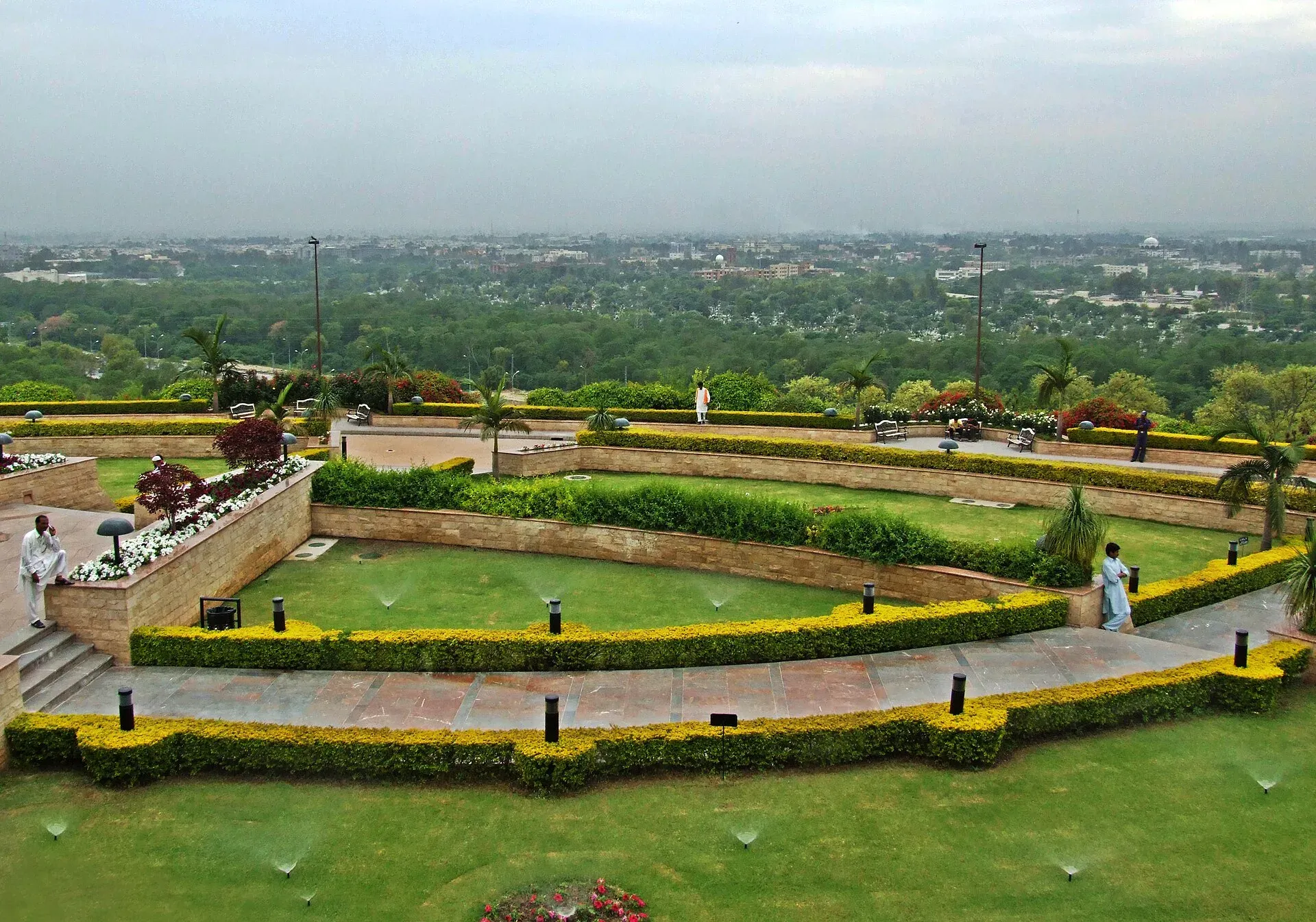
A petal-shaped national monument on Shakarparian Hill in Islamabad, opened in 2007, with a viewing platform over the city. The Pakistan Monument Museum stands beside it.
Overview
The Pakistan Monument is a national monument on the western part of the Shakarparian Hills in Islamabad, dedicated to the unity of the Pakistani people. It stands on high ground and can be seen across the Islamabad-Rawalpindi area. The Ministry of Culture owns it.
Plan your visit
- Nearest town
- Islamabad
- Getting there
The monument is on Shakarparian Hill, about 11 km and 9 minutes by road from central Islamabad (OSRM, 16 November 2026; our Shakarparian page). Taxis and ride-hailing cars drop you at the entrance. More
- Pakistan Monument
- Related places nearby: Pakistan Monument Museum, Shakarparian, Islamabad, Lok Virsa Heritage Museum
History
The government proposed a national monument in 2002. A design competition run by the Ministry of Culture drew 21 entries, and three were shortlisted. Arif Masoud's design was approved on 10 July 2003, the foundation stone was laid on 25 May 2004 and the structure was completed in 2006. President Pervez Musharraf inaugurated it on 23 March 2007.
The design
From above the plan looks like a blooming flower, and also like a star and crescent, echoing the flag. Four large petals and three smaller ones rise about 18 m, on a site of 2.8 hectares. The petals are granite and are cantilevered (held out from one side without support), among the largest such structures in Asia. The form is based on the muqarnas (stepped, honeycomb-like) motif of Mughal architecture, redone with modern construction methods.
The four large petals stand for the Punjabi, Baloch, Sindhi and Pashtun cultures, not for the four provinces, and the three small petals represent minorities, Azad Kashmir and Gilgit-Baltistan. A black granite star with gold stars represents those who died for Pakistan. The stainless-steel crescent carries writings by Muhammad Ali Jinnah and Allama Iqbal.
What to see and do
- Walk around the petals and look at the artwork on the inner walls. It shows landmarks such as the Lahore Fort, Badshahi Mosque, Khyber Pass and Minar-e-Pakistan, figures of the independence movement, and music and dance themes. One petal shows Muhammad Ali Jinnah and Fatima Jinnah.
- Look for the handprints of construction workers along the long walls beside Freedom Plaza, and the architect's name on the main dedication plaque.
- Use the viewing platform at the far end of Freedom Plaza for a view over Islamabad.
- Visit the Pakistan Monument Museum, linked to the monument by Freedom Plaza and run by Lok Virsa. It has a wax museum on the events leading to the Pakistan Movement, a reference library, an audio-visual archive and a 62-seat hall. See the museum page.
- Come at dusk, when the monument is lit.
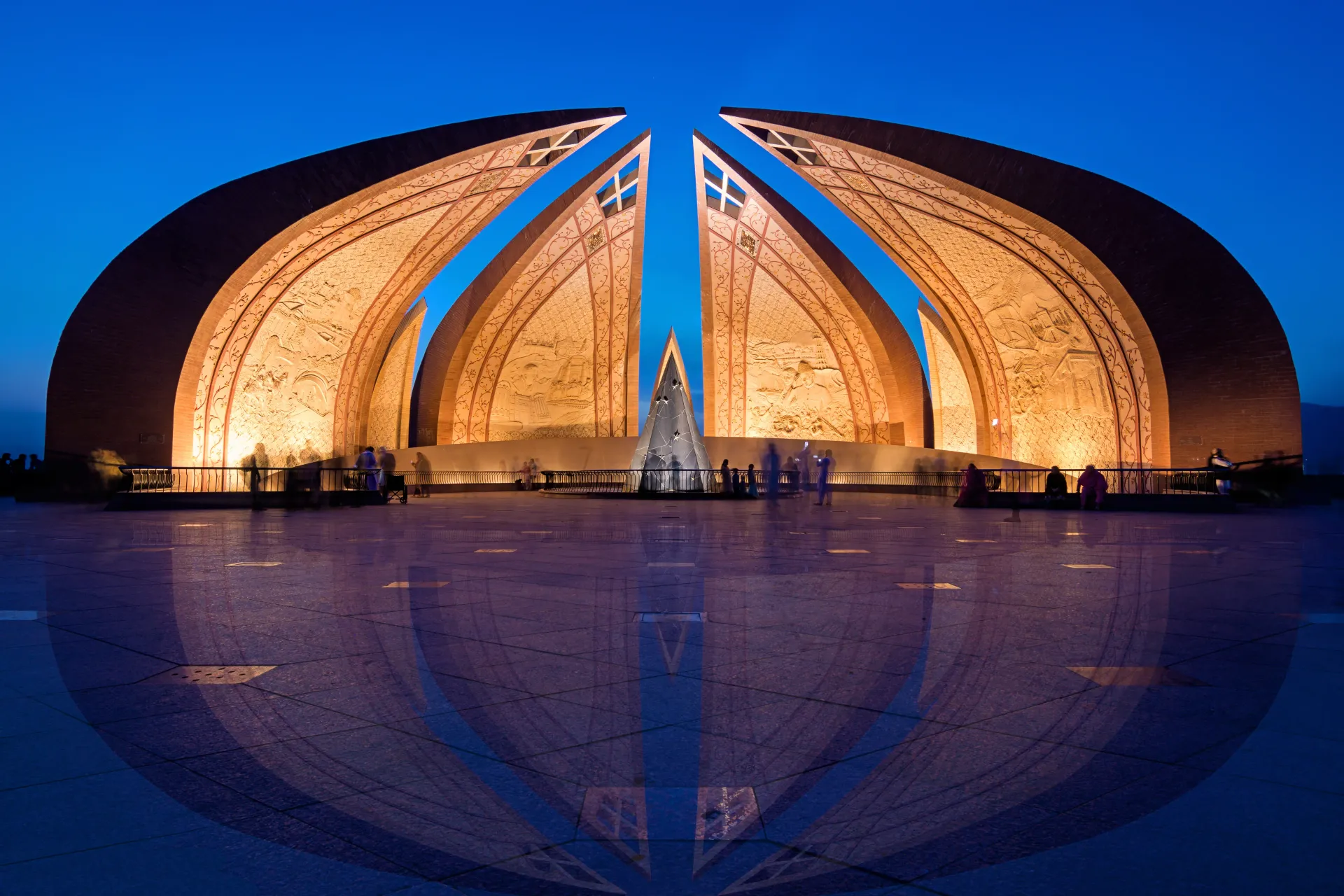
Photo: Muhammad Ashar, with thanks · CC BY-SA 4.0 · via Wikimedia Commons · temporary stand-in photo

When to visit
All year. Spring and autumn are the most pleasant, and summer afternoons are hot. Late afternoon gives softer light.
Good to know
- Fee and hours: Lok Virsa's Pakistan Monument Museum page (official site, undated; checked 18 November 2026) lists opening Tuesday to Sunday, 10 am to 7 pm, and these entry charges: local adults Rs 200, students Rs 100, foreigners Rs 2,000, SAARC or ECO delegates Rs 600 (the separate Lok Virsa Heritage Museum ticket lists Rs 1,000 for delegates, which is a different museum), children under 7 free. The page is undated, so confirm at the entrance. It is not explicit whether this covers the monument platform as well as the museum, so confirm on the day. Phone 051-9249200.
- Visitors: About 0.57 million visitors came in 2015 (about 1,500 a day) and 514,944 visits were recorded in 2018.
- Getting there: Shakarparian lies south-east of central Islamabad; taxis and ride-hailing cars drop you at the entrance.
- Respect: This is a national monument. Dress modestly and follow staff instructions.
- Nearby: Shakarparian, Lok Virsa Heritage Museum and the Islamabad city sights.
Highlights
- Petal-shaped monument, opened 23 March 2007
- Viewing platform over Islamabad
- Carved panels on the inner walls
- Next to the Pakistan Monument Museum
Getting there
The monument is on Shakarparian Hill, about 11 km and 9 minutes by road from central Islamabad (OSRM, 16 November 2026; our Shakarparian page). Taxis and ride-hailing cars drop you at the entrance.
Tips
- Combine with the museum next door.
- Go late in the afternoon for cooler air and better light.
- Check opening times and any fee before you go.
- Check the opening times and any entry fee before you go.
Photos we still need: the carved inner walls of the petals; the view from the viewing platform. Send us yours
Sources and last checked
Last checked Confidence medium2 sources2 still to check
- Last checked
- Method
- Desk research from published sources
- Confidence
- medium
- Checked by
- trek.pk research team
Researched from published sources; not yet checked on the ground by our team. Spot something out of date? Report a mistake.
Sources
- Pakistan Monument · Wikipedia · checked
- Pakistan Monument Museum · Lok Virsa · checked
Still to be checked on the ground (2)
- Whether the Lok Virsa fees and hours also apply to the monument platform itself (page is for the museum and undated)
- Security checks and photography rules (no source)
Nearby and related

Pakistan Monument Museum
A history museum beside the Pakistan Monument on Shakarparian Hill, Islamabad, run by Lok Virsa. It tells the story from ancient civilisations to the creation of Pakistan.

Shakarparian
A low hill and park near Zero Point in Islamabad. Its terrace at the Pakistan Monument gives easy views over the city to the Margalla Hills, best near sunset.

Islamabad
Pakistan's green, planned capital at the foot of the Margalla Hills: Faisal Mosque, hillside trails, cafes and the gateway to the north.

Lok Virsa Heritage Museum
Pakistan's national museum of ethnology on Shakarparian Hill, Islamabad, showing the crafts, costumes and living traditions of the country's peoples.