

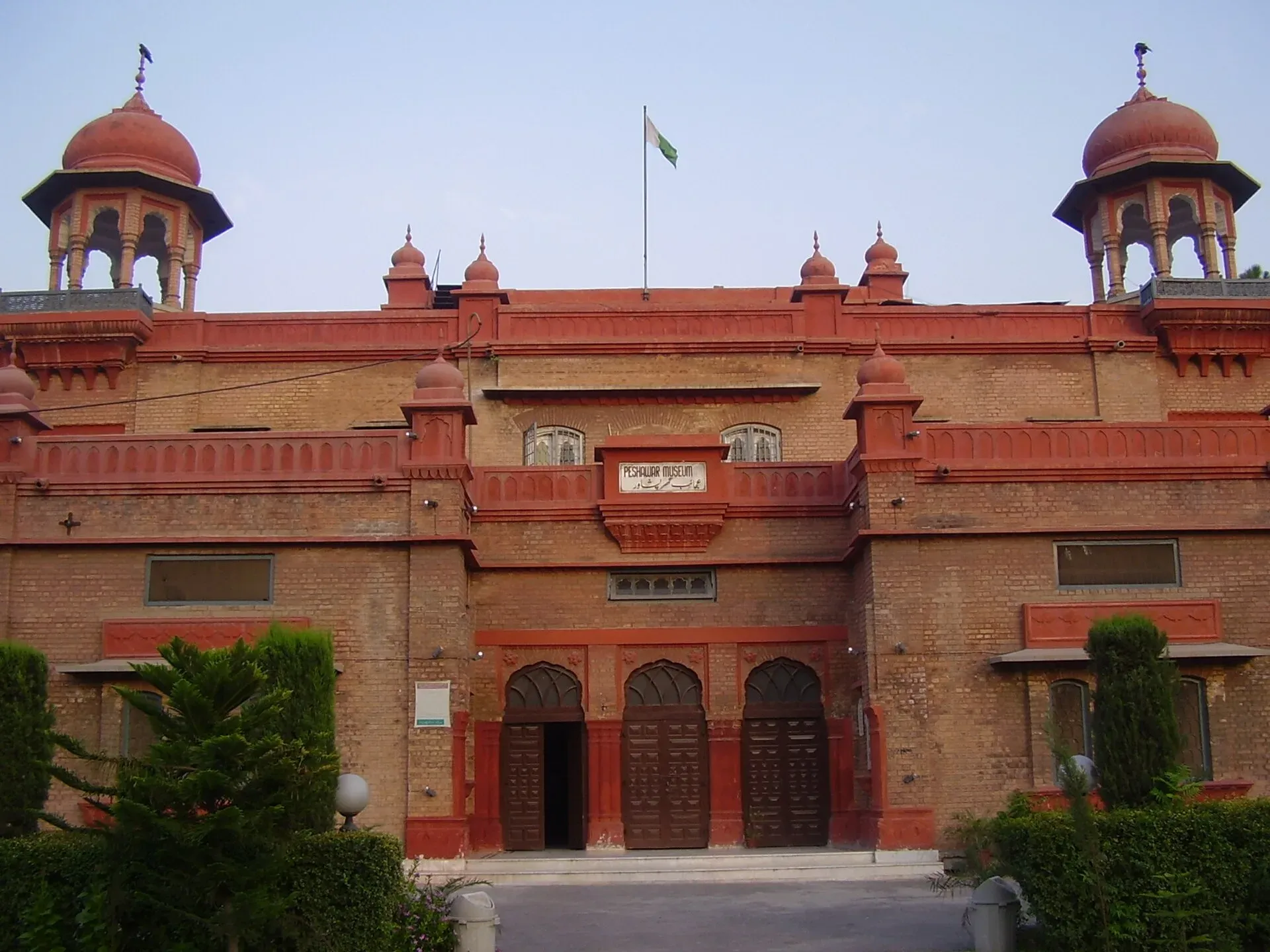
Photo: Khalid Mahmood, with thanks · CC BY-SA 3.0 · via Wikimedia Commons · temporary stand-in photo

Peshawar Museum
Founded in 1907 in the Victoria Hall, the Peshawar Museum holds one of the world's great collections of Gandharan Buddhist sculpture, plus coins, Islamic art and Kalash material.
Overview
The Peshawar Museum was built as a memorial to Queen Victoria and opened in November 1907, and it was formerly called Victoria Hall. The Directorate of Archaeology and Museums of Khyber Pakhtunkhwa, which runs it, says the main hall was built in 1906-07 for Rs 60,000. The people of the province paid Rs 45,000 of that and the Director General of Archaeology in India paid Rs 15,000.
Plan your visit
- Nearest town
- Peshawar
- Getting there
The museum is in Peshawar city. The Directorate's address is Jail Road, Civil Secretariat, Peshawar, but the page does not give a separate street address for the museum. Take a taxi or ride-hailing car within the city. More
Best months
Feb – Apr, Oct – Dec
- Peshawar Museum
- Related places nearby: Peshawar, Takht-i-Bahi and Sahr-i-Bahlol, Khyber Pakhtunkhwa
The building
The museum is a two-storey building that mixes British and Mughal styles, and Wikipedia adds Hindu and Buddhist elements. The original design had a main hall with two side aisles on the ground and first floors, topped by four cupolas and small pinnacles at the corners. Two halls were added in 1969-70, one on each side, and a second storey in 1974-75. In 2004-05 a new block added two galleries, two halls for stored collections, offices for the provincial archaeology directorate, a conservation laboratory and a cafeteria, and the historic hall was renovated.
What to see
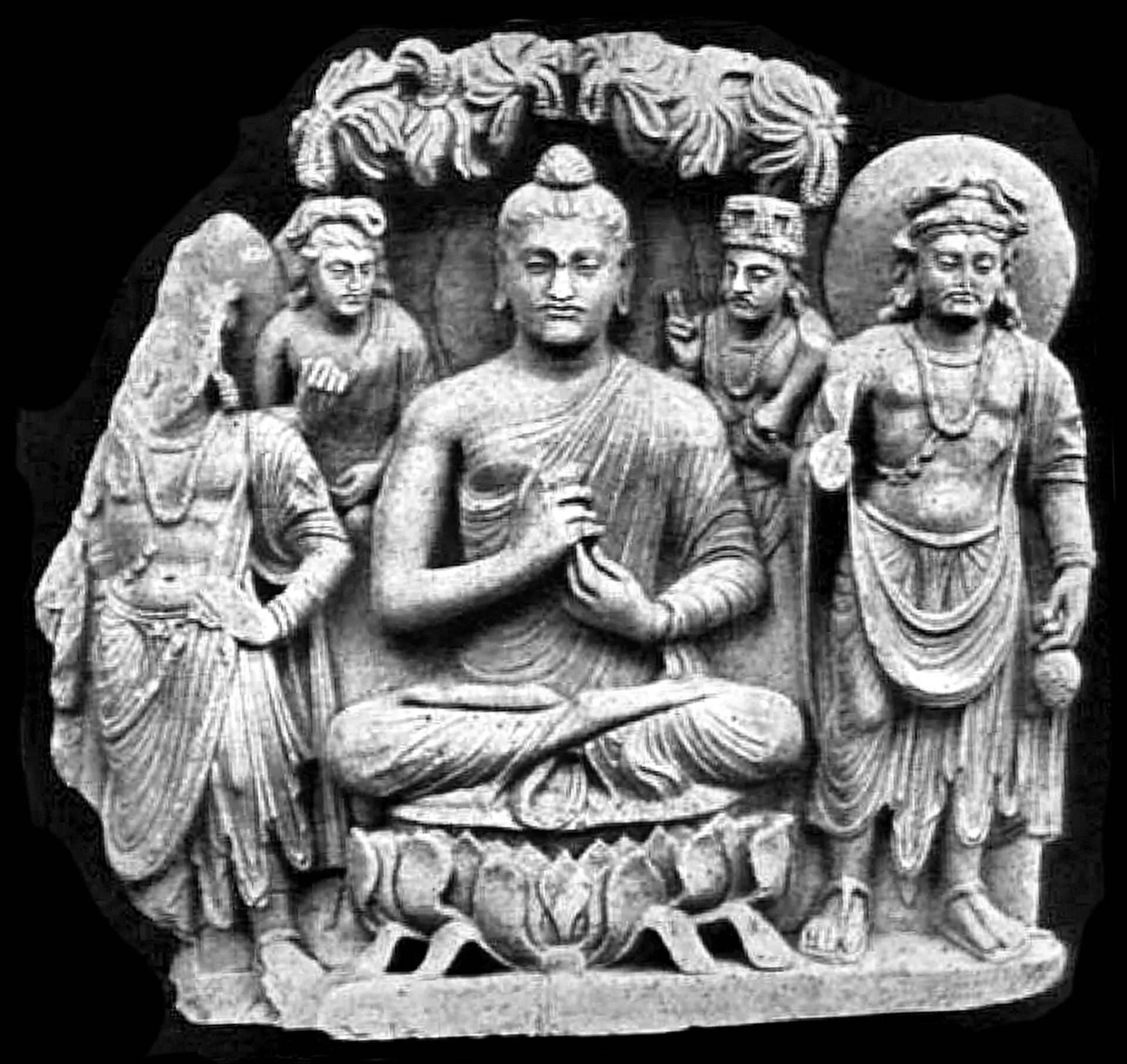
Photo: Peshawar Museum, 1930, with thanks · Public domain (CC0) · via Wikimedia Commons · temporary stand-in photo

The museum was set up to house Gandharan sculpture from Shah-ji-ki-Dheri in Peshawar, Sahri Bahlol and Takht-i-Bahi in Mardan district, and later finds from Jamal Garhi. Wikipedia describes the main collections:
- Gandharan and Greco-Buddhist art (main hall). Buddhist stone sculpture and terracotta figures, with scenes from the Buddha's life, miracles, relic caskets, a Buddhist triad and standing Buddhas and bodhisattvas.
- The Great Buddha of Sahri Bahlol. Excavated in 1909, it is said to weigh about 1.5 tonnes and stand about 3 m tall.
- Coins. Wikipedia gives 8,625 coins, 4,510 of them pre-Islamic, mostly from Shah-ji-ki-Dheri, Sahri Bahlol, Takht-i-Bahi and Jamal Garhi. Bactrian Greek, Indo-Greek, Indo-Scythian, Indo-Parthian and Kushan series have been published.
- Mughal and Persian Islamic gallery. Wooden mosque facades, Arabic and Persian inscriptions, Multani tiles and ceramics, bronze and silver metalwork, calligraphy and scrolls, the earliest dated 1224. Dress and weapons of the 19th-century leader Syed Ahmad Barelvi are also shown.
- Regional and tribal gallery. The culture of the tribes of Khyber Pakhtunkhwa, including the Kalash of the far north with their wooden figures, and weapons from swords and daggers to bows and muzzle-loading guns.
Wikipedia gives a collection of about 14,000 items, but the figure has no citation.
Reading Gandharan art
Gandharan art flourished from about the 1st century BC to the 5th century AD and is believed to have produced the first human images of the Buddha (Wikipedia). Look for a Buddha in a heavy robe like a Greek himation, with wavy hair tied in a topknot, and for guardian figures resembling Herakles holding a club, who stand for Vajrapani, the Buddha's protector. Sculptors worked in grey schist and in stucco. Many pieces show Kushan or Greek-dressed devotees. The Kushan empire patronised the art.
History
Peshawar Municipality ran the museum from 1907, with the Superintendent of the Archaeological Survey's Frontier Circle as curator. A full-time curator was appointed in 1927. A Board of Governors took over in 1971 and, since 1992, the museum has been part of the provincial Directorate of Archaeology and Museums.
How to spend a visit
An honest outline built from the galleries above: start in the main hall with the Gandharan sculpture, including the Great Buddha, then see the coin collection, then the Islamic gallery, and finish in the tribal gallery with the Kalash figures. The sculptures come from sites in Mardan; see Takht-i-Bahi and Sahr-i-Bahlol. The old city is described on the Peshawar page.
When to visit
Spring and autumn are comfortable. The museum is inside the city, so conditions on the ground matter more than the season (see below).
Where to stay and eat
Peshawar has hotels and the city's famous food streets. Because of the travel advice below, plan any stay carefully.
Good to know
- Ask the district administration or local police about current conditions before you go. Travel advice: For foreign visitors: the UK FCDO (updated 27 October 2026, still current when checked on 16 November 2026) advises against all travel to Peshawar, including the city. It also notes emergency measures and Governor's Rule in Khyber Pakhtunkhwa since 11 October 2026, with road closures, disruption to transport and internet, and heightened security. Check the current FCDO page and local news before any travel, and confirm the museum is open.
- Opening days: APP reported that the Directorate would keep the museum open seven days a week (the article is datelined 7 November and its image path points to November 2024, but it states no year). No official hours were found.
- Tickets and photography: not found on an official source. Current fees will be added soon.
- Contact: Directorate of Archaeology and Museums, 0092-91-9211488 or info.archaeology@kp.gov.pk.
- Related sites: Takht-i-Bahi and Sahr-i-Bahlol, which supplied many of the sculptures, are in Mardan district (the FCDO advises against all but essential travel to Mardan).
Highlights
- Opened 1907 as Victoria Hall
- Gandharan sculpture from Takht-i-Bahi, Sahri Bahlol and Jamal Garhi
- Great Buddha of Sahri Bahlol (excavated 1909)
- Coins, Islamic art and Kalash gallery
Getting there
The museum is in Peshawar city. The Directorate's address is Jail Road, Civil Secretariat, Peshawar, but the page does not give a separate street address for the museum. Take a taxi or ride-hailing car within the city. Check security and road conditions before you travel, because of the FCDO advice.
Tips
- Check the FCDO page and local news before any travel to Peshawar.
- Confirm opening days: reports say seven days a week but no hours were found.
- Takht-i-Bahi is in Mardan district, which the FCDO also lists; check its advice before planning that trip.
Photos we still need: the Great Buddha of Sahri Bahlol; the Kalash or Islamic gallery displays. Send us yours
Sources and last checked
Last checked Confidence medium6 sources5 still to check
- Last checked
- Method
- Desk research from published sources
- Confidence
- medium
- Checked by
- trek.pk research team
Researched from published sources; not yet checked on the ground by our team. Spot something out of date? Report a mistake.
Sources
- Peshawar Museum (official page) · Directorate of Archaeology and Museums, Khyber Pakhtunkhwa · checked
- Peshawar Museum · Wikipedia · checked
- Peshawar Museum to remain open 7 days in week · Associated Press of Pakistan (APP) · checked
- Foreign travel advice: Pakistan (updated 27 October 2026) · UK Foreign, Commonwealth & Development Office (FCDO) · checked
- Pakistan Tourism Guide 2021 (museums list) · Trade Development Authority of Pakistan (TDAP) · checked
- Gandharan Buddhist art · Wikipedia · checked
Still to be checked on the ground (5)
- Opening days and hours; ticket price (APP: open seven days a week; no hours or price on the Directorate page or Wikipedia)
- Whether the museum is currently open given the security situation (FCDO advises against all travel to Peshawar; no museum notice found)
- Collection size (about 14,000 is uncited on Wikipedia; the Directorate page gives none)
- Coin counts (8,625, of which 4,510 pre-Islamic, uncited on Wikipedia; the Directorate page gives none)
- Museum street address (the Directorate page lists only the Directorate's address, Jail Road, Civil Secretariat)
Nearby and related

Peshawar
Khyber Pakhtunkhwa's capital and one of South Asia's oldest living cities: the Gandhara museum, Qissa Khwani Bazaar, mosques and a strong food culture.

Takht-i-Bahi and Sahr-i-Bahlol
A hilltop Buddhist monastery near Mardan, founded in the early 1st century CE, with the ruins of a small walled town at Sahr-i-Bahlol. UNESCO World Heritage Site since 1980.

Khyber Pakhtunkhwa
Mountains, Buddhist ruins and old bazaars in north-west Pakistan: Swat, Kaghan, Chitral, the Kalash valleys, the Khyber Pass and Peshawar.
Bannu Museum
An archaeology and ethnology museum in Bannu, opened in 2011, with protohistoric finds, Islamic manuscripts and tribal heritage. The UK FCDO advises against all travel to Bannu.