

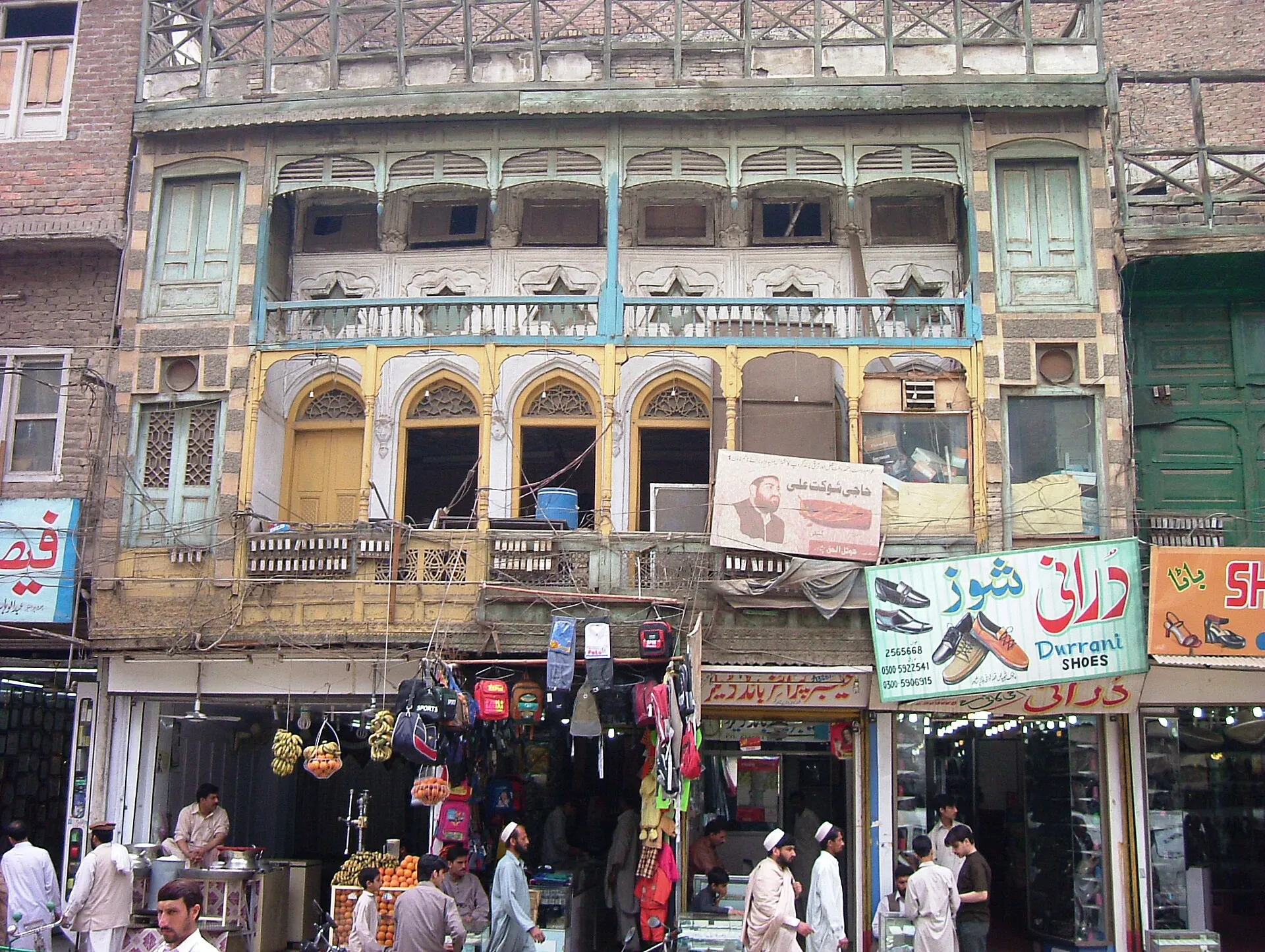
Photo: franek2, with thanks · CC BY-SA 3.0 · via Wikimedia Commons · temporary stand-in photo

Khyber Pakhtunkhwa
Mountains, Buddhist ruins and old bazaars in north-west Pakistan: Swat, Kaghan, Chitral, the Kalash valleys, the Khyber Pass and Peshawar.
Overview
Khyber Pakhtunkhwa (KP) runs along Pakistan's north-western edge, from the plains around Peshawar to the Hindu Kush and Hindu Raj ranges, and borders Afghanistan, Gilgit-Baltistan, Punjab, Balochistan and Azad Kashmir. It covers about 101,741 square kilometres and is the third most populous province, with 40.9 million people at the 2023 census (40,856,097). Its landscape swings from fruit orchards to alpine lakes and 7,000 m peaks, with Tirich Mir (7,708 m) the highest in the Hindu Kush. The old North-West Frontier Province took its present name on 15 April 2010, and in May 2018 the former tribal areas were merged into the province.
Plan your visit
- Getting there
To the hills. Islamabad to Abbottabad takes about 1.5 hours by motorway (M-1 and Hazara Motorway M-15). Mansehra, Balakot and Naran follow along N-15 and take another 5 to 6 hours to Naran in total. More
Best months
Apr – Jun, Sep – Oct
- Khyber Pakhtunkhwa
- Related places nearby: Peshawar, Takht-i-Bahi and Sahr-i-Bahlol, Khyber Pass
Regions at a glance
The province is run through seven divisions. Each has a different feel.
- Peshawar division (headquarters Peshawar) holds the provincial capital, the Valley of Peshawar and the Khyber side of the border. Charsadda was the site of Pushkalavati, an ancient capital of Gandhara. The Peshawar basin has hot summers, cold winters and moderate rainfall.
- Mardan division is the home of the Takht-i-Bahi Buddhist monastery ruins (UNESCO).
- Malakand division (headquarters Saidu Sharif) covers Swat, Dir and Chitral. Swat, Dir and Chitral hold most of the province's mountain valleys. Chitral is the most sheltered from the monsoon: the Nanga Parbat massif blocks much of the rain, so the climate is closer to Central Asia, with heavy winter snow that closes passes.
- Hazara division (headquarters Abbottabad) covers Abbottabad, Mansehra and the Kaghan Valley. It is the closest hill country to Islamabad and takes the full force of the monsoon, with parts of Abbottabad and Mansehra receiving up to about 1,750 mm of rain a year.
- Kohat, Bannu and Dera Ismail Khan divisions lie in the drier south. Dera Ismail Khan is among the hottest places in the country, with summer temperatures reaching about 50 °C. These divisions see few visitors.
Eight of Pakistan's 37 national parks are listed for the province. Ayubia (Galyat), Saiful Muluk and Lulusar-Dudipatsar (Kaghan), Chitral Gol and Broghil Valley (Chitral) are the ones most useful to travellers.
What it is best for
- Easy mountain escapes from Islamabad: Galyat hill stations, Kaghan, Swat and Dir.
- Buddhist and Gandhara heritage: Takht-i-Bahi and nearby Sahr-i-Bahlol, Butkara and Bhamala are among the finest ancient sites in the country.
- Old city life: Peshawar is among the oldest living cities in South Asia.
- Culture: the Kalash valleys of Chitral have a distinct religion and festivals.
- Trekking and lakes: Saiful Muluk, Lulusar, Dudipatsar and the Kumrat valley.
Top places
- Swat Valley (Mingora, Madyan, Bahrain, Kalam, Utror): rivers, waterfalls and a Buddhist past.
- Kaghan Valley (Balakot, Naran, Saiful Muluk, Babusar Top).
- Galyat (Nathia Gali, Ayubia, Thandiani) and Abbottabad.
- Chitral and the Kalash valleys of Bumburet, Rumbur and Birir.
- Kumrat and Upper Dir: deodar forest, meadows and waterfalls.
- Peshawar: Bala Hisar Fort, Mahabat Khan Mosque, Peshawar Museum.
- Khyber Pass and the Takht-i-Bahi region around Mardan.
A short history
Ancient Gandhara, centred on the Peshawar valley and Swat, became known for its Buddhist art. Alexander the Great crossed the Hindu Kush in 327 BCE. Ashoka's rock edicts at Shahbazgarhi and Mansehra date from the Mauryan period, and Kanishka of the Kushan empire made Peshawar his capital. Babur took Peshawar and Kohat in the early 1500s, and the Mughal governor Mohabbat Khan founded Peshawar's best-known mosque in 1630. Ranjit Singh's Sikh forces took Peshawar in 1818. The British defeated the Sikhs in 1849 and created the North-West Frontier Province in 1901. The Chitral campaign of 1895 had brought Chitral under British influence.
When to go
Hill areas are best from late April to October. Kaghan and upper Swat are busiest in June and July. Peshawar and the plains are hot in summer and pleasant from October to March. Winter brings snow to Malam Jabba and Galyat, good for short visits, but higher roads can close.
Getting around
Main roads are good, with motorways reaching Swat and Hazara. Beyond them, expect narrow hill roads, so allow extra time. Roads in the monsoon and after snow need caution.
Permits and rules for visitors
- Pakistani visitors do not need permits for the main tourist valleys.
- Foreign visitors need a valid visa. Rules about prior permission (NOC) have changed several times. A 2019 Ministry of Interior notification (Dawn, 26 March 2019) ended the NOC requirement for Chitral, but KP's tourism department then launched an online NOC system for foreign tourists to Upper Dir, Chitral, Swat and other northern areas, through its portal and KP Tourism app (Dawn, 12 July 2025; Daily Times, 14 July 2025). A Senate committee was told in May 2026 that foreign tourists must get an NOC before visiting Chitral (Express Tribune, 6 May 2026). As of November 2026 no later notice has been found, so expect to need an NOC and apply through KP Tourism or a registered operator before you go.
- The Kalash valleys and some protected areas charge visitor fees. Current fees will be added soon.
- Some treks and peaks in Chitral are in restricted or special-permission zones.
People, culture and food
Most people speak Pashto, with Hindko in Hazara, Khowar in Chitral and Kohistani languages in Swat and Dir Kohistan. Pashtun tribal chiefs remain influential, and hospitality towards guests is a strong tradition. In Chitral, polo is played on high-altitude grounds, and the Kalash celebrate Chilimjusht (spring), Uchau (autumn) and Chaumos (winter). Visitors should be respectful, ask permission before photography and avoid intrusive behaviour at Kalash festivals.
Four main ethnolinguistic groups live in the province: Pashtuns, Hindkowans, Saraikis and Kohistanis, with about a third of the population non-Pashtun, mainly in the north. Languages include Pashto, Hindko, Saraiki, Kohistani, Gujari, Khowar, Shina and Kalasha. Urdu and English are official.
Food is meat-focused. Chapli kebab, a flat beef patty shaped like a sandal sole, is the signature dish of Peshawar. Charsi tikka, karahi and tikka are served by weight in the restaurants of Namak Mandi in Peshawar; Peshawari namkeen karahi and kabuli pulao are other well-known dishes. Qissa Khwani bazaar is known for faluda. Kahwa, a green tea usually served sweet, is the standard drink, and sharbat-e-sandal is a cold summer drink. Swat is known for fresh trout and Chitral for walnut dishes and chapshuro.
Safety
KP has seen security incidents, especially in border and southern districts. Swat, Kaghan and Chitral are widely visited, but conditions change. Check your embassy's advice, local news and the district police before you travel. Other hazards are landslides, flash floods (as in 2010 and 2022), river crossings at jeep fords and cold at altitude. Do not swim in fast rivers.
For foreign visitors: the UK FCDO advises against all travel to Peshawar (including the city), Swat, Buner, Kohat, Khyber, Charsadda, Upper Dir, Lower Dir and other districts it lists, on the N-45 to the edge of Chitral city (including the Kalash valleys) and on the Karakoram Highway between Mansehra and Chilas. It advises against all but essential travel to Malakand, Mardan, Nowshera, Shangla and Swabi. It also notes emergency measures and Governor's Rule in Khyber Pakhtunkhwa since 11 October 2026 (advice updated 27 October 2026, checked 16 November 2026). Read the live advice before you plan.
Highlights
- Swat and Kalam: green valleys, rivers and waterfalls
- Kaghan Valley, Naran and Saiful Muluk
- Chitral and the Kalash valleys beneath Tirich Mir
- Gandhara Buddhist sites such as Takht-i-Bahi (UNESCO)
- Peshawar's Qissa Khwani bazaar, forts and museum
Getting there
To the hills. Islamabad to Abbottabad takes about 1.5 hours by motorway (M-1 and Hazara Motorway M-15). Mansehra, Balakot and Naran follow along N-15 and take another 5 to 6 hours to Naran in total.
To Swat. The M-1 and M-16 Swat Motorway reach Chakdara in about three hours from Islamabad, then N-95 continues to Mingora, Madyan and Kalam.
To Chitral. Chitral can be reached from Peshawar via Dir and the Lowari Tunnel (main tunnel about 8.5 km, plus a second 1.9 km tunnel; open since 2017), or by air from Islamabad when flights operate (Wikipedia says PIA announced in March 2025 that it would resume a weekly Islamabad-Chitral flight from 5 April 2025 after about three years; it has not been confirmed that it is running now). Chitral Airport is domestic and service has been intermittent. Road journeys take 8 to 10 hours. Note that the UK FCDO advises against all travel on the N-45 to the edge of Chitral city.
To Peshawar. Peshawar is about 2 to 2.5 hours from Islamabad by M-1. It has Bacha Khan International Airport and a railway station.
Local buses and shared vans link towns; jeeps are needed for upper valleys such as Kumrat and Saiful Muluk. Check current options locally.
Tips
- Check road and security news for your exact district the day before travel.
- Kaghan above Naran and Babusar Top are closed by snow in winter; ask locally before you leave Naran.
- Dress modestly in towns and villages; women travellers often find a headscarf useful in Chitral and Swat.
- Monsoon rain (July to August) can cause floods and landslides; avoid riverbank camping.
- Carry your passport or CNIC for checkpoints.
Sources and last checked
Last checked Confidence medium13 sources3 still to check
- Last checked
- Method
- Desk research from published sources
- Confidence
- medium
- Checked by
- trek.pk research team
Researched from published sources; not yet checked on the ground by our team. Spot something out of date? Report a mistake.
Sources
- Pakistan Tourism Guide 2021 · Trade Development Authority of Pakistan (TDAP) · checked
- Khyber Pakhtunkhwa · Wikipedia · checked
- Takht-i-Bahi and Neighbouring City Remains at Sahr-i-Bahlol · UNESCO World Heritage Centre · checked
- Lowari Tunnel · Wikipedia · checked
- Khyber Pakhtunkhwa tourism information · Khyber Pakhtunkhwa Culture and Tourism Authority · checked
- 2023 census of Pakistan (provincial populations) · Wikipedia · checked
- NOC requirements for foreigners visiting Pakistan abolished (26 March 2019) · Dawn · checked
- KP launches online NOC system for foreign tourists (14 July 2025) · Daily Times · checked
- Senate panel flags hurdles to Chitral tourism (6 May 2026) · The Express Tribune · checked
- List of airports in Pakistan · Wikipedia · checked
- Chitral Airport · Wikipedia · checked
- Khyber Pakhtunkhwa · Wikivoyage · checked
- Online NOC for foreign tourists launched (12 July 2025) · Dawn · checked
Still to be checked on the ground (3)
- Chitral flight availability now (March 2025 PIA announcement per Wikipedia; no current schedule seen)
- Fee amounts for Kalash valleys and parks (not published here; kptourism.com home page lists none)
- Scope of the KP NOC (trekking, Kalash valleys); the KP Tourism portal itself has not been opened ('Register as Foreign Tourist' page on kptourism.com)
Nearby and related

Swat Valley
A long green river valley in northern Khyber Pakhtunkhwa, with Gandhara Buddhist sites, orchards, hill towns and the road up to Kalam. Check the current security advice before you plan a trip.

Kaghan Valley (with Naran)
A 155 km Himalayan valley above Balakot along the Kunhar River, with Shogran, Naran, Saiful Muluk and Lulusar lakes, and the road to Babusar Pass. Open mainly from May to October.

Chitral
The main town of Lower Chitral District, at about 1,500 m on the Chitral River, with a historic fort, a royal mosque and views of Tirich Mir. The base for the Kalash valleys.

Kalash Valleys (Bumburet, Rumbur, Birir)
Three side valleys of the Chitral River, home to the Kalasha people, who keep their own religion, language and festivals. Visit with respect and check security advice first.

Peshawar
Khyber Pakhtunkhwa's capital and one of South Asia's oldest living cities: the Gandhara museum, Qissa Khwani Bazaar, mosques and a strong food culture.

Kumrat Valley
The upper Panjkora valley in Upper Dir, known for deodar forest, the Jahaz Banda meadow and Katora Lake. Access has been cut by floods and a collapsed bridge in 2025 and 2026.

Saiful Muluk
The best-known lake of the Kaghan Valley, at 3,224 m above Naran, with Malika Parbat behind it. It is about 9 km from Naran, reached by jeep, and is snowbound and frozen in winter.

Takht-i-Bahi and Sahr-i-Bahlol
A hilltop Buddhist monastery near Mardan, founded in the early 1st century CE, with the ruins of a small walled town at Sahr-i-Bahlol. UNESCO World Heritage Site since 1980.

Khyber Pass
The historic 40 km pass from Jamrud to Landi Kotal and the Afghan border, used by invaders and traders for thousands of years. Today the area is under an FCDO all-travel warning and Torkham is closed.

Naran
The main base of the Kaghan Valley, at 2,409 m beside the Kunhar River. Naran is the starting point for Saiful Muluk, Lulusar and the road to Babusar Top.

Naran, Kaghan and Babusar
A 4-day summer road trip from Islamabad up the Kaghan valley to Naran, Saiful Muluk and Lulusar Lake, over Babusar Pass (4,173 m) to Chilas on the KKH.

Swat and Kalam
A 4-5 day road trip from Islamabad up the Swat valley by the M-16 and N-95 to Mingora, Madyan, Bahrain and Kalam, with Mahodand Lake and Ushu forest in summer.

Chitral and Kalash
A 6-7 day road trip from Islamabad to Chitral through Dir and the Lowari Tunnel, with the Kalash valleys of Bumburet, Rumbur and Birir, Chitral Fort and Tirich Mir views.