

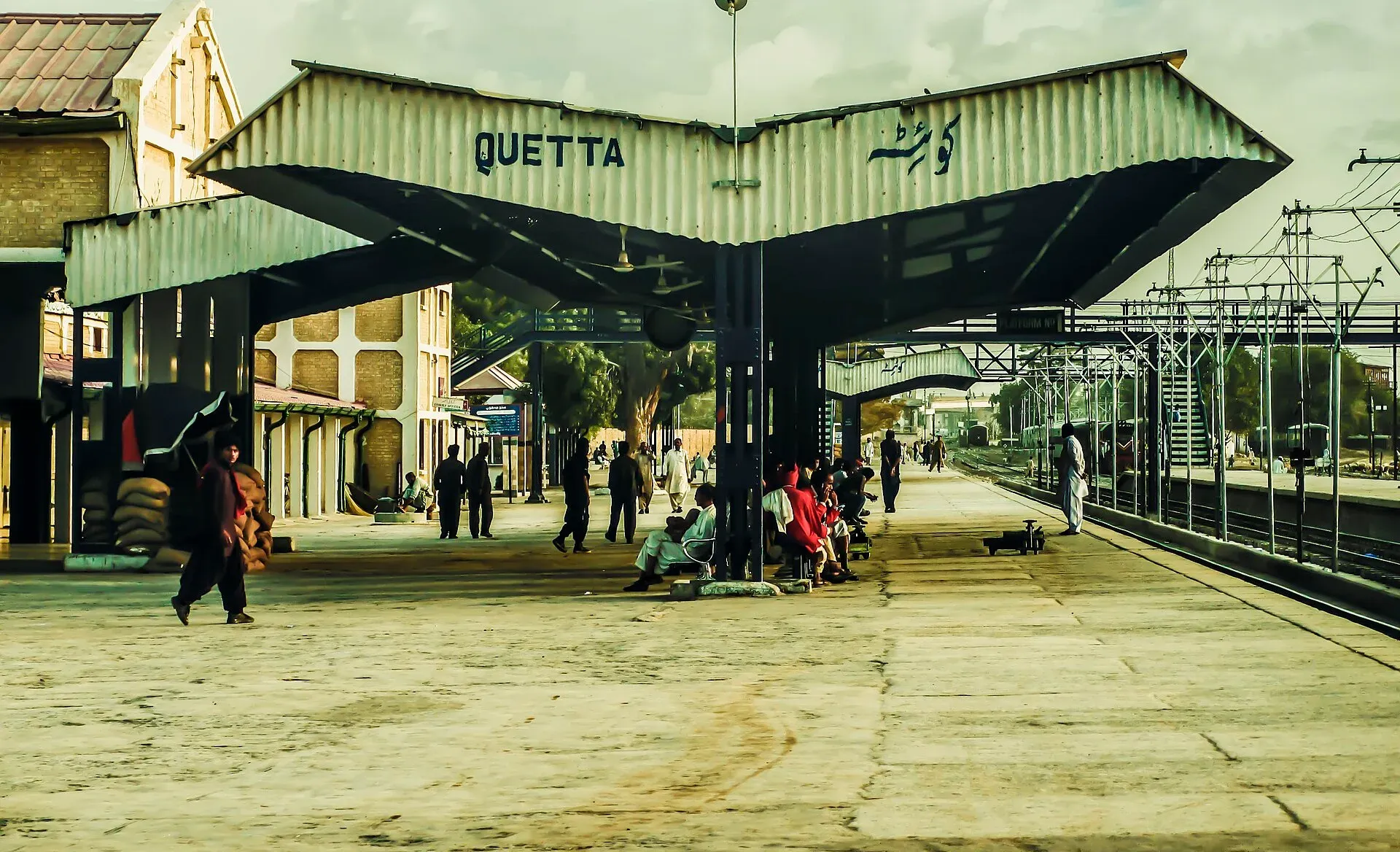
Photo: M.irfan44, with thanks · CC BY-SA 4.0 · via Wikimedia Commons · temporary stand-in photo

ML-4 Quetta-Taftan Line (Spezand to the Iranian border)
ML-4 is the Trans-Baluchistan line from Quetta and Spezand through Nushki, Dalbandin and Nok Kundi to Koh-e-Taftan on the Iranian border. There is no known regular passenger train in 2026.
The journey
Last verified: 16 November 2026.
Overview
ML-4 is the Trans-Baluchistan Railway, the line from Quetta and Spezand Junction west to the Iranian border at Koh-e-Taftan. Wikipedia counts it from Spezand and gives 632 km, while the Quetta to Taftan page gives 732 km in its lead and 757 km in its headline figure for the whole line to Zahedan, and its route map puts Koh-e-Taftan at 637 km from Quetta and the Iranian border station of Mirjaveh at 663 km. The sources do not agree, so treat the length as about 630 to 640 km to the border.
The line is broad gauge on the Pakistan side. Quetta to Nushki opened on 15 November 1905. The extension to Duzdap, now Zahedan, was finished on 1 October 1922. The section from Nok Kundi to Duzdap was closed in 1931 and the Quetta to Zahedan link was reopened on 20 April 1940. Operating speed is listed at only 20 km/h.
Building the line
A short account from one history article (Pakistaniat) gives these dates. Quetta was linked by rail in 1886, and the Spezand to Nushki section opened on 15 November 1905. Work on the Nushki Extension Railway west of Nushki began in September 1916. Nushki to Dalbandin opened on 1 February 1917, Dalbandin to Mirjawa (the first Iranian station) on 1 October 1920, and Mirjawa to Duzdap, now Zahedan, on 1 October 1922. The article says the war aim was a strategic link between India and Persia, and that the railway took over India-Persia trade from camel caravans from 1923. The Nok Kundi to Zahedan section, 221 km, closed in July 1931 and its track was lifted in 1932. The article dates the reopening to 1940 in one place and 1942 in another, so the exact year is uncertain. It also says Pakistan handed track upkeep inside Iran to Iran in 1967 and that by 2007 service had fallen to one fortnightly train.
Stations
The stops list gives distances from Quetta. The main stops are Spezand Junction, Nushki, Ahmedwal, Dalbandin, Nok Kundi and Koh-e-Taftan. Several small stations on the route map are marked abandoned.
Photo: laibaimran003, with thanks · CC BY-SA 4.0 · via Wikimedia Commons · temporary stand-in photo

Trains
We have not confirmed a regular passenger train on ML-4 in 2026. The Zahedan Mixed Passenger ran between Quetta and Zahedan twice a month and is listed in the past tense. An older source describes passenger train 403UP/404DN as the former Taftan Express. A Dunya News report of 19 January 2018 said a joint expert committee agreed in principle that a fortnightly Pakistan to Iran passenger train could restart, with no date given, and there is no known sign that it did. Pakistan Railways' official site does not list a Taftan service in its dining-car list.
Status and upgrade
Plans to rebuild the track and lay a new line have been announced since at least 2019. A 2018 report talked of replacing track and converting 183 dips into bridges. There is no known report of construction in 2026. Several 2026 Quetta suspensions affect trains on the ML-3 side of Spezand, not on the Taftan line itself.
Stations along the line
- Quetta is the start, at about 1,680 m, on the plateau.
- Spezand Junction is where the ML-4 leaves the ML-3, 25 km from Quetta by the stops list.
- Nushki (about 880 m) is a town in Nushki District with 48,572 people at the 2023 census, set in flat desert that runs towards the Helmand River. Wikipedia notes it was a starting point for British survey journeys towards Persia and Herat in the early 1800s.
- Dalbandin (843 m) is the headquarters of Chagai district. Wikipedia describes a hot desert climate with little rain (about 85 mm a year), occasional sandstorms, and a reputation for fruit orchards. The railway station is in the town centre. The history article mentions a loco shed and British-era buildings.
- Nok Kundi is where the line passed on towards the border. The history article says buffet cars ran only between Quetta and Nok Kundi, as a safeguard against being stranded.
- Koh-e-Taftan is the last Pakistani station, near a dormant volcano. The Iranian station Mirjawa is where passports were checked and tickets reissued for the last 96 km to Zahedan, according to the same article.
Terrain and railway problems
The route crosses desert and dry mountain country. The history article lists three recurring problems: strong winds locally called the "120-day wind" that blow sand over the track; crescent-shaped dunes, called do-reg, that move about 500 to 600 m a year, mostly between Nok Kundi and Koh-e-Taftan and have forced diversions; and rare, heavy rain that floods dry riverbeds. Engineers built low "Irish bridges" (dips) so trains could cross them. Summer temperatures are high for much of the year. Nok Kundi and Koh-e-Taftan are remote, and facilities are limited.
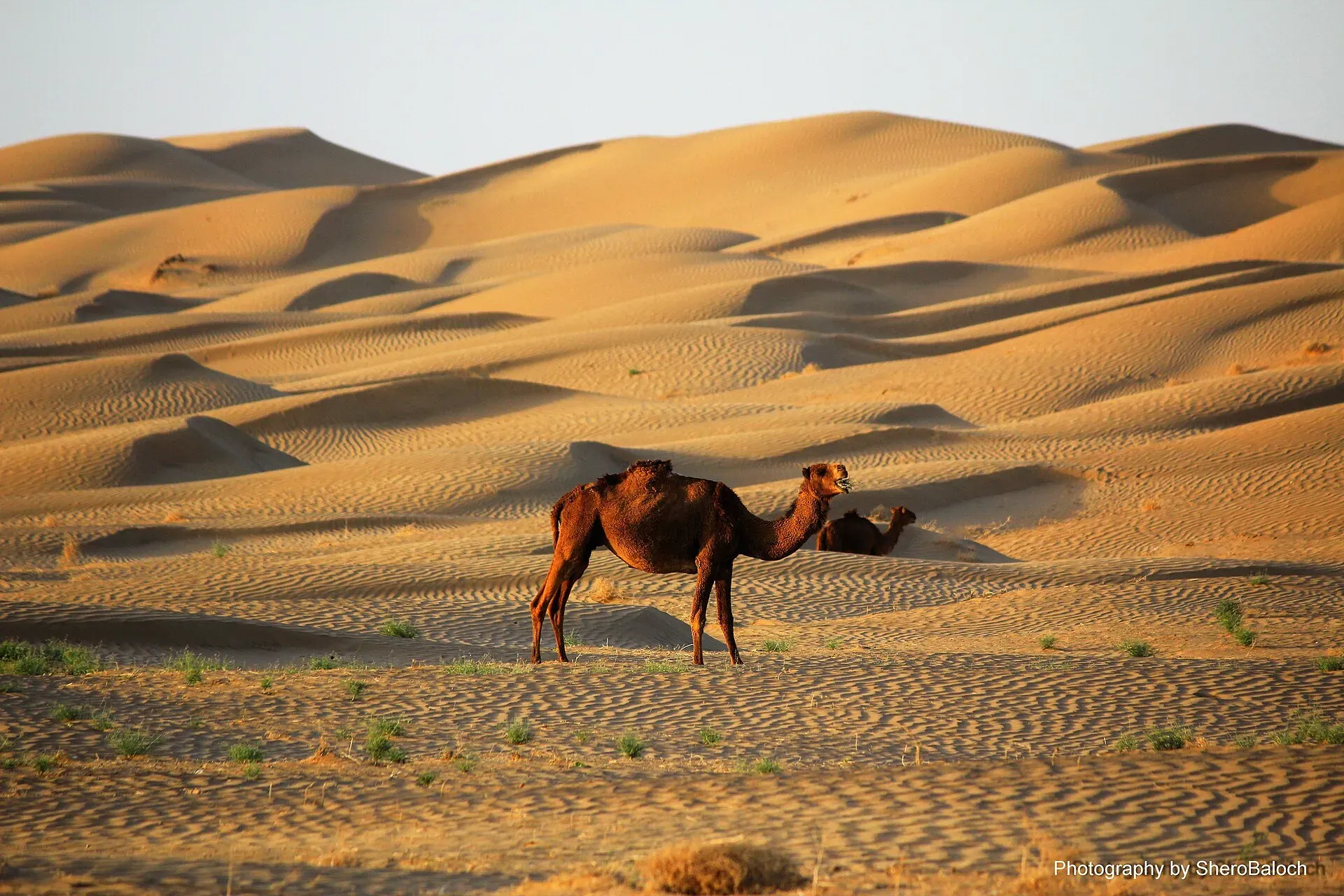
Photo: Sherbaz jamaldini, with thanks · CC BY-SA 4.0 · via Wikimedia Commons · temporary stand-in photo

The border and Iran
The Pakistan side is broad gauge (1,676 mm). Zahedan in Iran is the point where trains change gauge, because the Iranian line toward Qom is 1,435 mm. For that reason trains from Quetta have mostly ended at Zahedan rather than going further. The line was built as a strategic route between British India and Persia, and its use fell after British forces left east Persia in 1921. It came back into use in the Second World War, when it helped supply the Soviet Union. Today the border crossing is a matter for the Pakistan and Iranian authorities, so check visa and crossing rules separately.
Safety
Ask the district administration or local police about current conditions before you go. For foreign visitors: the UK FCDO page (updated 27 October 2026) advises against all travel to Balochistan. One news report said the Quetta to Taftan highway was shut for about five days in early February 2026. Do not plan a rail trip here, and do not travel to the border areas without current official advice.
How to book
If a service is announced, book on the Pakistan Railways website or the RABTA app, or at a reservation office. The helpline is 051-9201100. No fare is given here.
Highlights
- Built 1902 to 1922 as the Trans-Baluchistan Railway toward Iran
- Crosses the Nushki desert and Chagai
- Quetta to Zahedan link reopened in 1940
- No regular passenger train confirmed in 2026
Stops
- Quetta
- Spezand JunctionJunction with ML-3
- Nushki
- Ahmedwal
- Dalbandin
- Nok Kundi
- Koh-e-TaftanPakistan's last station before Iran
km: distance from the start along the route.
Numbers follow the stops in order. The map shows the 4 stops that have a trek.pk page, not the road itself.
Road conditions
Broad gauge (1,676 mm) on the Pakistan side, with Wikipedia listing 20 km/h as the current operating speed. Sand, desert and mountain terrain make the track hard to maintain. Several small stations are abandoned.
Fuel and services
Almost no facilities between Nushki and the border. No dining cars or station services are confirmed.
Where to stay, eat and fuel up
Places to stay
- Fatima Jinnah Hostel for girlsCall Fatima Jinnah Hostel for girlsMap of Fatima Jinnah Hostel for girls in Google Maps
- Khalid Durrani Hotel QuettaCall Khalid Durrani Hotel QuettaMap of Khalid Durrani Hotel Quetta in Google Maps
- ہزارگنجی کویٹہCall ہزارگنجی کویٹہMap of ہزارگنجی کویٹہ in Google Maps
Places to eat
- AL-DUBAI RESTAURANT AND GARDEN الدبئی ریستورینٹ اینڈ گارڈنCall AL-DUBAI RESTAURANT AND GARDEN الدبئی ریستورینٹ اینڈ گارڈنMap of AL-DUBAI RESTAURANT AND GARDEN الدبئی ریستورینٹ اینڈ گارڈن in Google Maps
- Quetta Food Club (QFC)Call Quetta Food Club (QFC)Map of Quetta Food Club (QFC) in Google Maps
- PAF Officer's Mess, SamungliCall PAF Officer's Mess, SamungliMap of PAF Officer's Mess, Samungli in Google Maps
- Mehfil Chai Khana and Fast FoodCall Mehfil Chai Khana and Fast FoodMap of Mehfil Chai Khana and Fast Food in Google Maps
- Nosh By Usmania RestaurantCall Nosh By Usmania RestaurantMap of Nosh By Usmania Restaurant in Google Maps
- AL RAHMAN RESTAURANTCall AL RAHMAN RESTAURANTMap of AL RAHMAN RESTAURANT in Google Maps
Essential services fuel stations, mechanics, ATMs, banks, pharmacies and hospitals and clinics
Fuel
- Ali Jan Petroleum ServiceCall Ali Jan Petroleum ServiceMap of Ali Jan Petroleum Service in Google Maps
- Byco Petroleum Service BaleliCall Byco Petroleum Service BaleliMap of Byco Petroleum Service Baleli in Google Maps
- Qazi Petrol PumpMap of Qazi Petrol Pump in Google Maps
- Byco PetroleumMap of Byco Petroleum in Google Maps
- نعمت اینڈ سدیس پٹرولیم سروس Basit ZaibCall نعمت اینڈ سدیس پٹرولیم سروس Basit ZaibMap of نعمت اینڈ سدیس پٹرولیم سروس Basit Zaib in Google Maps
- ShellCall ShellMap of Shell in Google Maps
Mechanics and tyre shops
- Wali AutosCall Wali AutosMap of Wali Autos in Google Maps
- اباسین ٹپ ٹاپ۔۔ Tyre Repair ServiceMap of اباسین ٹپ ٹاپ۔۔ Tyre Repair Service in Google Maps
ATMs
Banks and money exchange
- Link International Exchange Co (Pvt) Ltd SahiwalCall Link International Exchange Co (Pvt) Ltd SahiwalMap of Link International Exchange Co (Pvt) Ltd Sahiwal in Google Maps
- Mobilink Microfinance BankMap of Mobilink Microfinance Bank in Google Maps
- Nadra E-Sahulat CentreCall Nadra E-Sahulat CentreMap of Nadra E-Sahulat Centre in Google Maps
- ESahulat 65163Map of ESahulat 65163 in Google Maps
- Gallah Mandi SAHIWALMap of Gallah Mandi SAHIWAL in Google Maps
Pharmacies
- Taftan medical storeMap of Taftan medical store in Google Maps
- New Chand Medical StoreCall New Chand Medical StoreMap of New Chand Medical Store in Google Maps
- Nushki Medical StoreCall Nushki Medical StoreMap of Nushki Medical Store in Google Maps
- Asim Medical StoreCall Asim Medical StoreMap of Asim Medical Store in Google Maps
Hospitals and clinics
- PAF HospitalMap of PAF Hospital in Google Maps
- Tariq Hospital طارق ہسپتالMap of Tariq Hospital طارق ہسپتال in Google Maps
- Dhq HospitalMap of Dhq Hospital in Google Maps
Listings come from Google Maps data and are unverified: phone numbers, opening months and prices may have changed. Report a problem · Own one of these? Claim it
More safety notes
For foreign visitors: the UK FCDO advises against all travel to Balochistan (updated 27 October 2026). Reports in February 2026 said the Quetta to Taftan road was shut for five days. Do not plan a trip without current official advice.
Tips
- Treat this as a historic line, not a travel option, until a service is announced.
- Ask Pakistan Railways about any freight or special services.
- Read the FCDO page for Balochistan.
Photos we still need: a train, track or station on the Nushki to Taftan section (sand dunes over the line, Dalbandin station). Send us yours
Sources and last checked
Last checked Confidence low10 sources6 still to check
- Last checked
- Method
- Desk research from published sources
- Confidence
- low
- Checked by
- trek.pk research team
Researched from published sources; not yet checked on the ground by our team. Spot something out of date? Report a mistake.
Sources
- List of railway lines in Pakistan · Wikipedia · checked
- The Trans-Baluchistan Railway · Pakistaniat · checked
- Quetta-Taftan Line (ML-4) · Wikipedia · checked
- Passenger train service between Pakistan, Iran likely to resume before Muharram · Dunya News, 19 January 2018 · checked
- List of named passenger trains of Pakistan · Wikipedia · checked
- Pakistan Railways official website · Pakistan Railways · checked
- Frequently asked questions (booking, catering trains, helpline) · Pakistan Railways · checked
- Pakistan travel advice · UK Foreign, Commonwealth & Development Office · checked
- Nushki · Wikipedia · checked
- Dalbandin · Wikipedia · checked
Still to be checked on the ground (6)
- Whether any passenger train runs on the line (nothing found for 2026; Wikipedia lists it as operational at 20 km/h but gives no timetable)
- Line length: 632 km (list), 637 km to Koh-e-Taftan and 663 km to Mirjaveh (route map), 732 or 757 km to Zahedan; no official figure found
- Station list: several stations marked abandoned, and Wikipedia is inconsistent (for example Ablak)
- Status of the rebuilding plans (only a 2020 feasibility study and 2018 plans found; no 2026 construction report)
- Reported five-day closure of the Quetta to Taftan road in February 2026 (search summary only; not confirmed from a page we opened)
- Year the Quetta to Zahedan link reopened (1940 or 1942 in the same history article)
Nearby and related

Quetta
Balochistan's high-valley capital, the Fruit Garden of Pakistan: bazaars, sajji, orchard valleys and the base for Hanna Lake and Ziarat.

Nushki
Desert town and headquarters of Nushki District in west Balochistan, on the old route from Quetta towards the Iranian and Afghan borderlands.

Dalbandin
Desert headquarters of Chagai District in western Balochistan, known for fruit orchards, at about 843 m above sea level. For foreign visitors: the UK FCDO advises against all travel to Balochistan.

ML-3 Rohri-Quetta-Chaman Line (Bolan Pass)
ML-3 runs 526 km from Rohri through Jacobabad, Sibi and the Bolan Pass to Quetta and Chaman. Services have been repeatedly suspended in 2026 and FCDO advises against travel to Balochistan.