

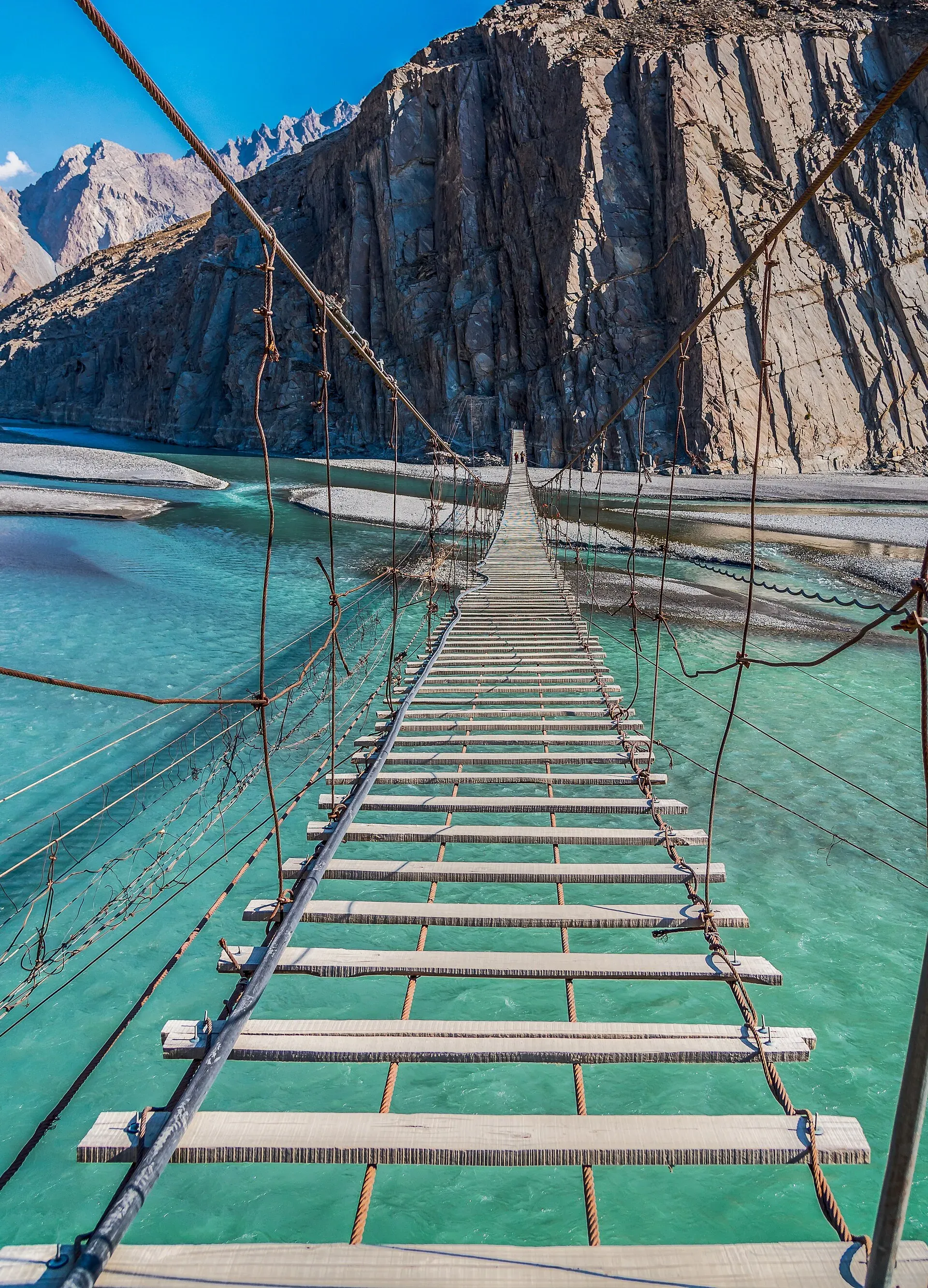
Why rivers are a real hazard
On many Karakoram and Hindu Kush treks you meet rivers fed by glaciers and snowmelt. They are cold, fast and silty, so you cannot see the bottom. A lost footing in a river with a heavy pack can be fatal, and a lost footing with a heavy pack is dangerous. An older Lonely Planet guide to the region warns that even a short fall into a raging river can be fatal.
The most important rule is simple: you never have to cross. Turning back, waiting or taking a longer route costs time. A mistake can cost much more.
Know the pattern of the water
- Glacial rivers rise in the afternoon and fall at night. Warm sun melts more ice and snow, so levels climb during the day. Crossing early, when the water is lowest, is the usual advice for glacier-fed rivers, although the exact time varies by river and season, so check with your guide and local people.
- Late spring and early summer are high water. Snowmelt peaks.
- Rain raises rivers quickly. Rain upstream that you cannot see can raise the water. Hydro-dam releases and storms elsewhere can do the same, as the Trailspace guide notes.
- Water temperature. Cold water saps strength in minutes. Do not underestimate it.
Ask before you go
An older trekking guide advises always asking for current conditions. Footbridges over rivers often wash away in high water and may be missing, or damaged. Ask:
- Is there a bridge, and is it in good condition?
- Where do local people cross, and at what time?
- Has the river risen or changed course since last season?
Local porters and villagers know the safest crossing points. Listen to them, and do not ask people to cross for you if you would not do it yourself.
Footbridges
On many trekking routes, footbridges are made of logs, planks, rocks or earth, and they often have no handrail. Some were built for one-off use to bring livestock across to summer pastures. Cross one at a time and test planks. Take deliberate steps and watch for loose planks or rocks or for holes. If the bridge looks unsound, do not use it.
Cable crossings
A cable with a small basket or a rope sling is sometimes used instead of a bridge. The older Lonely Planet guide describes a pulley and basket pulled by a rope, and local people crossing by hand-over-hand along the cable. It says not to try the hand-over-hand method. If you must use a cable crossing:
- Check the cable, the basket and the pulling rope. If they look damaged, find another way.
- Use only if you have equipment and training: a harness, locking carabiners and tubular webbing. The guide adds that aluminium carabiners should not be used on a steel cable because friction can destroy them.
- Secure bags to the basket or cable separately.
- Let your guide go first and decide.
Do not improvise.
Fording on foot: the method
- Scout upstream and downstream. Look for a wide, braided section where the water is shallow and slower. Avoid narrow, deep channels, bends where the current is strongest, and places just above rapids or log jams.
- Cross at the right time. Choose a time when the water is lowest.
- Wear footwear. Cross in sandals or old shoes with grip, not barefoot. Keep dry boots and socks for the other side.
- Loosen your pack. Most outdoor-education guides recommend unbuckling the hip belt and loosening the sternum strap so you can shed the pack if you fall. One source disagrees and prefers loosening them only slightly. Follow your guide's advice.
- Face upstream and shuffle. Face slightly upstream, take small steps and keep two points of contact with the bottom. Using poles or a sturdy stick helps.
- Cross as a group only if the guide decides. Your guide will choose whether to cross singly or together. Do not rope up for a ford unless the guide has set up a proper rope system.
- Do not stop in the middle. Keep moving, and do not run.
- If you fall, float on your back, feet downstream, and swim to the shore at an angle. Do not try to stand in fast water.
When not to cross
- Fast water that pushes hard on your legs, or that is above your knees
- Murky water that hides the bottom, with large rocks rolling
- Late afternoon on glacial rivers
- You are cold, tired or scared
- No one has crossed it that day
Camp on your side of the river and try again early the next morning. Build spare days into the plan for this reason.
After crossing
Dry your feet, warm up and put on dry socks. Cold, wet feet cause blisters and hypothermia risk.
Planning
On route pages, rivers are noted where we know of them. Conditions change every year, so always check with your guide and local people. See the hiring guide for working with a licensed guide.


