

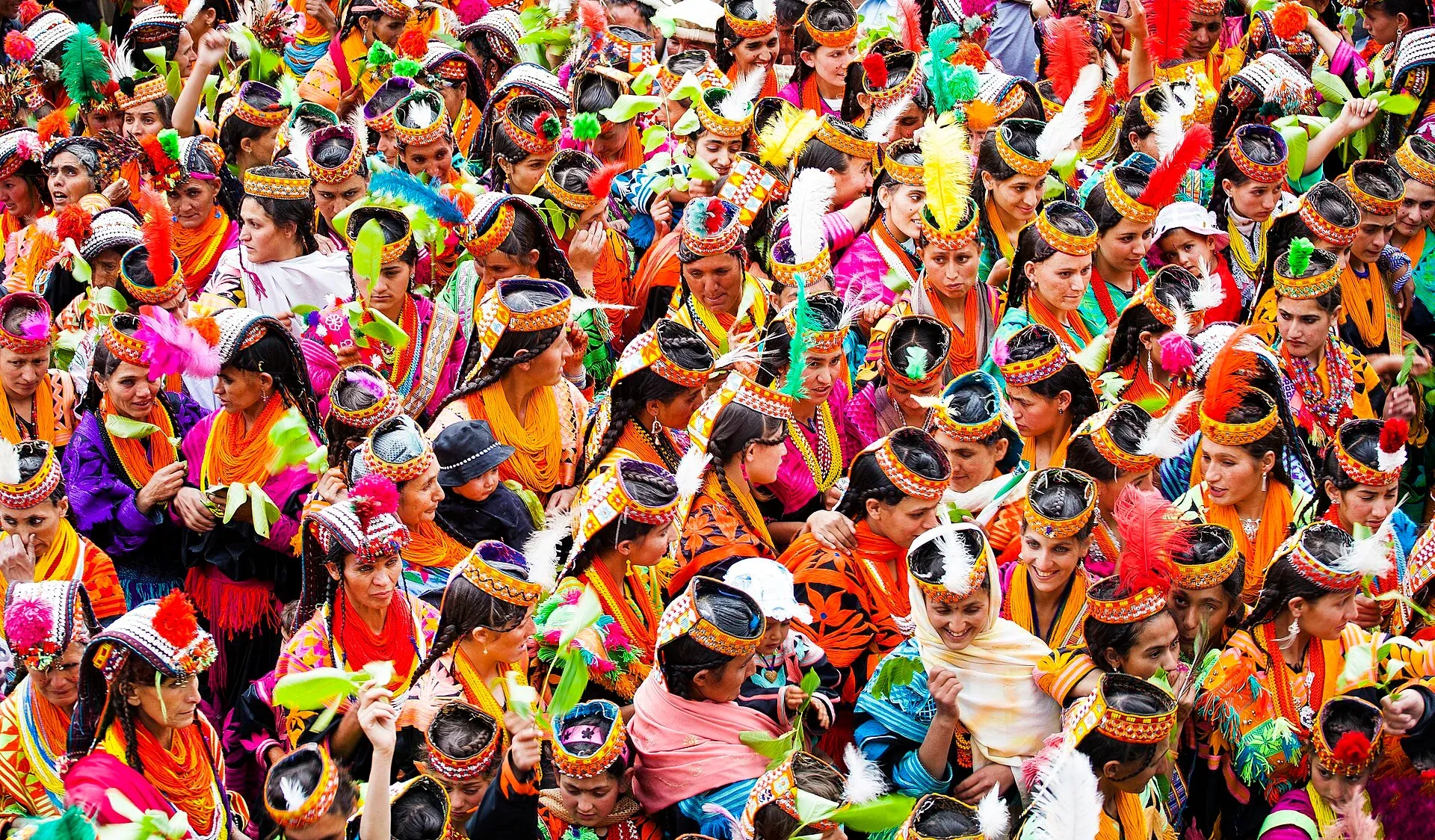
Who celebrates these festivals
The Kalasha (often written Kalash) are a small community in three valleys of Lower Chitral: Bumburet, Rumbur and Birir. They call themselves Kalasha and their language Kalasha-mun. The 2023 census recorded 7,466 Kalasha mother-tongue speakers, according to Wikipedia, and the valleys are also home to Muslim neighbours, Kho and Gujar families, so the villages are mixed. The Kalasha tradition is distinct from the Muslim majority in Chitral, with its own religion, language, music and festival year.
The year turns on three main festivals: Chilimjusht in spring, Uchaw in late summer and Chaumos in winter. They are community and religious events, not tourist shows, and some parts are closed to outsiders. This guide explains each one, when it falls, and how to be a good guest.
Check the travel advice first
Ask the district administration or local police about current conditions before you go. For foreign visitors: the UK FCDO page for Pakistan (updated 27 October 2026, checked 17 November 2026) advises against all travel on the N-45 from the north of the Mardan ring road to the edge of Chitral city, which includes the Kalash valleys. It does not name Chitral city itself. It also notes emergency measures and Governor's Rule in Khyber Pakhtunkhwa since 11 October 2026. Many Pakistani visitors do attend the festivals. For Chaumos 2025 the Express Tribune reported Tourism Police on the Lowari Tunnel and the routes to the valleys, with a tourism helpline on 1422, but you should read the live page and your own government's advice, check road and Lowari Tunnel conditions with the Chitral district administration, and make sure your insurance covers the trip.
How the dates work
The Kalasha follow their own seasonal calendar, so the festivals do not move with the Islamic lunar year, and the dates do not slide by eleven days a year. They do shift with the weather, the harvest and the decisions of village elders, and different valleys can start on different days. Always ask the Chitral district administration, the Kalash Valleys Development Authority or your guesthouse for the current year's dates. Some published lists are wrong: the TDAP 2021 guide lists dates that do not match recent reports, so do not rely on them.
Chilimjusht (spring)
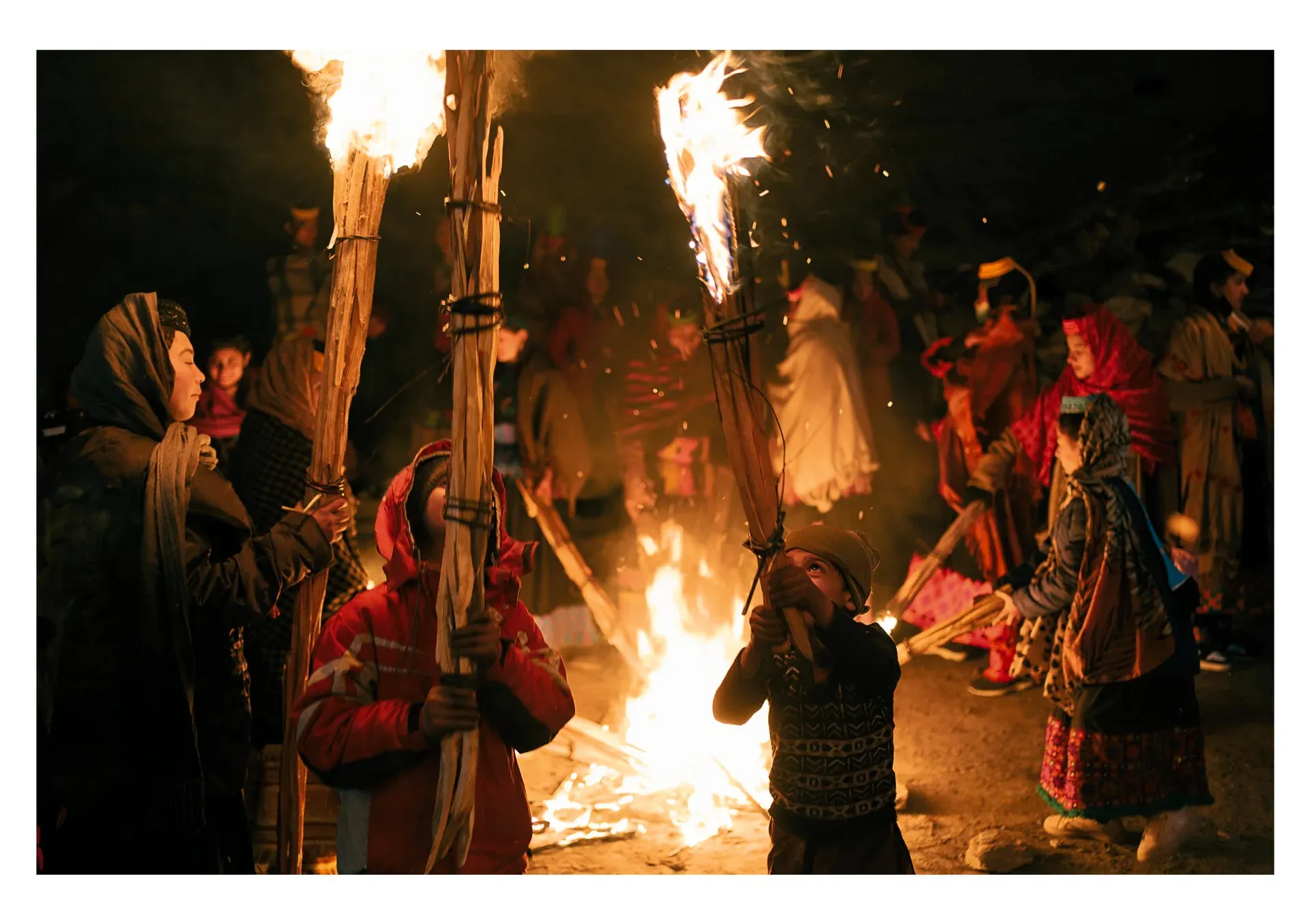
Photo: Laurariis, with thanks · CC BY-SA 4.0 · via Wikimedia Commons · temporary stand-in photo
Chilimjusht, also written Chilam Joshi or Joshi, is the Kalasha welcome to spring. It is described as a thanksgiving to Goshidai, the god who protects the herds. On the first day, milk saved for around ten days before the festival is offered in libations. Women and men then dance and sing, moving from the dancing grounds to the village arena known as the Charso.
- When: usually mid-May. In 2026 reports ran from 12 to 16 May: The News reported plans for 12 to 16 May, Chitral Today said it ended on 16 May, and Dawn reported it officially starting in all three valleys on 15 May. An operator lists 13 to 16 May for 2027, which is not confirmed by the organisers.
- Where: Bumburet, Rumbur and Birir. Bumburet is the largest and has the central dancing ground, where the closing dance is usually held.
- Expect: dances in age groups with drums and songs, people in traditional dress, and shared food. In 2026 the Kalash Valleys Development Authority arranged sanitation and parking in Bumburet.
Uchaw (late summer)
Uchaw, often written Uchal in the news, is the Kalasha thanksgiving for the wheat and barley harvest. Dawn reported that the 2026 festival marks the start of the migration to high summer pastures, when families stay for about three months making goat-milk cheese and ghee, then return in September.
- When: late summer. In 2026 Dawn reported a two-day celebration that ended on Sunday 23 August. In 2024 a three-day festival began on 20 August. There is no published date for 2027.
- Where: Rumbur and Bumburet were the venues in 2026. Elders from Rumbur walked to Bumburet for the closing ceremony.
- Expect: a day earlier, elders offer newly harvested grain and cheese at an altar. Men, women and children walk in procession to the dancing grounds, and on the final evening dancing continues through the night in shifts.
Chaumos (winter)
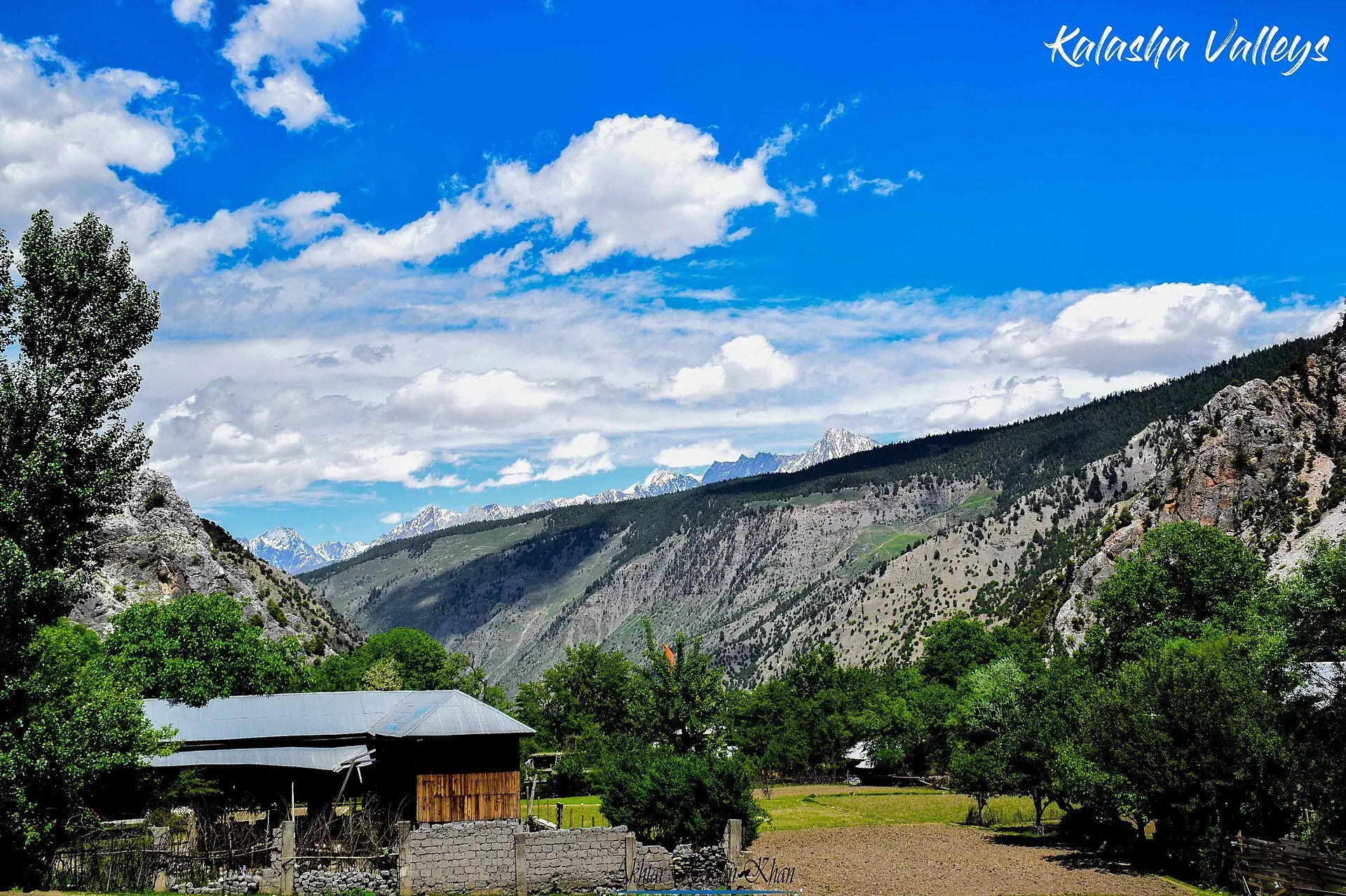
Photo: Akhtar Hassan, with thanks · CC BY-SA 4.0 · via Wikimedia Commons · temporary stand-in photo
Chaumos, also spelled Chawmos or Chitermas, is often described as the community's most important festival. It marks the end of the year's field work and welcomes the new year, and it is linked to Balumain, a figure believed to visit from the mythical homeland of Tsyam.
- When: about two weeks around the winter solstice. Wikipedia gives roughly 7 to 22 December, an academic account puts Bumburet's festival at 9 to 22 December, and 2024 reports said it would conclude on 22 December. There is no known official date for 2026.
- Where: all three valleys.
- Expect: rituals for the new year, including purification rites, in the first part. Impure and uninitiated people are not admitted to the main rituals, and one source says the first week is for Kalasha people only, so ask your host which days you may attend. Bonfires, drumming, dancing and feasting follow, and visitors are usually welcome at the public dances in the second week.
- Winter conditions: it is cold, access can be affected by snow and the Lowari Tunnel, and rooms need heating.
How to be a good guest
- No ticket, but there may be a fee. A visitor entry fee has been charged by the Chitral district administration. Current fees will be added soon; check with them.
- Book early. Rooms fill quickly at festival time, especially for Chilimjusht, the busiest.
- Photography. Ask before photographing anyone, especially women. Never photograph altars, shrines or ritual spaces, and do not pay people to pose.
- Stay out of the ring. Do not enter dancing grounds or shrines unless invited, and keep out of the way of rituals.
- Dress modestly. Cover shoulders and knees. Women should carry a scarf.
- Alcohol. Avoid it in the villages.
- Buy local. Use local guides, guesthouses and craft sellers.
- Do not call it a spectacle. It is a religious celebration.
Planning checklist
- Read the UK and home-government advice and check the Lowari Tunnel and road status.
- Ask the Chitral district administration or Kalash Valleys Development Authority for this year's dates.
- Book a guesthouse early and arrive the day before.
- Ask your host which days are open to visitors.
- Pack for the season: sun in May and August, heavy layers in December.
- Agree with your host what is photographed and what is not.
- Carry cash and warm layers.


