

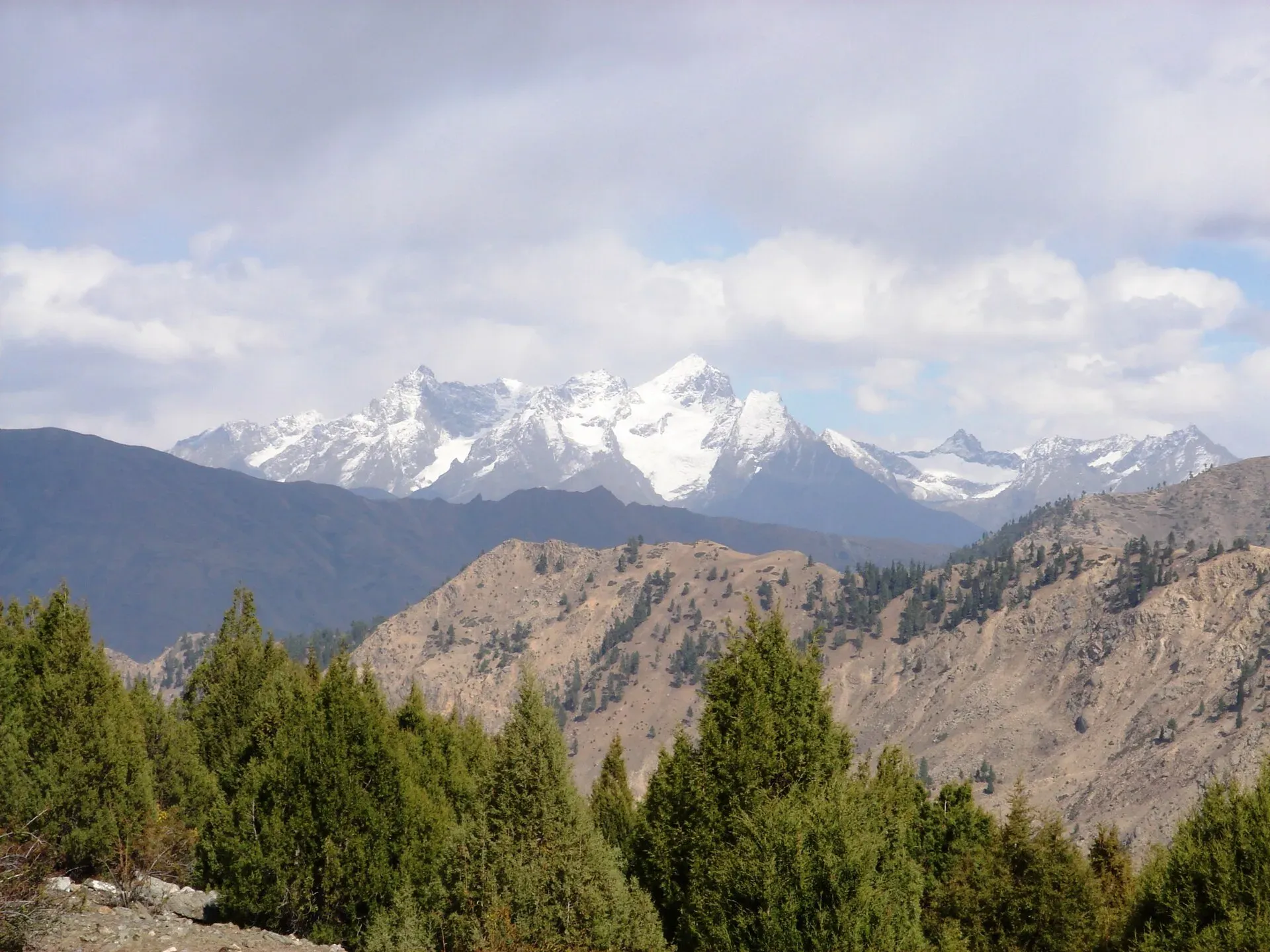
Photo: Daniel Martin (Eleutherosmartin at en.wikipedia), with thanks · CC BY 3.0 · via Wikimedia Commons · temporary stand-in photo

Astore Wildlife Sanctuary
A mountain wildlife sanctuary in Astore District, Gilgit-Baltistan, listed by Wikipedia as designated in 1975 and covering about 415 square kilometres. It protects habitat of the Astor markhor and snow leopard. Boundaries and access need local confirmation.
Overview
Astore Wildlife Sanctuary is a mountain reserve in Astore District, Gilgit-Baltistan, between Nanga Parbat (8,126 m) to the west and the Deosai plains to the east, about 11 km from the town of Bunji. Wikipedia gives its designation as 22 November 1975 and its area as about 414.72 square kilometres, rising from about 1,212 m to 6,060 m. Treat these figures as unconfirmed, as no official notification gives them. The Gilgit-Baltistan Forest, Wildlife & Environment Department lists only Satpara and Naltar on its wildlife sanctuaries page (checked 17 November 2026), so ask the department whether Astore is currently notified under this name.
Plan your visit
- Nearest town
- Bunji
- Getting there
From Gilgit, take the Karakoram Highway to Jaglot and then the Astore road. OSRM models about 56 km (0.7 hours) from Gilgit to Bunji and about 111 km (1.5 hours) from Gilgit to Astore town; More
Best months
Jun – Sep
- Astore Wildlife Sanctuary
- Related places nearby: Astore Valley (with Rama), Gilgit
Landscape and neighbouring parks
The Baltistan Wildlife Sanctuary, also set up in 1975, adjoins it to the south and east. The department also lists two protected areas notified in 2021 in the same part of the region: Himalaya National Park in Astore, for musk deer and other high-mountain wildlife, and Nanga Parbat National Park in Diamer and Astore, which includes habitat for Ladakh urial (a wild sheep). Deosai National Park, protected in 1993 for the Himalayan brown bear, lies across the plateau. The Rupal and Rama sides of Astore are within reach of the sanctuary and the other valley sights; see Astore Valley.
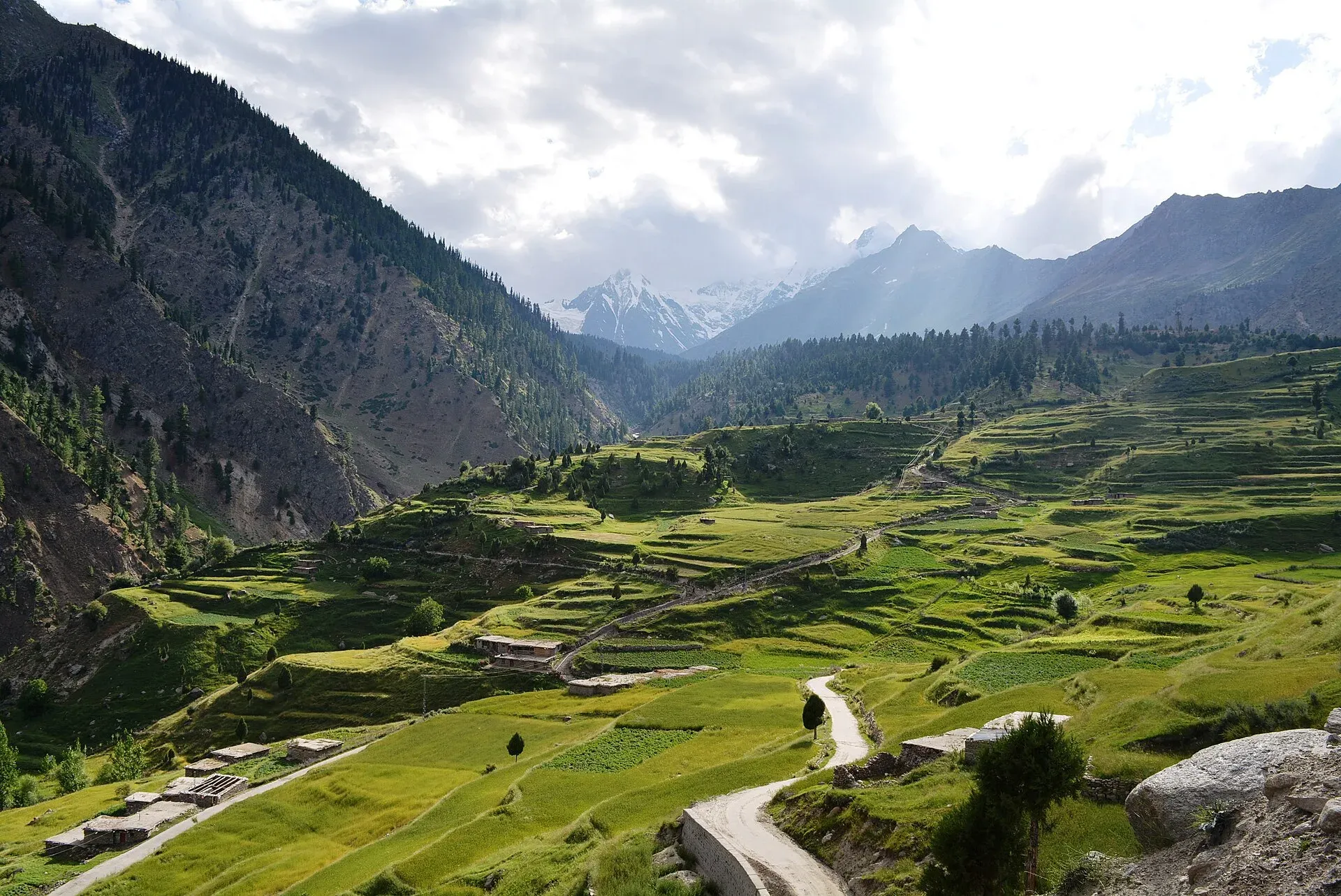
Photo: Obaid Hassan Qureshi, with thanks · CC BY-SA 4.0 · via Wikimedia Commons · temporary stand-in photo

Wildlife
The sanctuary was created mainly to protect the Astor markhor, the spiral-horned wild goat that is Pakistan's national animal. Wikipedia describes the Astor form as having large, flat horns that branch wide and then rise almost straight with only half a turn. Adults stand 65 to 115 cm at the shoulder and weigh 32 to 110 kg, and the horns of males can reach about 160 cm. Markhor live between about 600 m and 3,600 m on steep rocky ground with oak, pine and juniper scrub, grazing in spring and summer and browsing in winter, sometimes standing on their hind legs to reach high branches. The rut is in winter, when males lock horns and push at each other.
The IUCN lists the species as Near Threatened (2015 assessment), and it is in CITES Appendix I. Wikipedia cites a 2013 estimate of about 5,800 animals. Markhor have recovered in parts of Gilgit-Baltistan under community conservation programmes. The United Nations General Assembly declared 24 May the International Day of Markhor in 2024.
Other mammals reported are snow leopard (Vulnerable, IUCN 2017), Himalayan brown bear and Eurasian lynx, all rarely seen. Himalayan ibex (Near Threatened, IUCN 2020) live at higher altitudes.
What to see and do
- Markhor. They stay on steep, rocky slopes, so use binoculars or a spotting scope and a local guide.
- Mountain scenery. Nanga Parbat and the Rupal and Rama sides of Astore are within reach.
- Hiking with a local guide. Valley paths and meadows give views, but check where the boundary runs and keep to guided routes.
When to visit
Summer, from June to September, is the easiest period for road access to the Astore valley. Markhor often come lower in winter and the rut is in late autumn and winter, but snow can cut roads, and the Deosai road is closed from about November to June. Mid-winter wildlife watching suits only well-prepared groups.
Where to stay and eat
Astore town and the valley villages have simple hotels, guesthouses and restaurants. Gilgit offers more choice. Carry water and food into the hills.
Good to know
- The sanctuary is managed by the Gilgit-Baltistan Forest, Wildlife & Environment Department. The department lists info@fwegb.gov.pk and +92 5811 920146 or 920273; ask it, or the district office in Astore, about permission, guides and boundaries. A fee may apply: current fees will be added soon.
- Hunting is banned inside sanctuaries. Regulated trophy hunting of markhor is legal in Pakistan as a conservation measure, run under community and government programmes in some valleys; the department auctions permits for Astore markhor, and this does not apply to ordinary visitors. Do not disturb animals, keep your distance, take litter away and ask before flying a drone.
- Safety. For foreign visitors: the UK FCDO page (updated 27 October 2026, checked 16 November 2026) does not advise against Gilgit-Baltistan generally. It advises against all travel on the Karakoram Highway between Mansehra and Chilas, so take a flight to Gilgit or Skardu rather than driving through that stretch. Check the current page before you travel.
- Mountain roads can be blocked by landslides or snow; allow extra time.
Highlights
- Home of the Astor markhor, Pakistan's national animal
- Snow leopard habitat
- Between Nanga Parbat and Deosai
- Elevation about 1,212 to 6,060 m
- Adjoins the Baltistan Wildlife Sanctuary
Getting there
From Gilgit, take the Karakoram Highway to Jaglot and then the Astore road. OSRM models about 56 km (0.7 hours) from Gilgit to Bunji and about 111 km (1.5 hours) from Gilgit to Astore town; allow about four hours in practice on the mountain road. Wikipedia places the sanctuary about 11 km from Bunji. Gilgit has flights from Islamabad when weather allows. The road over Deosai to Skardu is closed from about November to June.
Tips
- Visit June to September for road access
- Hire a local guide and use binoculars
- Ask the GB Wildlife Department about boundaries and permission
- Avoid driving the Mansehra to Chilas KKH; fly to Gilgit
- Keep to guided routes and do not disturb animals
Wildlife
Facilities
- Guesthouses in Astore town and valley villages
Photos we still need: Astor markhor in the sanctuary area; the sanctuary entrance or a boundary sign; Astor markhor in the sanctuary area; the sanctuary entrance or a boundary sign. Send us yours
Sources and last checked
Last checked Confidence low10 sources6 still to check
- Last checked
- Method
- Desk research from published sources
- Confidence
- low
- Checked by
- trek.pk research team
Researched from published sources; not yet checked on the ground by our team. Spot something out of date? Report a mistake.
Sources
- Astore Wildlife Sanctuary · Wikipedia · checked
- Parks and wildlife · Forest, Wildlife & Environment Department, Gilgit-Baltistan · checked
- GB announces trophy hunting permit rates (27 August 2026) · ProPakistani · checked
- Markhor · Wikipedia (cites IUCN Red List assessment, 2015) · checked
- Snow leopard · Wikipedia (cites IUCN Red List assessment, McCarthy et al. 2017) · checked
- Population density and habitat use of Himalayan ibex in Nagar Valley, Gilgit-Baltistan (IUCN status of ibex) · International Journal of Conservation Science · checked
- Pakistan travel advice · UK Foreign, Commonwealth & Development Office (FCDO) · checked
- OSRM routing (driving distance and time estimates) · OpenStreetMap / Project OSRM · checked
- Wildlife sanctuaries · Forest, Wildlife & Environment Department, Gilgit-Baltistan · checked
- Capra sibirica (Siberian or Himalayan ibex) (IUCN Red List category) · GBIF, IUCN Red List checklist · checked
Still to be checked on the ground (6)
- Designation date and area (Wikipedia only; the department's sanctuaries page does not list Astore, so the notification is still unseen)
- Exact boundary and entry point
- Whether visitors need written permission
- Current markhor numbers in the sanctuary
- Winter access and road status
- Fees and guide arrangements
Nearby and related

Astore Valley (with Rama)
A forested valley south-east of Gilgit on the eastern side of Nanga Parbat, with Rama Meadows and Rama Lake, the Rupal and Rattu valleys and the seasonal road over the Deosai plateau.

Deosai National Park
A vast high plateau at about 4,100 m above Skardu and Astore, covered in wildflowers in summer. Created in 1993 to protect the Himalayan brown bear. Open only in summer.

Gilgit
Gateway to Gilgit-Baltistan on the Karakoram Highway: a busy mountain town with the Kargah Buddha and the base for Hunza, Naltar and Skardu.

Gilgit-Baltistan
Pakistan's far north: three great ranges meet here, with K2, Nanga Parbat, giant glaciers, the Karakoram Highway and the valleys of Hunza, Skardu and Gilgit.