

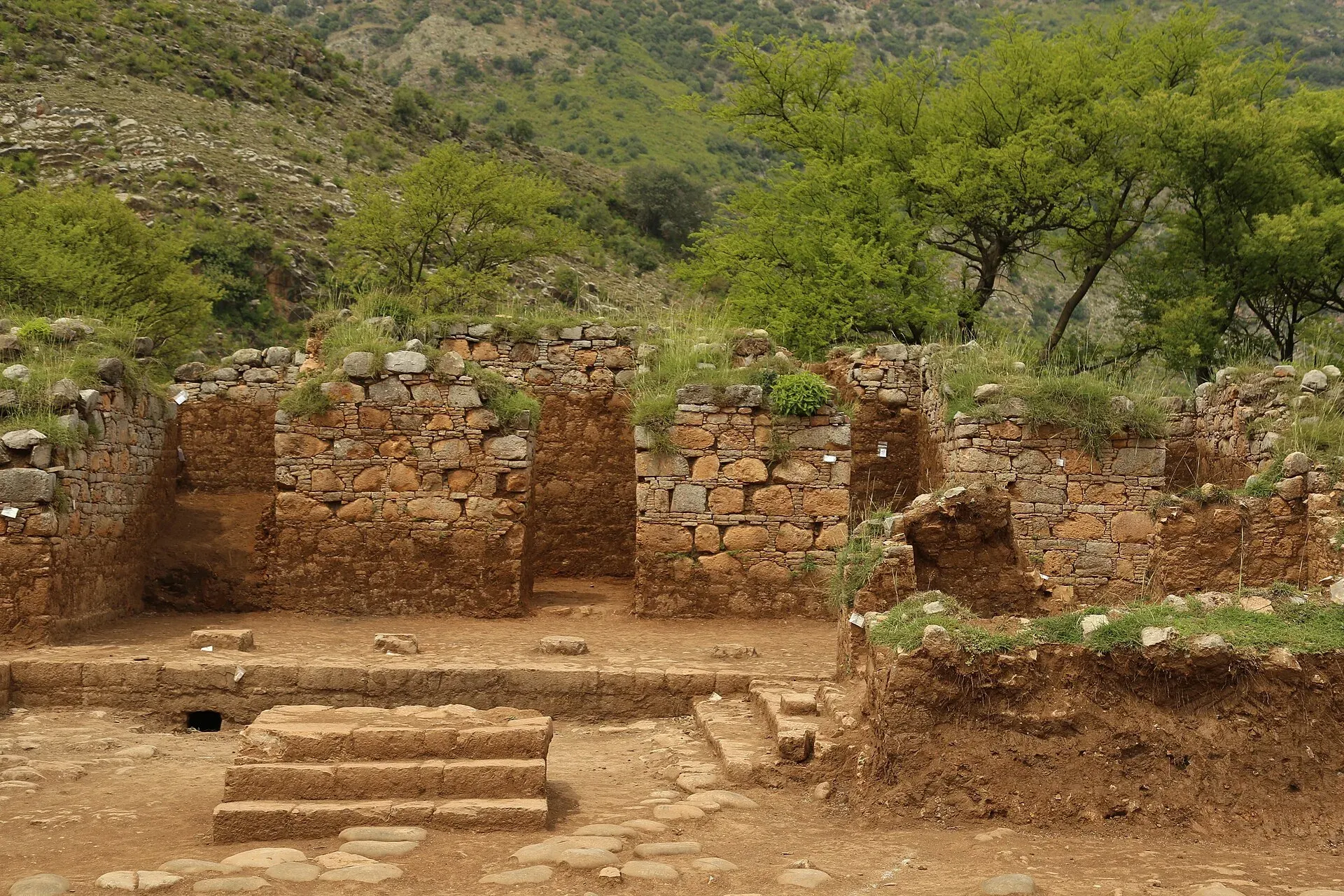
Photo: Ibrahimzauq, with thanks · CC BY-SA 4.0 · via Wikimedia Commons · temporary stand-in photo

Bhamala Stupa
A Buddhist monastery complex beside the Haro River near Khanpur Dam, Haripur, with a rare cross-shaped stupa. It joined UNESCO's tentative list in 2026.
Overview
Bhamala is a Buddhist monastic complex in Khanpur tehsil of Haripur District, on the banks of the Haro River close to Khanpur Dam. It lies in the wider Taxila valley and is believed to be among the best preserved Buddhist sites there. Its main stupa is cruciform, meaning it has a stairway on each of the four cardinal sides. A stupa is a domed Buddhist monument, usually built over relics or to mark a sacred place.
Plan your visit
- Nearest town
- Khanpur
- Getting there
Bhamala is near Khanpur Dam in Haripur District. From Islamabad, go to Haripur by motorway or the Grand Trunk Road through Taxila, then continue towards Khanpur. A private car is the easiest option; More
Best months
Oct – Apr
- Bhamala Stupa
- Related places nearby: Islamabad, Taxila, Taxila Museum
History
The stupa is usually dated to the 2nd century CE, and the wider site to about the 2nd to 5th centuries CE. Sir John Marshall's team first excavated it in 1929, with work continuing into the early 1930s. Excavations resumed in 2017. The site is looked after by the Khyber Pakhtunkhwa Department of Archaeology and Museums.
Why the plan matters
Gandharan stupas changed in shape over the centuries. Wikipedia places Bhamala after earlier examples such as the Dharmarajika stupa at Taxila, and describes the cruciform plan as a stage that led to the towering second Kanishka stupa. Bhamala's main stupa is described as the largest surviving example of this shape in the Taxila and Gandhara region. The Taxila Museum holds finds from the wider area.
UNESCO status
Bhamala is on Pakistan's UNESCO Tentative List. UNESCO's entry gives a submission date of 11 May 2026 and cites criteria (iii) and (iv). News reports in August 2026 listed it among four Khyber Pakhtunkhwa sites added. A tentative listing is a first step only: it is not World Heritage status.
What to see and do
- The cruciform stupa: a large stupa with stairs on each of the four sides, rising from a square base.
- Votive stupas: around nineteen small stupas stand in the courtyard around the main one.
- Monastery cells: rooms for monks arranged around a courtyard.
- The Buddha statue: a figure of the Buddha, described as about 1,700 years old, was found here. The Guardian (2017) called it a "sleeping Buddha", and Wikipedia links it to the Buddha's final passing, but the exact pose and where it is kept are not confirmed, so ask the staff.
- The river and dam: the Haro River and Khanpur Dam are close to the site.
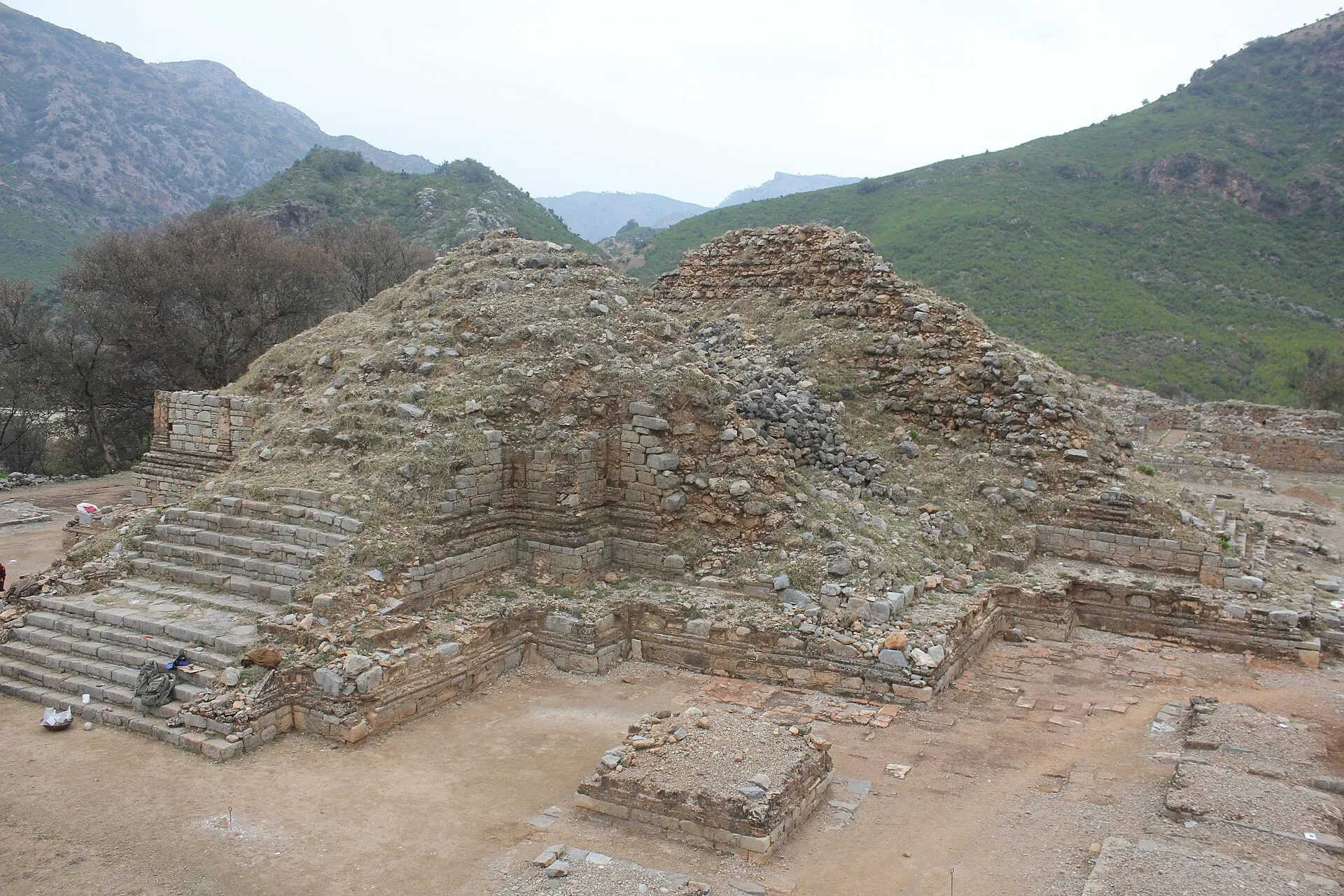
Photo: Muhammad Zahir, with thanks · CC BY-SA 3.0 · via Wikimedia Commons · temporary stand-in photo

A half-day outline
Visitors usually come from Islamabad. Allow a half day: walk round the main stupa first, then the votive stupas and the monastery cells, and finish by the river. Taxila, on the way, has its own Buddhist sites and museum if there is time.
When to visit
October to April is comfortable. Summers are hot and the site has little shade. The river and dam area is pleasant in the early morning.
Where to stay and eat
There is no accommodation at the site. Haripur and Taxila have hotels and ordinary restaurants, and most visitors come from Islamabad for the day.
Good to know
- Entry and opening hours: not confirmed from an official source for this guide. Check with the Khyber Pakhtunkhwa Department of Archaeology and Museums.
- Dress and behaviour: dress modestly, keep off the stupa steps unless allowed and never touch or remove carved pieces.
- Photography: personal photos are fine in general. Ask the staff about drones, because the site is near a dam.
Highlights
- Rare cruciform stupa with stairs on four sides
- Courtyard with about nineteen votive stupas
- Excavated in 1929 and again from 2017
- Added to UNESCO Tentative List in 2026
Getting there
Bhamala is near Khanpur Dam in Haripur District. From Islamabad, go to Haripur by motorway or the Grand Trunk Road through Taxila, then continue towards Khanpur. A private car is the easiest option; allow a half day for the visit. Ask locally for the final turn-off, as signposting may be limited.
Tips
- Combine with Taxila's museum and sites on the same trip.
- Go in the morning, there is little shade.
- Ask the caretaker about the Buddha statue, it may be displayed elsewhere.
- Keep the dam area in mind when flying a drone: ask first.
Photos we still need: the votive stupas and monastery cells (section: What to see and do). Send us yours
Sources and last checked
Last checked Confidence medium4 sources4 still to check
- Last checked
- Method
- Desk research from published sources
- Confidence
- medium
- Checked by
- trek.pk research team
Researched from published sources; not yet checked on the ground by our team. Spot something out of date? Report a mistake.
Sources
- Bhamala Stupa (Wikipedia) · Wikipedia · checked
- Bhamala Buddhist Complex (Tentative List) · UNESCO World Heritage Centre · checked
- Four K-P heritage sites added to UNESCO list · The Express Tribune · checked
- Foreign travel advice Pakistan: warnings and insurance · UK FCDO · checked
Still to be checked on the ground (4)
- Position of the Buddha statue and its exact pose (Wikipedia links the statue to parinirvana, the Guardian calls it a 'sleeping Buddha', but gives no position on site; the Guardian page could not be fetched)
- Opening hours and ticket price (not stated by Wikipedia, Tribune or Wikivoyage)
- Final access road and signage
- Coordinates are approximate (Wikipedia gives 33 deg 50 N, 72 deg 58 E, to the minute)
Nearby and related

Islamabad
Pakistan's green, planned capital at the foot of the Margalla Hills: Faisal Mosque, hillside trails, cafes and the gateway to the north.

Khyber Pakhtunkhwa
Mountains, Buddhist ruins and old bazaars in north-west Pakistan: Swat, Kaghan, Chitral, the Kalash valleys, the Khyber Pass and Peshawar.

Taxila
The ruins of several ancient cities and Buddhist monasteries near Islamabad, inscribed by UNESCO in 1980. Taxila was a crossroads of Gandhara, Greek, Persian and Kushan culture, with a fine museum.

Taxila Museum
A site museum near Taxila with one of Pakistan's finest collections of Gandharan Buddhist sculpture, coins and everyday objects from the ancient cities and stupas of the valley.