

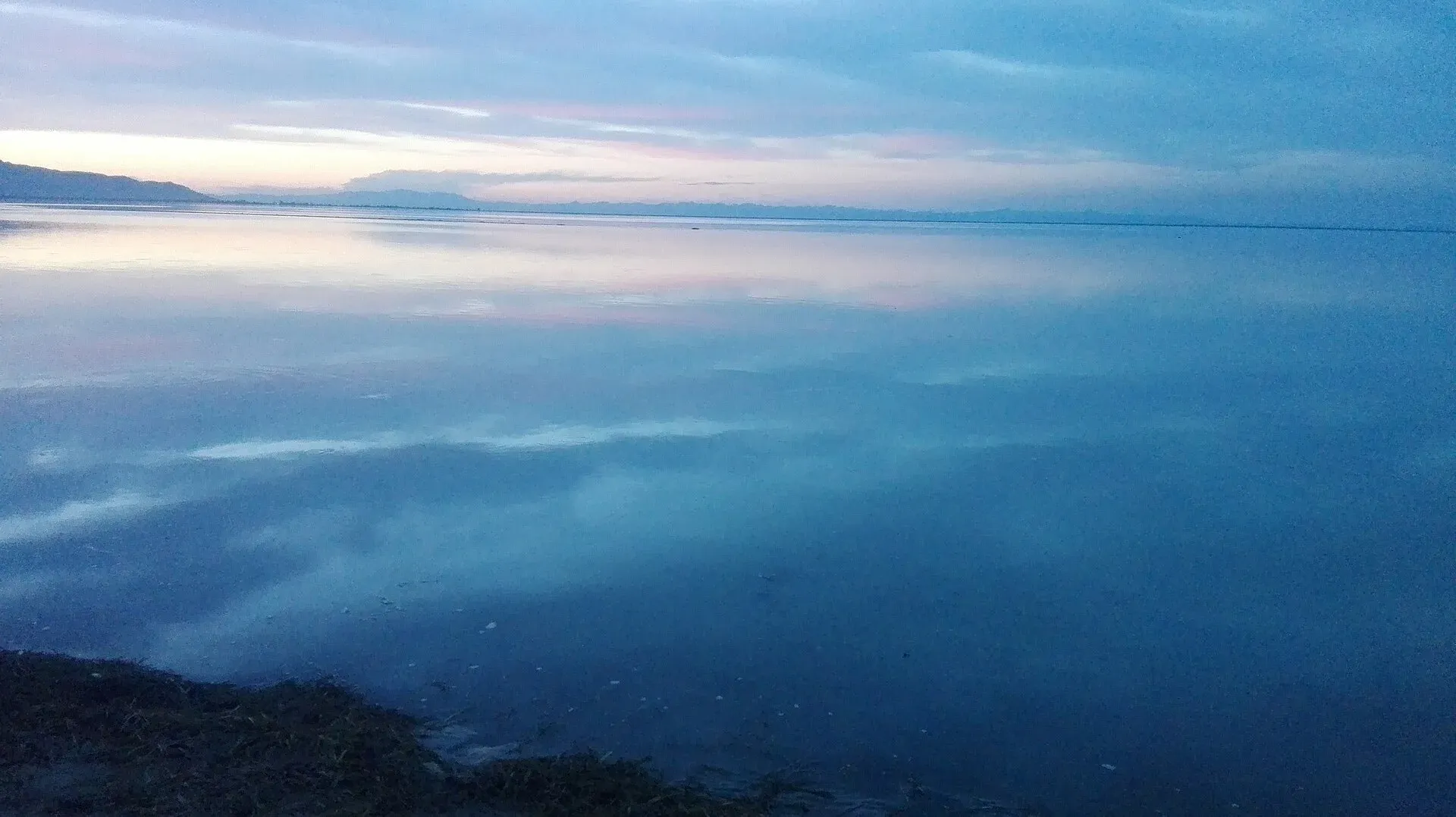
Photo: Muhammad Zain Abbas, with thanks · CC BY-SA 4.0 · via Wikimedia Commons · temporary stand-in photo

Chashma Lake Wildlife Sanctuary
The Chashma Barrage reservoir on the Indus near Mianwali, Punjab: a wildlife sanctuary since 1974 and Ramsar site no. 816 since 1996, with large winter flocks of ducks and coots and passing cranes.
Overview
Chashma Lake Wildlife Sanctuary protects the reservoir behind Chashma Barrage on the Indus, about 25 km south-west of Mianwali in Punjab. The barrage was completed in 1971. Embankments divide the reservoir at low water into five shallow lakes, with reed beds and marsh round the edges. It is one of Pakistan's best-known winter sites for waterfowl.
The wetland was first declared a wildlife sanctuary of 33,084 hectares in 1974 and re-notified in 1984 and 1989. It was listed as a Wetland of International Importance on 22 March 1996 (Ramsar site no. 816, 34,099 hectares). The Punjab Wildlife & Parks Department lists the sanctuary (as Chashma Barrage) at 89,000 acres, about 36,000 hectares. That is a little above the Ramsar figure of 34,099 hectares, probably because of a wider boundary, and neither source explains the difference. The reservoir is owned by the Punjab Irrigation Department, and WAPDA runs the power station and grants fishing leases. Part of the reservoir lies across the river in Dera Ismail Khan District, Khyber Pakhtunkhwa.
Plan your visit
- Nearest town
- Mianwali
- Getting there
Chashma Barrage is on the Indus about 25 km south-west of Mianwali, off the Mianwali to Dera Ismail Khan road. OSRM models about 34 km (0.6 hours) from Mianwali and about 270 km (3.5 hours) from Islamabad. More
Best months
Nov – Feb
- Chashma Lake Wildlife Sanctuary
- Related places nearby: Dera Ismail Khan, Chashma Barrage
The barrage
Chashma Barrage is on the Indus in Mianwali District, 304 km north-west of Lahore and 56 km downstream of Jinnah Barrage. The works were contracted on 10 February 1967 to a French consortium and finished on 25 March 1971, at a cost of Rs 399 million. The barrage is 1,084 m between abutments and has 52 bays. It serves irrigation and flood control, and a power station with eight bulb turbines (184 MW in total) began generating in 2001.
What to see and do
- Winter ducks and coots. The Ramsar sheet records more than 50,000 ducks and coots in midwinter, with peak counts of over 200,000 in January 1989 to 1991. Common species are wigeon, teal, pintail, pochard and coot. Counts vary from year to year with water management, so treat these as historic peaks.
- Cranes on passage. The barrage is a staging area for common and demoiselle cranes in spring and autumn.
- Herons, spoonbills and waders. Great egrets, little egrets, grey herons, Eurasian spoonbills, avocets and many shorebirds feed in the shallows.
- Summer breeding birds. More than 50 species are recorded on a typical summer day, according to the same sheet.
- Indus river dolphin. The Indus dolphin (Endangered, IUCN) lives in stretches of river upstream of the barrage. A Khyber Pakhtunkhwa survey counted 135 between Chashma Barrage and the Ramak boundary. Sightings are not guaranteed.
When to visit
Come between November and February for waterfowl, and in March or September to October for crane passage. Summers are hot, averaging about 41 degrees Celsius in June, and the reservoir is at its fullest in spring.
Where to stay and eat
There is no visitor accommodation inside the sanctuary that we can confirm. Mianwali has hotels and restaurants, and Islamabad and Rawalpindi are a long day away. Carry water and snacks.
Good to know
- The sanctuary is managed by the Punjab Wildlife & Parks Department. In Punjab sanctuaries, hunting, firearms, cultivation, damaging vegetation, introducing animals and water pollution are prohibited, and public access is regulated. Ask the department before you visit. A fee may apply: current fees will be added soon.
- Fishing, reed cutting and livestock grazing disturb birds. Keep your distance, do not flush flocks, and take your litter with you.
- Ask before flying a drone. The barrage and power station are sensitive installations.
- Ask the district administration or local police about current conditions before you go. Safety. For foreign visitors: the UK FCDO page (updated 27 October 2026, checked 17 November 2026) advises against all travel to a list of Khyber Pakhtunkhwa districts, and notes KP emergency measures and Governor's Rule since 11 October 2026. The west bank of the reservoir touches Dera Ismail Khan, so check the FCDO page and local conditions before you travel. Mianwali District, in Punjab, is not among the areas we hold from the FCDO page, but conditions can change.
Highlights
- Ramsar site no. 816, designated 22 March 1996
- More than 50,000 ducks and coots in midwinter
- Staging area for cranes in spring and autumn
- Five shallow lakes behind the barrage
- Indus river dolphin stretch upstream
Getting there
Chashma Barrage is on the Indus about 25 km south-west of Mianwali, off the Mianwali to Dera Ismail Khan road. OSRM models about 34 km (0.6 hours) from Mianwali and about 270 km (3.5 hours) from Islamabad. Mianwali has road and rail links; from there use a taxi or your own vehicle. Ask at the wildlife office about the best viewing points.
Tips
- Visit November to February for waterfowl
- Ask the Punjab Wildlife & Parks Department before you go
- Check FCDO advice for nearby KP districts
- Bring binoculars and a telescope for distant flocks
- Do not fly a drone without permission
Wildlife
Facilities
- Barrage and reservoir
- Fish hatchery (operational since 1987)
- Hotels in Mianwali
- Power station (184 MW, from 2001)
Photos we still need: winter waterfowl at the lake; reed beds and the shoreline; the Indus river dolphin habitat upstream of the barrage. Send us yours
Sources and last checked
Last checked Confidence medium7 sources5 still to check
- Last checked
- Method
- Desk research from published sources
- Confidence
- medium
- Checked by
- trek.pk research team
Researched from published sources; not yet checked on the ground by our team. Spot something out of date? Report a mistake.
Sources
- Ramsar Sites Information Service: Chashma Barrage (site 816) · Ramsar Convention Secretariat · checked
- Ramsar Information Sheet: Chashma Barrage · Ramsar Convention Secretariat / IUCN-Pakistan · checked
- Wildlife sanctuaries · Punjab Wildlife & Parks Department · checked
- Indus river dolphin · Wikipedia (cites IUCN Red List assessment, Braulik et al. 2023) · checked
- Pakistan travel advice · UK Foreign, Commonwealth & Development Office (FCDO) · checked
- OSRM routing (driving distance and time estimates) · OpenStreetMap / Project OSRM · checked
- Chashma Barrage · Wikipedia · checked
Still to be checked on the ground (5)
- Current winter bird counts (figures are from the 1996 Ramsar sheet; the Ramsar pages returned HTTP 502 on 17 Nov 2026)
- Entry arrangements and fee (the Punjab department page gives no prices; contact dgwildlife@gmail.com or +92 42 992 12367)
- Dolphin presence at the barrage
- Accommodation and viewing points
- KP-side access and FCDO status of Dera Ismail Khan (FCDO advises against all travel to Dera Ismail Khan)
Nearby and related

Punjab
Pakistan's most populous province: Mughal Lahore, ancient Taxila and Harappa, Sufi shrines, the Salt Range, the Cholistan desert and the hills of Murree.

Dera Ismail Khan
A historic Indus river city in southern Khyber Pakhtunkhwa where Saraiki and Pashtun cultures meet, near the 5,000-year-old Rehman Dheri mound. Check security advice before any visit.

Taunsa Barrage Wildlife Sanctuary
A Ramsar-listed Indus reservoir in south-west Punjab, notified in 1972 and designated in 1996 (site no. 817). A key winter site for waterfowl, bar-headed geese and part of the Indus river dolphin's range.

Chashma Barrage
An Indus barrage in Mianwali district, completed in 1971, that irrigates land, controls floods and generates power. Its reservoir is a Ramsar wetland.