

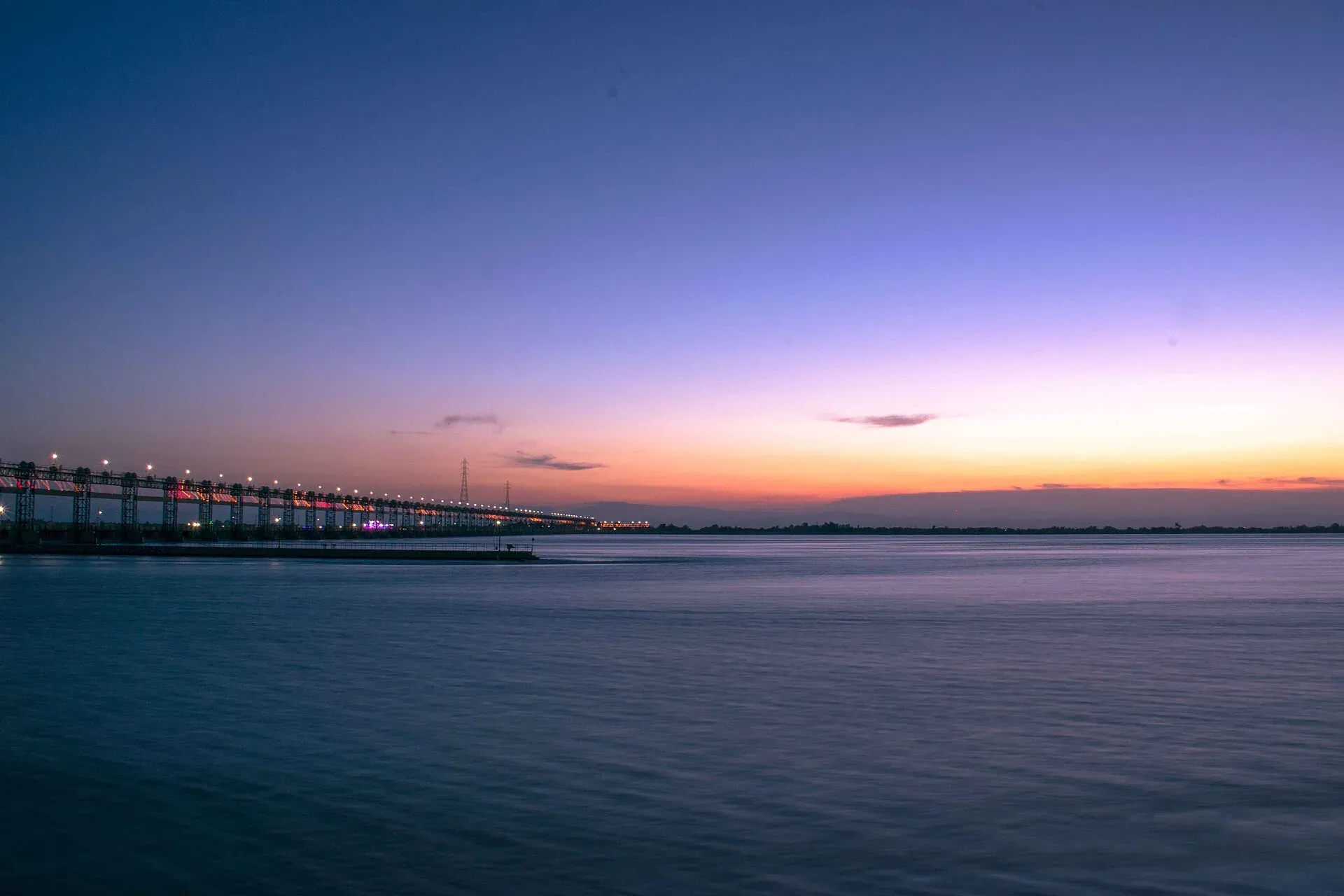
Photo: Tonsa Barrage, with thanks · CC BY-SA 4.0 · via Wikimedia Commons · temporary stand-in photo

Taunsa Barrage Wildlife Sanctuary
A Ramsar-listed Indus reservoir in south-west Punjab, notified in 1972 and designated in 1996 (site no. 817). A key winter site for waterfowl, bar-headed geese and part of the Indus river dolphin's range.
Overview
Taunsa Barrage Wildlife Sanctuary protects the reservoir and river channel behind Taunsa Barrage on the Indus, in south-west Punjab. The barrage is on the Indus about 20 km south-east of Taunsa Sharif (30.51 N, 70.85 E in both Wikipedia and OpenStreetMap). The Punjab Wildlife & Parks Department lists the sanctuary under Muzaffargarh, Dera Ghazi Khan and Layyah districts, with the river forming the boundary between Dera Ghazi Khan on the west bank and the other two on the east. OpenStreetMap places the barrage itself in the newer Kot Addu district. The Ramsar record lists the wetland at 6,756 hectares, while the Punjab Wildlife & Parks Department lists the sanctuary at 61,635 acres (about 24,900 hectares); the larger figure appears to cover a wider area than the Ramsar boundary, and there is no known notification that explains the gap.
The wetland was first declared a wildlife sanctuary in 1972, re-notified several times, and designated a Wetland of International Importance on 22 March 1996 (Ramsar site no. 817). It is managed by the Punjab Wildlife & Parks Department, while the reservoir itself belongs to the Punjab Irrigation Department.
Plan your visit
- Nearest town
- Taunsa Sharif
- Getting there
The barrage is on the Indus about 20 km south-east of Taunsa Sharif. OSRM models about 65 km (about 65 minutes) from Dera Ghazi Khan and about 78 km (about 85 minutes) from Multan, to the barrage coordinates. More
Best months
Nov – Feb
- Taunsa Barrage Wildlife Sanctuary
- Related places nearby: Dera Ghazi Khan, Multan, Kot Addu, Taunsa
What to see and do
- Winter waterfowl. The Ramsar sheet calls it a very important wintering area for ducks, geese and coots. It is the most important wintering site for bar-headed goose in Pakistan, though numbers have fallen since the early 1970s.
- Breeding and passage birds. Lesser whistling duck breeds here in summer. Cranes, shorebirds and the rare marbled teal pass through, and spoonbills, herons and egrets feed in the shallows.
- Indus river dolphin. This stretch of the Indus is part of the dolphin's range. The species is Endangered on the IUCN Red List and is blind, so you hear and glimpse it breaking the surface rather than see it clearly. Sightings are never guaranteed.
- River views. The barrage and embankments give open views for photography, but the barrage is an irrigation structure, so follow staff and police instructions.
When to visit
November to February is the main season for wintering waterfowl, with cooler days. Summers are very hot, with June highs of 42 to 45 degrees Celsius recorded in the Ramsar sheet. Water levels change through the year and affect where birds gather.
Where to stay and eat
The sanctuary has no visitor lodging confirmed in the sources used. Dera Ghazi Khan, Taunsa Sharif and Multan have hotels and restaurants. Plan a day trip and bring water.
Good to know
- Under the Punjab department's rules, hunting, firearms, cultivation, damaging vegetation, introducing animals and polluting the water are prohibited in sanctuaries, and public access is regulated. Ask the department (Lahore head office, or the local wildlife office) before you visit. A fee may apply: current fees will be added soon.
- Illegal hunting, fishing nets and occasional burning of vegetation are listed threats. Do not disturb birds, and report any hunting to the department.
- Ask before flying a drone. Barrages are sensitive installations and drones are often refused.
- Ask the district administration or local police about current conditions before you go. Safety. For foreign visitors: the UK FCDO page (updated 27 October 2026, checked 17 November 2026) advises against all but essential travel to Dera Ghazi Khan, the only Punjab area it names. Part of the sanctuary lies in that district on the west bank, so read the current advice and check local conditions before you plan a visit. The FCDO page does not name Taunsa, Kot Addu, Muzaffargarh or Layyah on the east bank, but conditions can change.
- Carry cash and food; there are few services near the barrage.
Highlights
- Ramsar site no. 817, designated 22 March 1996
- Most important Pakistan wintering site for bar-headed goose
- Indus river dolphin habitat
- Staging area for cranes and shorebirds
- First declared a sanctuary in 1972
Getting there
The barrage is on the Indus about 20 km south-east of Taunsa Sharif. OSRM models about 65 km (about 65 minutes) from Dera Ghazi Khan and about 78 km (about 85 minutes) from Multan, to the barrage coordinates. Buses run to Taunsa Sharif from both cities; from there you need a local vehicle to reach the barrage area. Confirm access with the wildlife office before you set out.
Tips
- Visit November to February for waterfowl
- Ask the Punjab Wildlife & Parks Department before you go
- Check FCDO advice for Dera Ghazi Khan
- Bring binoculars, water and food
- Do not fly a drone without permission
Wildlife
Facilities
- Barrage and embankments
- Hotels in Dera Ghazi Khan and Multan
Photos we still need: wintering ducks, geese and coots on the Taunsa reservoir; Indus river dolphin (only a Pakistan-taken, open-licence photo). Send us yours
Sources and last checked
Last checked Confidence medium8 sources5 still to check
- Last checked
- Method
- Desk research from published sources
- Confidence
- medium
- Checked by
- trek.pk research team
Researched from published sources; not yet checked on the ground by our team. Spot something out of date? Report a mistake.
Sources
- Ramsar Sites Information Service: Taunsa Barrage (site 817) · Ramsar Convention Secretariat · checked
- Ramsar Information Sheet: Taunsa Barrage · Ramsar Convention Secretariat / IUCN-Pakistan · checked
- Wildlife sanctuaries · Punjab Wildlife & Parks Department · checked
- Taunsa Barrage Wildlife Sanctuary · Wikipedia · checked
- Indus river dolphin · Wikipedia (cites IUCN Red List assessment, Braulik et al. 2023) · checked
- Pakistan travel advice · UK Foreign, Commonwealth & Development Office (FCDO) · checked
- OSRM routing (driving distance and time estimates) · OpenStreetMap / Project OSRM · checked
- Taunsa Barrage (waterway) · OpenStreetMap contributors · checked
Still to be checked on the ground (5)
- Sanctuary boundary: Ramsar and Wikipedia 6,756 ha versus Punjab list 61,635 acres (about 24,900 ha); the Ramsar pages returned HTTP 502 on 17 November 2026
- Whether wintering bar-headed goose numbers have recovered (no recent count found; the Ramsar pages could not be re-opened)
- Dolphin sightings near the barrage (the Wikipedia dolphin article does not cover this stretch)
- Entry arrangements and fee (the Punjab Wildlife & Parks Department page lists only general sanctuary rules and a Lahore contact)
- Accommodation near the barrage
Nearby and related

Dera Ghazi Khan
Divisional city on the west bank of the Indus in south-west Punjab, in Saraiki and Baloch country, and the gateway to the cool hills of Fort Munro and the shrine town of Sakhi Sarwar.

Punjab
Pakistan's most populous province: Mughal Lahore, ancient Taxila and Harappa, Sufi shrines, the Salt Range, the Cholistan desert and the hills of Murree.

Multan
The City of Saints in southern Punjab: blue-tiled Sufi shrines, a crowded old city, blue pottery, sohan halwa and mangoes.

Chashma Lake Wildlife Sanctuary
The Chashma Barrage reservoir on the Indus near Mianwali, Punjab: a wildlife sanctuary since 1974 and Ramsar site no. 816 since 1996, with large winter flocks of ducks and coots and passing cranes.
Kot Addu
Town just east of the Indus and about 16 to 20 km from Taunsa Barrage, 68 km from Multan. 142,161 people (2023 census).

Taunsa
Indus-bank town in south-west Punjab, near Taunsa Barrage and the shrine of Pir Pathan. A district capital under the Sulaiman Range.