

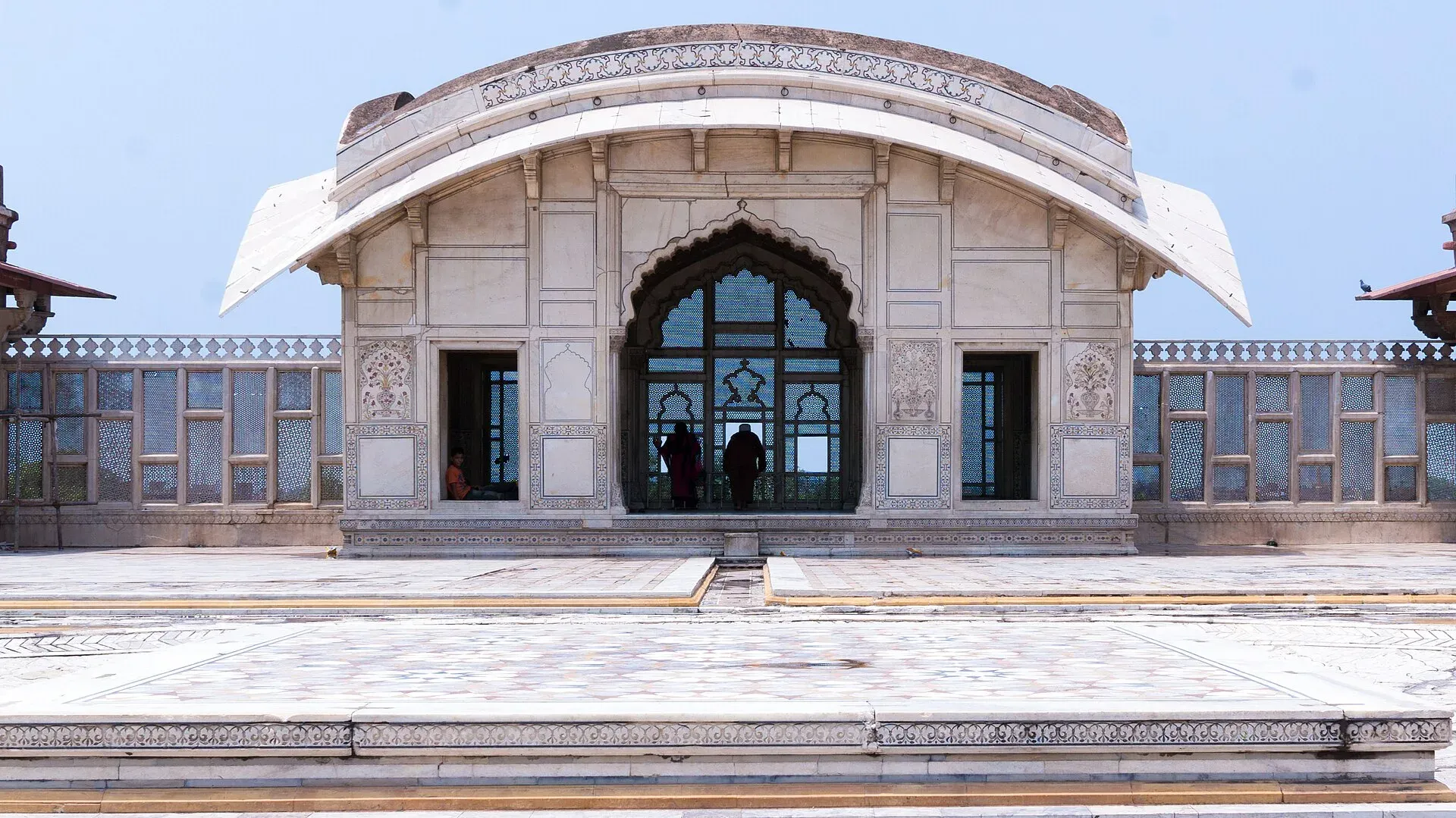
Photo: Jawad.hassan89, with thanks · CC BY-SA 3.0 · via Wikimedia Commons · temporary stand-in photo

Punjab
Pakistan's most populous province: Mughal Lahore, ancient Taxila and Harappa, Sufi shrines, the Salt Range, the Cholistan desert and the hills of Murree.
Overview
Punjab means "five waters", for the Indus tributaries that cross it: the Jhelum, Chenab, Ravi and Sutlej, with the Indus on its western edge. It is Pakistan's most populous province, with 127.7 million people at the 2023 census (127,688,922), and covers about 205,000 square kilometres (205,344 km2). Its capital is Lahore. The land is mostly flat and farmed, rising to the Potohar Plateau, the Salt Range and the Murree Hills in the north, and falling to the Thal and Cholistan deserts in the south.
People have lived here for thousands of years. Harappa belongs to the Indus Valley Civilisation, Taxila was a centre of learning in ancient Gandhara, and the Mughals, Sikhs and British all left their mark.
Plan your visit
- Getting there
By air. Lahore, Islamabad (for Rawalpindi), Multan, Faisalabad, Sialkot and Bahawalpur have airports; Bahawalpur is domestic. Lahore is the main international gateway for the province. More
Best months
Oct – Mar
Landscape and regions
The land between two rivers is called a doab, and Punjab's are named Sind Sagar, Chaj, Rachna and Bari. The Pothohar Plateau lies north of the Salt Range, with the Margalla Hills on the northern edge near Islamabad. The Thal is a semi-arid desert in the Sind Sagar doab, and Cholistan is the part of the Thar Desert along the Rajasthan border in the south. The Sulaiman Mountains rise in the south-west, where Suroh near Dera Ghazi Khan is the province's highest point at 2,311 m. The province has ten divisions and 41 districts.
A practical way to read the map is in two halves. Northern Punjab, around Islamabad, Rawalpindi and Lahore, is the most visited. It holds the capital territory, a hill station at Murree and the Sikh sites at Nankana Sahib. Southern Punjab, around Multan and Bahawalpur, is known for mango orchards, tombs and mosques. Faisalabad is a textile centre and Sialkot is known for sports goods and leather (Wikivoyage).
Wildlife survives in the margins. Lal Suhanra National Park, near Bahawalpur, has reintroduced blackbuck, nilgai and chital. The Punjab urial, the provincial animal, lives only in the Salt Range and the Kala Chitta Range, and the Indus river dolphin is found in the Indus (Wikipedia).
What it is best for
- Heritage cities: Lahore, Multan, Bahawalpur and Uch Sharif.
- Ancient sites: Taxila, Harappa and the Buddhist remains around Rawalpindi.
- Forts and palaces: Lahore Fort, Rohtas Fort, Derawar Fort and Noor Mahal.
- Faith and pilgrimage: Sufi shrines, Sikh gurdwaras at Nankana Sahib, Panja Sahib and Kartarpur, and the Hindu Katas Raj temples.
- Family trips and food: Lahore's food street culture is a reason on its own to visit.
Top places
- Lahore: Lahore Fort and Shalimar Gardens (UNESCO, 1981), Badshahi Mosque, Wazir Khan Mosque, Walled City, Lahore Museum and the Wagah border ceremony.
- Rohtas Fort near Jhelum, a 16th-century fort (UNESCO, 1997).
- Taxila and its museum (UNESCO, 1980).
- Multan and Uch Sharif: blue-tiled shrines.
- Salt Range: Khewra Salt Mine, Katas Raj temples and Kallar Kahar lake.
- Murree, Bhurban and Patriata: cool hills close to Islamabad.
- Cholistan and Derawar Fort near Bahawalpur.
When to go
Wikipedia gives April to early June as the hot season, late June to September as the rains and October to March as the cool season. Rainfall is about 500 to 800 mm on the plains and 950 to 1,300 mm in the sub-mountain north. October to March is the comfortable season. April and May warm up quickly, and June brings extreme heat. The monsoon arrives in July and August, with humid heat and sometimes flooding along the rivers. Murree is best in summer and also draws visitors for winter snow. Smog from burning crop stubble and traffic is common in the plains from late October to January.
Getting around
Punjab has the best roads and rail links in the country. Motorways connect the major cities, and long-distance buses and trains run daily. Cities have app-based taxis. Sights outside cities, such as Rohtas Fort and Katas Raj, need your own car or a hired one.
Permits and rules for visitors
- Pakistani and most foreign visitors do not need special permits for main cities and sights.
- Foreign visitors need a valid visa and should keep their passport and visa copies at hand.
- Areas close to the India border, and some desert routes in Cholistan, may need local police or district permission. Ask before you go.
- Sikh pilgrims from abroad usually travel through organised arrangements under the Kartarpur corridor and visa schemes. Check current rules with the official authorities.
- Many monuments charge entry. Current fees will be added soon; check with the Punjab Archaeology Department or the site.
People, culture and food
Punjabi is the main language, with Saraiki spoken in the south and Pothohari around Rawalpindi. Lahore is known for festivals, music and crafts, and spring kite-flying (Basant) has long been a local tradition, though it is restricted in many places. Wikipedia reports that the Punjab government lifted the long ban in December 2025 and allowed Basant in Lahore only, on 6 to 8 February 2026, with strict rules. The next Basant is set for 12 to 14 March 2027, in Lahore only (as of November 2026; check Punjab government notices). Check each year's official notice. Shrines hold regular urs celebrations with qawwali music.
The food is rich: siri paye, nihari, haleem, saag with makki di roti, Lahori fried fish, lassi and kulfi. Multan is known for sohan halwa and Gujranwala for chicken.
Safety
Emergency numbers listed by Wikivoyage are 15 for police, 115 for an ambulance and 1122 for rescue. Avoid rallies, protests and large religious gatherings, and drink only sealed bottled water. Main hazards are road accidents, summer heat, smog and petty theft in crowded bazaars. Keep valuables out of sight and use registered taxis. Security increases around Muharram, with road and mobile network closures in some cities, so plan around those days. Check local news before large public events.
Highlights
- Lahore: fort, gardens, Badshahi Mosque and the Walled City
- Three UNESCO sites: Lahore Fort and Shalimar Gardens, Rohtas Fort, Taxila
- Multan and Uch Sharif Sufi shrines
- Katas Raj, Khewra Salt Mine and Kallar Kahar in the Salt Range
- Sikh holy places at Nankana Sahib and Kartarpur
Getting there
By air. Lahore, Islamabad (for Rawalpindi), Multan, Faisalabad, Sialkot and Bahawalpur have airports; Bahawalpur is domestic. Lahore is the main international gateway for the province.
By road. The M-2 motorway links Islamabad and Lahore in about 4 hours. M-3, M-4 and M-11 reach Faisalabad, Multan and Sialkot. The N-5 (Grand Trunk Road) runs from Lahore through Gujranwala and Jhelum to Rawalpindi and Attock.
By train. The Pakistan Railways main line (ML-1) runs through Lahore, Sahiwal, Multan and Rawalpindi. Check timetables and booking options on the Pakistan Railways website.
In Lahore. The Orange Line metro train (27.1 km, 26 stations, opened 25 October 2020), the Metrobus on the Gajjumata to Shahdara corridor (opened 2013), app-based taxis and rickshaws are options. Check current routes locally.
Tips
- Visit between October and March; summer heat often passes 40 degrees Celsius.
- Smog affects Lahore and nearby cities from late October to January. Check air quality and carry a mask if you are sensitive.
- Dress modestly at mosques and shrines and remove shoes when asked.
- Motorways are fast but tolled; roads away from them can be crowded and slow.
- Book Lahore fort and museum visits in the morning to avoid heat.
Photos we still need: a bazaar or food scene in Punjab (People, culture and food); Murree or the Salt Range for the north of the province (When to go). Send us yours
Sources and last checked
Last checked Confidence medium14 sources3 still to check
- Last checked
- Method
- Desk research from published sources
- Confidence
- medium
- Checked by
- trek.pk research team
Researched from published sources; not yet checked on the ground by our team. Spot something out of date? Report a mistake.
Sources
- Pakistan Tourism Guide 2021 · Trade Development Authority of Pakistan (TDAP) · checked
- Punjab, Pakistan · Wikipedia · checked
- Fort and Shalamar Gardens in Lahore · UNESCO World Heritage Centre · checked
- Rohtas Fort · UNESCO World Heritage Centre · checked
- Taxila · UNESCO World Heritage Centre · checked
- 2023 Pakistan census results · Pakistan Bureau of Statistics · checked
- 2023 census of Pakistan (provincial populations) · Wikipedia · checked
- List of airports in Pakistan · Wikipedia · checked
- Orange Line (Lahore Metro) · Wikipedia · checked
- Lahore Metrobus · Wikipedia · checked
- Basant (festival) · Wikipedia · checked
- Cholistan Desert Rally 2026 · Tourism Development Corporation of Punjab (TDCP) · checked
- Punjab (Pakistan) (Wikivoyage) · Wikivoyage · checked
- Pakistan's historic kite festival to return in March 2027 after successful revival · Arab News Pakistan · checked
Still to be checked on the ground (3)
- Permission needed for Cholistan and border-area travel (the TDCP rally page and Wikipedia state no permit rule)
- Entry fee amounts for monuments (not published here)
- Muharram arrangements (change each year)
Nearby and related

Lahore
Punjab's capital and Pakistan's cultural city: Mughal forts, mosques and gardens, a lively Walled City, and some of the best food in the country.

Lahore Fort
The Mughal citadel at the north end of Lahore's Walled City, with palaces, a marble mosque and a long tiled Picture Wall. Inscribed by UNESCO in 1981 together with the Shalimar Gardens.

Badshahi Mosque
Lahore's great Mughal mosque, built for Emperor Aurangzeb in 1671-73 from red sandstone and marble. It faces Lahore Fort and has been on UNESCO's tentative list since 1993.

Rohtas Fort
A huge 16th-century fort of Sher Shah Suri near Jhelum, with four kilometres of walls, monumental gates and a village still living inside. UNESCO inscribed it in 1997.

Taxila
The ruins of several ancient cities and Buddhist monasteries near Islamabad, inscribed by UNESCO in 1980. Taxila was a crossroads of Gandhara, Greek, Persian and Kushan culture, with a fine museum.

Multan
The City of Saints in southern Punjab: blue-tiled Sufi shrines, a crowded old city, blue pottery, sohan halwa and mangoes.

Uch Sharif Monuments
A cluster of tiled Sufi tombs and a mosque in the old town of Uch Sharif near Bahawalpur, dating from the 13th to 15th centuries. The group is on UNESCO's tentative list (2004).

Khewra Salt Mine
One of the largest and oldest salt mines in South Asia, in the Salt Range of Jhelum District, run by PMDC. A guided walk on lit tunnels takes in brine ponds, a salt-brick mosque and a salt bridge.

Katas Raj Temples
A group of Hindu temples around a sacred pond in the Salt Range near Kallar Kahar, dating from about the 6th to 10th centuries. Important to Hindus and visited by pilgrims each year. Near the M2 motorway.

Murree
Hill resort and district capital at about 2,300 m in the Galyat hills above Islamabad. Mall Road, viewpoints, cool summers and winter snow; busy at weekends.

Cholistan Desert
Cholistan is a desert of about 25,800 km2 in Punjab's Bahawalpur Division, with dunes, seasonal ponds called tobas, camel herders and Derawar Fort. Visit October to March.
Derawar Fort
A square mud-brick fort of 40 round bastions in the Cholistan Desert, south of Ahmedpur East. Dated to the 9th century, rebuilt in 1732, and on UNESCO's tentative list since 2016.

Nankana Sahib
District capital and the birthplace of Guru Nanak, the founder of Sikhism. Gurdwara Janam Asthan draws Sikh pilgrims from around the world, especially at Guru Nanak's birth anniversary in November.

Lahore Heritage and Wagah
A two to three day city trip: Lahore Fort, the Badshahi Mosque and old city, the Shalimar Gardens, and the evening flag-lowering at Wagah, 33 km from the fort. Measured distances and current notes on the new Wagah arena.

Salt Range: Katas Raj, Khewra, Kallar Kahar
A two-day, about 360 km loop from Islamabad by the M-2 to Kallar Kahar, the Katas Raj temples and the Khewra Salt Mine. Khewra stopped receiving visitors in August 2026 until after the monsoon, so check first.

M-2 Islamabad-Lahore Motorway
Pakistan's first long motorway, the 375 km M-2, links Islamabad and Lahore across the Salt Range. It has over 20 interchanges, five pairs of service areas and fog closures in winter.
Cholistan and Derawar Fort
A 2-3 day road trip from Multan to Bahawalpur and on to Derawar Fort in the Cholistan Desert: 185 km one way. Derawar's 40 bastions are best seen in the cool season, around the February jeep rally.