

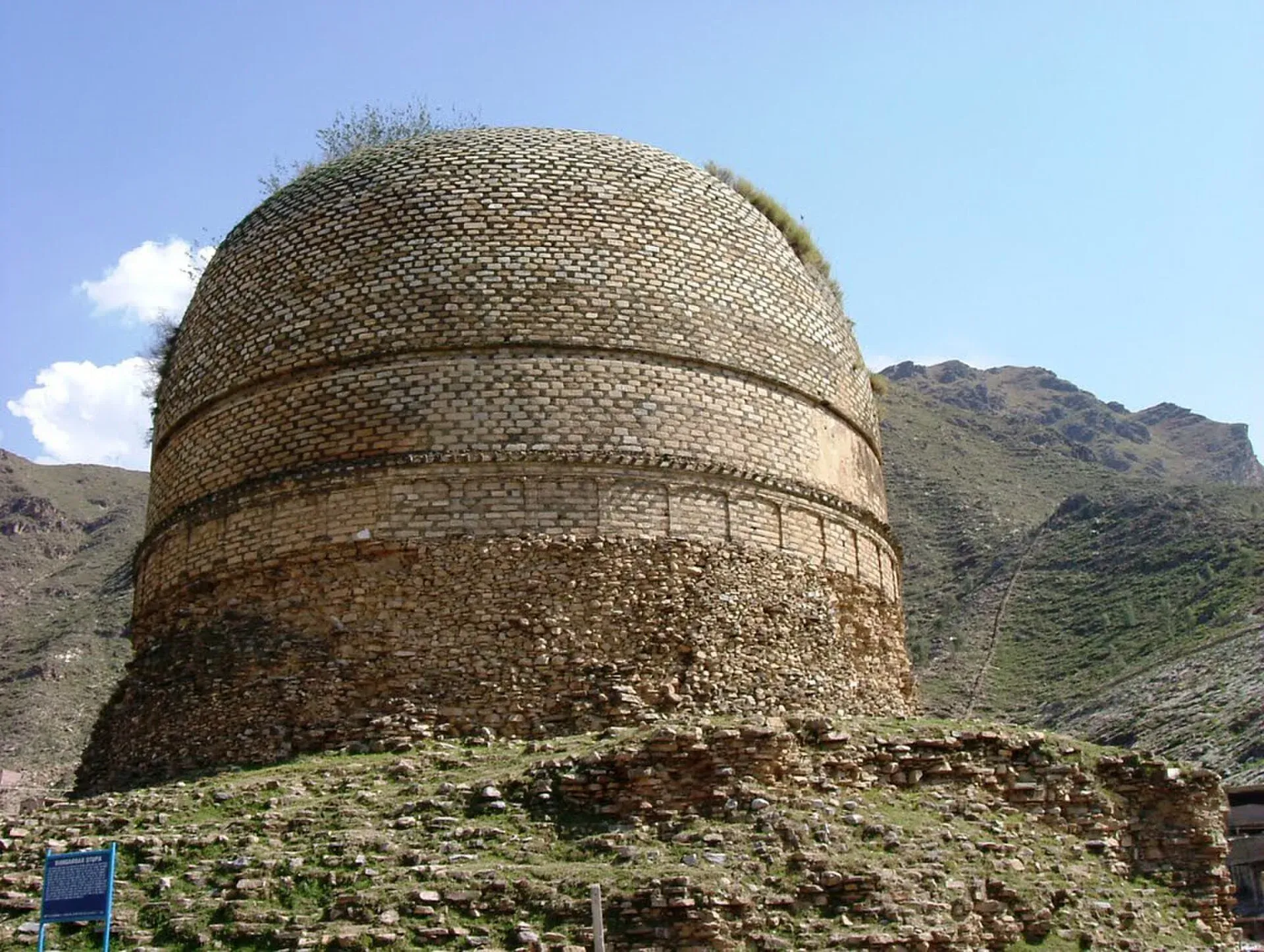
Photo: TheFranek2, with thanks · CC BY-SA 3.0 · via Wikimedia Commons · temporary stand-in photo

Shingardar Stupa
A ruined Buddhist stupa in Shingardar village, between Ghalegay and Barikot in the Swat valley. Local tradition ties it to an ancient king of Swat; Italian archaeologists later worked there.
Overview
Shingardar Stupa is a ruined Buddhist monument in the village of Shingardar, between Ghalegay and Barikot in the Swat valley. A stupa is a domed Buddhist monument, often built to hold relics. Swat has many Buddhist remains, and the valley was part of the old Gandhara region. This stupa is built of large stones with thin layers of slate, a construction method found across Swat.
Plan your visit
- Nearest town
- Ghalegay
- Getting there
The village is about 15 km by road south of Mingora (roughly 20 minutes, OSRM), on the Mingora to Barikot road. Coordinates given are for nearby Ghalegay, not the stupa itself. Local taxis and rickshaws can reach it. More
Best months
Mar – May, Sep – Nov
- Shingardar Stupa
- Related places nearby: Swat Valley, Saidu Sharif, Takht-i-Bahi and Sahr-i-Bahlol, Barikot (ancient Bazira), Swat
History
Local tradition says the stupa was built by Uttarasena, an ancient king of Swat, to enshrine his share of the Buddha's relics. That is a tradition, not a dated record, and no published source gives a construction date. Colonel Deane and Sir Aurel Stein identified the monument in the colonial period. Dawn in 2002 and The Express Tribune in 2012 both published reports on its neglect.
The Swat Buddhist sites
The Italian Archaeological Mission began work in Swat in 1955, when Giuseppe Tucci first visited, and held an excavation licence from 1956. Its published sites include the Buddhist sanctuaries of Butkara I, Panr I and Saidu Sharif I, the urban site at Barikot and the Jahanabad rock sculpture of a Buddha. Fieldwork stopped from 2007 to 2010 and resumed in 2011. No source confirms that the mission excavated or conserves Shingardar. The Swat Museum in Saidu Sharif has its own page on this site.
Ghalegay and the road
Shingardar lies on the Mingora to Barikot road, close to Ghalegay. Ghalegay has its own place in the valley's history: it was chosen as the first capital of Swat in 1849, and in 1915, after a long civil war, the jirga (council of elders) crowned Miangul Abdul Wadood as head of the new Swat State there.
What to see and do
- The stupa mound and its stone and slate construction.
- The village setting and views over the Swat river valley.
- Nearby on the road towards Mingora is a Buddha figure carved in rock, with other remains in a cave beside it. Check locally before visiting, as the link between it and the stupa is not documented.
Plan a short visit of an hour. No visitor centre or marked trail is documented.
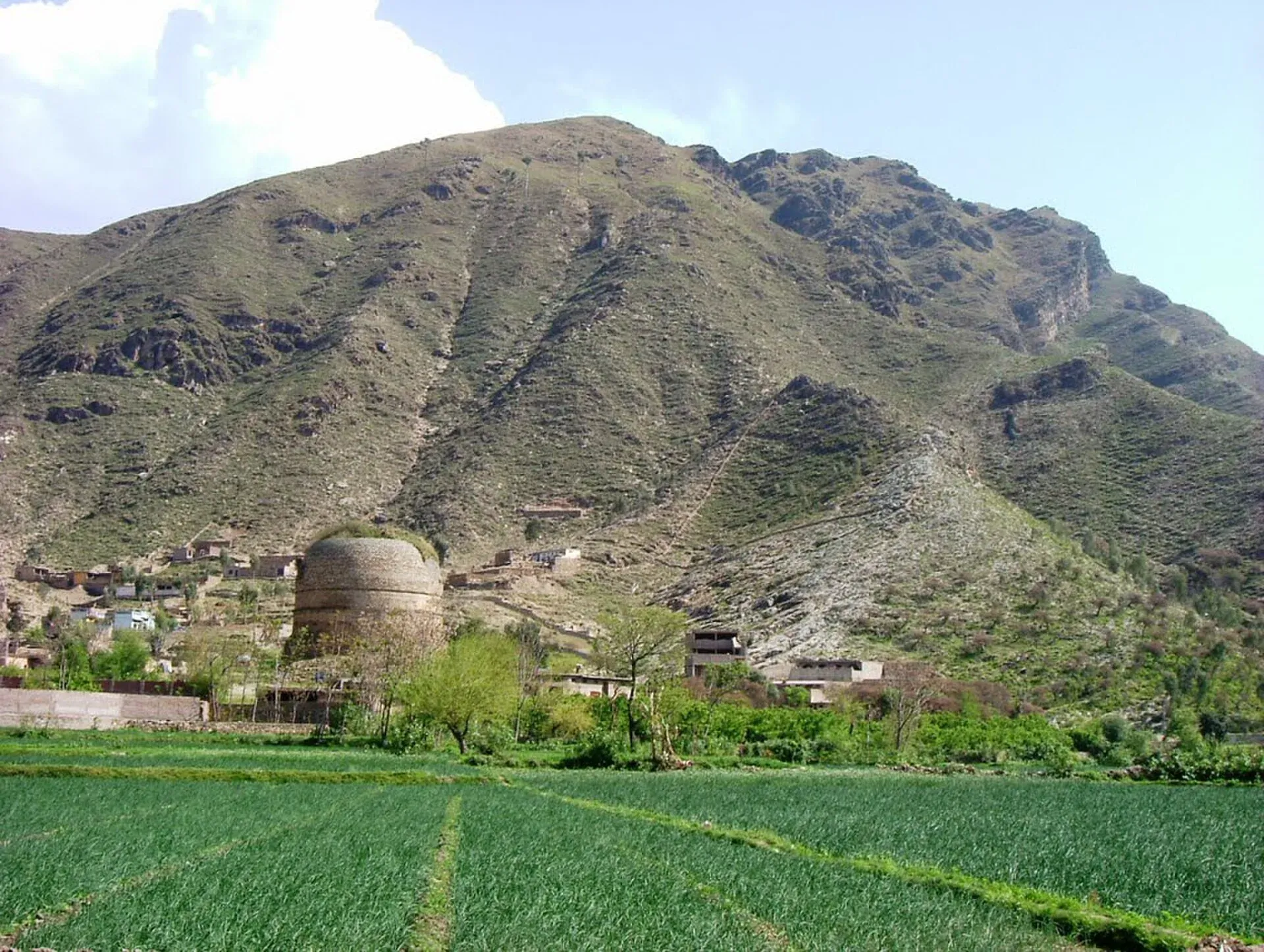
Photo: TheFranek2, with thanks · CC BY-SA 3.0 · via Wikimedia Commons · temporary stand-in photo

When to visit
Spring and autumn are the most comfortable months in lower Swat. Summers are warm and the monsoon can bring heavy rain.
Where to stay and eat
The nearest towns are Mingora and Barikot. No businesses are listed here; take advice locally.
Good to know
- Travel advice. For foreign visitors: the UK FCDO (updated 27 October 2026, checked 17 November 2026) advises against all travel to Swat. Read the current page before making any plans.
- Hours and fees. No official hours or fees are published. Contact the Khyber Pakhtunkhwa Directorate of Archaeology and Museums.
- Etiquette. The stupa is an ancient religious monument. Do not climb on it, move stones or remove fragments. Ask before photographing people in the village.
- Nearby. Swat Valley and Saidu Sharif have their own pages.
Highlights
- Buddhist stupa of stone and slate in lower Swat
- Local tradition links it to King Uttarasena
- Identified by Deane and Stein in the colonial era
- Near Ghalegay and Barikot
Getting there
The village is about 15 km by road south of Mingora (roughly 20 minutes, OSRM), on the Mingora to Barikot road. Coordinates given are for nearby Ghalegay, not the stupa itself. Local taxis and rickshaws can reach it. For foreign visitors: the UK FCDO advises against all travel to Swat.
Tips
- Check the current UK FCDO advice for Swat before planning.
- Visit with a local guide; the site is not signed.
- Ask locally about the rock-cut Buddha on the road to Mingora.
- Treat the stupa with respect; do not climb on it.
Photos we still need: the rock-cut Buddha on the Mingora road; Ghalegay village. Send us yours
Sources and last checked
Last checked Confidence low4 sources5 still to check
- Last checked
- Method
- Desk research from published sources
- Confidence
- low
- Checked by
- trek.pk research team
Researched from published sources; not yet checked on the ground by our team. Spot something out of date? Report a mistake.
Sources
- Ghalegay (Wikipedia) · Wikipedia · checked
- Italian Archaeological Mission to Pakistan (MAIP) · ISMEO · checked
- Pakistan travel advice: warnings and insurance (updated 27 October 2026) · UK Foreign, Commonwealth & Development Office · checked
- Shingardar Stupa · Wikipedia · checked
Still to be checked on the ground (5)
- Construction date and size (no source gives either)
- Coordinates are for Ghalegay; the stupa position needs a GPS check
- Whether the Italian mission excavated it, and who conserves the site now (ISMEO page on Swat does not mention Shingardar)
- Condition and access on the ground (latest press reports found are 2002 and 2012)
- Whether the rock-cut Buddha on the road to Mingora is related to the stupa (Wikipedia gives no source for it)
Nearby and related

Swat Valley
A long green river valley in northern Khyber Pakhtunkhwa, with Gandhara Buddhist sites, orchards, hill towns and the road up to Kalam. Check the current security advice before you plan a trip.

Saidu Sharif
The administrative town of Swat, joined to the bazaar city of Mingora, with the ancient Butkara stupa, the Swat Museum of Gandhara art, a Sufi shrine and the road into the Swat valley.

Takht-i-Bahi and Sahr-i-Bahlol
A hilltop Buddhist monastery near Mardan, founded in the early 1st century CE, with the ruins of a small walled town at Sahr-i-Bahlol. UNESCO World Heritage Site since 1980.

Khyber Pakhtunkhwa
Mountains, Buddhist ruins and old bazaars in north-west Pakistan: Swat, Kaghan, Chitral, the Kalash valleys, the Khyber Pass and Peshawar.
Barikot (ancient Bazira), Swat
The excavated ancient city of Bazira beneath Barikot in the Swat valley, dug by an Italian-Pakistani team since 1984. Includes an early Buddhist temple, an Indo-Greek wall and a site that Alexander's army besieged. On Pakistan's UNESCO tentative list since 2026.