

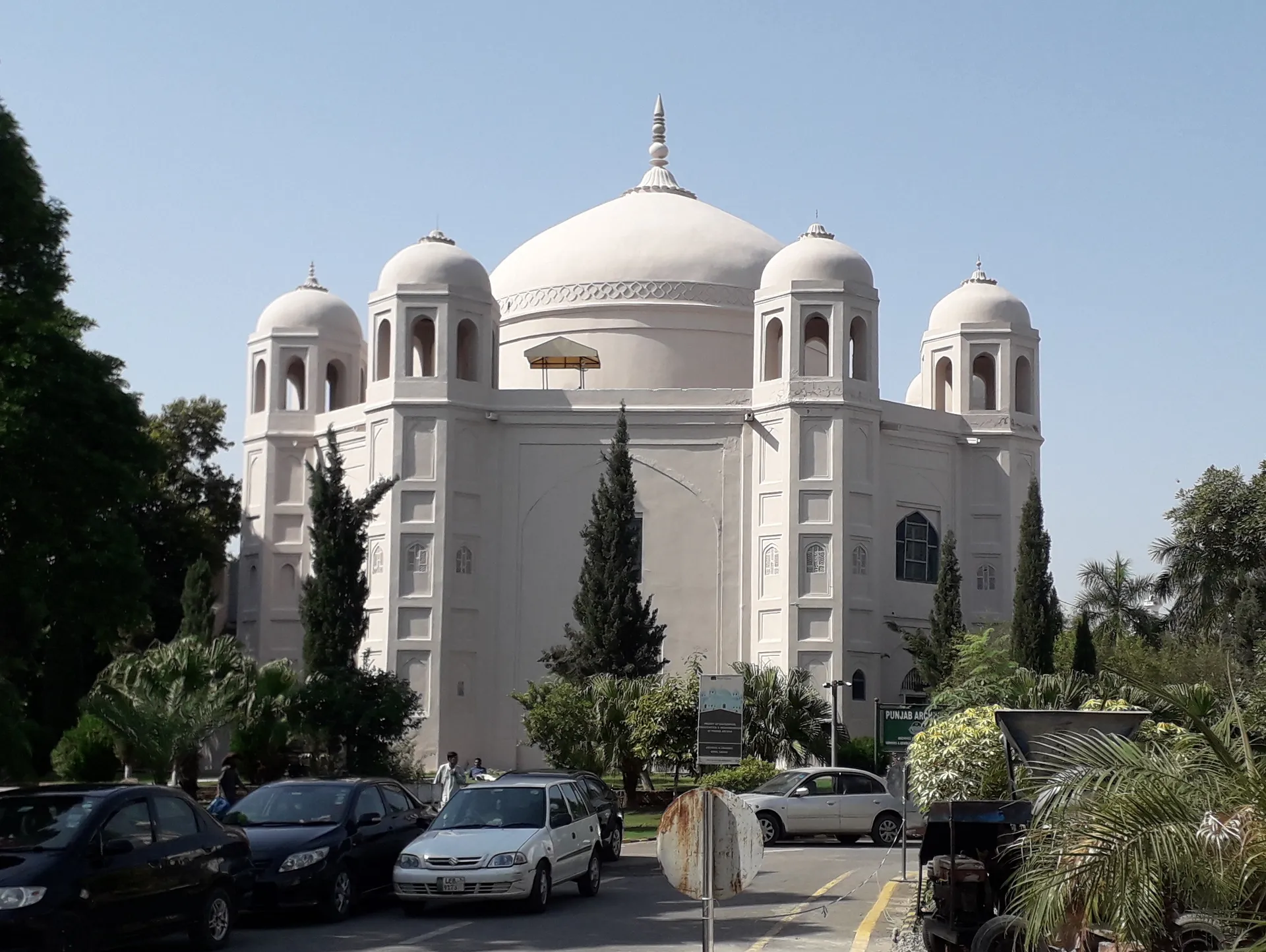
Photo: King Eliot, with thanks · CC BY-SA 4.0 · via Wikimedia Commons · temporary stand-in photo

Tomb of Anarkali
An octagonal Mughal tomb in the Punjab Civil Secretariat grounds in Lahore. It has housed the Punjab Archives since 1891, so public access is limited.
Overview
The Tomb of Anarkali is an octagonal Mughal building in the grounds of the Punjab Civil Secretariat, near The Mall and south-west of the Walled City. It is considered one of the earliest surviving Mughal tombs. Its construction is dated to either 1599 or 1615. Legend says Emperor Jahangir built it for Anarkali, a woman Akbar suspected of a relationship with Prince Saleem, as Jahangir was then known. Wikipedia notes there is no independent proof that Anarkali existed. The only evidence cited is accounts by Western travellers of the time, and the rest is later speculation or fiction.
Plan your visit
- Nearest town
- Lahore
- Opening hours
- Not confirmed. Check with the museum before you go.
- Getting there
The tomb is inside the Punjab Civil Secretariat grounds, near The Mall in central Lahore. Taxis and ride-hailing cars serve the area. Ask for the Civil Secretariat or Anarkali Tomb. More
Best months
Oct – Mar
- Tomb of Anarkali
- Related places nearby: Lahore, Anarkali Bazaar, Lahore Museum, Walled City of Lahore
What to see and do
- Plan and walls. The building is octagonal, with alternating sides of 13.4 m and 9.1 m and a small semi-octagonal tower at each corner. It is built of brick and whitewashed.
- Double dome. The dome rests on eight arches, each 3.7 m wide, and is one of the earlier Mughal examples of a double dome (an inner and an outer shell).
- Blocked arches. The large side arches were originally open in the usual Mughal way. They were blocked off in the British period. The building is said to have once stood in a garden.
- Cenotaph. A white marble cenotaph is carved with the 99 names of Allah and a Persian couplet by Saadi. A 19th-century historian called it one of the finest pieces of carving in the world. It was moved from its original place and now stands where the altar was when the building served as a church.
History
Under Sikh rule, Kharak Singh occupied the tomb, and it was later turned into a residence for the wife of General Jean-Baptiste Ventura, who served in Ranjit Singh's army. In 1847 the British converted it into clerical offices. In 1851 it became the Anglican St James Church, later regarded as Lahore's Protestant cathedral. In 1891 the congregation moved out and the building became the Punjab Record Office. Today it is the Punjab Archives and is listed as a protected monument by the Punjab Archaeology Department. It has also been used as a filming location for a song by Shoaib Mansoor.
When to visit
October to March is the most comfortable time in Lahore.
Where to stay and eat
The Secretariat area is a working government district. Hotels and restaurants are in central Lahore. See the Lahore page.
Good to know
- Access: the tomb is part of a working archive inside a government compound, so access is limited. Public visiting arrangements are not confirmed. Ask before you go.
- Opening hours: not confirmed.
- Tickets: current fees will be added soon.
- Nearby: Anarkali Bazaar and the Lahore Museum are close by.
Highlights
- Octagonal Mughal tomb dated to 1599 or 1615
- Marble cenotaph carved with the 99 names of Allah
- Home of the Punjab Archives since 1891
Getting there
The tomb is inside the Punjab Civil Secretariat grounds, near The Mall in central Lahore. Taxis and ride-hailing cars serve the area. Ask for the Civil Secretariat or Anarkali Tomb.
Tips
- Check access first: the building is part of a working archive in a government compound.
- Bring photo ID in case the Secretariat gate asks for it.
- Combine with the Lahore Museum and Anarkali Bazaar.
Photos we still need: the marble cenotaph (the Commons photos of it are low resolution); interior of the dome. Send us yours
Sources and last checked
Last checked Confidence low2 sources4 still to check
- Last checked
- Method
- Desk research from published sources
- Confidence
- low
- Checked by
- trek.pk research team
Researched from published sources; not yet checked on the ground by our team. Spot something out of date? Report a mistake.
Sources
- Tomb of Anarkali · Wikipedia · checked
- List of museums in Pakistan · Wikipedia · checked
Still to be checked on the ground (4)
- Public access and any visiting hours or permission needed (not stated in the sources opened)
- Ticket price, photography rules and accessibility
- Coordinates are from Wikipedia (31 deg 34 min 03 sec N, 74 deg 18 min 02 sec E)
- Construction date: Wikipedia gives 1599 or 1615
Nearby and related

Lahore
Punjab's capital and Pakistan's cultural city: Mughal forts, mosques and gardens, a lively Walled City, and some of the best food in the country.

Anarkali Bazaar
One of Lahore's oldest markets, just south of Lahori Gate. It sells clothes, fabric, jewellery and street food, and holds the tomb of Qutb ud-Din Aibak.

Lahore Museum
Pakistan's oldest and largest museum, in an 1894 Indo-Saracenic building on The Mall. Home of the Fasting Buddha from Gandhara and galleries from the Indus Valley to the Pakistan Movement.

Walled City of Lahore
Lahore's old core: lanes, gates and Mughal and Sikh-era monuments around the Royal Road, including Wazir Khan Mosque, Delhi Gate and the Shahi Hammam. Its lanes are best explored on foot.