

Photo: Tahir mq, with thanks · CC BY-SA 4.0 · via Wikimedia Commons · temporary stand-in photo

Walled City of Lahore
Lahore's old core: lanes, gates and Mughal and Sikh-era monuments around the Royal Road, including Wazir Khan Mosque, Delhi Gate and the Shahi Hammam. Its lanes are best explored on foot.
Overview
The Walled City, also called the Old City or Inner Lahore, is the historic heart of Lahore. Settlement here goes back many centuries, and Lahore became a proper city in about 1040. The city was fortified over the medieval period, and after Emperor Akbar made Lahore his capital in 1584 the walls were rebuilt and extended. The Lahore Fort, a UNESCO World Heritage Site since 1981, sits at its north-western corner.
The old city remains the cultural centre of Lahore. Today it is a maze of crowded bazaars, courtyard houses (havelis) and monuments from the Mughal and Sikh periods.
Plan your visit
- Nearest town
- Lahore
- Getting there
The Walled City is in central Lahore. Wazir Khan Mosque is about 2.7 km (4 minutes by car) and Data Darbar about 3 km (5 minutes) from Lahore Railway Station (OSRM, checked 16 November 2026). More
Best months
Oct – Mar
- Walled City of Lahore
- Related places nearby: Lahore, Badshahi Mosque, Wazir Khan Mosque, Data Darbar, Tomb of Jahangir and Akbari Sarai
History
Wikipedia says the city once had 13 gates; six survive today as gates (Bhati, Delhi, Kashmiri, Lohari, Roshnai and Shairanwala). The British pulled down most of the walls after the 1857 rebellion. The Mughals shaped much of what you see. Akbar built the walls and old gates and founded the Akbari Mandi grain market, which still operates. Shah Jahan's governor, Wazir Khan, built the Wazir Khan Mosque and the Shahi Hammam, and his own mansion, the Peri Mahal. Aurangzeb added the Badshahi Mosque, the largest Mughal monument in Lahore. Under Sikh rule, Lahore was again a capital from 1799, and monuments such as the Samadhi of Ranjit Singh and several gurdwaras were added. The British largely ignored the old city and built a new Lahore to the south.
A pilot conservation project, the Shahi Guzargah (Royal Passage) project, began in 2012 under the Walled City of Lahore Authority. The first phase restored the route from Wazir Khan Mosque to Delhi Gate and finished in 2015 with support from Norway and the United States.
The gates
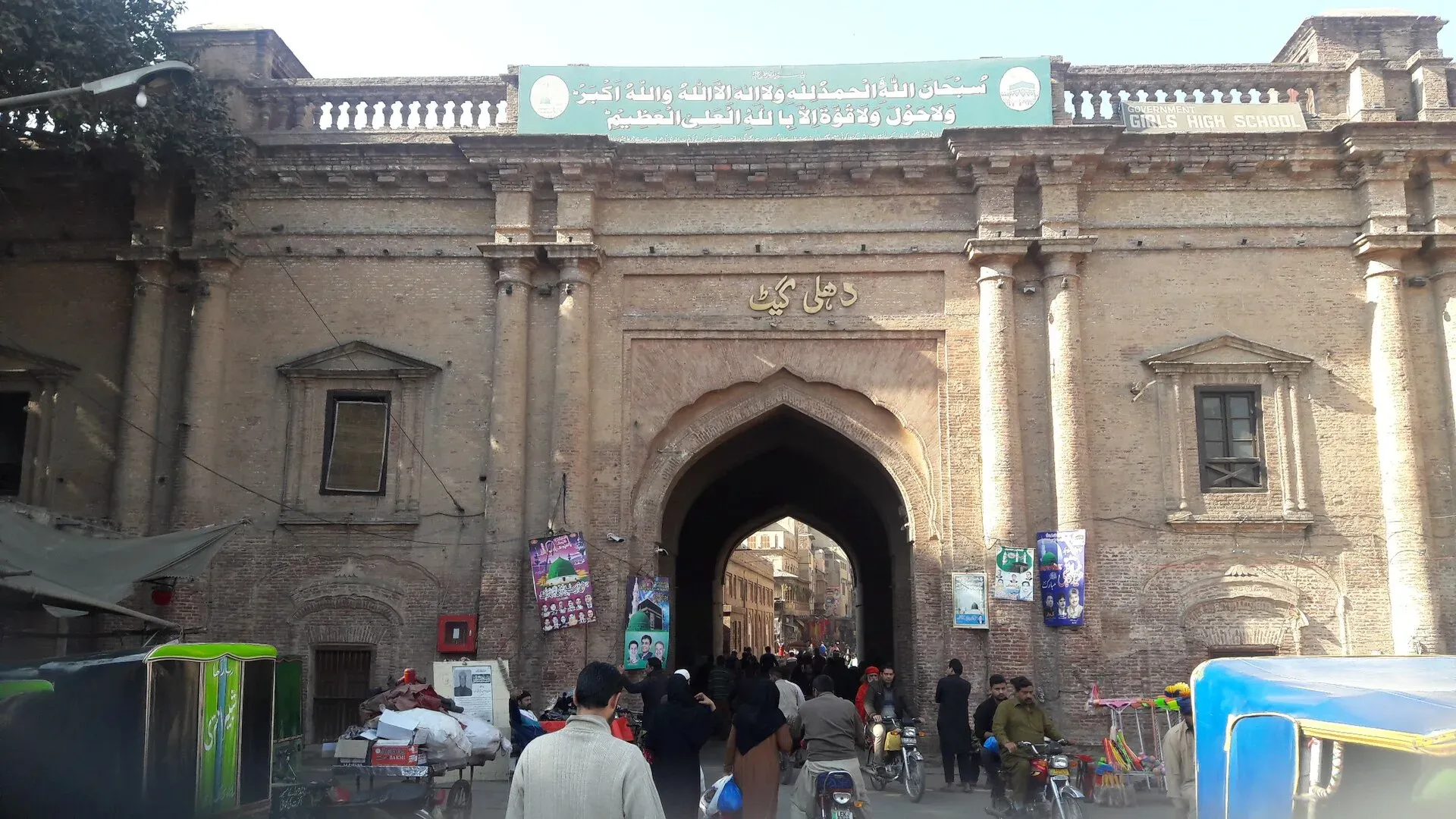
- Delhi Gate faces Delhi. The present gate is a British-era rebuilding east of the older gate, which stood at Chitta Gate. It is the usual starting point for the Royal Road.
- Bhati Gate on the western wall is known for food inside it. The shrine of Data Darbar stands just outside.
- Lohari Gate is very close to Bhati Gate. It is named after the blacksmith (lohar) workshops that once lay outside it.
- Roshnai Gate stands between the Lahore Fort and the Badshahi Mosque and was lit in the evenings, hence its name (roshni means light). Wikipedia describes it as the gate that largely remains in its original state.
- Shairanwala Gate was first called Khizri Gate and was built by Ranjit Singh. Two live lions were kept in cages here. Khizri Street, inside the gate, has Haveli Agha Gull.
- Kashmiri Gate faces towards Kashmir. Mochi Gate is no longer a surviving gate but its name stays on a busy bazaar.
The Royal Road, step by step
The Shahi Guzargah (Royal Passage) once ran from Delhi Gate to Lahore Fort. The restored section runs between Delhi Gate and Wazir Khan Mosque.
- Delhi Gate and Chitta Gate, the eastern entrance to Wazir Khan Chowk.
- Shahi Hammam, a Persian-style bathhouse built in 1635 under Shah Jahan, restored between 2013 and 2015. It won a UNESCO Award of Merit in 2016. It was meant to earn the income to maintain the mosque.
- Dina Nath's well, restored in the chowk.
- Wazir Khan Mosque, begun in 1634 and completed in 1641 (a footnote gives 1634 to 1635), famous for its tilework and frescoes.
- Beyond the chowk the route continues towards the fort. The Gurdwara Janam Asthan Guru Ram Das stands in Chuna Mandi Bazaar near the Lahore Fort, and the Sunehri Mosque (1753, with gilded domes, later used as a gurdwara under Sikh rule) is also in the old city.
What to see and do
- Delhi Gate and the Royal Road. Walk west from Delhi Gate to Wazir Khan Chowk (the mosque is about 260 m from the gate).
- Wazir Khan Mosque and the Shahi Hammam. Tile, calligraphy and painted baths.
- Data Darbar. The shrine of Ali Hujwiri near Bhati Gate.
- Badshahi Mosque and Hazuri Bagh at the north side, facing the Fort.
- Samadhi of Ranjit Singh, the Sikh-era memorial beside the Fort, and old havelis and gurdwaras in the lanes.
- Food and bazaars. Try street food in the bazaars; Food Street near the mosque is the well-known place for an evening meal.
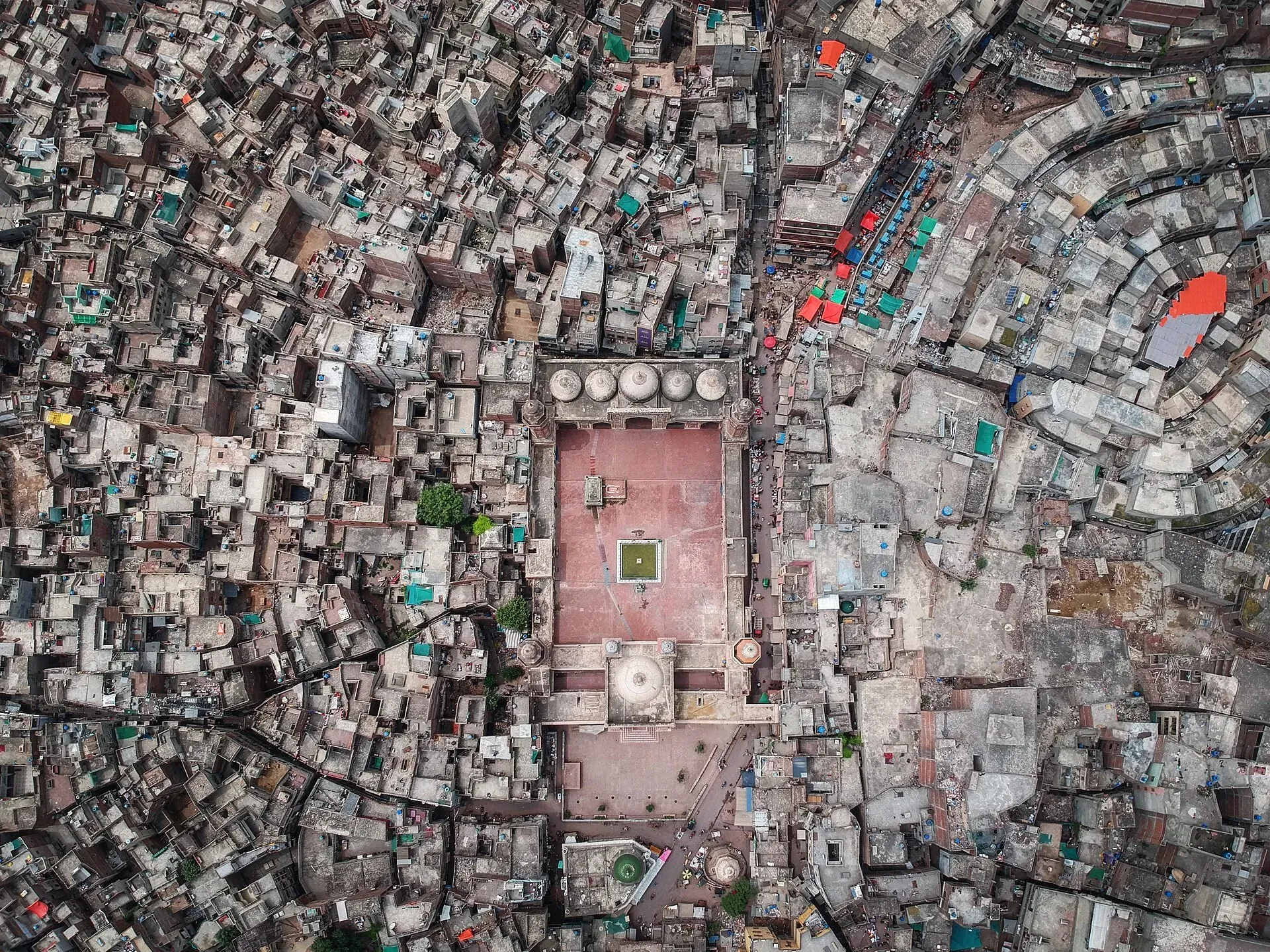
Photo: Alisjafri, with thanks · CC BY-SA 4.0 · via Wikimedia Commons · temporary stand-in photo

Havelis
Courtyard houses (havelis) show how the old city lived. The Haveli of Nau Nihal Singh is the only Sikh-era haveli that keeps its original ornamentation, including Kangra-style paintings on the western facade. It has been used as a girls' school since the British period. Haveli Agha Gull on Khizri Street was built around 1875 and is now partly a market.
Bazaars and food
Shah Alami Bazaar is one of Lahore's largest commercial markets, rebuilt after 1947. Akbari Mandi, founded under Akbar, is still a grain market. The Mochi Gate bazaar is known for dry fruits, kites and fireworks. The areas around Masti Gate and Taxali Gate are wholesale shoe markets.
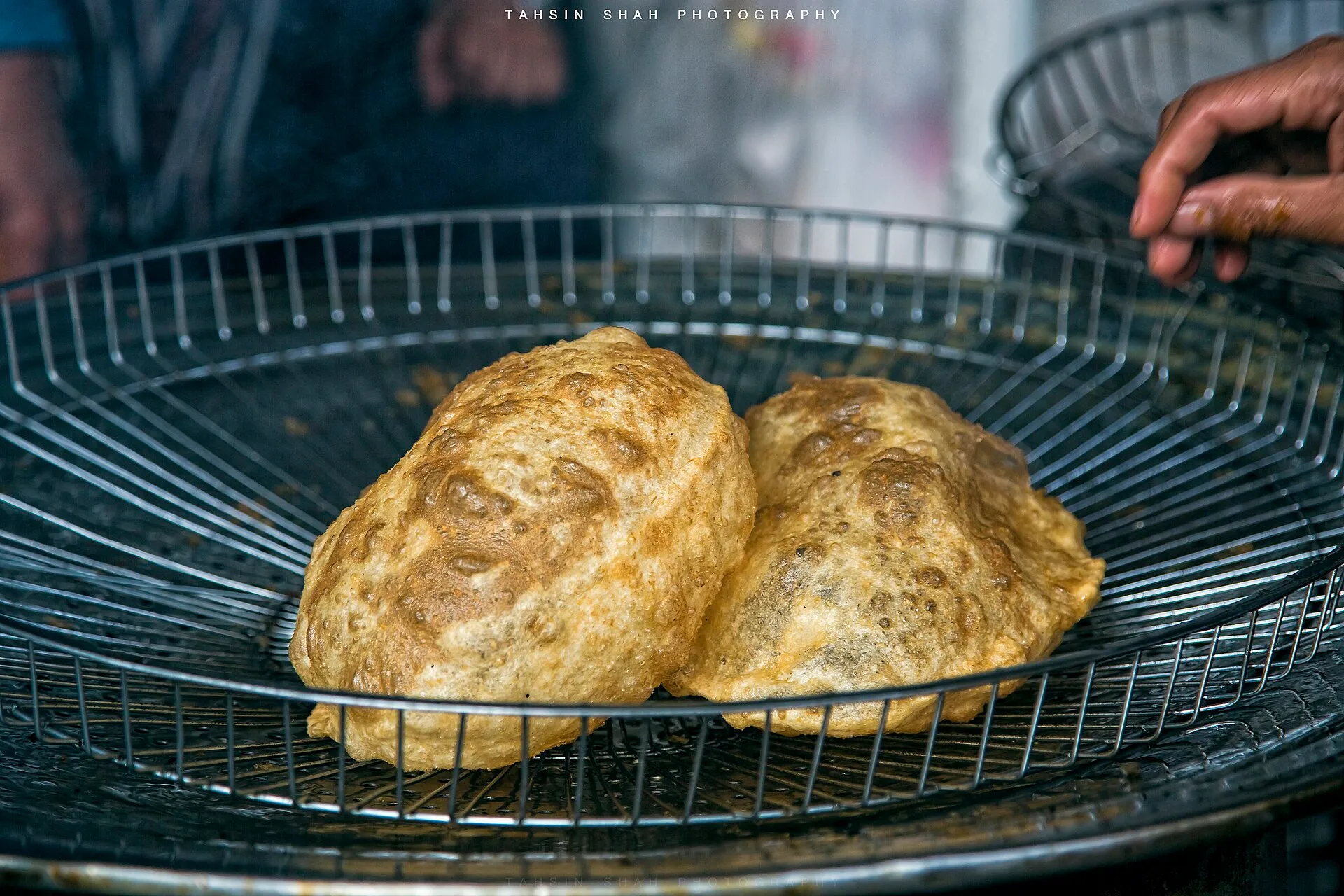
Photo: Tahsin Shah, with thanks · CC BY-SA 4.0 · via Wikimedia Commons · temporary stand-in photo

Food is a main reason to come. Bhati Gate and Mochi Gate are known for kebabs and sweets, and the lanes near Taxali Gate are known for siri paye (trotters, locally called phajja) and traditional sweet shops. Nihari is eaten near Lohari Gate, and Gawalmandi has a food street. Halwa puri is a traditional breakfast of the old city. Wikivoyage warns that obvious foreigners should haggle carefully, since bargaining is standard.
A day in the Walled City
An honest outline from the sights above. Come early. Start at Delhi Gate and walk the Royal Road past the Shahi Hammam to Wazir Khan Mosque. Continue to the Sunehri Mosque and the haveli of Nau Nihal Singh. Have lunch in the Bhati Gate or Mochi Gate area, then walk to Roshnai Gate, the Badshahi Mosque and the Lahore Fort in the afternoon. Finish with an evening meal near Bhati Gate or on the food streets. Sunday mornings are quiet. A second day could cover Data Darbar, Lohari Gate and the Mochi Gate bazaar at a slower pace.
When to visit
October to March is pleasant for walking. In summer go early. Friday midday and evenings are crowded.
Where to stay and eat
Most hotels are in newer parts of Lahore, within a short ride of the gates. Eat at the traditional food stalls and restaurants in the old city.
Good to know and etiquette
- Walk, or use a rickshaw or tuk-tuk (qingqi) for the main gates; cars struggle in the lanes, and Wikivoyage advises against taxis in the Inner City because the streets are narrow and crowded.
- Dress modestly and cover your head and shoulders when entering mosques and shrines; remove shoes.
- Pickpocketing is possible in crowds. Keep bags in front.
- Opening times and entry charges for individual monuments vary and were not confirmed from an official source. Current fees will be added soon. The Walled City of Lahore Authority is the official body.
- In April 2025 the Lahore High Court ruled that the provincial Archaeology Department, not the Walled City Authority, manages Lahore Fort and Shalimar Gardens, so check who looks after a monument before you go.
Highlights
- Mughal walls, gates and monuments
- Wazir Khan Mosque and Shahi Hammam
- Delhi Gate and the Royal Road
- Samadhi of Ranjit Singh and Sikh-era buildings
- Next to Lahore Fort, a UNESCO site since 1981
Getting there
The Walled City is in central Lahore. Wazir Khan Mosque is about 2.7 km (4 minutes by car) and Data Darbar about 3 km (5 minutes) from Lahore Railway Station (OSRM, checked 16 November 2026). Take a rickshaw or ride-hailing car to Delhi Gate, Bhati Gate or Lahori Gate and then walk. Several Metrobus stops are nearby.
Tips
- Walk the Royal Road from Delhi Gate to Wazir Khan Mosque.
- Go early or late; avoid summer midday.
- Keep bags in front in crowds.
- Dress modestly for mosques and shrines.
Photos we still need: Sunehri Mosque; a bazaar lane such as Shah Alami; Roshnai Gate. Send us yours
Sources and last checked
Last checked Confidence medium8 sources5 still to check
- Last checked
- Method
- Desk research from published sources
- Confidence
- medium
- Checked by
- trek.pk research team
Researched from published sources; not yet checked on the ground by our team. Spot something out of date? Report a mistake.
Sources
- Walled City of Lahore (Wikipedia) · Wikipedia · checked
- Walled City of Lahore Authority · Government of the Punjab · checked
- Wazir Khan Mosque (Wikipedia) · Wikipedia · checked
- List of World Heritage Sites in Pakistan · Wikipedia · checked
- Pakistan Tourism Guide 2021 · TDAP Pakistan (Trade Development Authority of Pakistan) · checked
- OSRM routing (road distances) · Project OSRM · checked
- Lahore (Walled City / Old City section) · Wikivoyage · checked
- Walled City of Lahore (gates, Royal Passage, havelis, bazaars) · Wikipedia · checked
Still to be checked on the ground (5)
- Which gates are currently open (Wikipedia lists six surviving gates; no source says which are open to traffic)
- Entry fees and hours of individual monuments
- Which authority manages which monument (the Walled City of Lahore Authority site lists Walled City, Lahore Fort, Shalimar and Shahdara under its administration, but the April 2025 Lahore High Court ruling reported earlier gave Lahore Fort and Shalimar to the Archaeology Department; unresolved)
- Whether the Haveli of Nau Nihal Singh (now a girls' school) and the Sunehri Mosque are open to visitors, and on what days
- Which of the food streets and kebab areas named by Wikivoyage are still active (no outlet names are used here)
Nearby and related

Lahore
Punjab's capital and Pakistan's cultural city: Mughal forts, mosques and gardens, a lively Walled City, and some of the best food in the country.

Badshahi Mosque
Lahore's great Mughal mosque, built for Emperor Aurangzeb in 1671-73 from red sandstone and marble. It faces Lahore Fort and has been on UNESCO's tentative list since 1993.

Wazir Khan Mosque
A Mughal mosque in Lahore's Walled City, built 1634 to 1641, famous for its tilework and painted interior. On Pakistan's UNESCO tentative list since 1993, and still an active place of worship.

Data Darbar
The shrine of the Sufi saint Ali al-Hujwiri (Data Ganj Bakhsh) in Lahore, the largest Sufi shrine in South Asia and the most sacred place in the city. A working shrine with free food and nightly crowds.

Tomb of Jahangir and Akbari Sarai
The Mughal emperor Jahangir's mausoleum at Shahdara in Lahore, finished in 1637, with the Akbari Sarai gateway and the tomb of Asif Khan. The group is on UNESCO's tentative list (1993).