

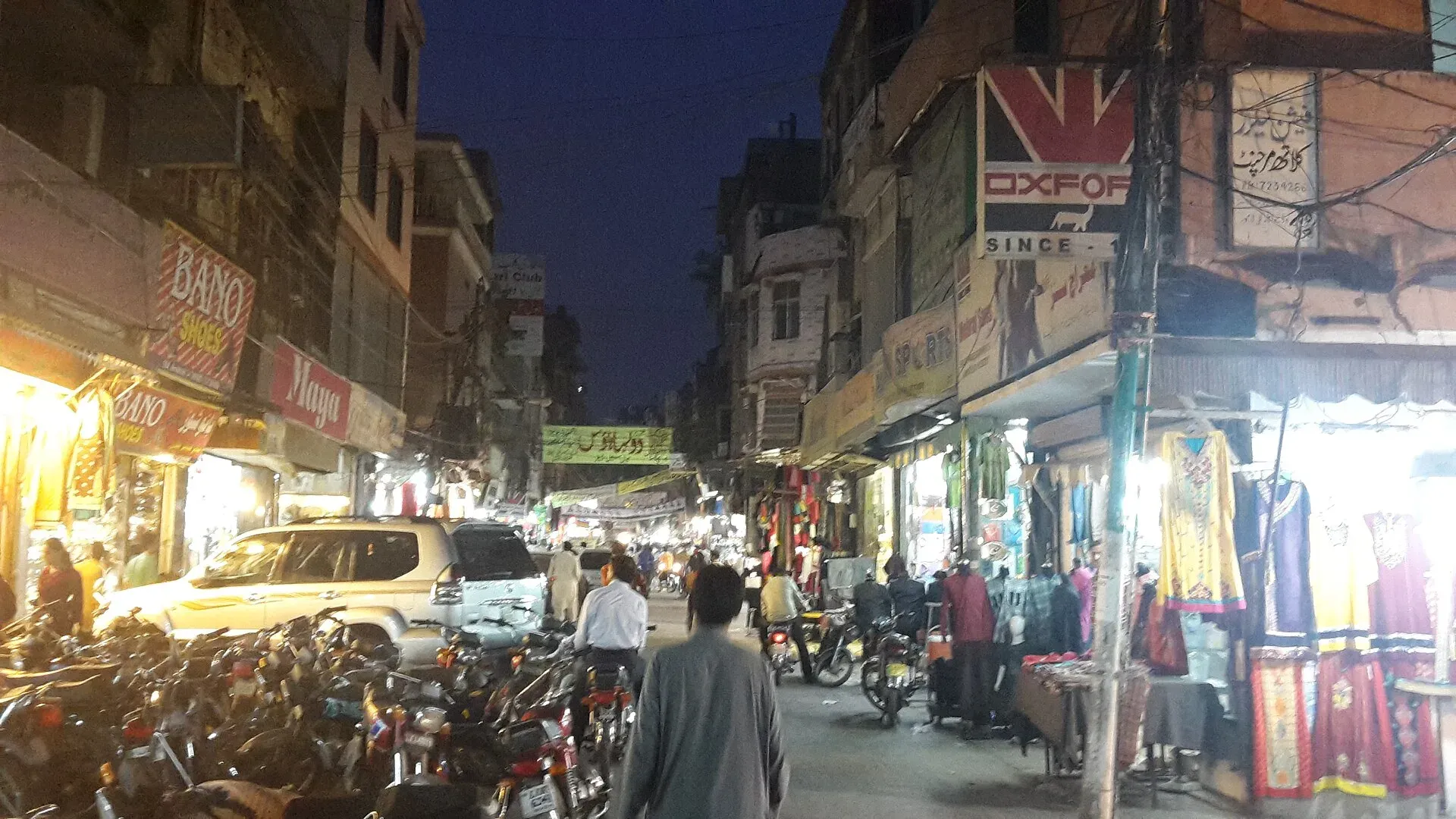
Photo: Ali lahoti, with thanks · CC BY-SA 4.0 · via Wikimedia Commons · temporary stand-in photo

Anarkali Bazaar
One of Lahore's oldest markets, just south of Lahori Gate. It sells clothes, fabric, jewellery and street food, and holds the tomb of Qutb ud-Din Aibak.
Overview
Anarkali Bazaar is one of the oldest surviving markets in South Asia, dating back at least 200 years. It runs south from Lahori Gate of the Walled City and across Mall Road. Shops sell fabric, clothes, jewellery and many other goods, and food stalls serve some of Lahore's best-known dishes. The World Monuments Fund placed it on its 2020 World Monuments Watch, describing it as endangered by neglect.
Plan your visit
- Nearest town
- Lahore
- Getting there
About 5 km from Lahore city centre, roughly 6 minutes by road without traffic (OSRM, checked 16 November 2026). The market sits at the south end of the Walled City near Lahori Gate and Mall Road. Traffic is very heavy; More
Best months
Oct – Mar
- Anarkali Bazaar
- Related places nearby: Lahore, Walled City of Lahore, Lahore Fort, Badshahi Mosque, Tomb of Anarkali
The name
The bazaar takes its name from a mausoleum thought to hold Anarkali, a court dancer in Mughal stories. In the legend she was punished on Emperor Akbar's order for an alleged love affair with his son, Prince Salim, later Emperor Jahangir. The tomb itself now stands in a building of the Civil Secretariat next to the bazaar; see the Tomb of Anarkali.
Old and New Anarkali
The bazaar is split in two.
- Old Anarkali is known for traditional food. Halwa puri (fried bread with sweet halwa and chickpea curry), nihari (slow-cooked beef stew) and siri paye (a dish of trotters) are all associated with it.
- New Anarkali is known for handicrafts, embroidery, clothing and fabric. Its markets and lanes include Bano Bazaar, Urdu Bazar (a book market), Paan Gali, Paisa Akhbar, Dhani Ram Road, Jan Muhammad Road, Aabkari Road and Aibak Road.
The Aibak tomb
The tomb of Qutb ud-Din Aibak, the first Sultan of Delhi, is in the bazaar. It was renovated in the early 1970s on the orders of Prime Minister Zulfikar Ali Bhutto.
Valmiki Mandir
The Valmiki Mandir, a Hindu temple on Bhim Street in the Neela Gumbad area, is described as about 1,200 years old. After a court case in 2022 the Evacuee Trust Property Board took it back, made basic repairs and reopened it to Hindu worshippers. Check access before you go.
A half-day outline
Arrive late in the morning, when crowds are lighter. Walk through Old Anarkali for lunch, browse New Anarkali for fabric and handicrafts, then visit the Aibak tomb. The Walled City, Lahore Fort and the Badshahi Mosque are a few minutes' walk north through Lahori Gate.
When to visit
October to March is the best time. Evenings are lively but very busy.
Where to stay and eat
The bazaar has many small restaurants and street stalls, and food streets in the Walled City are a short walk away. Hotels are along Mall Road and in Gulberg.
Good to know
- Bargaining is normal. Start well below the first price and stay polite.
- Streets are crowded. Keep phones and wallets in front pockets and avoid carrying large amounts of cash.
- Lanes are narrow and busy with bikes and carts. The best way to explore is on foot.
- Dress modestly and carry some cash for small stalls.
- Opening hours differ between shops, and weekly closing days vary by lane.
Highlights
- One of South Asia's oldest surviving markets
- Old Anarkali for food; New Anarkali for textiles and crafts
- Tomb of Qutb ud-Din Aibak inside the market
- Next to Lahori Gate and the Walled City
Getting there
About 5 km from Lahore city centre, roughly 6 minutes by road without traffic (OSRM, checked 16 November 2026). The market sits at the south end of the Walled City near Lahori Gate and Mall Road. Traffic is very heavy; park further out and walk, or take a ride-hailing car or rickshaw to the edge.
Tips
- Visit in the late morning for fewer crowds.
- Bargain politely and carry small notes.
- Keep valuables secure in busy lanes.
- Combine with the Walled City on foot.
Photos we still need: Old Anarkali food stalls; New Anarkali fabric shops; Valmiki Mandir. Send us yours
Sources and last checked
Last checked Confidence medium3 sources3 still to check
- Last checked
- Method
- Desk research from published sources
- Confidence
- medium
- Checked by
- trek.pk research team
Researched from published sources; not yet checked on the ground by our team. Spot something out of date? Report a mistake.
Sources
- Anarkali Bazaar · Wikipedia · checked
- World Monuments Watch 2020 listing for Anarkali Bazaar · World Monuments Fund (cited by Wikipedia) · checked
- Valmiki Mandir, Lahore · Wikipedia · checked
Still to be checked on the ground (3)
- Shop opening hours and weekly closing day
- Current condition of the Aibak tomb and Valmiki Mandir (no source after the 2022 repairs)
- Exact positions of the sub-markets on the ground
Nearby and related

Lahore
Punjab's capital and Pakistan's cultural city: Mughal forts, mosques and gardens, a lively Walled City, and some of the best food in the country.

Walled City of Lahore
Lahore's old core: lanes, gates and Mughal and Sikh-era monuments around the Royal Road, including Wazir Khan Mosque, Delhi Gate and the Shahi Hammam. Its lanes are best explored on foot.

Lahore Fort
The Mughal citadel at the north end of Lahore's Walled City, with palaces, a marble mosque and a long tiled Picture Wall. Inscribed by UNESCO in 1981 together with the Shalimar Gardens.

Badshahi Mosque
Lahore's great Mughal mosque, built for Emperor Aurangzeb in 1671-73 from red sandstone and marble. It faces Lahore Fort and has been on UNESCO's tentative list since 1993.

Tomb of Anarkali
An octagonal Mughal tomb in the Punjab Civil Secretariat grounds in Lahore. It has housed the Punjab Archives since 1891, so public access is limited.