

Photo: Moiz Ismaili, with thanks · CC BY-SA 4.0 · via Wikimedia Commons · temporary stand-in photo

Wazir Khan Mosque
A Mughal mosque in Lahore's Walled City, built 1634 to 1641, famous for its tilework and painted interior. On Pakistan's UNESCO tentative list since 1993, and still an active place of worship.
Overview
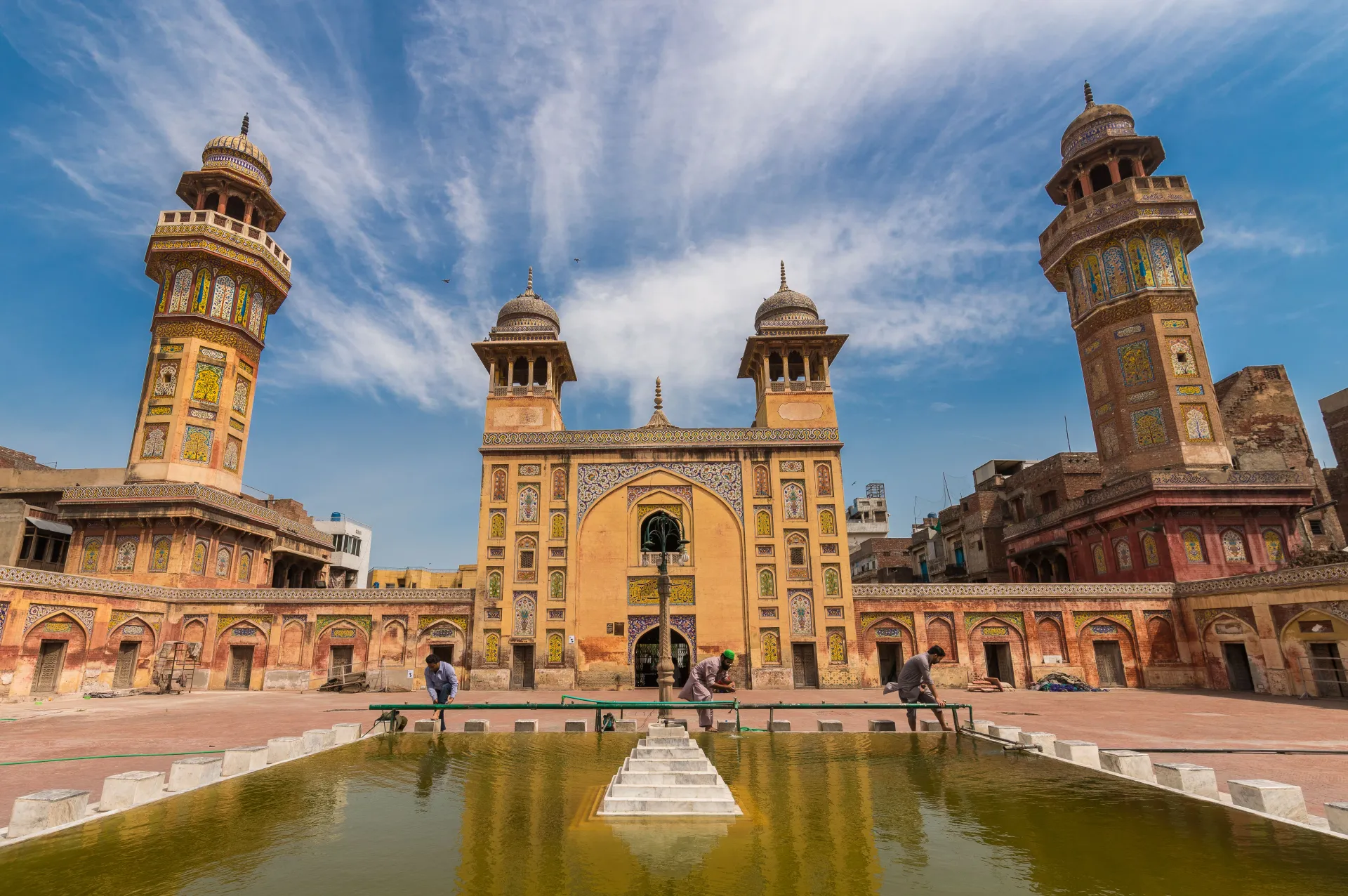
Wazir Khan Mosque is a 17th-century Mughal mosque on the Royal Road (Shahi Guzargah) inside the Walled City of Lahore, on the south side of the road, about 260 m west of Delhi Gate. Wikipedia describes it as the most ornately decorated mosque of the Mughal period. Almost every surface is covered in tile mosaic or painted plaster. It is still used for prayer, and it also holds a saint's tomb. For the surrounding lanes, see the Walled City of Lahore.
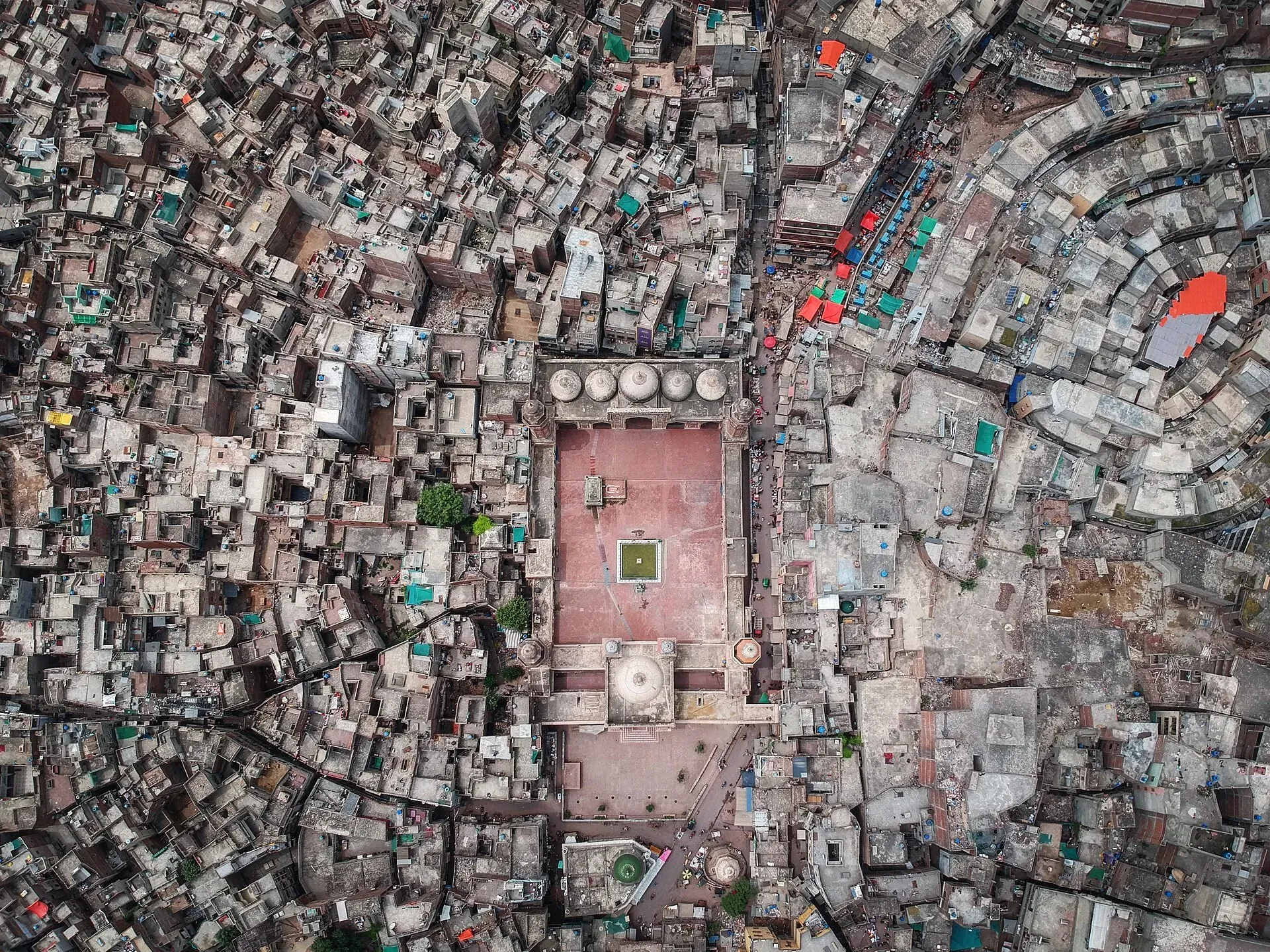
Photo: Alisjafri, with thanks · CC BY-SA 4.0 · via Wikimedia Commons · temporary stand-in photo

Plan your visit
- Nearest town
- Lahore
- Getting there
The mosque is about 2.7 km (roughly 4 minutes by car) from Lahore Railway Station (OSRM, checked 16 November 2026), but the Walled City's lanes are narrow. More
Best months
Oct – Mar
- Wazir Khan Mosque
- Related places nearby: Lahore, Badshahi Mosque, Walled City of Lahore, Data Darbar
History
Hakim Ilm-ud-din Ansari, known as Wazir Khan, was physician to Shah Jahan and governor of the Punjab. He began the mosque in 1634 (Wikipedia's headline figure and lead; its background section says 1634 or 1635). Construction took about seven years, and Wikipedia's headline figure gives completion as 3 December 1641.
The mosque stands on the site of an older Sufi shrine and encloses the tomb of Miran Badshah (Syed Muhammad Ishaq Gazruni), in a crypt in the courtyard. It replaced the Maryam Zamani Mosque as Lahore's main Friday mosque. The architect is unknown; Wazir Khan used craftsmen from his home town of Chiniot, known for woodwork and stonework.
The mosque was part of a complex: a row of calligraphers' and bookbinders' shops, shops on the north and east sides, a serai (inn), the nearby Shahi Hammam (baths) and a public square. Rents from these paid into a waqf, or endowment, for upkeep. John Lockwood Kipling wrote about its decoration in the late 1880s, and in 1903 Fred Henry Andrews noted that it had fallen into disrepair.
Restoration has been under way since 2004 under the Government of Punjab. The Aga Khan Trust for Culture joined in 2007, and a survey began in 2009, with support from Germany, Norway, the United States and others. A related Shahi Guzargah project from 2012 to 2015 removed illegal shops from the Royal Road between the mosque and Delhi Gate, cleared encroachments from Wazir Khan Chowk, rehabilitated Chitta Gate and put power lines underground. The mosque has been on Pakistan's UNESCO tentative list since 1993. It is not inscribed.
What to see and do
- The entrance iwan. A tall arched gateway in Timurid style, covered in tile and calligraphy, above a smaller portal facing Wazir Khan Chowk. The niche has one of Lahore's first muqarnas (honeycomb vaulting). Quranic verses above are credited to the calligrapher Haji Yousaf Kashmiri, and Persian quatrains by Muhammad Ali, a disciple of the saint Mian Mir, flank the portal.
- Kashi-kari tilework. Punjabi tile mosaic set in glazed brick covers the outer walls, minarets and courtyard facades in cobalt blue, turquoise, white, green, orange, yellow and purple.
- The calligrapher's bazaar. The octagonal chamber behind the portal sits at the centre of the calligraphers' bazaar. Wikipedia calls it the first South Asian example of the Central Asian charsu (four-axis) bazaar.
- The frescoes. The interior walls are plastered and painted in fresco, with flowers and, beneath the dome, paired trees, wine pitchers and fruit platters read as allusions to Paradise.
- The courtyard. About 160 by 130 ft, with a brick floor, high arched galleries, 32 small cells once used by scholars, a washing pool of about 35 ft square and four minarets of about 33 m.
- The prayer hall. Five compartments under domes; the central one is a square pavilion on four arches, and its acoustics are said to carry the imam's sermon across the courtyard.
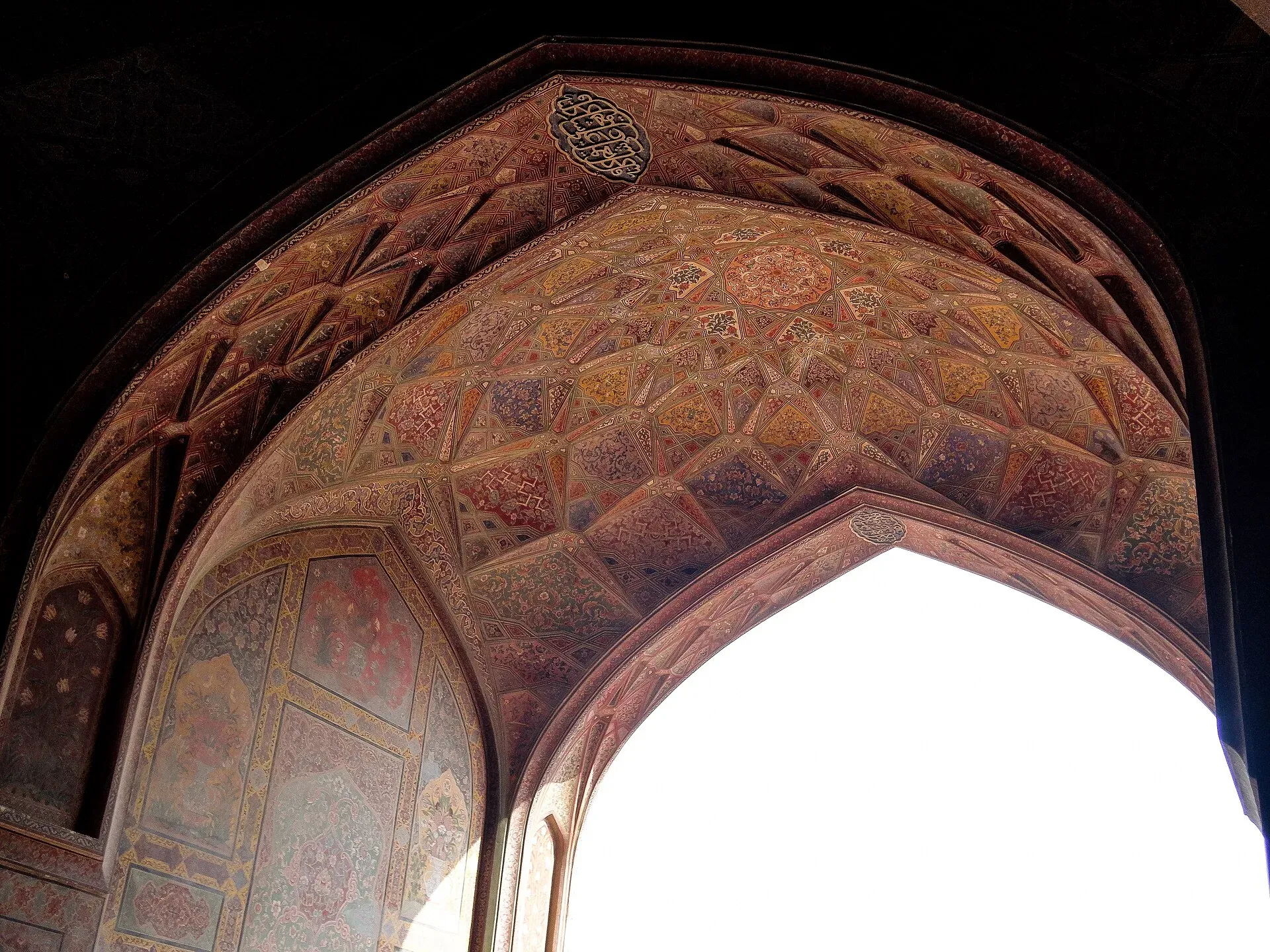
Photo: AnoshNadeemButt, with thanks · CC BY-SA 4.0 · via Wikimedia Commons · temporary stand-in photo

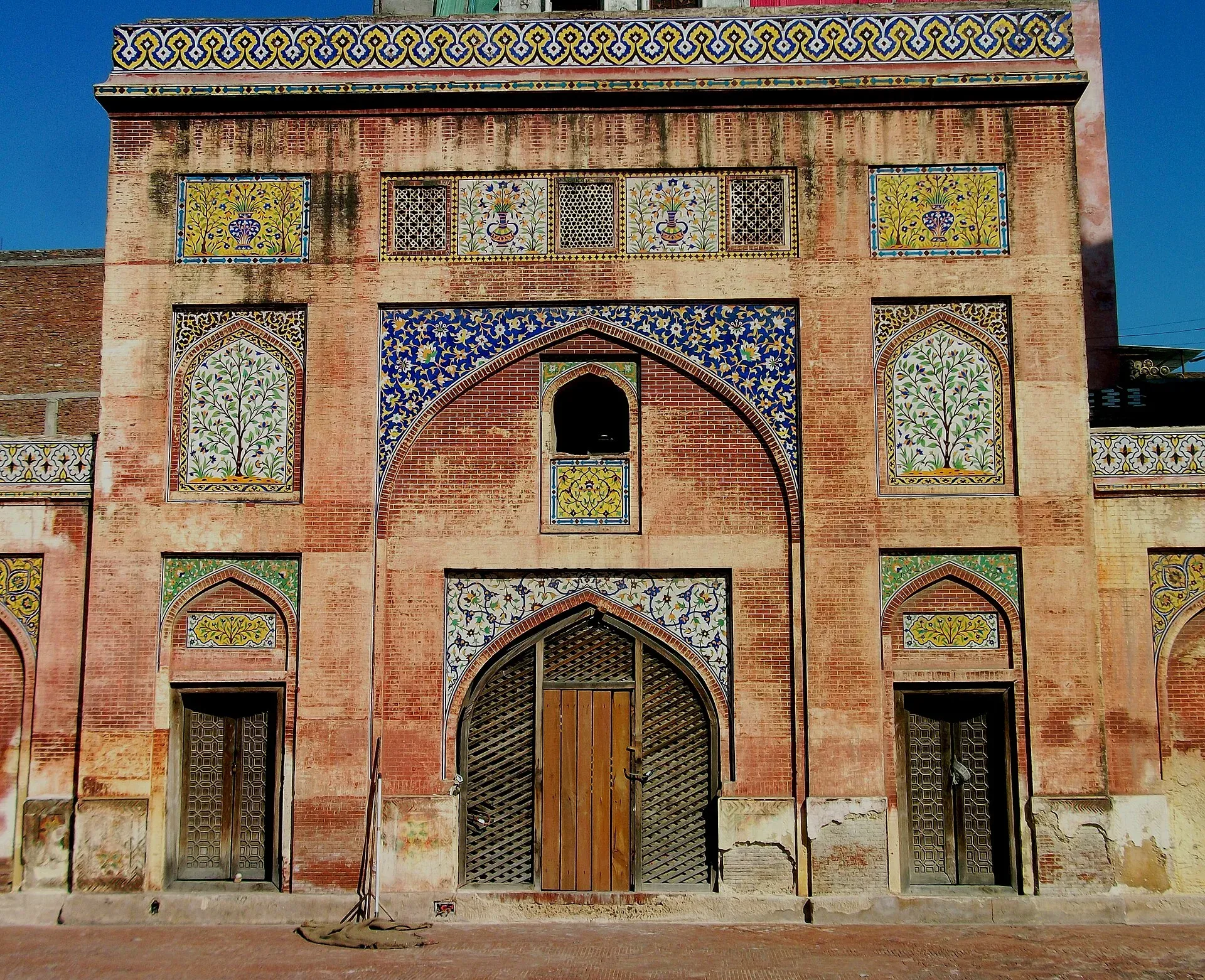
Photo: Muhammad Umair Mirza, with thanks · CC BY-SA 4.0 · via Wikimedia Commons · temporary stand-in photo

A morning in the Walled City
An outline built from the sights on this site. Enter the Walled City at Delhi Gate and walk west along the Royal Road to the mosque, arriving early for the light. Spend an hour on the portal, courtyard and frescoes, then the calligraphers' bazaar and the Shahi Hammam nearby. Wazir Khan Chowk is the natural place to stop. See also Badshahi Mosque and Lahore.
When to visit
Early morning or late afternoon gives the best light. October to March is comfortable. Friday midday is busy with prayer, so avoid it.
Where to stay and eat
The Walled City has traditional food stalls and nearby guesthouses; most hotels are in newer parts of Lahore a short ride away.
Getting there and around
The mosque is about 2.7 km (roughly 4 minutes by car) from Lahore Railway Station (OSRM estimate, checked 16 November 2026), but the Walled City's lanes are narrow. Take a rickshaw or taxi to Delhi Gate and walk west along the Royal Road. Nearby Metrobus stops include Bhatti Chowk.
Good to know and etiquette
- Dress modestly. Cover shoulders and legs; women should bring a scarf. Remove shoes at the entrance.
- Do not enter the prayer hall during prayer. Keep voices low.
- Ask before photographing people. Avoid flash on the frescoes.
- Entry fee and opening hours were not confirmed from an official source; current fees will be added soon. Check with the Walled City of Lahore Authority (phone +92 42 99204238, walledcitylahoreauthority@gmail.com, listed on its website on 17 November 2026, which gives no ticket or hours information).
Highlights
- Built 1634 to 1641 for Wazir Khan
- Kashi-kari tile mosaic in many colours
- Painted frescoes inside
- Around 260 m from Delhi Gate on the Royal Road
- UNESCO tentative list since 1993
Tips
- Go early or late for light and fewer people.
- Dress modestly and remove shoes.
- Avoid Friday midday prayer.
- Combine with Delhi Gate and the Shahi Hammam.
Photos we still need: Wazir Khan Chowk and the Royal Road approach from Delhi Gate. Send us yours
Sources and last checked
Last checked Confidence medium7 sources3 still to check
- Last checked
- Method
- Desk research from published sources
- Confidence
- medium
- Checked by
- trek.pk research team
Researched from published sources; not yet checked on the ground by our team. Spot something out of date? Report a mistake.
Sources
- Wazir Khan Mosque (Wikipedia) · Wikipedia · checked
- Wazir Khan's Mosque, Lahore (tentative list entry) · UNESCO World Heritage Centre · checked
- List of World Heritage Sites in Pakistan · Wikipedia · checked
- Auqaf and Religious Affairs Department, Government of Punjab · Government of Punjab · checked
- Pakistan Tourism Guide 2021 · TDAP Pakistan (Trade Development Authority of Pakistan) · checked
- OSRM routing (road distances) · Project OSRM · checked
- Walled City of Lahore Authority · Punjab Walled Cities & Heritage Areas Authority · checked
Still to be checked on the ground (3)
- Entry fee and hours (no official source; the WCLA site has none)
- Whether tourists can enter during prayer times (no source; page advises not to enter the prayer hall during prayer)
- Exact start year: 1634 or 1635 (Wikipedia says 1634 in infobox and lead, 1634 or 1635 in text; no further source)
Nearby and related

Lahore
Punjab's capital and Pakistan's cultural city: Mughal forts, mosques and gardens, a lively Walled City, and some of the best food in the country.

Badshahi Mosque
Lahore's great Mughal mosque, built for Emperor Aurangzeb in 1671-73 from red sandstone and marble. It faces Lahore Fort and has been on UNESCO's tentative list since 1993.

Walled City of Lahore
Lahore's old core: lanes, gates and Mughal and Sikh-era monuments around the Royal Road, including Wazir Khan Mosque, Delhi Gate and the Shahi Hammam. Its lanes are best explored on foot.

Data Darbar
The shrine of the Sufi saint Ali al-Hujwiri (Data Ganj Bakhsh) in Lahore, the largest Sufi shrine in South Asia and the most sacred place in the city. A working shrine with free food and nightly crowds.