

Photo: KamranRashied, with thanks · CC BY-SA 4.0 · via Wikimedia Commons · temporary stand-in photo

Heritage Railway Stations
Pakistan's oldest railway stations, from Lahore Junction (1860, fort-style) to Karachi City (1864) and Peshawar Cantonment (1898), plus Golra Sharif and Attock Khurd, worth seeing even if you do not ride.
What it is
Many of Pakistan's main railway stations date from the 1860s to the 1930s and survive as working buildings. They are not museums, so there is no ticket or opening time for a visit. You can look from the forecourt or buy a platform ticket if the station offers them. Ask Pakistan Railways. Pakistan Railways' website has a Railway Heritage photo album and a Steam Buffs page, but gives no visitor list (checked 16 November 2026).
Photography rules changed in 2026. In late April 2026 Pakistan Railways announced that filming and photography on its premises needs prior written permission from Railway Headquarters, aimed at journalists, vloggers and influencers (ProPakistani, 29 April 2026). A Senate committee questioned the notice on 11 May 2026 (Dawn, 12 May 2026), and reports say Railways later described it as covering sensitive installations only. There is no known later update, so assume that photography inside a station can be stopped and ask the station master first.
Stations worth knowing
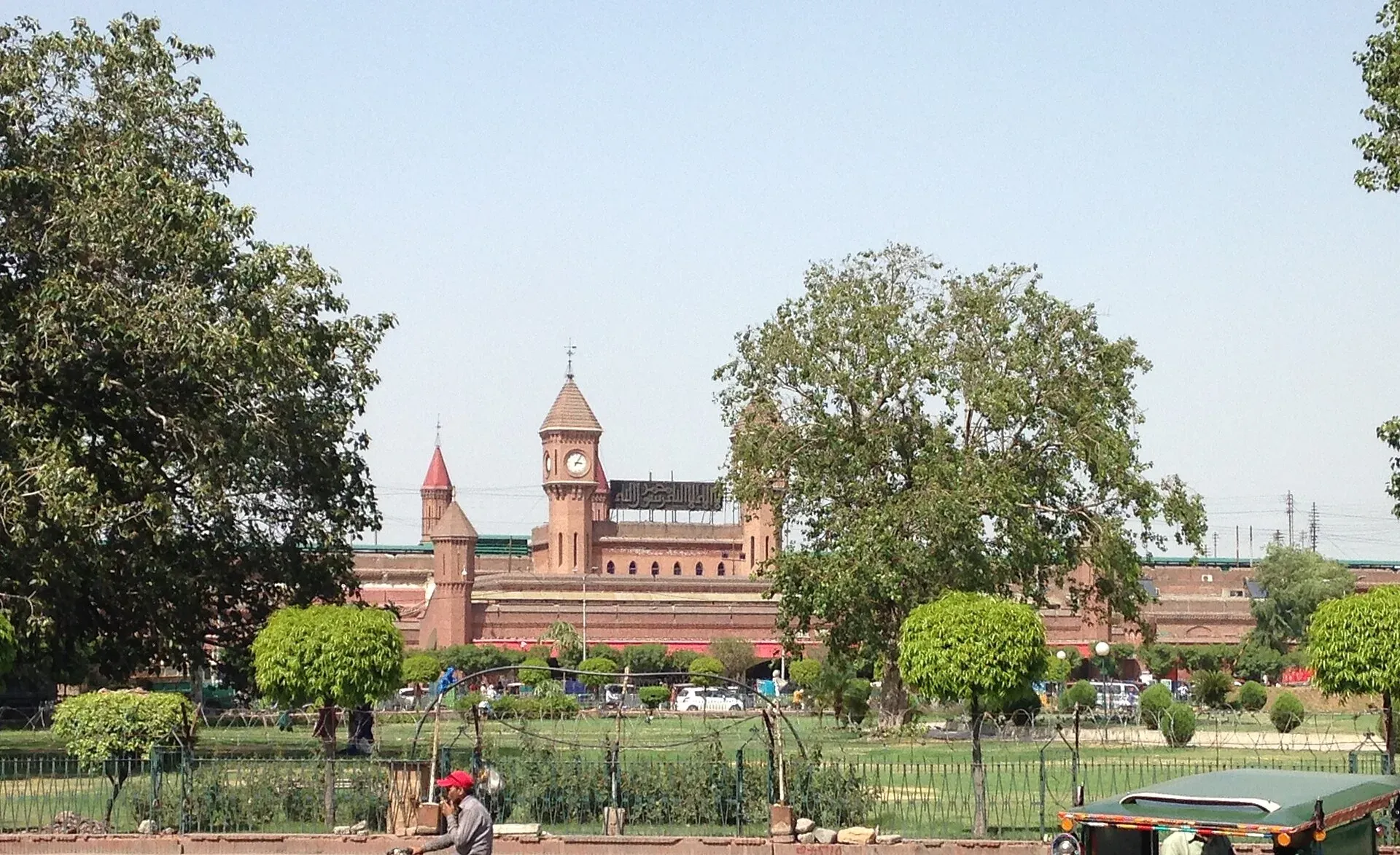
- Lahore Junction: built between 1859 and 1860, shortly after the 1857 uprising. Wikipedia describes a medieval-fort style with thick walls, turrets and gun loops. It is a working station and Pakistan Railways headquarters, at about 31.58 N, 74.34 E.
- Karachi City: opened on 3 May 1864 as McLeod station, the southern end of the Scinde Railway. Wikipedia says the current building dates from 1935 and is of yellow Gizri sandstone. Dawn (2010) says a foundation stone dated 30 September 1935 sits on the block facing Wallace Road, which it describes as a divisional office block, and that little is known about when the station building itself was built; treat 1935 as the date of that block. The station is listed under the Sindh Cultural Heritage (Preservation) Act 1994 (Dawn, 2017), although Sindh decided in August 2025 to reassess its protected buildings.
- Peshawar Cantonment: opened in 1898. It was linked to the Khyber Pass Railway, now closed, and its locomotive shed keeps three steam engines.
- Golra Sharif: built in 1882, now home to the railway museum. See the Golra Sharif Railway Museum page.
- Attock Khurd: a Victorian stone station on the Indus, dating from the 1880s (Dawn gives 1880; Wikipedia's headline figure gives 1884, so sources still disagree), beside the 1883 iron bridge. It is the destination of the Sunday Safari Train.
- Landi Kotal: built in 1925 on the Khyber Pass line, renovated as a heritage site and drawing visitors in 2025 (Dawn). Its location is in a district the UK advises against visiting.
- Shelabagh (Balochistan): the station at the eastern portal of the Khojak Tunnel, near the line to Chaman.
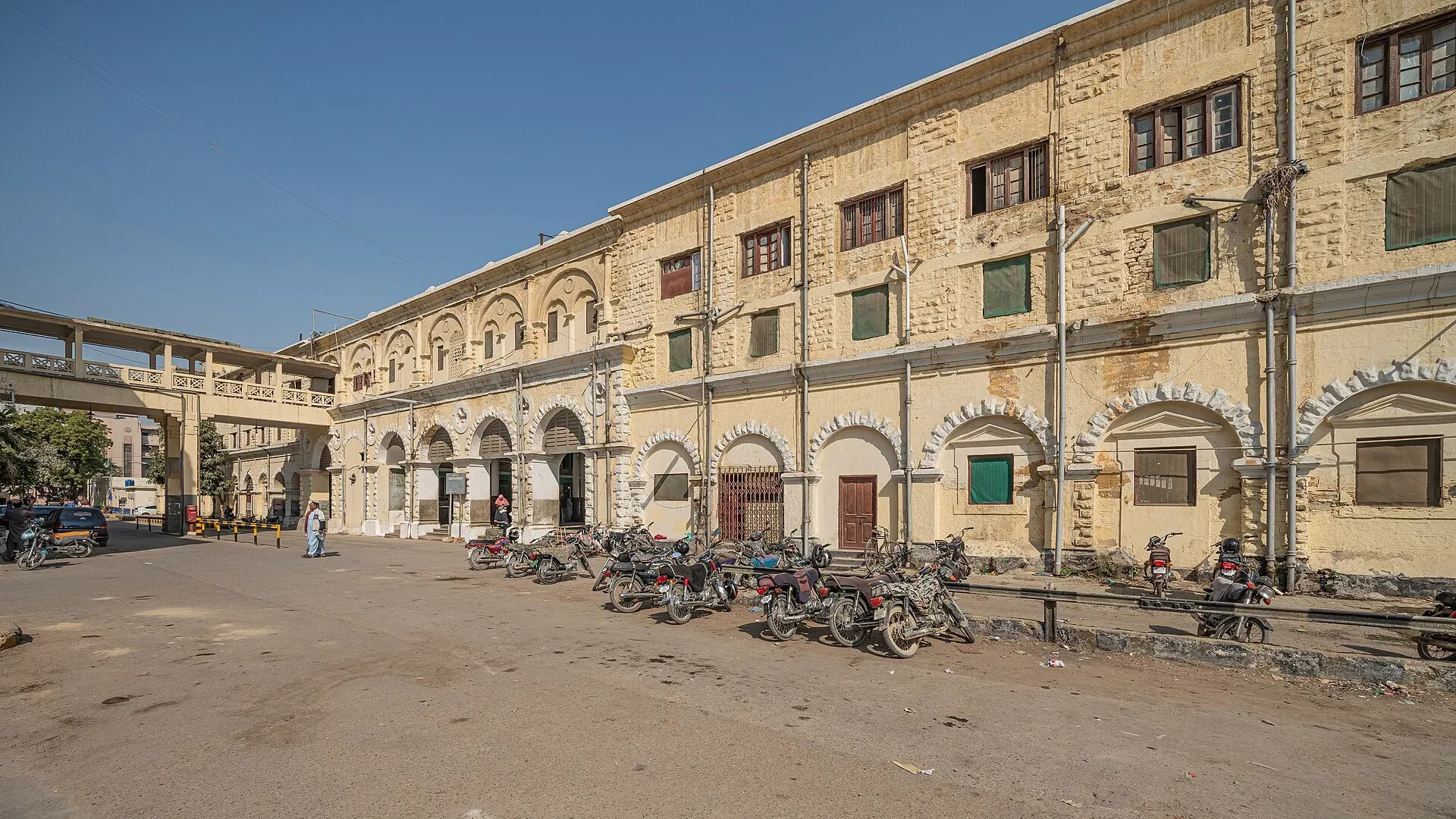
Photo: A.Savin, with thanks · Public domain (CC0) · via Wikimedia Commons · temporary stand-in photo

Golra Sharif and Attock Khurd
Golra Sharif is on Golra Road in the south-west of Islamabad at about 608 m. Wikipedia gives its opening as 1881 in one place and 1882 in another section, and says it became a junction in 1912. The building is Victorian, with five hall-like rooms of yellow stone masonry. It stands on the Karachi to Peshawar main line and on the Khushalgarh-Kohat-Thal line, with more than 20 trains a day passing, and it houses the Golra Sharif Railway Museum.
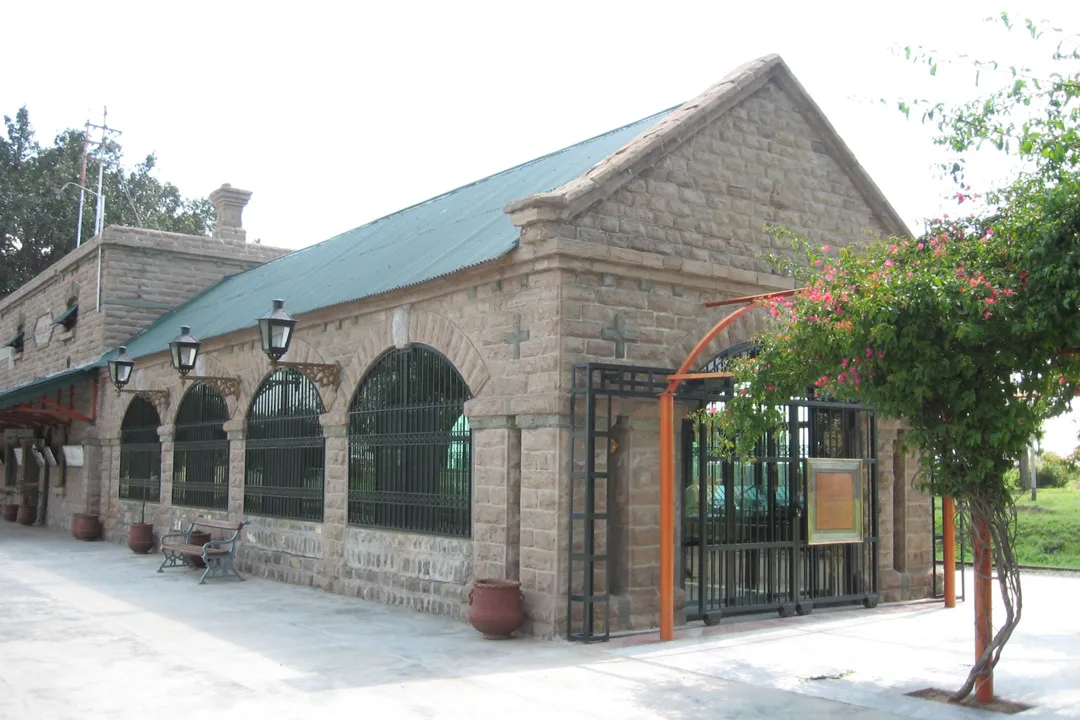
Photo: Adnanrail, with thanks · CC BY-SA 3.0 · via Wikimedia Commons · temporary stand-in photo

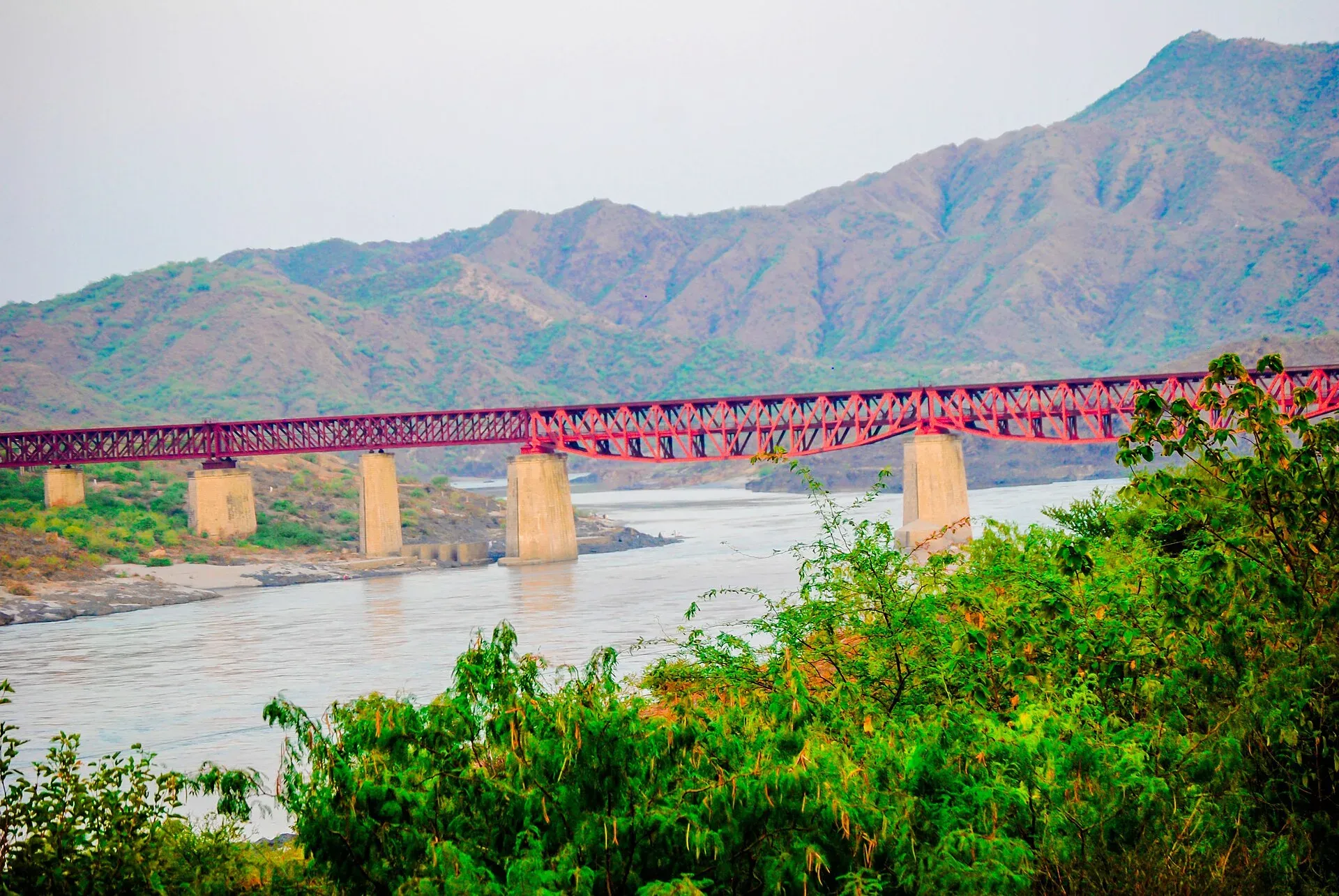
Photo: Prince Waqar Jalbai, with thanks · CC BY-SA 4.0 · via Wikimedia Commons · temporary stand-in photo

Attock Khurd lies in the Manglot hills, at about 306 m. It is a Victorian stone-masonry station near the iron-girder Attock Bridge of 1883, which links Punjab and Khyber Pakhtunkhwa. Few trains stop. A road of about 6 km branches off the Grand Trunk Road to reach it. Special excursions have run there, and the Khyber Steam Safari ends at the station, as Wikipedia notes.
The Khyber Pass Railway
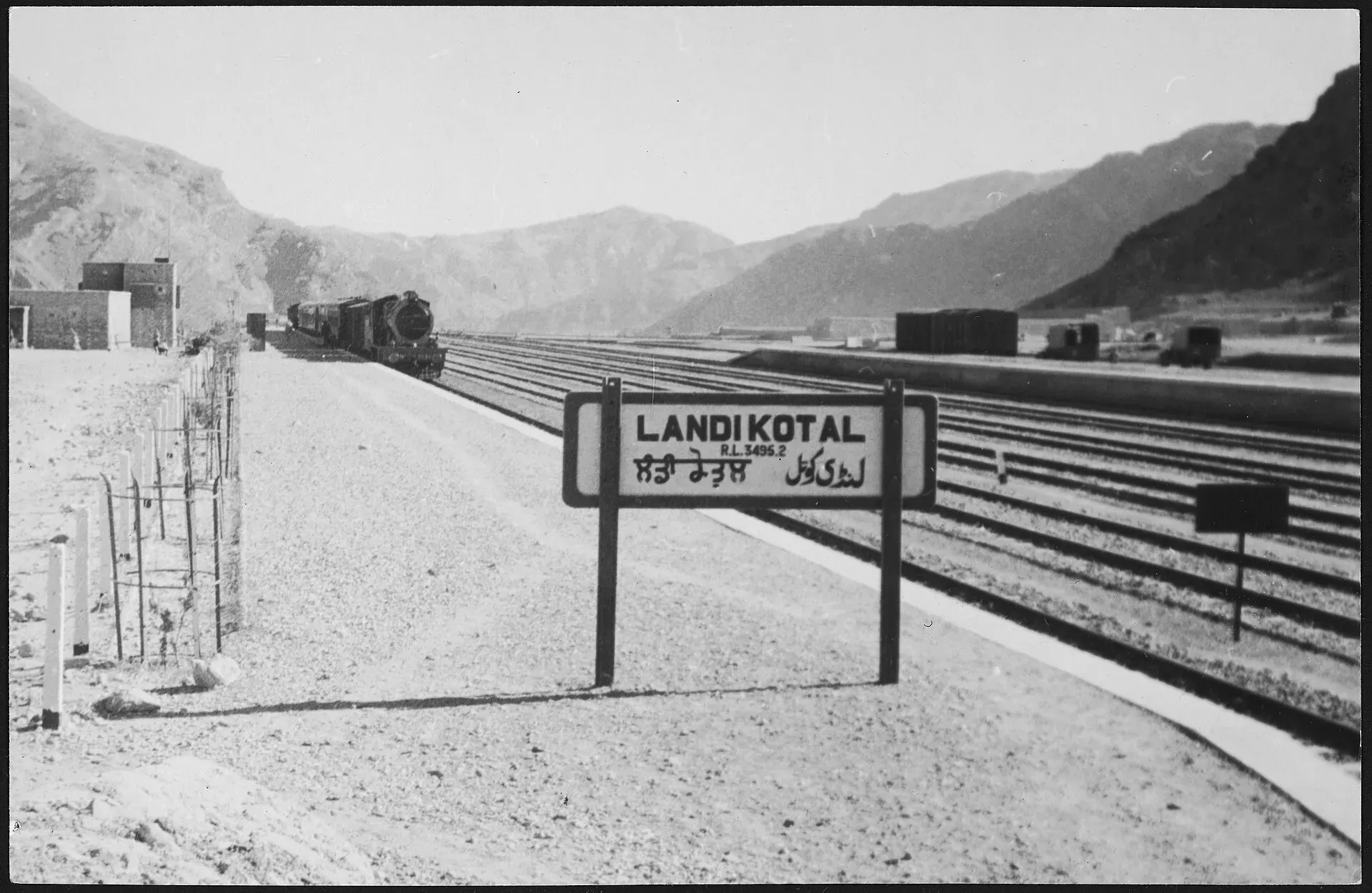
Photo: Landi Kotal railway station, with thanks · Public domain (CC0) · via Wikimedia Commons · temporary stand-in photo

The line from Peshawar to Landi Khana is not in service, but its stations are part of the heritage story. Wikipedia describes a 53 km broad-gauge line. Work began in 1905, stopped after the 1907 Anglo-Russian agreement, and resumed in 1920. The Jamrud to Landi Kotal section opened in November 1925, and the Landi Khana extension on 3 April 1926. The line climbs to about 1,200 m through 34 tunnels and 92 bridges and culverts, with zig-zag reversing stations near the top. Oil-fired steam locomotives from Vulcan Foundry and Kitson worked it. The section from Landi Kotal to Landi Khana closed in 1932, and regular Peshawar to Landi Kotal services ended in 1982. Monsoon rain later washed away sections of track. Landi Kotal and Landi Khana lie in Khyber district, covered by the FCDO advice below.
Route order for a visit
All the main stations sit on or near the Karachi to Peshawar main line (ML-1), so a traveller can see them in line order: Karachi City, Lahore Junction, then Golra Sharif and Attock Khurd near Islamabad. Peshawar Cantonment and the Khyber stations lie beyond.
What to look for
Brickwork and stone, arched verandahs, platform canopies, clock towers, old signal gear and the water towers of the steam era. Early morning is quieter. At Lahore, the fortress look is easy to see from outside. Punjab and Pakistan Railways agreed in July 2026 to restore Lahore, Rawalpindi and Taxila stations (Dawn, 29 July 2026), so expect building works. In Karachi, the sandstone building rewards a walk around the forecourt.
History
The dates above show how the network grew: Lahore in 1860, Karachi in 1864, Attock and Golra in the 1880s, Peshawar Cantonment in 1898, and the Khyber line in 1925. Lahore's fort-like design is tied by Wikipedia to the 1857 uprising.
How to use them
Stations are crowded and loud. Arrive early, keep bags in sight, and ask the station master before photographing. Pakistan Railways rules on photography at stations can change. For tickets use the official portal linked from pakrail.gov.pk or the helpline +92-51-9272117 (checked 16 November 2026).
Safety
Stations are public places where terrorism is a stated risk (UK FCDO, updated 27 October 2026). Ask the district administration or local police about current conditions before you go. For foreign visitors: the UK FCDO advises against all travel to Peshawar, Khyber and Balochistan, so we do not recommend visiting Peshawar Cantonment, Landi Kotal or Shelabagh at present. Lahore, Karachi, Golra and Attock are not in an advised-against area, though the Attock border with Khyber Pakhtunkhwa calls for care.
Highlights
- Lahore Junction: fort-style station built 1859 to 1860
- Karachi City: opened 1864, current building 1935 yellow sandstone
- Golra Sharif and Attock Khurd: Safari Train stops
- Several heritage stations lie in areas the UK advises against visiting
Stops
Numbers follow the stops in order. The map shows the stops, not the road itself.
Road conditions
Rail; stations are in busy city centres.
Fuel and services
Food stalls and waiting rooms at major stations; quality varies.
More safety notes
Terrorism risk applies at stations; FCDO advises against travel to Peshawar, Khyber and Balochistan (checked 16 November 2026).
Tips
- Ask the station master before taking photographs; Pakistan Railways tightened photography rules in April 2026.
- Visit in daylight and keep to public areas.
- Pair Golra Sharif with the Sunday Safari Train.
- Check pakrail.gov.pk heritage pages for updates.
Photos we still need: Peshawar Cantonment, Attock Khurd and Golra Sharif station buildings (not only the museum); Karachi City station is a general view; a detail of the sandstone facade would help; Stations worth knowing. Send us yours
Sources and last checked
Last checked Confidence medium15 sources4 still to check
- Last checked
- Method
- Desk research from published sources
- Confidence
- medium
- Checked by
- trek.pk research team
Researched from published sources; not yet checked on the ground by our team. Spot something out of date? Report a mistake.
Sources
- Pakistan Railways official website (home page, helpline and e-ticket links) · Pakistan Railways · checked
- Lahore Junction railway station · Wikipedia · checked
- Karachi City railway station · Wikipedia · checked
- Peshawar Cantonment railway station · Wikipedia · checked
- Attock Khurd railway station · Wikipedia · checked
- Centuries-old Attock Khurd Railway Station to be uplifted as tourist attraction (18 Nov 2018) · Dawn · checked
- Golra Sharif Junction railway station · Wikipedia · checked
- Renovated Landi Kotal railway station attracts crowds (13 July 2025) · Dawn · checked
- Pakistan travel advice (updated 27 October 2026) · UK Foreign, Commonwealth & Development Office · checked
- Senate panel seeks info on use of Pakistan Railways premises by influencers · Dawn, 12 May 2026 · checked
- Pakistan Railways imposes strict ban on filming and photography · ProPakistani, 29 April 2026 · checked
- Keeping track of history · Dawn, 9 May 2010 · checked
- Demolition at protected City Railway Station · Dawn, 21 March 2017 · checked
- Punjab, Centre join hands to preserve Pindi, Lahore and Taxila railway stations · Dawn, 29 July 2026 · checked
- Khyber Pass Railway · Wikipedia · checked
Still to be checked on the ground (4)
- Whether stations allow visitors and photography in practice (Pakistan Railways notice of April 2026 requires written permission to film or photograph; later clarification and any Ministry reply not found)
- Attock Khurd opening year (Dawn 1880; Wikipedia infobox 1884; a district gazetteer is said to give about 1885)
- Date of the Karachi City station building itself (1935 foundation stone is on the divisional office block)
- Formal heritage listing of Lahore Junction (a Punjab Special Premises Ordinance 1985 listing is claimed in secondary sources only), Golra Sharif, Attock Khurd and Peshawar Cantonment
Nearby and related

Lahore
Punjab's capital and Pakistan's cultural city: Mughal forts, mosques and gardens, a lively Walled City, and some of the best food in the country.

Karachi
Pakistan's largest city and main port: colonial buildings, museums, beaches, busy bazaars and some of the country's best food.

Peshawar
Khyber Pakhtunkhwa's capital and one of South Asia's oldest living cities: the Gandhara museum, Qissa Khwani Bazaar, mosques and a strong food culture.

Attock
District capital on the Grand Trunk Road near the Indus, about 86 km from Islamabad. A practical stop with the Mughal-era Attock Fort nearby.

Landi Kotal
Hill town at the western end of the Khyber Pass, 1,072 m above sea level and about 5 km from the Afghan border. For foreign visitors: the UK FCDO advises against all travel to Khyber.

Lahore Fort
The Mughal citadel at the north end of Lahore's Walled City, with palaces, a marble mosque and a long tiled Picture Wall. Inscribed by UNESCO in 1981 together with the Shalimar Gardens.

Golra Sharif Railway Museum
Pakistan's formal railway museum, in the 1881 Golra Sharif station on Islamabad's western edge: steam engines, royal saloons and relics, and the first stop of the Safari Train.
Safari Train (Potohar)
A Sunday tourist train from Rawalpindi through Golra, Taxila and the Margalla foothills to Attock Khurd on the Indus. Reported relaunched in April 2026; confirm with Pakistan Railways before you plan around it.

Khyber Pass Railway (Peshawar-Landi Kotal)
A famous British-era mountain railway, about 52 km with 34 tunnels and 92 bridges, built to 1925. There is no train service now; the line is closed and this is a history page.