

Photo: S.hassanjawad, with thanks · CC BY-SA 3.0 · via Wikimedia Commons · temporary stand-in photo

Lahore Fort
The Mughal citadel at the north end of Lahore's Walled City, with palaces, a marble mosque and a long tiled Picture Wall. Inscribed by UNESCO in 1981 together with the Shalimar Gardens.
Overview
Lahore Fort, known locally as Shahi Qila, is the royal citadel at the northern edge of the Walled City. The walls enclose more than 20 hectares and 21 notable monuments, roughly 365 by 320 metres on plan. Most of what stands today dates from the 17th century, and the ramparts are brick rather than red stone. The fort faces the Badshahi Mosque across Hazuri Bagh. UNESCO inscribed it together with the Shalimar Gardens in 1981 for its Mughal architecture at the height of the empire.
Plan your visit
- Nearest town
- Lahore
- Opening hours
- Daytime hours not confirmed from an official source. The WCLA announced night opening from 7 pm to 11 pm (Express Tribune, 16 October 2026). Check with the Walled City of Lahore Authority.
- Getting there
The fort is at the north end of the Walled City, about 4 km by road from Lahore Junction railway station (roughly 8 minutes without traffic, OSRM). Rickshaws, ride-hailing cars and taxis all stop at the fort. More
Best months
Oct – Mar
- Lahore Fort
- Related places nearby: Lahore, Walled City of Lahore, Badshahi Mosque, Wazir Khan Mosque, Tomb of Jahangir and Akbari Sarai
History
- 11th century: the first mention of a fort on the site, built of mud brick.
- 1566: Emperor Akbar built the present brick fort, with the Akbari Gate (now called the Maseeti Gate).
- 1617 onward: Jahangir added the Maktab Khana, the Kala Burj pavilion and the Picture Wall.
- 1628-1645: Shah Jahan built the Diwan-i-Aam, the Diwan-i-Khas, the Shah Burj quadrangle with the Sheesh Mahal and the Naulakha Pavilion, and the white marble Moti Masjid.
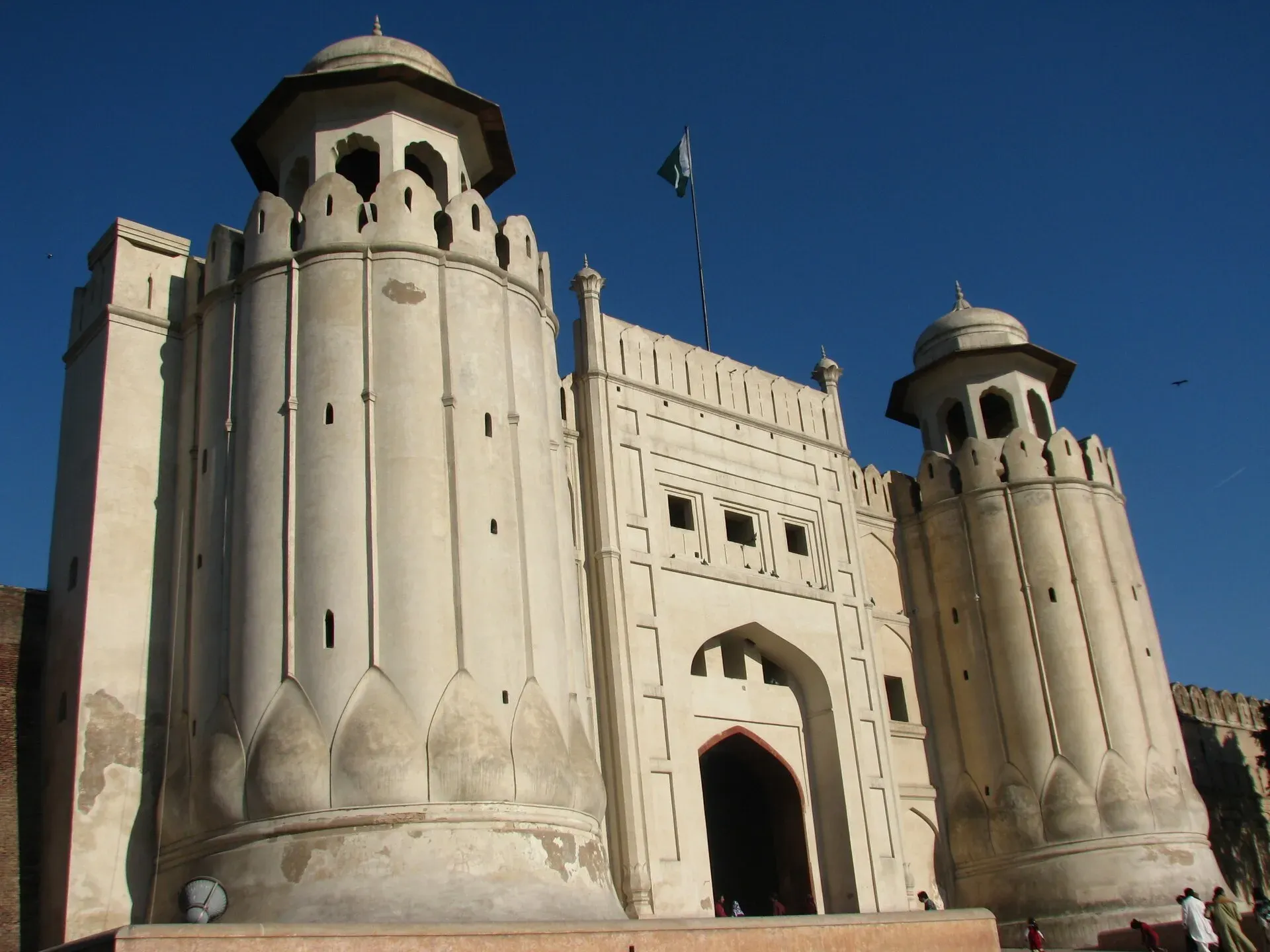
- 1674: Aurangzeb built the Alamgiri Gate, the big gate that faces the Badshahi Mosque.
- 1799-1849: Maharaja Ranjit Singh took the fort, held court in the Ath Dara pavilion and built the Hazuri Bagh pavilion. The British East India Company took over in 1849 and rebuilt the Diwan-i-Aam.
How the fort is arranged
The fort has two halves. The southern half holds the entrances, gardens and halls used for public business. The northern half held the private palaces and is reached through the Elephant Gate. A visit usually follows this order:
- Alamgiri Gate and Hazuri Bagh, the entrance at the western end.
- Diwan-i-Aam and Maktab Khana, the public hall and the clerks' hall.
- Moti Masjid, the white marble mosque on the north-west side of the Diwan-i-Aam court.
- Jahangir's Quadrangle, with the Picture Wall and the Kala Burj.
- Shah Jahan's Quadrangle and the Diwan-i-Khas.
- Shah Burj Quadrangle, with the Sheesh Mahal, the Naulakha Pavilion and the Summer Palace.
This is an outline from the fort's layout, not a signposted route. Follow the signs and the guides on the day.
What to see and do
- Alamgiri Gate. The main entrance, with two semi-circular bastions on lotus-petal bases.
- Diwan-i-Aam. The hall of public audience, in the style of a forty-pillar hall. Shah Jahan's original was destroyed in 1841 and the British built the present hall in 1849.
- Diwan-i-Khas. The hall where the emperor received courtiers and state guests.
- Sheesh Mahal. The "Palace of Mirrors", built in 1631-32 in white marble with pietra dura and mirror-work.
- Naulakha Pavilion. A small marble pavilion with a curved roof, built in 1633. Its name refers to a cost of about nine lakh rupees.
- Picture Wall. A tiled and painted wall about 440 metres long and 15 metres high, with 116 panels of glazed tile, faience mosaic and fresco showing court scenes, polo and elephant fights. Conservation work by the Aga Khan Trust for Culture and the Walled City of Lahore Authority began in 2015.
- Moti Masjid. The Pearl Mosque, built in 1630-35, with three domes and a five-arched front. Under Sikh rule it served as a treasury and a gurdwara.
- Kala Burj and Lal Burj. The Black Pavilion has a vaulted ceiling with painted angels. The octagonal Lal Burj has frescoes mostly from the Sikh period.
- Summer Palace. Cooled by water channels and cascades, reached from the Sheesh Mahal. A restoration with the Aga Khan Trust for Culture is planned to house the fort's museum.
- Sikh-era buildings. The Ath Dara pavilion, which Ranjit Singh used as a court, and Mai Jindan Haveli, which now holds the Sikh Gallery Museum.
Allow two to three hours. A guide at the ticket office can explain what you are looking at. The Badshahi Mosque, Wazir Khan Mosque and the Walled City bazaars are all within walking distance.
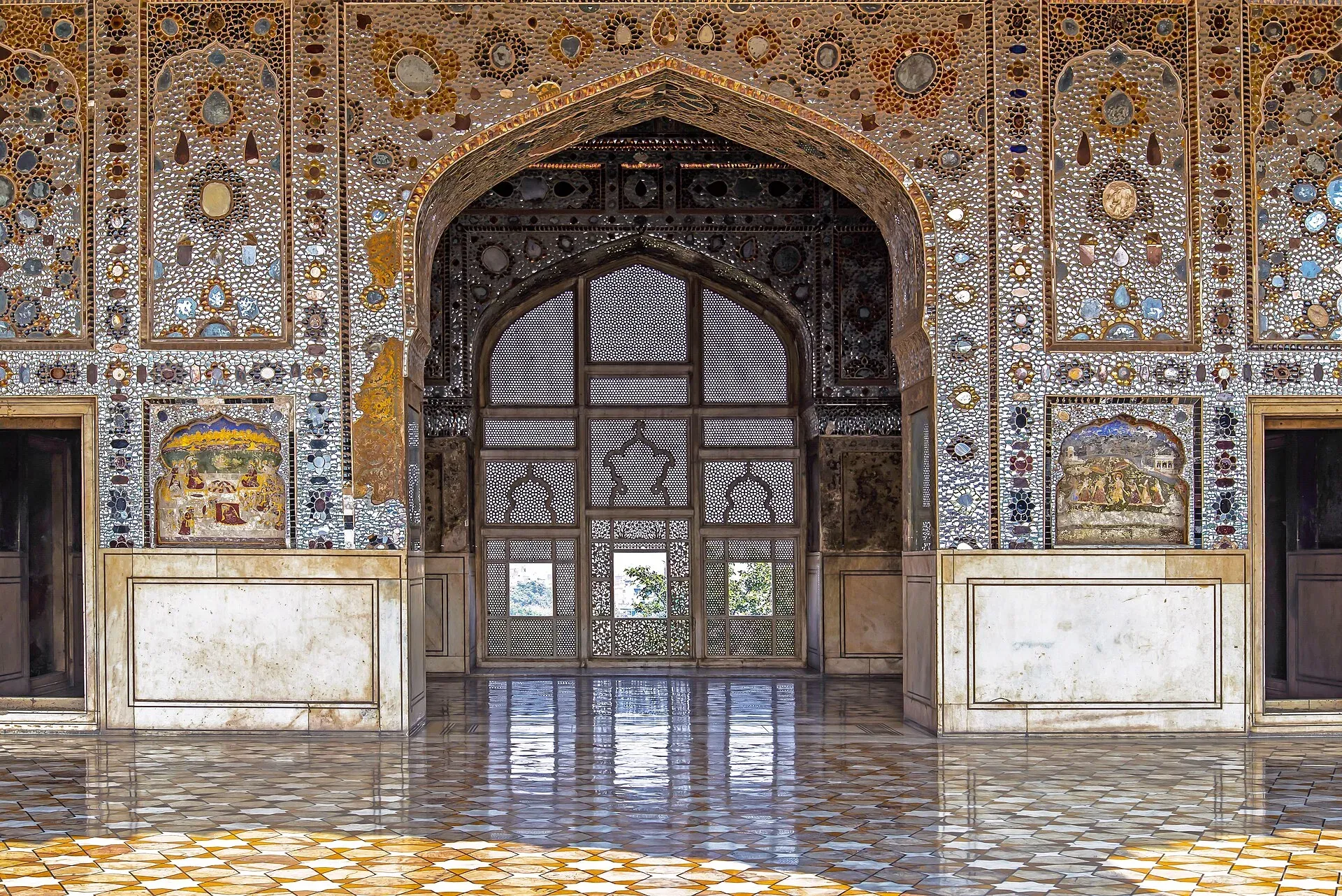
Photo: Faisalrazamalik, with thanks · CC BY-SA 4.0 · via Wikimedia Commons · temporary stand-in photo

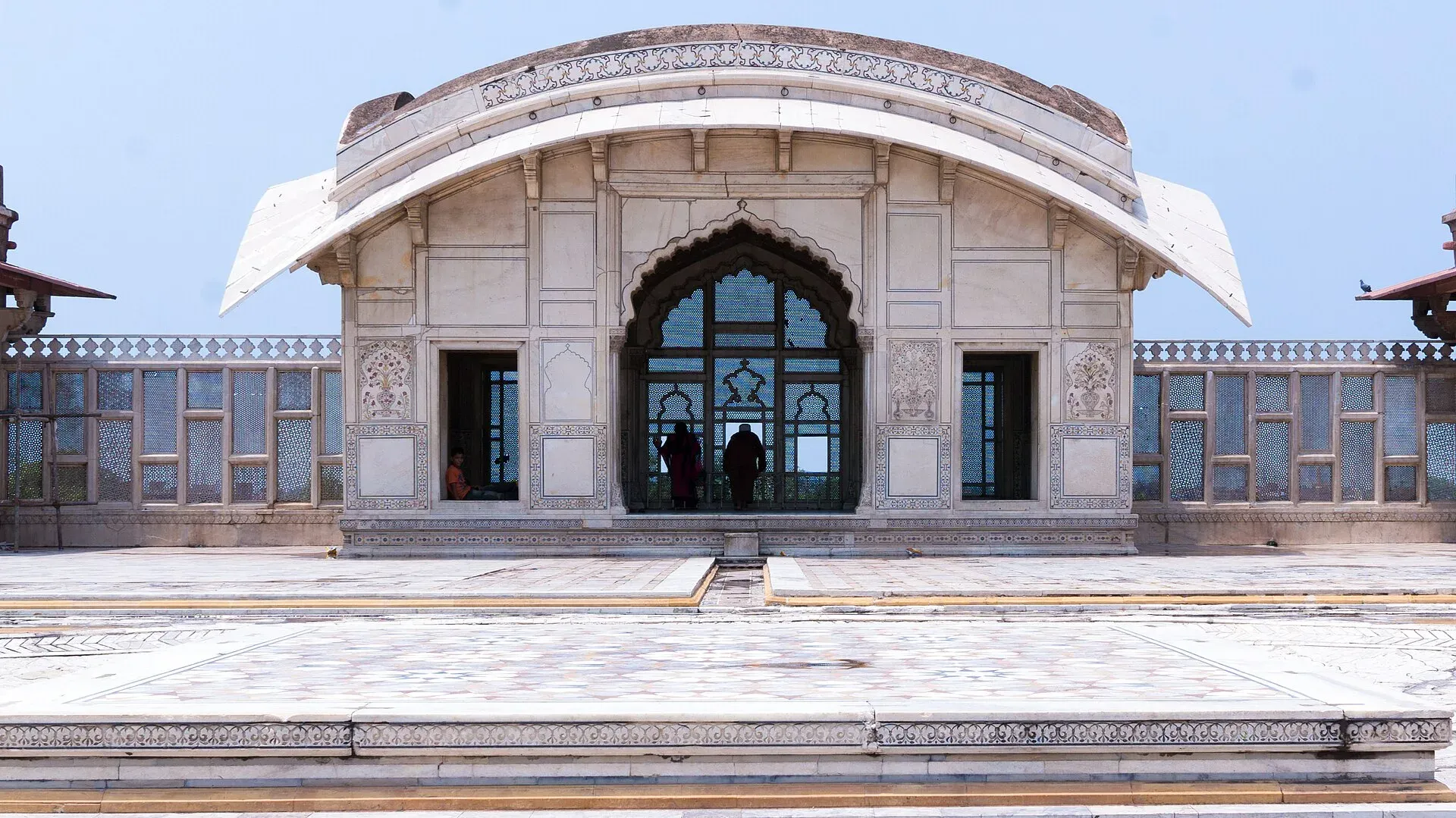
Photo: Jawad.hassan89, with thanks · CC BY-SA 3.0 · via Wikimedia Commons · temporary stand-in photo

When to visit
October to March is the best time: cool enough to walk the open courtyards. Summer midday is very hot and the marble glares. Go in the morning, or in the evening if the night opening announced by the Walled City of Lahore Authority (WCLA) is running (see below).
Where to stay and eat
Stay in central Lahore or inside the Walled City. The Walled City has many places to eat; ask your hotel for current recommendations.
Good to know
- Hours. We have not confirmed daytime hours from an official source. The WCLA announced that Lahore Fort and Shalimar Gardens would open to visitors from 7 pm to 11 pm under a night tourism initiative (reported by The Express Tribune, 16 October 2026). Check with the WCLA before you go. Current ticket prices will be added soon.
- Closed areas. The Naag Temple, built by Chand Kaur in the Sikh period, is closed to the public. Wikipedia says the Akbari Gate was restored by the Punjab Walled Cities and Heritage Areas Authority and was due to reopen in December 2026; check whether it is open.
- Etiquette. Dress modestly. Do not touch the frescoes, mirror-work or marble inlay, and stay on the marked paths. Take your shoes off if you enter the mosque.
- Nearby. The Walled City, Badshahi Mosque and Wazir Khan Mosque (each has its own page).
Highlights
- UNESCO World Heritage Site since 1981 (with Shalimar Gardens)
- Sheesh Mahal, Diwan-i-Aam and Naulakha Pavilion
- 440-metre Picture Wall in tile and fresco
- Alamgiri Gate facing the Badshahi Mosque
- Night opening announced by the WCLA, October 2026
Getting there
The fort is at the north end of the Walled City, about 4 km by road from Lahore Junction railway station (roughly 8 minutes without traffic, OSRM). Rickshaws, ride-hailing cars and taxis all stop at the fort. Ask your hotel about the best drop-off point, as the streets around the Walled City are busy.
Tips
- Come in the morning or the evening to avoid midday heat.
- Combine it with the Badshahi Mosque, which faces the Alamgiri Gate.
- Check current day and night hours with the WCLA.
- Wear shoes that are easy to take off.
Photos we still need: the Picture Wall (no open-licence photo found yet). Send us yours
Sources and last checked
Last checked Confidence medium5 sources4 still to check
- Last checked
- Method
- Desk research from published sources
- Confidence
- medium
- Checked by
- trek.pk research team
Researched from published sources; not yet checked on the ground by our team. Spot something out of date? Report a mistake.
Sources
- Lahore Fort (Wikipedia) · Wikipedia · checked
- Lahore Fort, Shalimar Gardens to stay open late · The Express Tribune (16 October 2026) · checked
- List of World Heritage Sites in Pakistan · Wikipedia · checked
- Pakistan Tourism Guide 2021 · Tourism Development Corporation of Pakistan (TDAP) · checked
- Pakistan travel advice: warnings and insurance (updated 27 October 2026) · UK Foreign, Commonwealth & Development Office · checked
Still to be checked on the ground (4)
- Daytime opening hours and ticket prices (no official WCLA page reached; Tribune night-visit prices not used, press source)
- Night opening: the Tribune of 16 October 2026 gives 7 pm to 11 pm but no end date; confirm it is running
- UNESCO website returned 403 again; 1981 inscription from Wikipedia
- Whether the Akbari (Maseeti) Gate has reopened to visitors (Wikipedia reports a December 2026 reopening)
Nearby and related

Lahore
Punjab's capital and Pakistan's cultural city: Mughal forts, mosques and gardens, a lively Walled City, and some of the best food in the country.

Walled City of Lahore
Lahore's old core: lanes, gates and Mughal and Sikh-era monuments around the Royal Road, including Wazir Khan Mosque, Delhi Gate and the Shahi Hammam. Its lanes are best explored on foot.

Badshahi Mosque
Lahore's great Mughal mosque, built for Emperor Aurangzeb in 1671-73 from red sandstone and marble. It faces Lahore Fort and has been on UNESCO's tentative list since 1993.

Wazir Khan Mosque
A Mughal mosque in Lahore's Walled City, built 1634 to 1641, famous for its tilework and painted interior. On Pakistan's UNESCO tentative list since 1993, and still an active place of worship.

Tomb of Jahangir and Akbari Sarai
The Mughal emperor Jahangir's mausoleum at Shahdara in Lahore, finished in 1637, with the Akbari Sarai gateway and the tomb of Asif Khan. The group is on UNESCO's tentative list (1993).

Punjab
Pakistan's most populous province: Mughal Lahore, ancient Taxila and Harappa, Sufi shrines, the Salt Range, the Cholistan desert and the hills of Murree.