

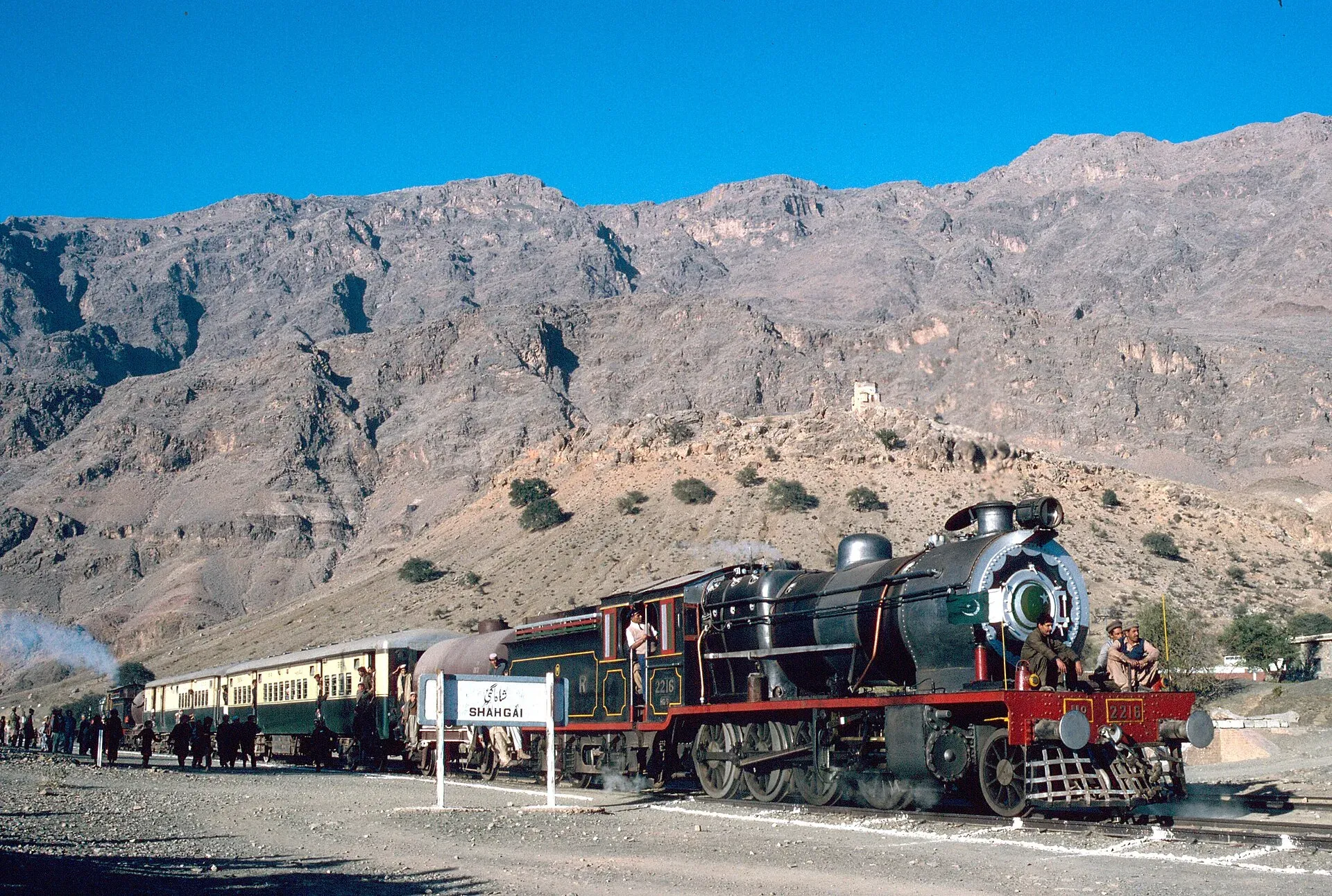
Photo: MaltaGC, with thanks · CC BY-SA 3.0 · via Wikimedia Commons · temporary stand-in photo

Khyber Pass Railway (Peshawar-Landi Kotal)
A famous British-era mountain railway, about 52 km with 34 tunnels and 92 bridges, built to 1925. There is no train service now; the line is closed and this is a history page.
What it is
The Khyber Pass Railway ran from Peshawar through Jamrud to Landi Kotal, high on the Khyber ridge near the Afghan border. Wikipedia gives its length as 52 to 53 km, built on broad gauge (1,676 mm), with 34 tunnels and 92 bridges and culverts. It climbed to about 1,070 m at Landi Kotal (Wikipedia gives 1,072 m). Steam engines pushed and pulled the train.
Does it run now?
No. Regular passenger trains between Peshawar and Landi Kotal ended in 1982 (Wikipedia). Tourist steam charters ran from 1996 until 2006, when monsoon damage closed the line. Dawn (13 July 2025) reported that the track was damaged by floods at several places and that proposals and surveys to restore it have failed so far. Sources disagree on the flood year: Wikipedia gives 2006 for the end of the tourist train, Dawn (19 October 2007) reported floodwater washing away part of the track bed on 28 June 2007, and Dawn (2025) says 2007. A 2008 monsoon photo also exists. Landi Kotal station itself was renovated as a heritage site, which Dawn said was drawing crowds in July 2025. There is no published rules, hours or fees for visitors. That is a visit to a building, not a train. There is no known restart announced. Because the UK FCDO advises against all travel to Khyber and to Peshawar (updated 27 October 2026, checked 16 November 2026), we treat this as a history page.
Route and stops
Stations on the line, east to west (Wikipedia): Peshawar City, Jamrud, Bagiarari, Medanak, Chaghi, Shahgai, Kata Kushta, Zintara, Sultan Khel, Torra Tigga (a reversing station), Landi Kotal, and Landi Khana. Sources give no kilometre figures for individual stops. Total length is about 52 km to Landi Kotal.
What it was like
Wikipedia and Dawn describe a steep climb in short loops and reversing stations, with tunnels and bridges blasted into the hills, and a final zig-zag between Landi Kotal and Landi Khana. Wikipedia lists four reversing stations: Medanak, Chaghi, Torra Tigga and Landi Khana. The Express Tribune says gradients reached 1 in 25, too steep for a continuous climb with the engines of the day, so the line gained height in shorter climbs and reversals. It also notes that the line went through tunnels where landslide risk was high and crossed the large dry gullies (nalas) on bridges.
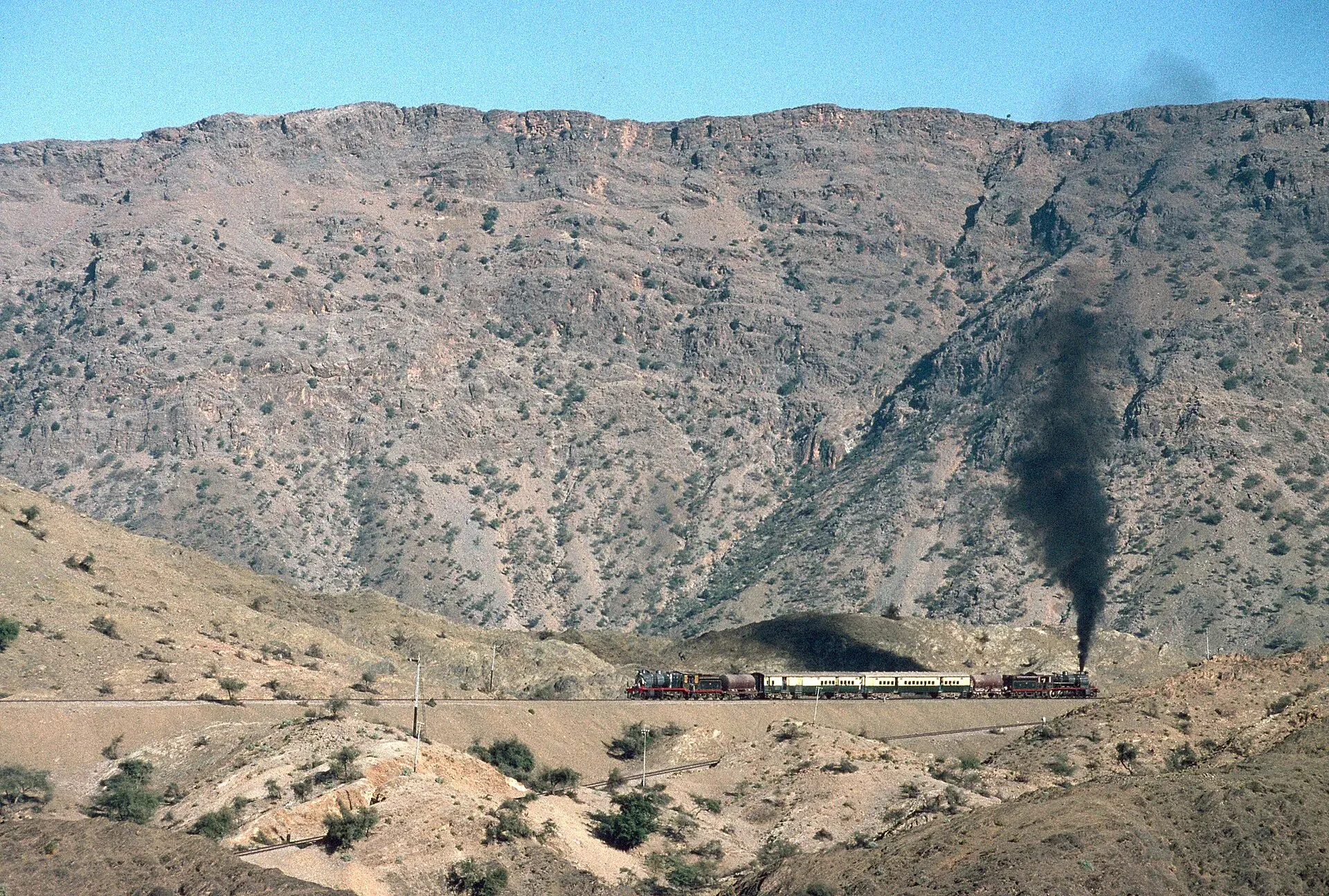
Photo: MaltaGC, with thanks · CC BY-SA 3.0 · via Wikimedia Commons · temporary stand-in photo

Engineering
The Express Tribune puts the 34 tunnels at about two and a half miles in total. Tunnel 20, between Zintara and Torra Tigga, is over a quarter of a mile long and took nearly two years to finish. Shale and brittle rock made some bores unstable. The Michni tunnel, about 400 yards long, met wet mud and then muddy water, and brick lining was used because the shale was not safe to leave bare. Timber came from Nowshera and cement from a factory near Wah. Local Afridi, Shinwari and Yusufzai workers did much of the labour, supported by a levy force of about 500.
The line opened with HGS class 2-8-0 locomotives. Double-heading was needed on the steepest climbs, and brakes often glowed red on the way down. After independence it carried mainly freight and tribal passengers. Wikipedia says the line once crossed the main runway of Peshawar Airport. The surviving steam locomotives are kept at Peshawar locomotive shed: three 2-8-0 HGS engines, numbers 2216 (Kitson, 1916) and 2277 and 2306 (Vulcan Foundry, 1923). The Express Tribune says most of the class has been scrapped.
Landi Kotal
Landi Kotal stands at 1,072 m on the western edge of the Khyber Pass, about 5 km from Afghanistan's Nangarhar Province (Wikipedia). It is the main shopping centre for the Shalmani, Shinwari, Afridi and Mulagori tribes. The Khyber Rifles, a militia recruited from the tribes of the agency, garrisoned the fort from 1899. The station was built in 1925, was in poor condition for a long time, and was renovated as a heritage site in 2024 (Dawn, 13 July 2025). A steam engine is on display there. Dawn said the station was drawing visitors, among them one from Lahore, but it gave no hours, rules or fees.
History
The idea came from British worries about Russia during the Great Game. Work began at Kacha Garhi in 1905, stopped in 1907 after the Anglo-Russian Entente, and resumed in 1920. The line from Jamrud to Landi Kotal opened in November 1925 (Wikipedia gives 3 November; The Express Tribune cites a Times report dated 3 November 1925), reaching Landi Khana in April 1926. The Landi Kotal to Landi Khana section closed in 1932 at Afghan insistence. Dawn names the chief engineer as Victor Baley (Wikipedia: Bailey) and records a local legend that he died before the opening and his widow ran the first train.
What you can still do
The Peshawar Cantonment to Attock Khurd line, on the open main line, has been run as the Khyber Train Safari from 2015, though it is not a Khyber Pass journey and its status is unclear. See the heritage stations page. There is no booking for Peshawar to Landi Kotal.
Safety
Ask the district administration or local police about current conditions before you go. For foreign visitors: the UK FCDO advises against all travel to Khyber and Peshawar, and notes emergency measures and Governor's Rule in Khyber Pakhtunkhwa since 11 October 2026. Do not go.
Highlights
- About 52 km, 34 tunnels, 92 bridges and culverts
- Opened November 1925; passenger service ended 1982
- Steam tourist charters ran 1996 to 2006
- No train service today; FCDO advises against travel to Khyber
Stops
- Peshawar CityTerminus; the Peshawar locomotive shed keeps the surviving engines
- JamrudStart of the 1925 section
- Medanak and ChaghiFirst and second reversing stations
- Shahgai
- Torra TiggaReversing station
- Landi KotalStation renovated as heritage site
Numbers follow the stops in order. The map shows the 2 stops that have a trek.pk page, not the road itself.
Road conditions
Rail line closed; sections washed away by floods.
Fuel and services
None.
More safety notes
For foreign visitors: the UK FCDO advises against all travel to Khyber and Peshawar (updated 27 October 2026; Governor's Rule in KP since 11 October 2026).
Tips
- Do not plan travel to the Khyber district while FCDO advice stands.
- Read the Khyber Pass and Landi Kotal pages for context.
- There is no way to book a ride; ignore anyone selling one.
Photos we still need: Landi Kotal station and the steam engine on display. Send us yours
Sources and last checked
Last checked Confidence medium8 sources4 still to check
- Last checked
- Method
- Desk research from published sources
- Confidence
- medium
- Checked by
- trek.pk research team
Researched from published sources; not yet checked on the ground by our team. Spot something out of date? Report a mistake.
Sources
- Khyber Pass Railway · Wikipedia · checked
- Khyber train safari · Wikipedia · checked
- Renovated Landi Kotal railway station attracts crowds (13 July 2025) · Dawn · checked
- Pakistan travel advice (updated 27 October 2026) · UK Foreign, Commonwealth & Development Office · checked
- The Khyber Pass railway: a century on · The Express Tribune · checked
- Work on railway track yet to begin (19 October 2007) · Dawn · checked
- Landi Kotal · Wikipedia · checked
- Landi Kotal railway station · Wikipedia · checked
Still to be checked on the ground (4)
- Whether Landi Kotal station can be visited and under what rules (no published rules found; it is in a district the FCDO advises against visiting)
- Exact year the line was finally closed by floods (2006 or 2007 in different sources)
- Length of the Peshawar to Jamrud part (Wikipedia gives about 52 km from Jamrud to Landi Kotal and about 53 km overall; the Express Tribune says about 32 km was laid from Peshawar to Jamrud by 1907)
- Count of reversing stations (Wikipedia lists four including Landi Khana; the Express Tribune says four between Jamrud and Landi Kotal)
Nearby and related

Khyber Pass
The historic 40 km pass from Jamrud to Landi Kotal and the Afghan border, used by invaders and traders for thousands of years. Today the area is under an FCDO all-travel warning and Torkham is closed.

Landi Kotal
Hill town at the western end of the Khyber Pass, 1,072 m above sea level and about 5 km from the Afghan border. For foreign visitors: the UK FCDO advises against all travel to Khyber.

Peshawar
Khyber Pakhtunkhwa's capital and one of South Asia's oldest living cities: the Gandhara museum, Qissa Khwani Bazaar, mosques and a strong food culture.

Heritage Railway Stations
Pakistan's oldest railway stations, from Lahore Junction (1860, fort-style) to Karachi City (1864) and Peshawar Cantonment (1898), plus Golra Sharif and Attock Khurd, worth seeing even if you do not ride.