

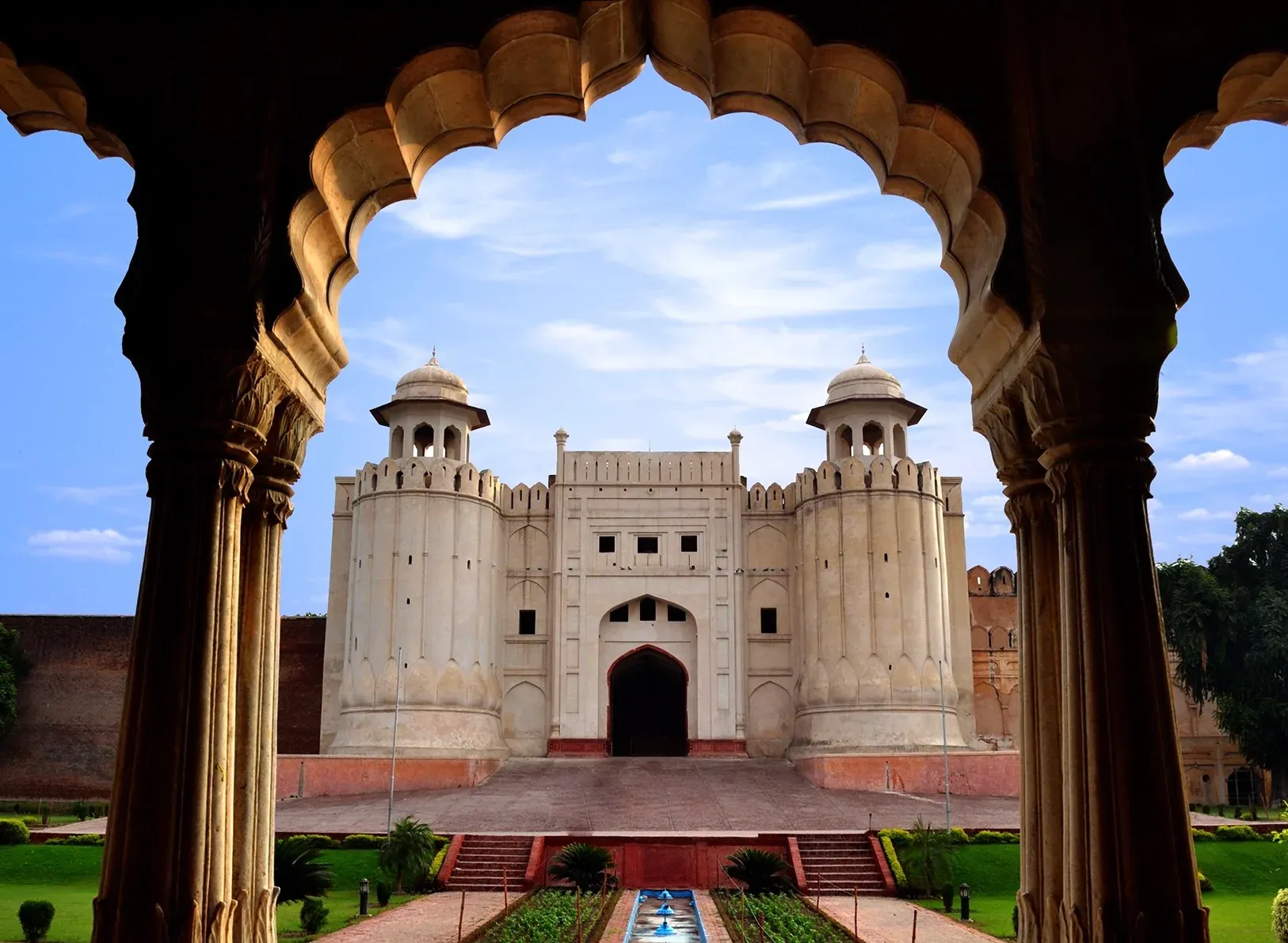
Photo: Rohaan Bhatti, with thanks · CC BY-SA 3.0 · via Wikimedia Commons · temporary stand-in photo
Lahore Heritage and Wagah
A two to three day city trip: Lahore Fort, the Badshahi Mosque and old city, the Shalimar Gardens, and the evening flag-lowering at Wagah, 33 km from the fort. Measured distances and current notes on the new Wagah arena.
Customise this route Change the dates, stops and how you travel in the Road Trip Planner.
Overview
Lahore is Punjab's capital and Pakistan's most visited heritage city. This trip links three things: the Mughal monuments of the walled city, the Shalimar Gardens on the north-east side, and the Wagah border ceremony on the Grand Trunk Road towards India. You can see all of it in two or three days without leaving the city region, and most distances are short.
Who it suits
Families, history lovers and first-time visitors. You can use a hired car or ride-hailing; the old city is best on foot. It also fits as a long weekend from Islamabad, which is 288 km away by road (about 3 hours 55 minutes without stops).
When to go
October to March is the best time: days are mild and dry. April to September is hot, and the monsoon brings heavy rain in July and August. Check the weather before planning the Wagah evening.
The route
All figures are from OSRM / OpenStreetMap (measured 16 November 2026) and are driving distances without stops.
- Lahore Fort to the Badshahi Mosque: 3.2 km, about 10 minutes. The fort and the mosque face each other across a large square.
- Lahore Fort to the Shalimar Gardens: 12.1 km, about 17 minutes. The gardens were begun in 1641 under Shah Jahan and cover about 16 hectares in three terraces (Wikipedia).
- Lahore Fort to Wagah: 33.3 km, about 35 minutes. The Shalimar Gardens to Wagah is 18.5 km.
The Lahore Fort and the Shalamar Gardens were inscribed together as a UNESCO World Heritage Site in 1981 (Wikipedia, citing UNESCO).
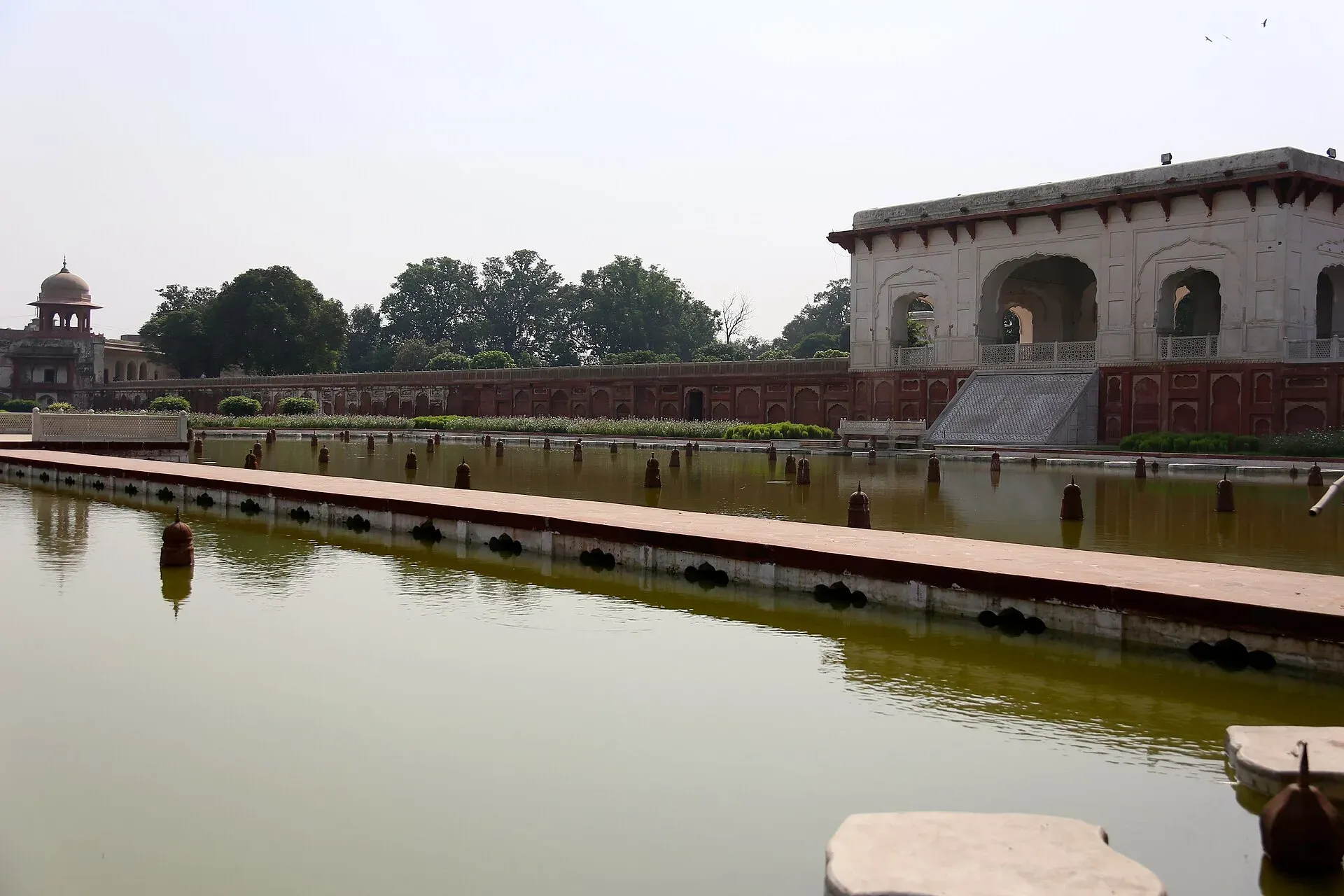
Photo: Aun Muhammad, with thanks · CC BY-SA 4.0 · via Wikimedia Commons · temporary stand-in photo
Badshahi Mosque
Wikipedia says the Badshahi Mosque was built between 1671 and 1673 under Aurangzeb, in red sandstone with white marble inlay. The complex measures 170 m by 170 m, its courtyard can hold about 100,000 people and the prayer hall about 10,000. It has three marble domes and four major octagonal minarets about 60 m high. Its museum holds a gallery of Quran parts stitched on cloth in gold and silver thread (1966 to 1976) and a gallery of relics associated with the Prophet and his companions. The tomb of Muhammad Iqbal is near the entrance.
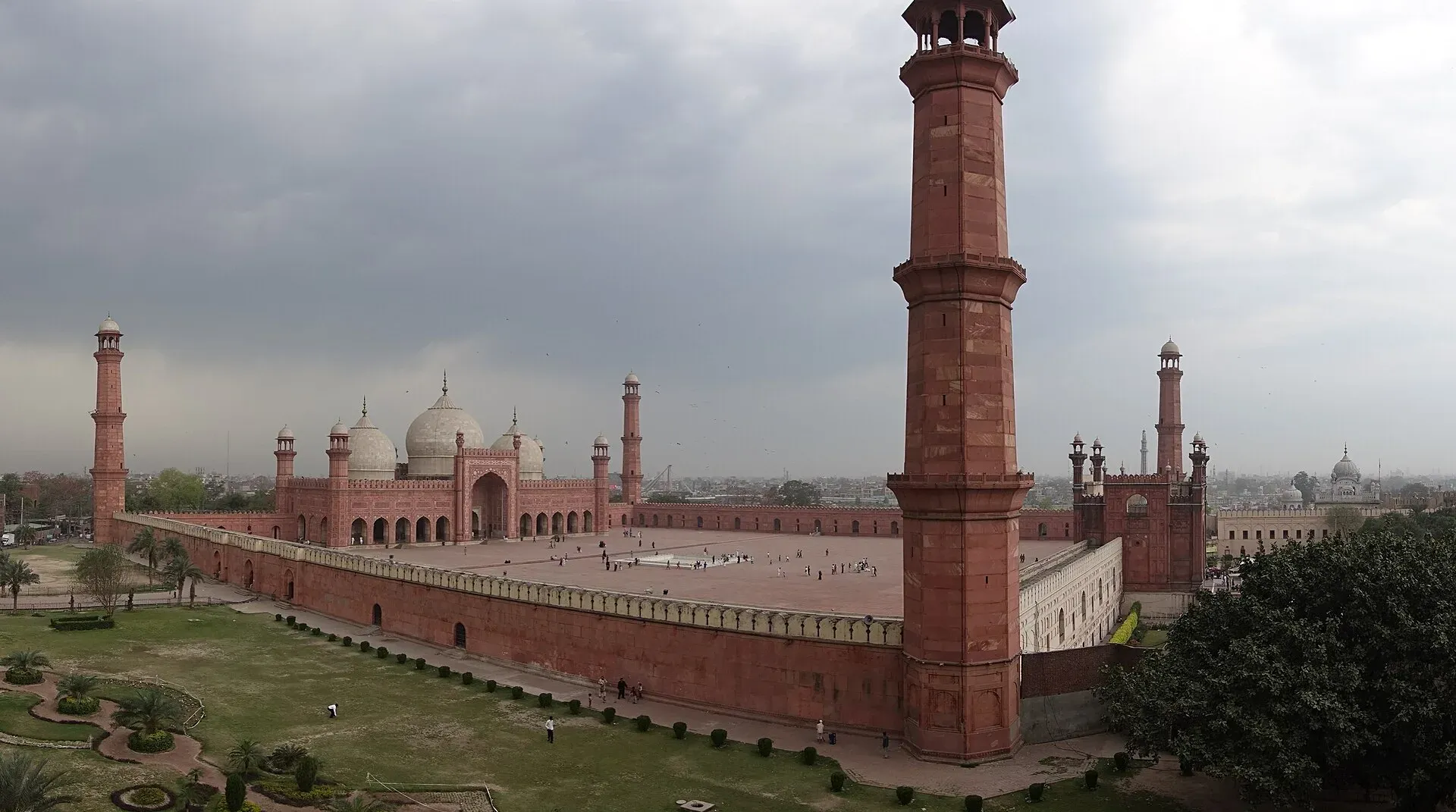
Photo: Marsmux, with thanks · CC BY-SA 4.0 · via Wikimedia Commons · temporary stand-in photo
The walled city
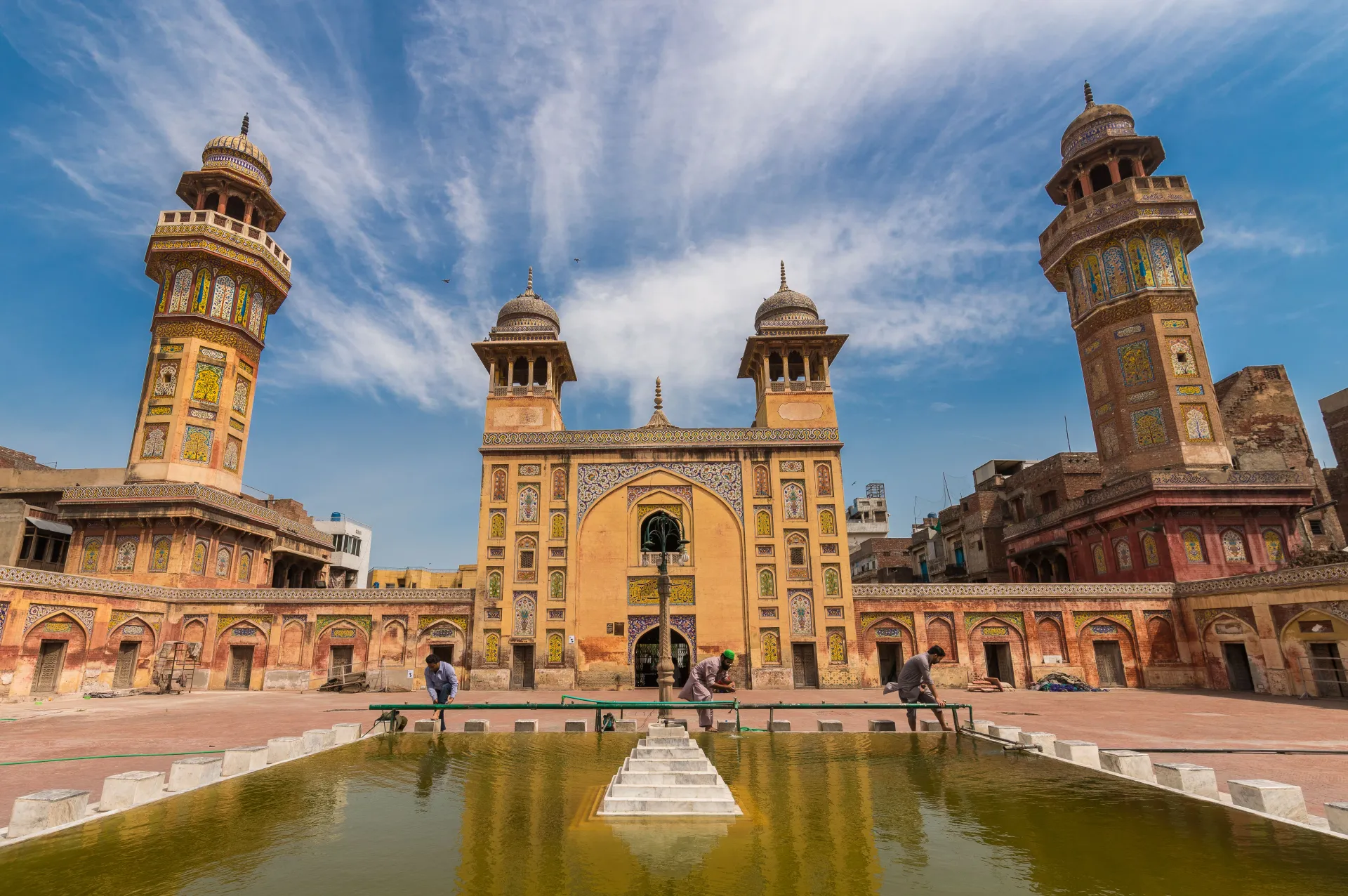
Photo: Moiz Ismaili, with thanks · CC BY-SA 4.0 · via Wikimedia Commons · temporary stand-in photo
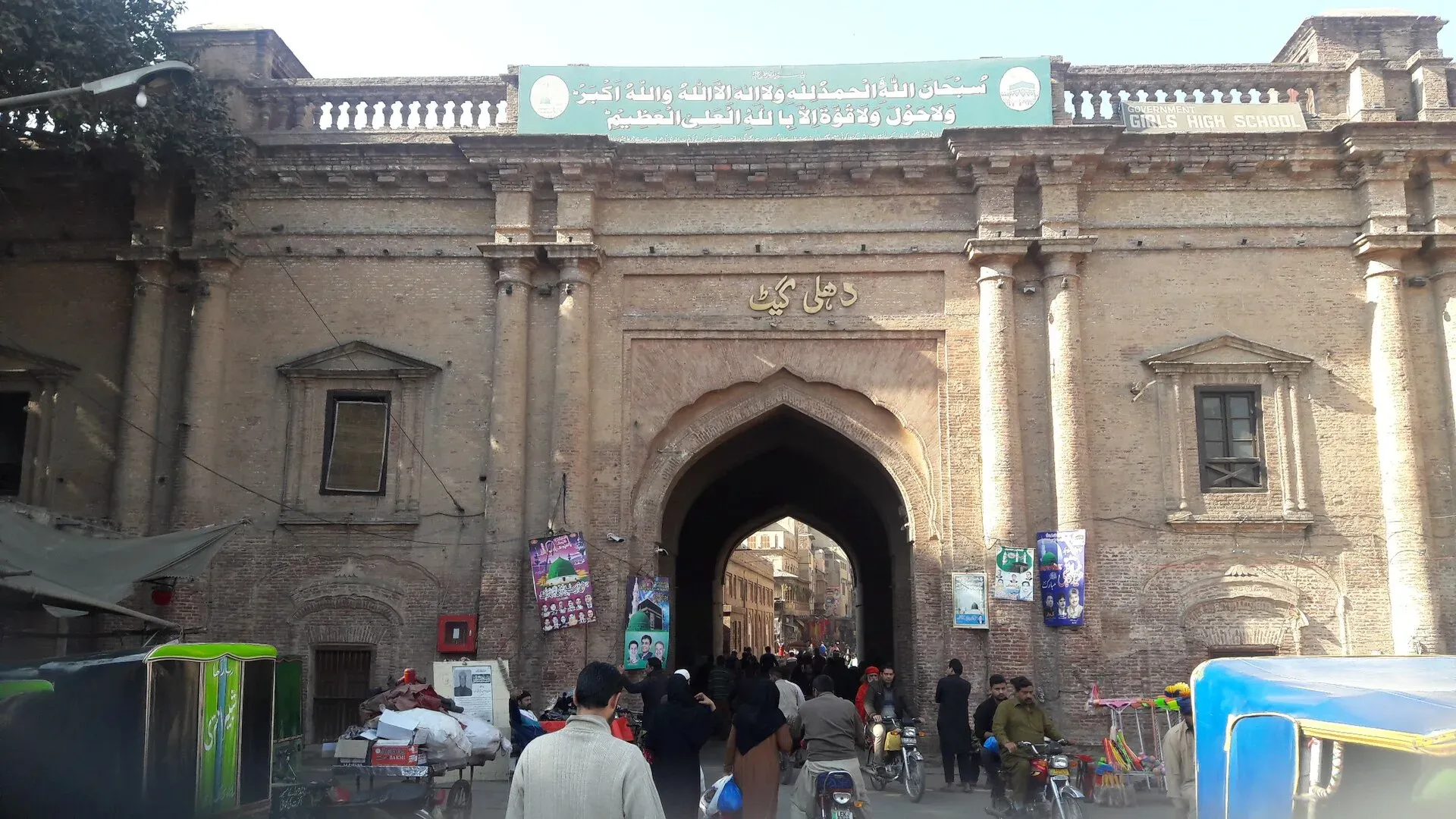
Photo: Tahir mq, with thanks · CC BY-SA 4.0 · via Wikimedia Commons · temporary stand-in photo
The old city once had 13 gates. After 1857 the British demolished the walls and most gates, and only some survive: Bhati, Delhi, Kashmiri, Lohari, Roshnai and Shairanwala (Wikipedia). A good half day on foot:
- Delhi Gate and Wazir Khan Mosque. The 17th-century mosque, commissioned under Shah Jahan, is known for its tilework (kashi-kari) and painted frescoes. Restoration led by the Aga Khan Trust for Culture and the Punjab government has been under way since 2009. The Shahi Guzargah ("royal way") project restored the route between Delhi Gate and the mosque.
- Shahi Hammam. A Persian-style bath built in 1635 and restored in 2013 to 2015; it received a UNESCO Award of Merit in 2016. It is no longer used as a bath.
- Bazaars. Akbari Mandi, a grain market founded under Akbar, still operates. The area near Mochi Gate has a bazaar known for dried fruit, kites and fireworks. Taxali and Masti gate areas are known for shoes.
- Food. Fort Road Food Street is a pedestrianised street of stalls and restaurants specialising in Lahori cooking, lit in the evening, with views of the Badshahi Mosque. The area inside Bhati Gate is also known for food (Wikipedia).
Suggested days
Day one: Lahore Fort and Badshahi Mosque in the morning, the walled city in the afternoon, dinner on Fort Road Food Street. Day two: Shalimar Gardens in the morning, then drive to Wagah for the evening ceremony. A third day can add the Lahore Museum, Data Darbar or the Tomb of Jahangir at Shahdara.
The Wagah ceremony
The daily flag-lowering ceremony at Wagah is run on the Pakistan side by the Punjab Rangers. Dawn reported on 2 January 2026 that a newly built arena, opened by the Punjab Chief Minister, increased seating from 7,500 to 25,000 spectators. The ceremony usually starts in the late afternoon, about two hours before sunset (Wikipedia), so the time changes through the year. Dawn and ProPakistani did not say how the public is admitted or whether there is a charge; ask your hotel or the Punjab tourism authorities. Travel sites give about 4.30 pm in winter and 5.30 pm in summer for the Pakistan side, but there is no known official timetable. Follow all instructions from the security staff, expect checks and queues, and carry your CNIC or passport.
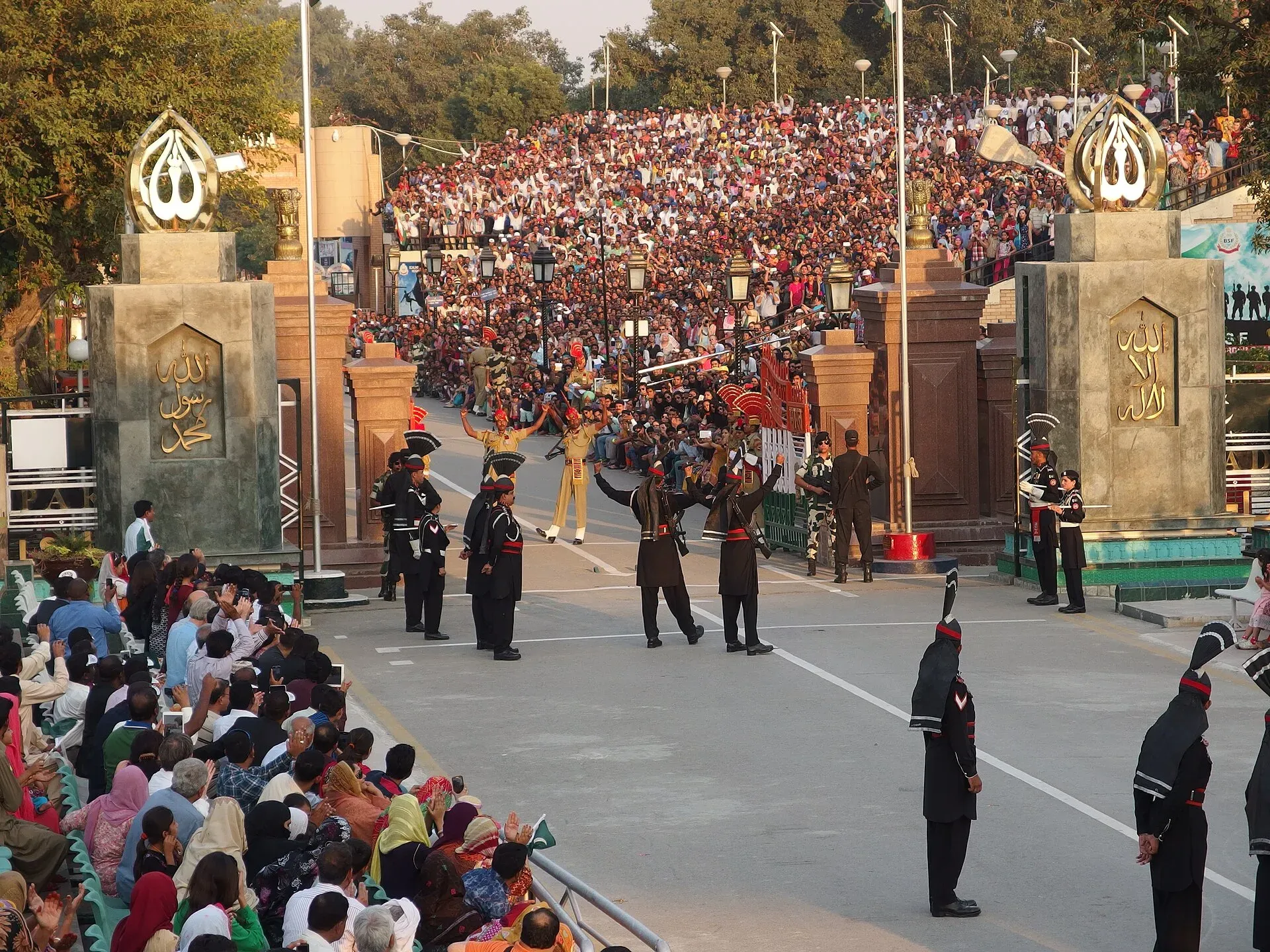
Photo: Guilhem Vellut, with thanks · CC BY 2.0 · via Wikimedia Commons · temporary stand-in photo
In May 2025 the ceremony format changed after tension with India: Indian press reports said that the gates stay closed and the handshake was dropped on the Indian side. These arrangements can change at short notice, so check the current format before you go.
Practical information
Parking near the fort and the Badshahi Mosque is limited and the old city streets are narrow. The fort's own visitor site (linked from the Walled City of Lahore Authority page, undated) gives hours of 8 am until half an hour before sunset. There is no known dated official notice for daytime ticket prices, or any hours or fees for the Badshahi Mosque or the Shalimar Gardens; current fees will be added soon. News reports in October 2026 say the Walled City of Lahore Authority opened the fort and the gardens for evening visits from 7 pm to 11 pm. Conservation continues: Arab News (24 June 2026) described work on the fort's Picture Wall, and ProPakistani (5 November 2026) reported that Akbari Gate was restored, with a ticket booth planned. Neither report says that any part of the fort is closed. Dress modestly, remove your shoes in the mosque, and avoid prayer times when visiting.
Highlights
- Lahore Fort and the Badshahi Mosque
- Walled city on foot
- Shalimar Gardens
- Wagah flag-lowering ceremony
- UNESCO listing (1981) for the fort and gardens
Stops
- Lahore FortMughal fort, UNESCO site
- Badshahi MosqueAcross the square from the fort
- Shalimar GardensMughal garden, UNESCO site
- WagahBorder ceremony in the evening
km: distance from the start along the route.
Numbers follow the stops in order. The map shows the stops, not the road itself.
Day by day
Day 1 · Lahore Fort and the walled city
Start at the fort, cross to the Badshahi Mosque, then walk through the old city bazaars.
Day 2 · Shalimar Gardens and Wagah
Visit the gardens in the morning, then drive to Wagah in the afternoon for the ceremony.
Day 3 · Optional: more museums or markets
Use a third day for museums, the Anarkali bazaar or a rest day.
Road conditions
- City roads: paved but congested, especially on evenings and festival days.
- To Wagah: the Grand Trunk Road is paved and busy. Expect checkpoints near the border.
- Flooding: heavy monsoon rain can flood low streets in July and August.
Fuel and services
Full city services in Lahore: fuel, hospitals, ATMs, hotels and restaurants at every price. Services near Wagah are limited to the ceremony area.
Where to stay, eat and fuel up
Places to stay
- Pearl Continental Hotel, LahoreCall Pearl Continental Hotel, LahoreMap of Pearl Continental Hotel, Lahore in Google Maps
- Avari Hotel LahoreCall Avari Hotel LahoreMap of Avari Hotel Lahore in Google Maps
- Serena HotelCall Serena HotelMap of Serena Hotel in Google Maps
- Islamabad Marriott HotelCall Islamabad Marriott HotelMap of Islamabad Marriott Hotel in Google Maps
- The Nishat HotelCall The Nishat HotelMap of The Nishat Hotel in Google Maps
- Faletti's Hotel LahoreCall Faletti's Hotel LahoreMap of Faletti's Hotel Lahore in Google Maps
Places to eat
- The Monal IslamabadCall The Monal IslamabadMap of The Monal Islamabad in Google Maps
- Tehzeeb Bakers Blue AreaCall Tehzeeb Bakers Blue AreaMap of Tehzeeb Bakers Blue Area in Google Maps
- TKR 3Call TKR 3Map of TKR 3 in Google Maps
- Savour FoodsCall Savour FoodsMap of Savour Foods in Google Maps
- Savour Foods ShadmanCall Savour Foods ShadmanMap of Savour Foods Shadman in Google Maps
- Cheezious Commercial MarketCall Cheezious Commercial MarketMap of Cheezious Commercial Market in Google Maps
Essential services fuel stations, mechanics, pharmacies and hospitals and clinics
Fuel
- Attock Petrol PumpMap of Attock Petrol Pump in Google Maps
- PSO Petrol PumpMap of PSO Petrol Pump in Google Maps
- PSO Petrol PumpMap of PSO Petrol Pump in Google Maps
- Total Parco LA TownCall Total Parco LA TownMap of Total Parco LA Town in Google Maps
- PSO-Al-Rafay Filling Station - Petrol Pump Thokar Niaz BaigCall PSO-Al-Rafay Filling Station - Petrol Pump Thokar Niaz BaigMap of PSO-Al-Rafay Filling Station - Petrol Pump Thokar Niaz Baig in Google Maps
- Total - Areeb Areel Filling StationCall Total - Areeb Areel Filling StationMap of Total - Areeb Areel Filling Station in Google Maps
Mechanics and tyre shops
- Mohammed Bilal tyre centreMap of Mohammed Bilal tyre centre in Google Maps
- Changan City SalesCall Changan City SalesMap of Changan City Sales in Google Maps
- Toyota Airport MotorsCall Toyota Airport MotorsMap of Toyota Airport Motors in Google Maps
- Honda GatewayCall Honda GatewayMap of Honda Gateway in Google Maps
- Saif Traders - Best Tyre Shop in LahoreCall Saif Traders - Best Tyre Shop in LahoreMap of Saif Traders - Best Tyre Shop in Lahore in Google Maps
- Mini MotorsCall Mini MotorsMap of Mini Motors in Google Maps
Pharmacies
- Imtiaz Mega - Ramzan Mall - islamabadCall Imtiaz Mega - Ramzan Mall - islamabadMap of Imtiaz Mega - Ramzan Mall - islamabad in Google Maps
- Raja Market Garden Town LahoreCall Raja Market Garden Town LahoreMap of Raja Market Garden Town Lahore in Google Maps
- Rainbow Cash & Carry - EME LahoreCall Rainbow Cash & Carry - EME LahoreMap of Rainbow Cash & Carry - EME Lahore in Google Maps
- D.WATSON CHEMIST BLUE AREACall D.WATSON CHEMIST BLUE AREAMap of D.WATSON CHEMIST BLUE AREA in Google Maps
- D.WATSON CHEMIST F-11 MARKAZCall D.WATSON CHEMIST F-11 MARKAZMap of D.WATSON CHEMIST F-11 MARKAZ in Google Maps
- Rainbow Cash & Carry - Valencia Town LahoreCall Rainbow Cash & Carry - Valencia Town LahoreMap of Rainbow Cash & Carry - Valencia Town Lahore in Google Maps
Hospitals and clinics
- Holistic CareCall Holistic CareMap of Holistic Care in Google Maps
- Lahore Care HospitalCall Lahore Care HospitalMap of Lahore Care Hospital in Google Maps
- Shifa International Hospitals LimitedCall Shifa International Hospitals LimitedMap of Shifa International Hospitals Limited in Google Maps
- Amanat Eye Hospital RawalpindiCall Amanat Eye Hospital RawalpindiMap of Amanat Eye Hospital Rawalpindi in Google Maps
- Maryam Memorial Hospital (MMH)Call Maryam Memorial Hospital (MMH)Map of Maryam Memorial Hospital (MMH) in Google Maps
- Evercare HospitalCall Evercare HospitalMap of Evercare Hospital in Google Maps
Listings come from Google Maps data and are unverified: phone numbers, opening months and prices may have changed. Report a problem · Own one of these? Claim it
Safety
- Government advice (checked 16 November 2026): the UK FCDO, updated 27 October 2026, advises against all but essential travel within 5 miles of the India border but names the Grand Trunk Road via Wagah as an exception.
- Crowds: expect security checks and large crowds at Wagah. Keep valuables close.
- Ceremony changes: relations with India can change the format or close access at short notice.
Tips
- Visit the old city early in the morning, before the traffic builds up.
- Go to Wagah with a driver who knows the parking and security arrangements; arrive at least an hour before the ceremony.
- Carry your CNIC or passport for Wagah checkpoints.
- Travel light, since security checks can be slow.
- Dress modestly in the mosque and walled city.
Sources and last checked
Last checked Confidence medium14 sources4 still to check
- Last checked
- Method
- Desk research from published sources
- Confidence
- medium
- Checked by
- trek.pk research team
Researched from published sources; not yet checked on the ground by our team. Spot something out of date? Report a mistake.
Sources
- OSRM driving route service: distances and times measured 16 November 2026 (drive times are without stops) · OSRM / OpenStreetMap contributors · checked
- Pakistan Tourism Guide 2021 · Trade Development Authority of Pakistan (TDAP) · checked
- Fort and Shalamar Gardens in Lahore · Wikipedia · checked
- Wagah · Wikipedia · checked
- Wagah Joint Check Post seating capacity enhanced (2 January 2026) · Dawn · checked
- Beating retreat ceremony at Attari restarts after 12 days (May 2025) · The Tribune (India) · checked
- Pakistan travel advice: warnings and insurance (latest update 27 October 2026) · UK Foreign, Commonwealth and Development Office · checked
- Lahore Fort and Shalimar Gardens open for night tourism (15 October 2026) · The Pakistan Connect (reporting a Walled City of Lahore Authority announcement) · checked
- Lahore Fort visitor information (undated) · Lahore Fort (linked from Walled City of Lahore Authority) · checked
- Lahore Fort's historic gate restored after decades of closure (5 November 2026) · ProPakistani · checked
- Lahore Fort's Picture Wall gets a second life (24 June 2026) · Arab News · checked
- Wagah Border gets new arena and attractions (2 January 2026) · ProPakistani · checked
- Walled City of Lahore · Wikipedia · checked
- Badshahi Mosque · Wikipedia · checked
Still to be checked on the ground (4)
- Who can attend the Wagah ceremony today, how to book or register, and the start time in each season (no official Pakistan-side timetable found; travel sites say about 4.30 pm winter, 5.30 pm summer)
- Daytime fees for the Lahore Fort, and hours and fees for the Badshahi Mosque and the Shalimar Gardens (no dated official notice found; evening visits 7-11 pm reported October 2026)
- Whether the 2025 ceremony format (closed gates, no handshake) still applies (only Indian press from 2025 found; no 2026 report)
- Opening hours and entry rules for Wazir Khan Mosque and Shahi Hammam


