

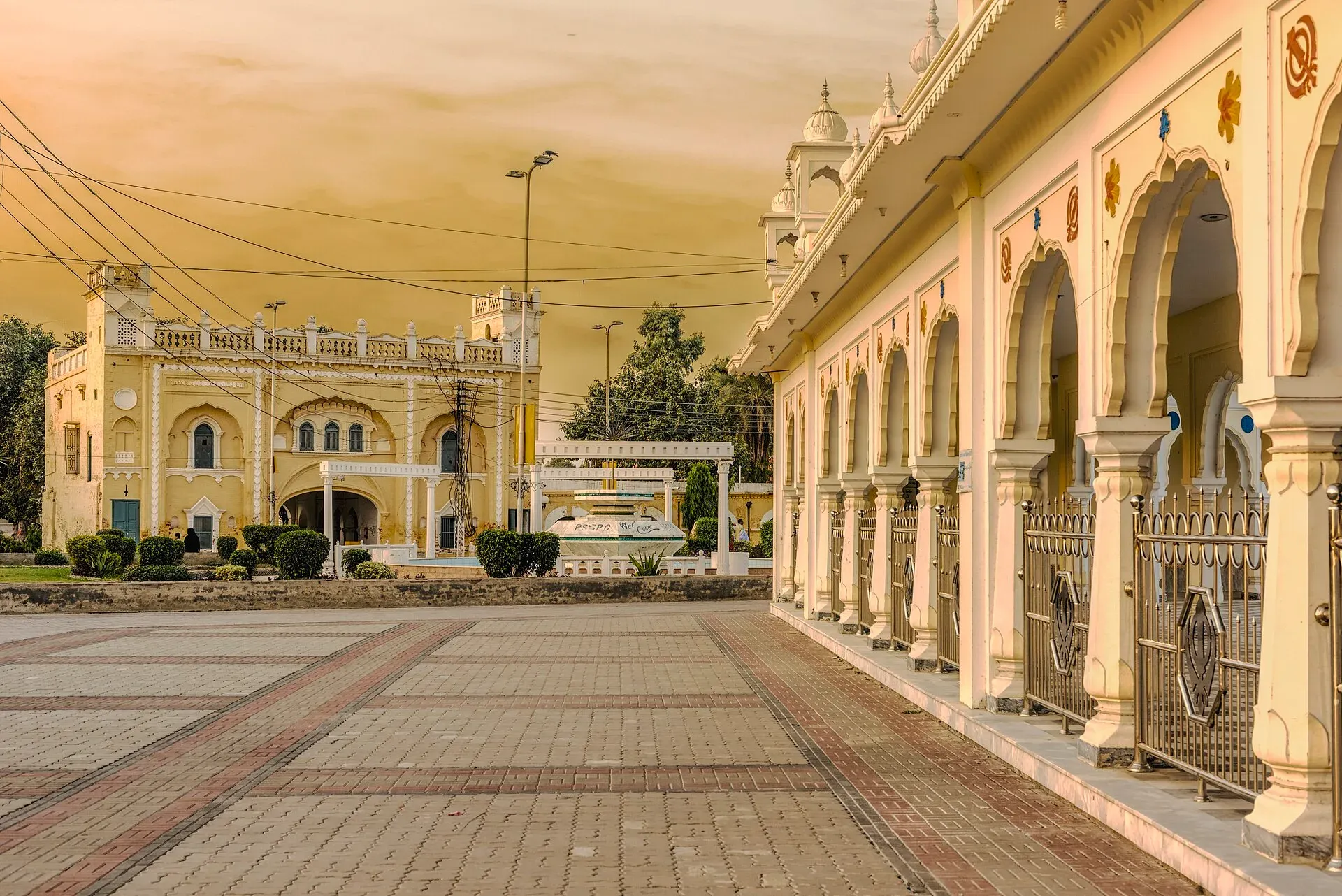
Why this land matters to Sikhs
Sikhism began in what is now Pakistan. Guru Nanak, its founder, is believed to have been born at Nankana Sahib, to Mehta Kalu and Mata Tripta. In 2026 the Evacuee Trust Property Board (ETPB) is marking his 557th birth anniversary, which places his birth in 1469. Tradition says he reached Hasan Abdal with his companion Bhai Mardana in 1521. He later settled at Kartarpur, on the Ravi, where he farmed and gathered a community for about 18 years until his death in 1539.
This article is for Sikh pilgrims, and for any visitor who wants to understand these places. It is a guide, not a pilgrim-registration manual: for permissions, always ask the ETPB or the Pakistan Sikh Gurdwara Parbandhak Committee (PSGPC).
Nankana Sahib
Nankana Sahib, west of Lahore, is the holiest place for many Sikhs. Gurdwara Janam Asthan, built where Guru Nanak is believed to have been born, is one of nine important gurdwaras in the town. A Protected Heritage Monument of the Government of Punjab, it is managed by the PSGPC. The first gurdwara here is thought to date to the 16th century, and the present building dates mainly from Maharaja Ranjit Singh's time. On 20 February 1921, 86 Sikhs were killed in the Nankana massacre, which Sikhs remember as a turning point in the movement to take control of their gurdwaras. Visitors see the main shrine, the sarovar (sacred pool) and the courtyards.
Hasan Abdal and Panja Sahib
Gurdwara Panja Sahib stands in Hasan Abdal on the road between Islamabad and Peshawar. Its famous boulder bears the imprint of a hand, which Sikhs believe is Guru Nanak's, beside a clear spring that flows into a large pool. In the story, Mardana asked a local saint for water and was refused. Guru Nanak moved a rock and a spring welled up, and when the saint rolled a boulder down the hill, Guru Nanak stopped it with his hand. Hari Singh Nalwa is credited with building the first gurdwara here. The main festival is Baisakhi in April: in 2026 it ran from 10 to 19 April, with the main ceremony on 14 April, and Pakistan issued more than 2,800 visas for it (Dawn).
Lahore
Lahore holds the Samadhi of Ranjit Singh, with gilded domes and a marble lotus-shaped urn, beside Lahore Fort and the Badshahi Mosque. It stands next to Gurdwara Dera Sahib, which is also the PSGPC's headquarters. Ranjit Singh took the city in 1799 and died on 27 June 1839. His son Kharak Singh began his samadhi, and Duleep Singh finished it in 1848. Visits to the Samadhi are generally limited to Sikhs, and others need ETPB permission, so ask in advance.
Kartarpur
Gurdwara Darbar Sahib Kartarpur stands in Narowal district beside the Ravi, about 3 to 4.7 km from the India border. Guru Nanak founded the settlement in 1504 and died there on 22 September 1539. The present building dates from 1925 and was funded by the Maharaja of Patiala. A courtyard, museum and library were added in 2018. The Kartarpur Corridor opened on 9 November 2019 for visa-free Indian pilgrims. India suspended it in May 2025, and The Friday Times reported it still closed in October 2026. The two countries renewed their formal agreement through 2029 in August 2026, but no reopening date has been announced.
Pilgrim gatherings
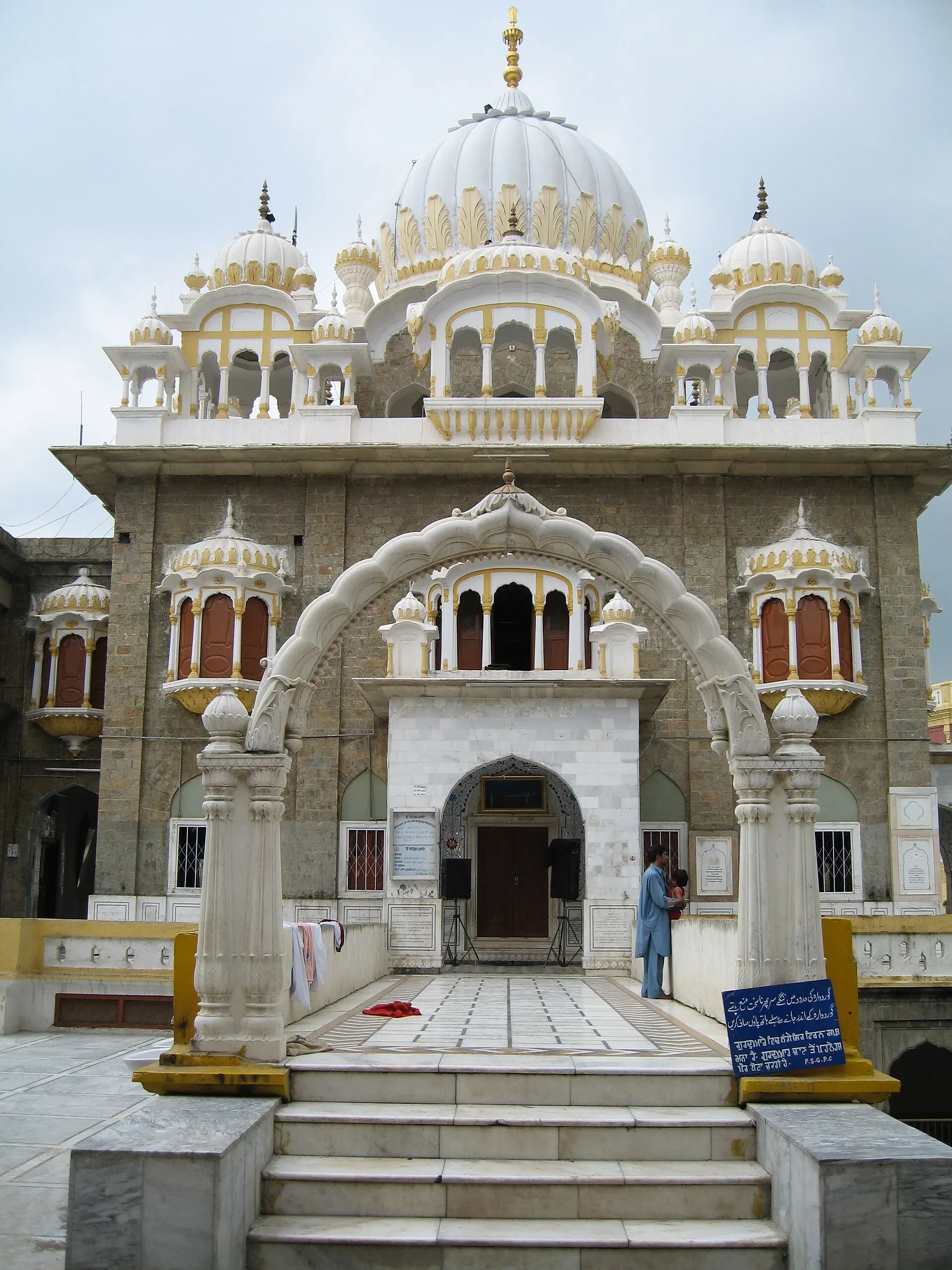
Photo: BookwormUK at English Wikipedia, with thanks · Public domain (CC0) · via Wikimedia Commons · temporary stand-in photo
The ETPB manages Sikh pilgrim visits under the bilateral protocol on visits to religious shrines. It lists four annual gatherings, each with a quota and a 10-day stay:
- Baisakhi: Panja Sahib, Hasan Abdal, April (quota up to 3,000 pilgrims).
- Martyrdom Day of Guru Arjan Dev: Lahore, June (up to 1,000).
- Death anniversary of Maharaja Ranjit Singh: Lahore, June (up to 500).
- Birth anniversary of Guru Nanak: Nankana Sahib, November (up to 3,000).
For the 557th birth anniversary, the main ceremony at Nankana Sahib is on 24 November 2026, with pilgrims due at Wagah on 22 November (The Nation, 16 October 2026). Expect continuous reading of the Guru Granth Sahib, a nagar kirtan procession, kirtan and 24-hour langar. Pilgrims from India enter through Wagah. Sikhs living outside India and Pakistan should ask the nearest Pakistani mission about visas. The ETPB page covers only Sikh and Hindu pilgrims under the bilateral protocol and does not say whether other foreign visitors can attend, so ask the ETPB before you go.
Etiquette in a gurdwara
- Take your shoes off and cover your head. Scarves are usually provided, but bring your own.
- Do not bring tobacco, alcohol or intoxicants.
- Dress modestly and sit on the floor. Do not point your feet towards the Guru Granth Sahib.
- Ask before photographing worshippers.
- Langar, the free meal, is part of the worship: take only what you will eat.
- Follow instructions from PSGPC and ETPB staff.
When to go
October to March suits the plains. Festival weeks bring crowds, heavy security and full accommodation, so book ahead or choose a quiet week. Lahore is the practical base for Nankana Sahib and Kartarpur, and Islamabad or Rawalpindi for Hasan Abdal. Our article on religion and sacred sites gives wider context.
Fees
Fees may apply at Lahore Fort and some monuments. Current fees will be added soon. Ask the PSGPC or ETPB about any charge at the gurdwaras.
Before you go: travel advice
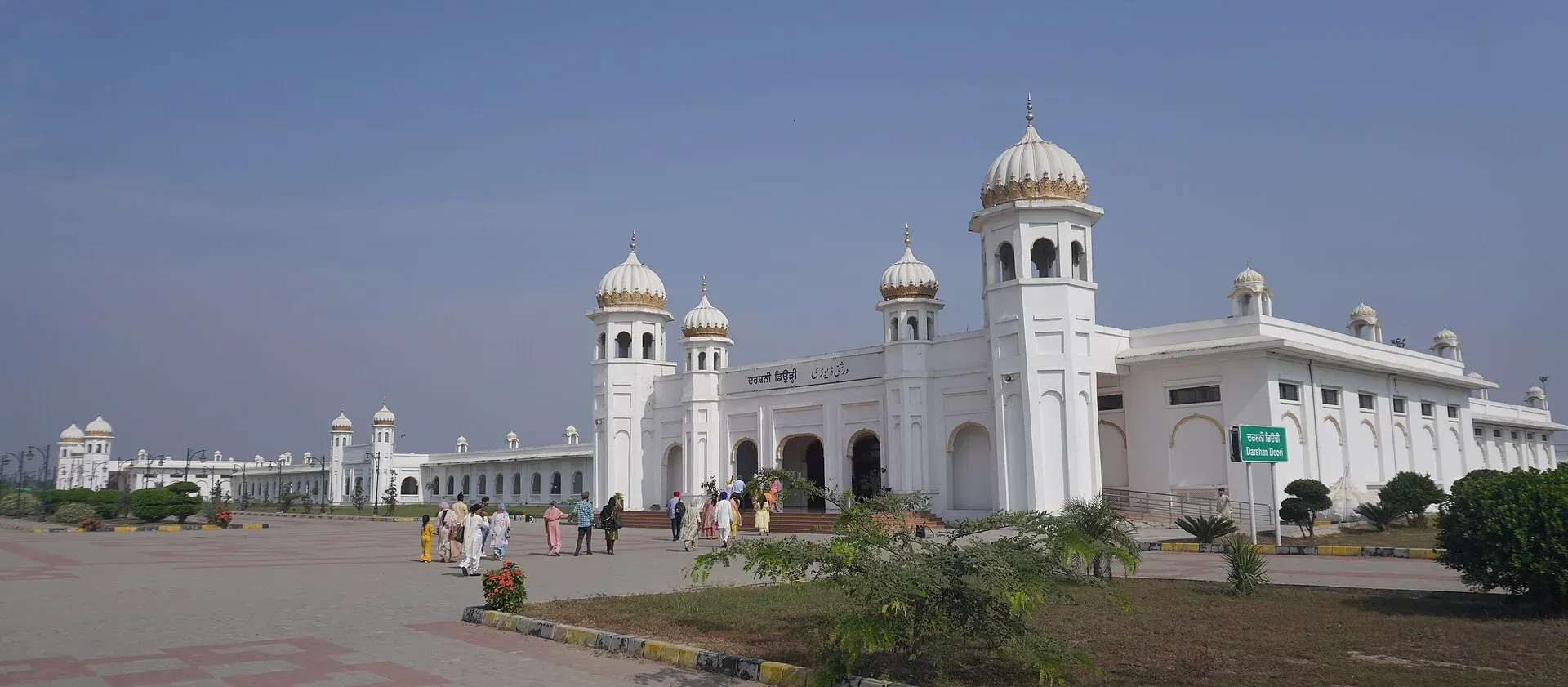
Photo: Harvinder Chandigarh, with thanks · CC BY 4.0 · via Wikimedia Commons · temporary stand-in photo
Ask the district administration or local police about current conditions before you go. For foreign visitors: the UK FCDO page for Pakistan (updated 27 October 2026) advises against all but essential travel within 5 miles of the India border. The exceptions it names are the Grand Trunk highway via Wagah (the crossing point is closed, but the daily ceremony can still be attended) and the Kartarpur Corridor for Sikh pilgrims, which is closed for crossings. Kartarpur lies about 3 to 4.7 km from the border, so it falls inside the 5-mile zone. The page does not name Lahore, Nankana Sahib or Hasan Abdal. It does advise against all travel on the Karakoram Highway between Mansehra and Chilas, which affects onward trips north of Hasan Abdal, and it notes emergency measures and Governor's Rule in Khyber Pakhtunkhwa since 11 October 2026. Travel insurance can be invalid if you travel against FCDO advice. Carry your passport or CNIC and follow instructions at checkpoints.


