

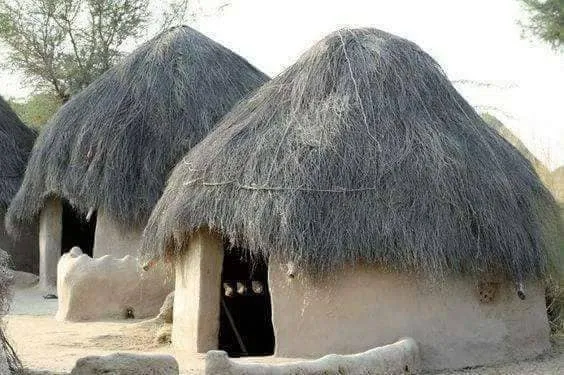
Photo: Shirjeel Imran Malik, with thanks · CC BY-SA 4.0 · via Wikimedia Commons · temporary stand-in photo

Cholistan Wildlife Sanctuary
A very large desert sanctuary in Bahawalpur District, Punjab, in the Cholistan Desert. Wikipedia lists caracal, chinkara, houbara bustard and many reptiles. Facilities are limited; Derawar Fort is the usual visitor stop.
Overview
Cholistan Wildlife Sanctuary protects part of the Cholistan Desert in Bahawalpur District, Punjab. Wikipedia gives its area as about 26,000 sq km (2.6 million hectares), which is close to the size of the whole desert (about 25,800 sq km), so the exact sanctuary boundary should be confirmed with the Punjab wildlife authorities. The year of notification is not stated in the sources.
Plan your visit
- Nearest town
- Bahawalpur
- Getting there
The sanctuary lies in the Cholistan Desert, in Bahawalpur District. Bahawalpur is the nearest city. Wikipedia places the site at about 28.94 N, 72.13 E, but we have no verified entrance. More
Best months
Oct – Mar
- Cholistan Wildlife Sanctuary
- Related places nearby: Cholistan Desert, Lal Suhanra National Park, Bahawalpur
The desert
The Hakra river once ran through this land. Its dry bed now divides the desert into two zones. Lesser Cholistan, to the north and east (about 7,770 sq km), borders canal-irrigated farmland and holds most of the population. Greater Cholistan, to the south and west (about 18,130 sq km), is sandier and more saline, with large dunes that average about 100 m tall, river terraces and depressions.
Low sandy ridges alternate with salty flats called dahars. Soils are saline or saline-sodic. Rainfall is sparse and erratic, usually 100 to 250 mm a year and mostly in the monsoon, and droughts are common. Summer highs pass 46 C and can exceed 50 C, while winter nights can approach freezing.
Water is scarce. Herders store rain in natural pools called tobas and in dug pools called kunds. Groundwater lies at 30 to 40 m but is usually brackish. About 131 plant species grow here, mostly drought-tolerant.
Wildlife
The Wikipedia list counts 17 mammals, 16 birds and 44 reptiles and amphibians. They are listed descriptively, with no recent counts, so treat them as what the habitat can hold, not as sightings to expect.
- Mammals. Caracal, jungle cat, Asiatic wildcat, Bengal fox, Indian jackal, Arabian wolf, chinkara (the Indian gazelle), nilgai, Indian boar, Indian grey mongoose, Indian ratel and Indian crested porcupine, among others.
- Birds. Grey francolin, desert lark, houbara bustard, great Indian bustard, black-bellied sandgrouse, saker falcon and tawny eagle, with several other falcons and eagles and the cinereous vulture. Houbara bustards migrate here in winter, and their numbers have fallen sharply.
- Reptiles and amphibians. Five turtles, many lizards and geckos, and 17 snakes, among them the Indian cobra, Sind krait and eastern saw-scaled viper. Take care walking in the dunes. The Indian bullfrog and Indian marbled toad are the listed amphibians.
Chinkara are also threatened across the desert.
People and the desert
Livestock rearing is the backbone of the local economy, and camels are kept for transport, milk, meat and racing. Local crafts include wool carpets and blankets, khaddar and ajrak textiles, leather khusa shoes, gold jewellery and pottery. See the Bahawalpur Museum for displays of these crafts.
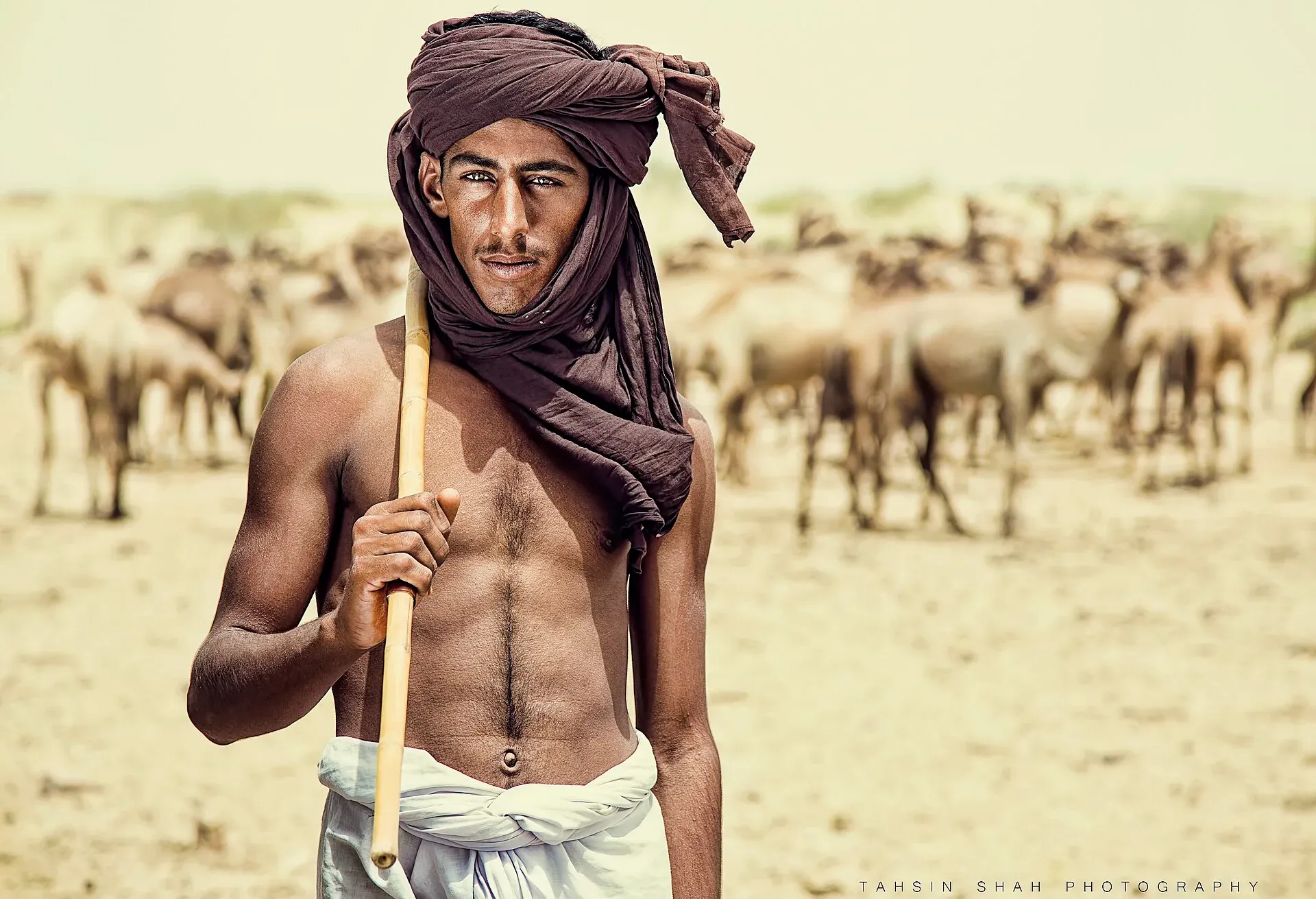
Photo: Tahsin Shah, with thanks · CC BY-SA 4.0 · via Wikimedia Commons · temporary stand-in photo

Medieval forts once guarded the caravan routes across the desert, and Derawar Fort is the best preserved. The Tourism Development Corporation of Pakistan has run the Cholistan Desert Jeep Rally since 2005, over tracks around Rahim Yar Khan, Bahawalnagar and Bahawalpur.
What to see and do
Most visitors come for the fort and the dunes, not the sanctuary as such. See the Cholistan Desert and Derawar Fort pages. Wildlife watching needs a local guide and patience, and early morning and late afternoon are the cooler hours.
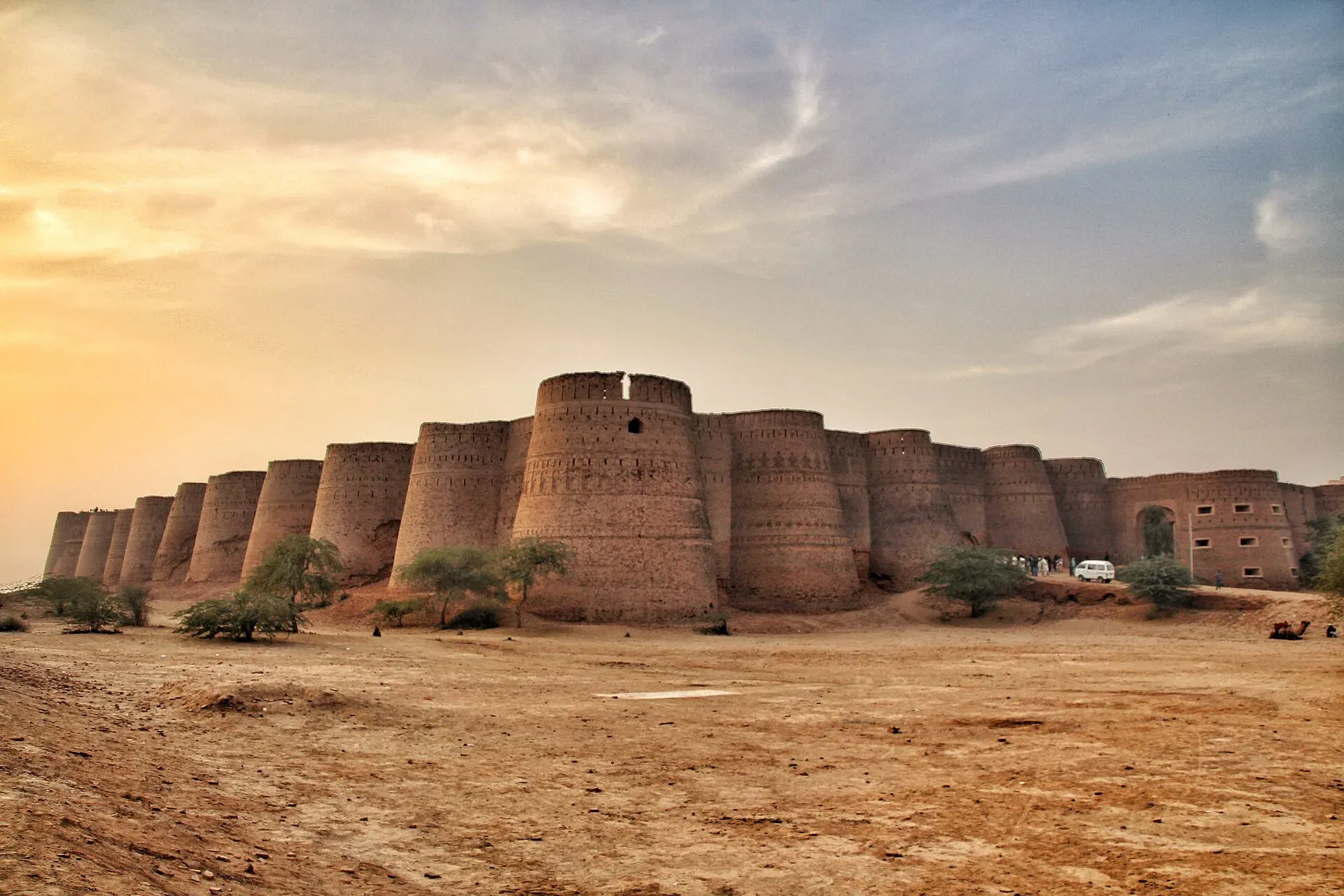
Photo: Fassifarooq, with thanks · CC BY-SA 4.0 · via Wikimedia Commons · temporary stand-in photo

When to visit
The Cholistan Desert page on this site gives October to March as the better period. Summers are dangerously hot.
Where to stay and eat
No lodgings can be confirmed inside the sanctuary. Bahawalpur has hotels. Desert camps are described on the Cholistan Desert Camp page.
Good to know
- Go with a local guide and a suitable vehicle. Carry plenty of water; tracks are unmarked and distances are long.
- Hunting is not allowed in a wildlife sanctuary. Ask the Punjab Wildlife and Parks Department about entry rules. Current fees, if any, will be added soon.
- Safety. For foreign visitors: the UK FCDO (updated 27 October 2026, checked 17 November 2026) does not list Bahawalpur district, but advises against all but essential travel within 5 miles of the border between Pakistan and India. Parts of Cholistan lie near that border. Read the current FCDO page and get local advice before you travel.
Highlights
- Part of the Cholistan Desert
- Caracal, chinkara and houbara bustard listed
- Large reptile list
- Near Derawar Fort
Getting there
The sanctuary lies in the Cholistan Desert, in Bahawalpur District. Bahawalpur is the nearest city. Wikipedia places the site at about 28.94 N, 72.13 E, but we have no verified entrance. Desert tracks are unmarked, so use a local driver or guide; see the Cholistan Desert and Derawar Fort pages for routes to the main sights.
Tips
- Go with a local guide and 4x4
- Visit October to March
- Carry water and fuel
- Ask the Punjab wildlife authorities about entry
Wildlife
Facilities
- Derawar Fort and desert camps nearby (see linked pages)
- Hotels in Bahawalpur
Photos we still need: wildlife (chinkara, houbara) in Cholistan, and the Hakra bed. Send us yours
Sources and last checked
Last checked Confidence low4 sources5 still to check
- Last checked
- Method
- Desk research from published sources
- Confidence
- low
- Checked by
- trek.pk research team
Researched from published sources; not yet checked on the ground by our team. Spot something out of date? Report a mistake.
Sources
- Cholistan Wildlife Sanctuary · Wikipedia · checked
- List of wildlife sanctuaries in Pakistan · Wikipedia · checked
- Cholistan Desert · Wikipedia · checked
- Pakistan travel advice: warnings and insurance (updated 27 October 2026) · UK Foreign, Commonwealth & Development Office (FCDO) · checked
Still to be checked on the ground (5)
- Actual sanctuary boundary and area (26,000 sq km is close to the whole desert)
- Year of notification
- Entry rules and any fee
- Coordinates are from Wikipedia and approximate
- Wildlife list is from Wikipedia and unconfirmed by the department
Nearby and related

Cholistan Desert
Cholistan is a desert of about 25,800 km2 in Punjab's Bahawalpur Division, with dunes, seasonal ponds called tobas, camel herders and Derawar Fort. Visit October to March.
Derawar Fort
A square mud-brick fort of 40 round bastions in the Cholistan Desert, south of Ahmedpur East. Dated to the 9th century, rebuilt in 1732, and on UNESCO's tentative list since 2016.

Cholistan Desert Camp (Derawar)
A camping area at the TDCP tourist resort beside Derawar Fort in the Cholistan Desert, about 96 km by road from Bahawalpur. Best from October to March.

Lal Suhanra National Park
A desert and forest park about 35 km east of Bahawalpur, covering roughly 516 square kilometres. A UNESCO biosphere reserve with blackbuck, chinkara, nilgai and Patisar Lake.

Bahawalpur
Former capital of a princely state on the edge of the Cholistan Desert: Nawabi palaces, a museum, desert crafts, and a base for Lal Suhanra, Derawar Fort and Uch Sharif.

Punjab
Pakistan's most populous province: Mughal Lahore, ancient Taxila and Harappa, Sufi shrines, the Salt Range, the Cholistan desert and the hills of Murree.