

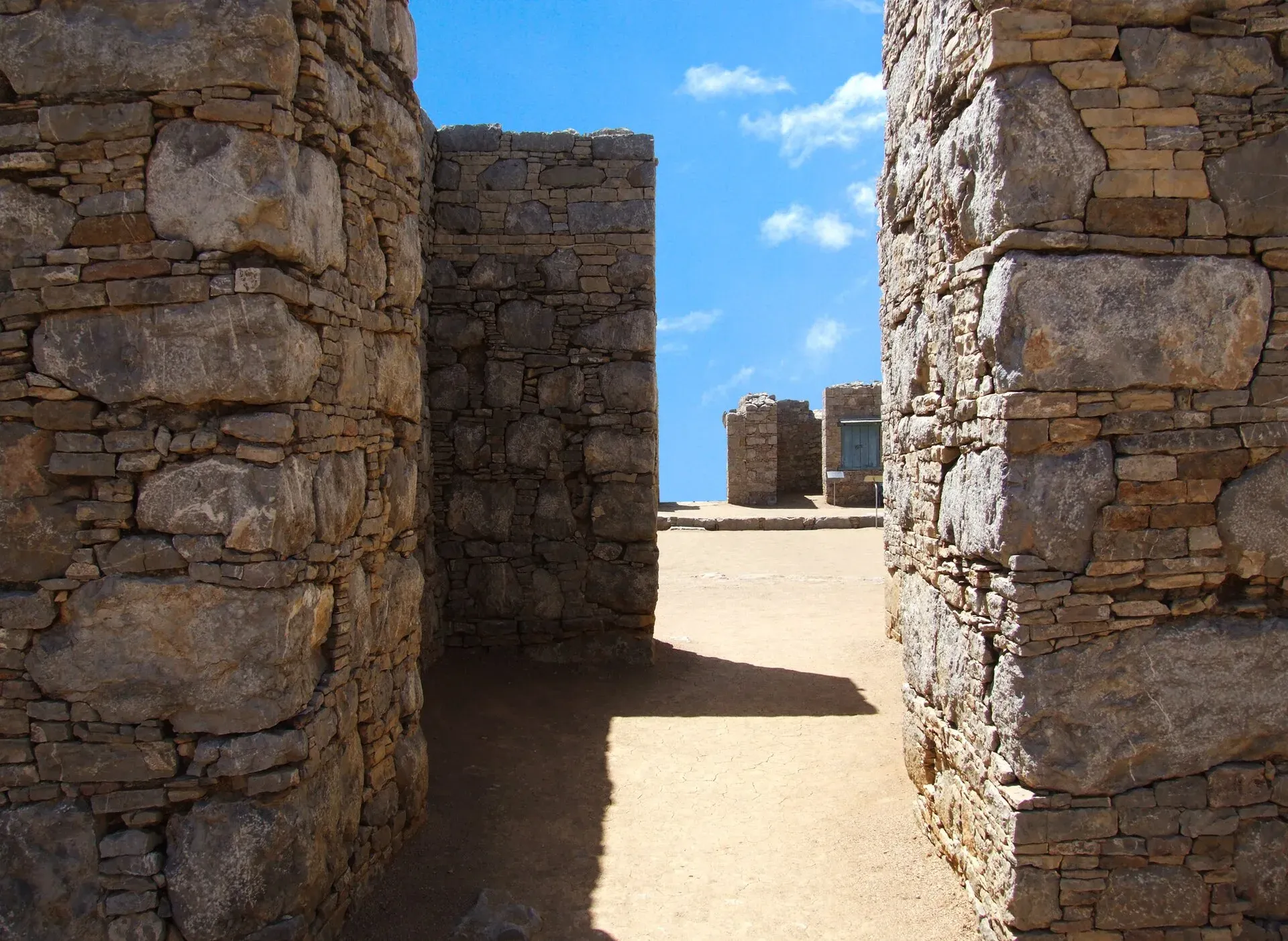
Photo: Amjad Sheikh, with thanks · CC BY-SA 3.0 · via Wikimedia Commons · temporary stand-in photo
Jaulian
A 2nd-century Buddhist monastery on a hilltop at Taxila, with stupas, chapels and stucco carvings. Part of the Taxila World Heritage Site, inscribed in 1980.
Overview
Jaulian is the ruin of a Buddhist monastery on a hill about 100 m above the village of Jaulian, near Taxila. It is part of the "Taxila" World Heritage Site, which UNESCO inscribed in 1980. The name is often translated as "Seat of Saints". Hilltop stupas, small chapels with surviving stucco figures and a block of monks' rooms make it one of the clearest examples of a Gandhara monastery in Pakistan.
Plan your visit
- Nearest town
- Taxila
- Getting there
Jaulian is near Taxila, about 35 km from Rawalpindi and about 39 km from central Islamabad by road (about 35 minutes, OSRM, an optimistic estimate checked 17 November 2026). More
Best months
Feb – Apr, Oct – Dec
- Jaulian
- Related places nearby: Rawalpindi, Islamabad
History
The monastery dates from the 2nd century CE, in the Kushan period, around the same time as Mohra Muradu nearby. It was damaged in the 450s CE during the White Hun invasions, which Wikipedia links to the persecution of Buddhists under the Hun king Mihirakula, and it never recovered. Sir John Marshall's excavations at Taxila, carried out for the Government of India between 1913 and 1934, brought the site to light. A silver reliquary from Jaulian is now in the British Museum.
The stupa court
The upper terrace holds a central stupa, a Buddhist monument that housed relics. It is much smaller than the great stupas at Dharmarajika and Mohra Muradu and is badly damaged. Around it stand dozens of small votive stupas (Wikipedia gives 27 in one section and 21 in another) and 59 small chapels. Some of the votive stupas may have been built as tombs for revered monks.
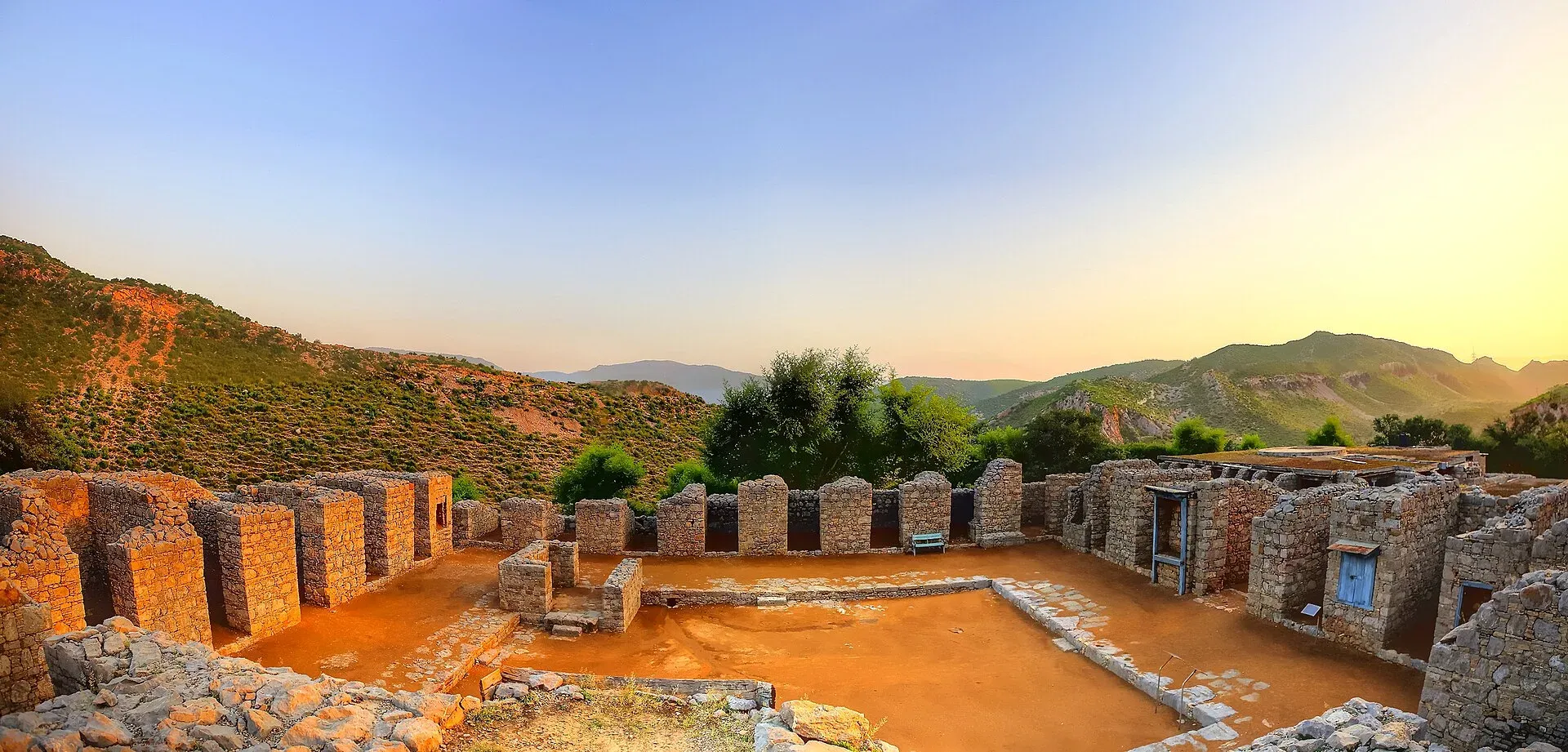
Photo: ClicksByMohammadOmer, with thanks · CC BY-SA 3.0 · via Wikimedia Commons · temporary stand-in photo
Almost everything here was once coated in stucco, a moulded lime plaster used for the Buddha figures and the architectural details. Original plaster survives in places, and most statues in the votive stupas are still in position, though some have gone to museums. The decoration is less rich than at Mohra Muradu, but the figures show how a Gandhara shrine was finished. One figure is a devotee in foreign dress, described as Indo-Scythian.
The best-known figure is the "healing Buddha". It has a hole in its navel, and pilgrims put a finger in it and prayed for a cure. An inscription beneath, dated to the 5th century, records that the statue was given by a monk named Budhamitra Dharmanandin.
The monastery quarters
The living quarters stand round two courtyards on a lower level. The building had two floors, with 28 students' rooms on each, linked by stone stairs that still survive. Each room had a niche for a lamp and a window that was narrower outside than inside, reportedly to keep out wild animals. A few rooms still hold Buddha statues.
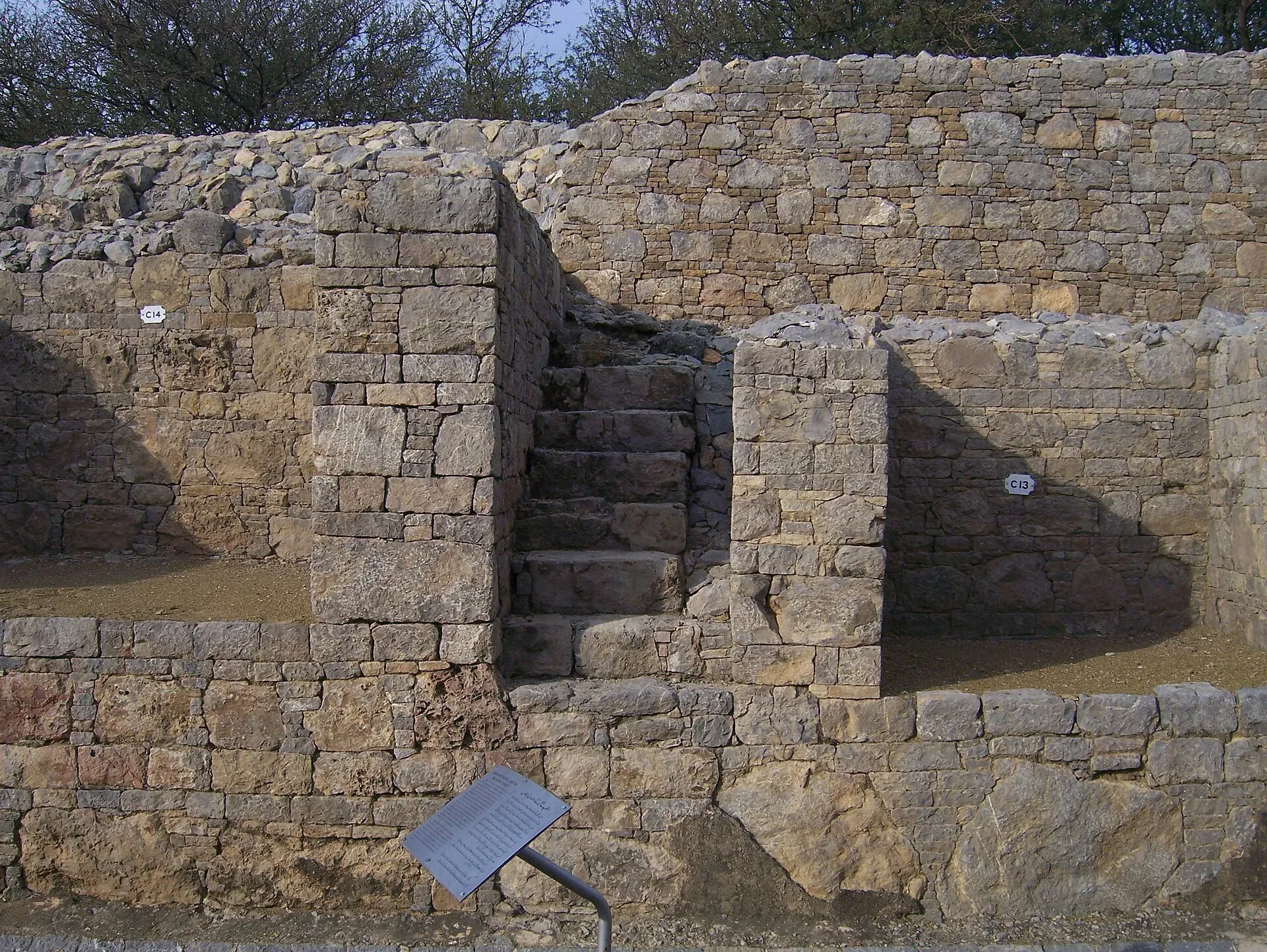
Photo: Dawoodmajoka, with thanks · Public domain (CC0) · via Wikimedia Commons · temporary stand-in photo
Other parts show the daily routine: a large washing pool, a kitchen, a stone slab for grinding spices and two stone grain mills. One section was set aside for copying Buddhist texts, usually on birch bark.
A half day at Taxila
Jaulian is the furthest of the main sites. Wikivoyage puts it about 7 km from Taxila Museum, with Dharmarajika about 2.5 km from the museum and most other sites within about 2 km. A workable order is the museum first for context, then Dharmarajika (see Dharmarajika Stupa), Mohra Muradu and finally Jaulian, finishing back at the museum. See Taxila Museum and Taxila. Most sites can be seen by vehicle in a couple of hours. Walking between them is hard in hot weather.
When to visit
October to April is the most comfortable period. Summers are hot and the climb has little shade.
Where to stay and eat
Taxila town has simple hotels and restaurants. Islamabad and Rawalpindi offer a wider choice and are an easy day trip away.
Good to know
- The path up includes steps. Wear sturdy shoes and bring water.
- Do not touch or lean on the stucco carvings. The site is sacred to Buddhists.
- Self-appointed guides and vendors of "old" coins may approach visitors at Taxila sites, according to Wikivoyage. Decline politely if not interested.
- Opening hours and any ticket price were not confirmed by an official source. Current fees will be added soon; check with the Taxila Museum or the Department of Archaeology and Museums.
Highlights
- Hilltop Buddhist monastery of the 2nd century CE
- Stucco chapels and votive stupas
- Healing Buddha with a hole in its navel
- Part of the Taxila World Heritage Site (1980)
Getting there
Jaulian is near Taxila, about 35 km from Rawalpindi and about 39 km from central Islamabad by road (about 35 minutes, OSRM, an optimistic estimate checked 17 November 2026). From Taxila, hire a rickshaw or taxi for the drive. Wikivoyage lists taxis, auto-rickshaws and tangas (horse-drawn carriages) near Taxila Museum, and says Jaulian is about 7 km from it. Sites are signposted. Many visitors make a day trip by car from Islamabad or Rawalpindi and see several sites together.
Tips
- Wear sturdy shoes; there are steps up the hill.
- Visit Taxila Museum first for context.
- Do not touch the stucco carvings.
- Allow about an hour.
Photos we still need: the healing Buddha and the votive stupas with stucco, close up. Send us yours
Sources and last checked
Last checked Confidence medium5 sources5 still to check
- Last checked
- Method
- Desk research from published sources
- Confidence
- medium
- Checked by
- trek.pk research team
Researched from published sources; not yet checked on the ground by our team. Spot something out of date? Report a mistake.
Sources
- Jaulian · Wikipedia · checked
- Taxila · UNESCO World Heritage Centre · checked
- Taxila Museum · Government of Punjab · checked
- Pakistan Tourism Guide 2021 · Tourism Development Corporation of Pakistan (TDAP) · checked
- Taxila · Wikivoyage · checked
Still to be checked on the ground (5)
- Opening hours and entry fee for Jaulian itself (the Taxila Museum site lists museum hours and prices but none for Jaulian)
- Exact number of stupas and chapels (Wikipedia gives 27 peripheral stupas in one section and 21 votive stupas in another; 59 chapels)
- Current access and conservation work at Taxila sites (no notice on the museum page; UNESCO page refused the request)
- Whether Jaulian needs a separate ticket (Wikivoyage says it lies in Khyber Pakhtunkhwa, which should be checked)
- Distance from Taxila Museum (Wikivoyage: about 7 km)


