

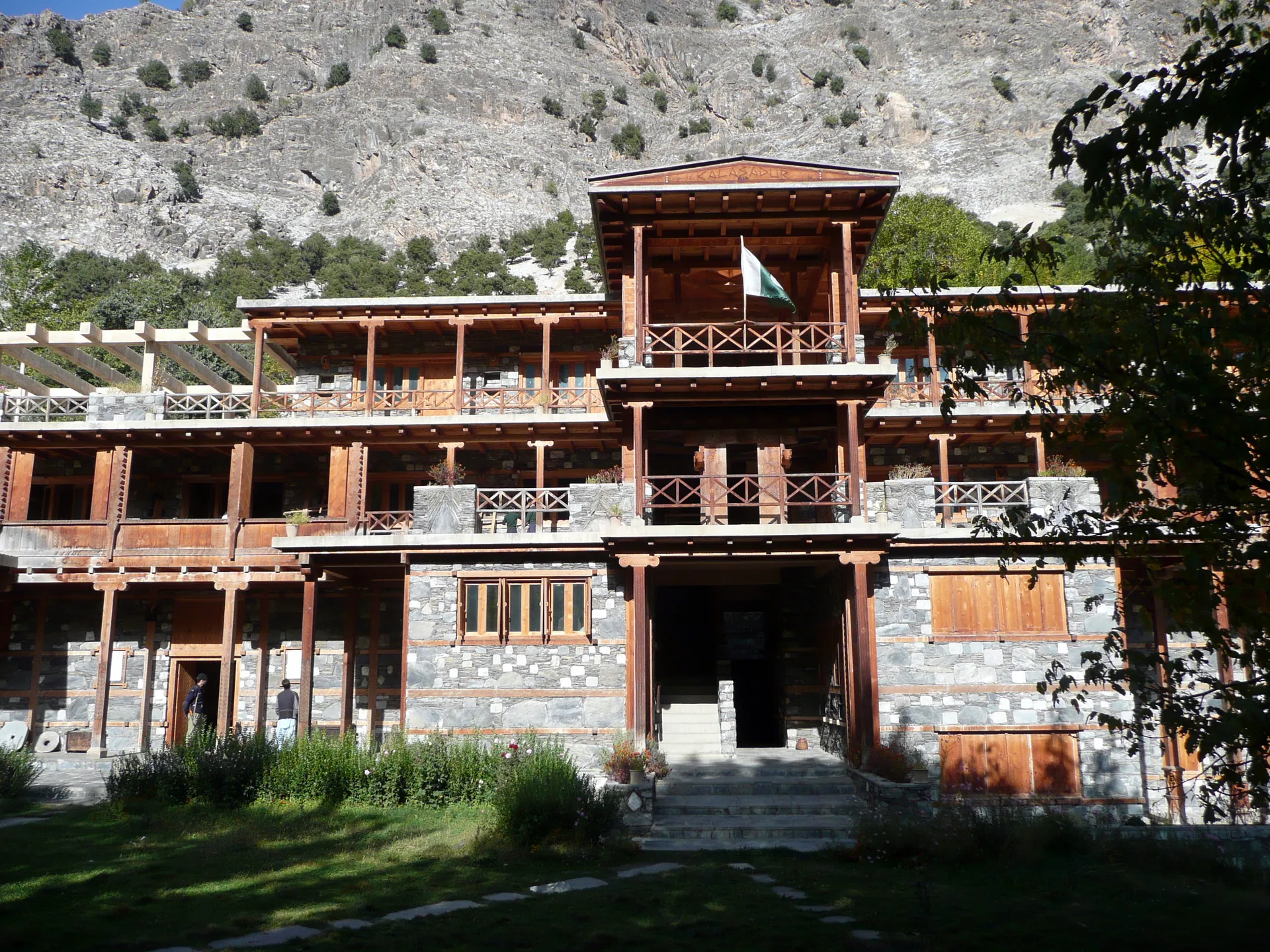
Photo: Martin Jung, with thanks · CC BY-SA 3.0 · via Wikimedia Commons · temporary stand-in photo

Kalasha Dur Museum
A cultural centre and museum in Bumburet, the largest of the Kalash valleys, with about 1,300 objects from Kalash life and the wider Hindu Kush.
Read this first: current advice
For foreign visitors: the UK FCDO (updated 27 October 2026, checked 17 November 2026) advises against all travel on the N45 highway from north of the Mardan ring road to the edge of Chitral City, including the Kalash valley. It also advises against all travel to a list of Khyber Pakhtunkhwa districts, and against all but essential travel to others. This page describes the museum for information and does not recommend the trip. Ask your host or the Chitral district administration about conditions before you go.
Plan your visit
- Nearest town
- Bumburet
- Getting there
Bumburet is a side valley south-west of Chitral town. Hire a local jeep or taxi from Chitral. Road distance, travel time and road condition are not confirmed here; see the Kalash valleys page. More
Best months
Apr – Jun, Sep – Oct
- Kalasha Dur Museum
- Related places nearby: Kalash Valleys (Bumburet, Rumbur, Birir), Chitral, Chitral Museum, Chitral Valley
Overview
Kalasha Dur, also called the Bumburet Museum, is the cultural centre of the Kalash people. The name means roughly "house of the Kalasha". It stands in Bumburet valley in Lower Chitral District, Khyber Pakhtunkhwa, and is owned by the Directorate of Archaeology and Museums of Khyber Pakhtunkhwa. Building began in 2001 and the museum opened in 2005. It was led by the Greek volunteer group Greek Volunteers, under teacher Athanasios Lerounis, with support from the Greek aid agency Hellenic Aid.
How the collection began
Greek Volunteers had worked in the three Kalash valleys (Bumburet, Birir and Rumbur) since 1995. They were concerned that young Kalash would never see their ancestors' everyday objects, so they bought items, or swapped modern goods for traditional ones, with the aim of an ethnological museum. After the building opened, residents of the valleys donated more. The museum also bought traditional utensils and objects from antique shops in Peshawar and Chitral, many of which had left Hindu Kush settlements.
The building
The museum and its grounds cover about four kanals (a local land measure) of land. The design mixes old and new methods: stone walls over a concrete frame, with parallel wooden beams and carved verandas in the traditional style. The ground floor holds the collection. The upper floor has a school of Kalash culture, a library of books about the valley and a hall for training local craftspeople. A small temple to Jestak, a deity believed to protect future generations, stands near the entrance.
What to see and do
- The collection. About 1,300 items from the Kalash and the wider Hindu Kush: weapons, everyday objects, tools, clothing, jewellery and musical instruments.
- Cultural centre. The school, library and craft training hall show that the building is used by the community, not only as a display space.
- Jestak shrine. Look at it from outside, and enter only if invited.
When to visit
Valley roads can close in winter and after heavy rain, and festival times bring many visitors. Ask locally about the season before you plan.
Where to stay and eat
Bumburet has guesthouses and small restaurants. See the Kalash valleys page for the wider area.
Good to know
- Hours and fees: current opening hours and fees will be added soon. No official dated source was found.
- Respect local custom. The Kalash have their own religion and customs. Ask before photographing people, and do not enter shrines unless invited.
Highlights
- About 1,300 Kalash and Hindu Kush objects
- Cultural centre in Bumburet valley
- Opened in 2005
- Shrine to Jestak by the entrance
Getting there
Bumburet is a side valley south-west of Chitral town. Hire a local jeep or taxi from Chitral. Road distance, travel time and road condition are not confirmed here; see the Kalash valleys page.
Tips
- Ask locally about the season and road conditions.
- Ask before photographing people or shrines.
- Combine with a walk through Bumburet village.
Photos we still need: interior displays, or the carved wooden veranda. Send us yours
Sources and last checked
Last checked Confidence low2 sources4 still to check
- Last checked
- Method
- Desk research from published sources
- Confidence
- low
- Checked by
- trek.pk research team
Researched from published sources; not yet checked on the ground by our team. Spot something out of date? Report a mistake.
Sources
- Kalasha Dur Museum · Wikipedia · checked
- Pakistan travel advice · UK FCDO (GOV.UK), updated 27 October 2026 · checked
Still to be checked on the ground (4)
- Opening hours and any entry fee (no official dated source reached)
- Road distance and travel time from Chitral to Bumburet (not verified from a map source)
- Whether the museum is open year-round
- Current FCDO status and local conditions for Kalash valleys
Nearby and related

Kalash Valleys (Bumburet, Rumbur, Birir)
Three side valleys of the Chitral River, home to the Kalasha people, who keep their own religion, language and festivals. Visit with respect and check security advice first.

Chitral
The main town of Lower Chitral District, at about 1,500 m on the Chitral River, with a historic fort, a royal mosque and views of Tirich Mir. The base for the Kalash valleys.

Chitral Museum
A small museum in Chitral town, established in 2010, with galleries on Chitrali life, weapons, and Kalash and Gandhara Grave archaeology.

Chitral Valley
The long Chitral River valley at the foot of the Hindu Kush, with Chitral town's fort and Shahi Mosque, the Lowari Tunnel route, Tirich Mir views and side valleys leading to Kalash and Shandur.

Chitral and Kalash
A 6-7 day road trip from Islamabad to Chitral through Dir and the Lowari Tunnel, with the Kalash valleys of Bumburet, Rumbur and Birir, Chitral Fort and Tirich Mir views.