

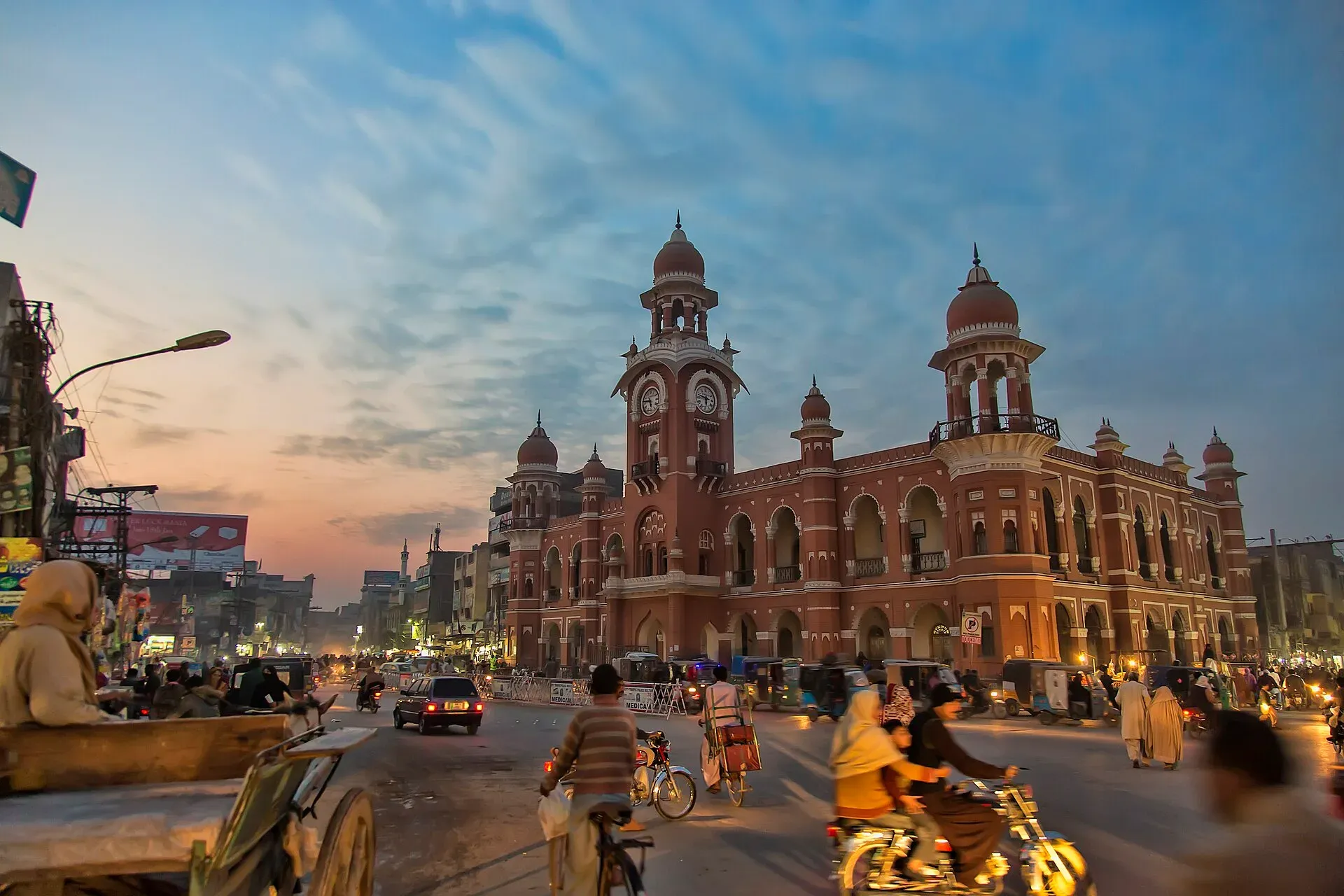
Photo: Tahsin Shah, with thanks · CC BY-SA 4.0 · via Wikimedia Commons · temporary stand-in photo

Multan Clock Tower (Ghanta Ghar)
A Victorian-era clock tower and municipal building in central Multan, begun in 1884. A US-backed restoration led by THAAP was reported complete in January 2026; public opening is unconfirmed.
Overview
Ghanta Ghar is the clock tower and civic building at the heart of old Multan. The Punjab government's Multan district page says construction began on 12 February 1884 and took about four years. The British built it to house the offices needed to run the city after the Municipal Act of 1883. It stands on the site of the Haveli of Ahmad Khan Sadozai, which was destroyed in the Siege of Multan of 1848-49. The style is Indo-Saracenic, and the tower is at about 30.1986 N, 71.4678 E.
Plan your visit
- Nearest town
- Multan
- Opening hours
- Not confirmed. Check locally.
- Getting there
The tower is in central Multan, in the old city. Multan has an airport, a main railway station and a motorway link. From any hotel in town, take a rickshaw or taxi and ask for Ghanta Ghar Chowk. More
Best months
Oct – Mar
- Multan Clock Tower (Ghanta Ghar)
- Related places nearby: Multan, Hussain Agahi Bazaar (Multan), Shrine of Bahauddin Zakariya, Tomb of Shah Rukn-e-Alam
Names
The complex has carried several names. The hall and building were named Ripon Hall and Ripon Building after the viceroy of the day, and the tower was called Northbrook Tower. After 1947 the hall became Jinnah Hall. The city government offices later moved out because the building became too small.
The tower and its clocks
The red-brick and arched facade and the clock face are the main reason to come. They are easy to see from the surrounding streets at any time of day. The clocks stopped in 1985. On 27 October 2011 three clocks were repaired by Rado Watchmaker, which replaced the machinery and hands but kept the original main dial. They run on solar power and show Pakistan Standard Time.
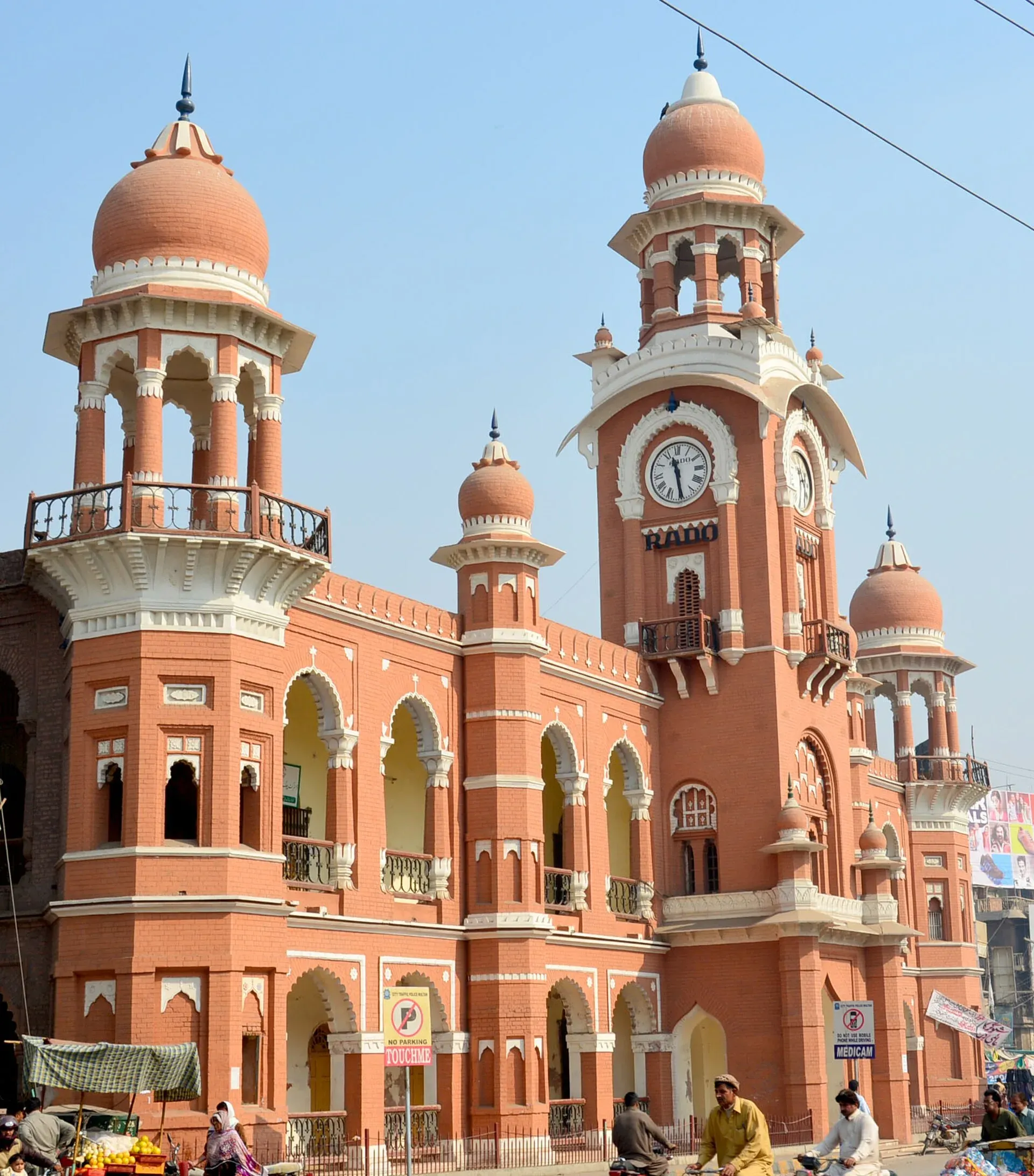
Photo: Junaidahmadj, with thanks · CC BY-SA 3.0 · via Wikimedia Commons · temporary stand-in photo

Restoration
THAAP, working with the Walled City of Lahore Authority and funded by the US Mission in Pakistan, launched a restoration in November 2024. The aim was to keep the building's architecture intact while giving its spaces cultural and educational uses. The plans listed:
- a Traditional Art and Crafts Museum with an archive of artisan templates (khakas) and artefacts from artisan families;
- an artisans' collective and training centre, where trainees learn under master craftsmen (ustads);
- a library, handicraft shops and a cafe.
Minute Mirror reported on 27 January 2026 that the work had been completed within a year at a cost of US$200,000, that 150 craftsmen had received apprenticeship training, and that officials had formally opened it. Guests toured stalls of local crafts, including Multani khussas (traditional shoes), calligraphy, engraving, blue pottery and chunri (tie-dyed) clothes.
What to see and do
- Walk round the tower and the facade of the building.
- Look for the original dial among the restored clock machinery.
- Combine it with the bazaars nearby, including Hussain Agahi Bazaar, and with the shrines of Bahauddin Zakariya and Shah Rukn-e-Alam. See Multan for the city.
When to visit
October to March is the comfortable season. Summers in Multan are very hot, so go early morning or at dusk.
Where to stay and eat
Stay in Multan city; there are hotels in all grades. The restoration plan included a cafe, but its opening is not confirmed.
Good to know
- Opening status. There is no known official notice of public opening hours or visitor rules after the January 2026 inauguration. Sources also disagree on whether the building is now a museum or a craft centre. Ask at your hotel or local tourism office before you go.
- Fees. No entry fee is confirmed. Current fees will be added soon.
- Another museum. The city's long-planned Multan Museum was moved to a separate new building near here.
- Ask the district administration or local police about current conditions before you go. Safety. For foreign visitors: the UK FCDO Pakistan advice (updated 27 October 2026, checked 16 November 2026) advises against all but essential travel to Dera Ghazi Khan in south Punjab. It does not list Multan, but check the live page before you travel.
Highlights
- Indo-Saracenic civic tower begun on 12 February 1884
- Clocks restarted in 2011 after stopping in 1985
- Restoration reported complete in January 2026
- In the middle of Multan's old city
Getting there
The tower is in central Multan, in the old city. Multan has an airport, a main railway station and a motorway link. From any hotel in town, take a rickshaw or taxi and ask for Ghanta Ghar Chowk. Walking is possible from nearby bazaars.
Tips
- Check locally whether the restored building is open to visitors before making a special trip.
- Go early or at dusk in summer; Multan is very hot by day.
- Combine it with the old-city bazaars and the shrines.
- Carry small notes and keep valuables out of sight in the crowded streets.
Photos we still need: the restored interior, craft stalls or the hall. Send us yours
Sources and last checked
Last checked Confidence medium6 sources4 still to check
- Last checked
- Method
- Desk research from published sources
- Confidence
- medium
- Checked by
- trek.pk research team
Researched from published sources; not yet checked on the ground by our team. Spot something out of date? Report a mistake.
Sources
- Ghanta Ghar · District Government Multan (Punjab) · checked
- Clock Tower, Multan · Wikipedia · checked
- Multan Ghanta Ghar preservation project launched · Dawn · checked
- Multan Clock Tower restoration completed, returned to original glory · Minute Mirror · checked
- Pakistan Tourism Guide 2021 · TDAP · checked
- Pakistan travel advice · UK FCDO · checked
Still to be checked on the ground (4)
- Whether the restored building is open to the public, and its hours (sources are undated and conflict)
- Final use of the building (the district page says a museum is planned; the 2024 plan listed a craft museum, library and cafe)
- Whether the cafe, shops and library exist yet
- Any entry fee
Nearby and related

Multan
The City of Saints in southern Punjab: blue-tiled Sufi shrines, a crowded old city, blue pottery, sohan halwa and mangoes.

Multan Museum
Multan's first public museum, built near the Qasim Bagh fort mound at Damdama and planned with four galleries on the city's history and culture. Opening status is unconfirmed, so check before you go.

Hussain Agahi Bazaar (Multan)
A busy market in old Multan, near the fort mound and the great shrines, known for blue pottery, embroidered cloth and khussa shoes.

Shrine of Bahauddin Zakariya
The 13th-century shrine of the Sufi saint Bahauddin Zakariya in Multan, built in 1262 and a model for later Multani tomb architecture. A working shrine with blue tiles and nightly devotional music.

Tomb of Shah Rukn-e-Alam
An octagonal brick tomb from the early 1300s on the edge of Multan Fort, with blue tilework and a dome rising about 35 m. A working shrine and on UNESCO's tentative list.