

Photo: Muhammad Khan Niazi, with thanks · CC BY-SA 4.0 · via Wikimedia Commons · temporary stand-in photo

Sadh Belo
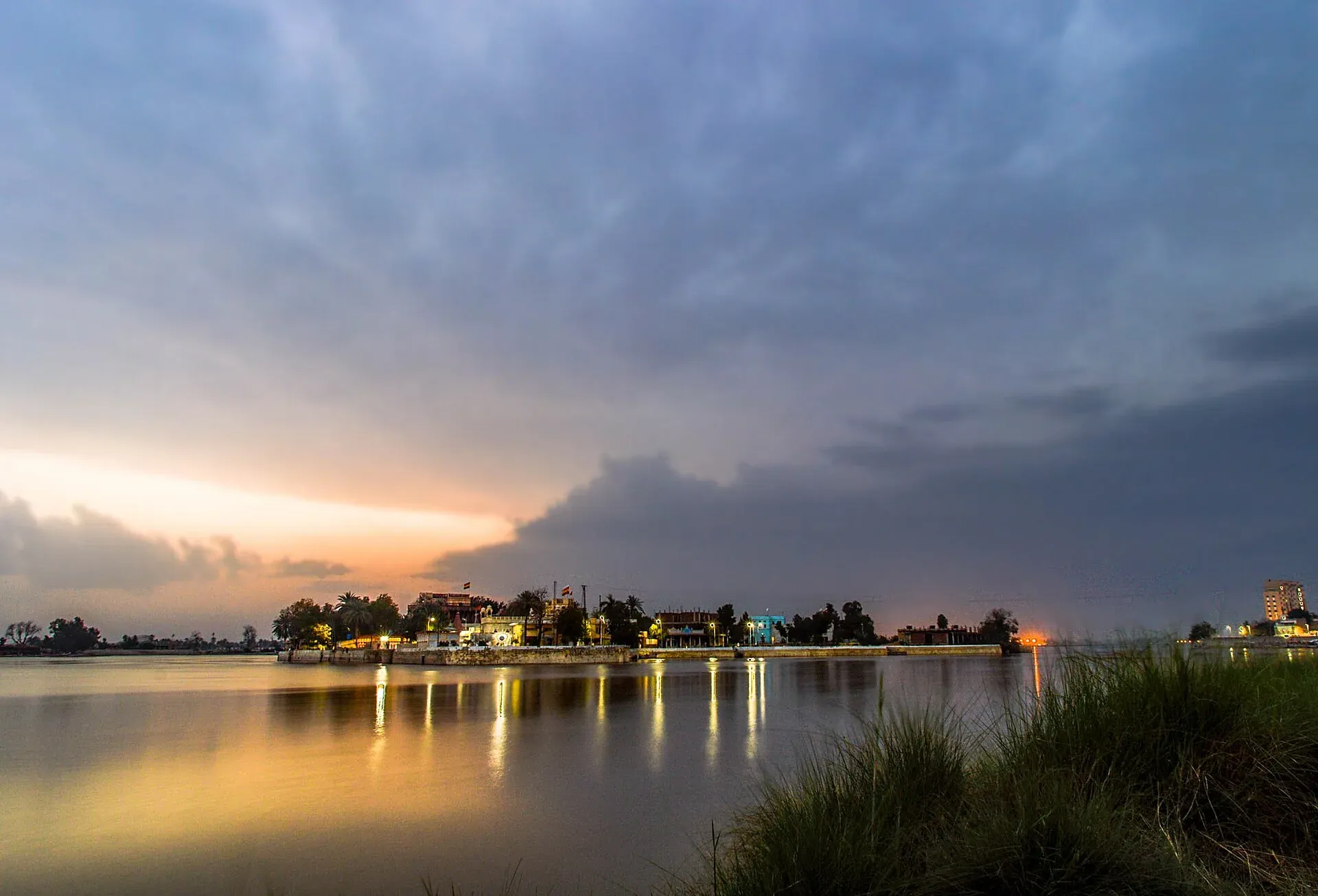
A Hindu temple complex on an Indus island at Sukkur, with nine temples founded in 1823. Visitors need permission; the process is harder for non-Hindus.
Overview
Sadh Belo (also spelt Sadh Bela) is a Hindu temple complex on an island in the Indus between Rohri and Sukkur, downstream of Bukkur island. It is linked to the Udasi tradition, an ascetic order close to Sikhism. The island was once a forested islet called Menak Parbat. The name is explained as "Sadhu Bhelo", the woods of the sage, after the saint who settled there.
Plan your visit
- Nearest town
- Sukkur
- Getting there
Sukkur is about 5 km from Bukkur island by road (OSRM). Travel pages say the boat to Sadh Belo goes from the Sukkur Bund; there is no known official fare or timetable. Security is tight; do not turn up without checking. More
Best months
Oct – Mar
- Sadh Belo
- Related places nearby: Sukkur, Bukkur Island, Lansdowne Bridge (Sukkur), Kot Diji
History
Baba Bankhandi Maharaj, born Balchand Sharma, came to Sukkur in 1823 aged about 15. Accounts differ on whether he came from near Delhi or from Nepal. He settled alone on the island and lit a dhuni (sacred fire). Tradition says the goddess Annapurna appeared to him in a dream and promised that the community kitchen would never run short of grain. He founded temples to Annapurna, Hanuman, Ganesh and Shiv Shankar, and places for the Guru Granth Sahib and the Bhagavad Gita.
The first temple was built in 1899 by Sant Harnam Das, the eighth gaddi nashin (spiritual head). After 1947 the head family moved to India, and the Evacuee Trust Property Board now manages the site. Family members still travel to Pakistan once a year to open the fair.
What to see
The complex spans two linked islands. Sadh Belo has the kitchen, a verandah and many of the temples. Deen Belo has samadhis (memorial shrines), a park and the Rishi Nol mandir. Sources give nine temples in all, with the main one dedicated to Shiva. The shrine is known for marble work. There is also a library, dining areas, a large garden and rooms for monks and retreat guests. Many texts and prayers are in Sindhi.
People and culture
Hindus across Sindh and in India revere the site, and pilgrims from India occasionally visit. Shivratri is observed. The main event is the three-day Baba Bankhandi Maharaj mela on the anniversary of his death, with free lodging, food and water for pilgrims.
When to visit
October to March is comfortable; Sukkur is extremely hot in summer.
Where to stay and eat
Stay in Sukkur. The temple provides food for pilgrims; ask first.
Good to know
- Visitors need permission, which is said to come through the Pakistan Hindu Panchayat and to be harder for non-Hindus. Security is tight. Confirm current rules locally.
- Ask the district administration or local police about current conditions before you go. For foreign visitors: the UK FCDO advises against all but essential travel to Sindh north of and including Nawabshah, which includes Sukkur (checked 16 November 2026).
- Boat fares will be added soon.
Highlights
- Nine temples and a library
- Founded in 1823 by Baba Bankhandi Maharaj
- Main temple built in 1899
- Shivratri and the Bankhandi Maharaj mela
Getting there
Sukkur is about 5 km from Bukkur island by road (OSRM). Travel pages say the boat to Sadh Belo goes from the Sukkur Bund; there is no known official fare or timetable. Security is tight; do not turn up without checking.
Tips
- Ask for permission through the Pakistan Hindu Panchayat or the site's management.
- Dress modestly and remove shoes at temples.
- Ask before photographing worshippers.
Photos we still need: temple or marble work at Sadh Belo (permission to photograph required). Send us yours
Sources and last checked
Last checked Confidence medium5 sources3 still to check
- Last checked
- Method
- Desk research from published sources
- Confidence
- medium
- Checked by
- trek.pk research team
Researched from published sources; not yet checked on the ground by our team. Spot something out of date? Report a mistake.
Sources
- Sadh Belo · Wikipedia · checked
- Pakistan Tourism Guide 2021 · TDAP Pakistan · checked
- OSRM driving route calculation · OpenStreetMap / OSRM project · checked
- Pakistan travel advice (updated 27 Oct 2026) · UK Foreign, Commonwealth & Development Office · checked
- Sukkur · Wikivoyage · checked
Still to be checked on the ground (3)
- Current permission process (Wikipedia says only that permission comes through the Pakistan Hindu Panchayat; no steps given)
- Boat fare and times
- Month of the annual Baba Bankhandi Maharaj mela
Nearby and related

Sukkur
Sindh's third-largest city on the Indus, with the 1932 Sukkur Barrage, the 1889 Lansdowne Bridge, Masum Shah's Minaret and the river islands of Rohri.

Bukkur Island
A limestone island fort in the Indus between Sukkur and Rohri, about 730 m long. Interior access is limited; most visitors view it from the bridges and riverbanks.

Lansdowne Bridge (Sukkur)
An iron cantilever bridge over the Indus between Sukkur and Rohri, opened in 1889. Trains stopped using it in 1962, when the Ayub Bridge beside it took the railway. It has since carried road traffic and pedestrians.

Kot Diji
A fort on a rocky hill in Khairpur district, built by the Talpurs in the late 18th century, below an early Indus-era town that gave its name to the Kot Dijian culture. Across the Indus from Moenjodaro.