

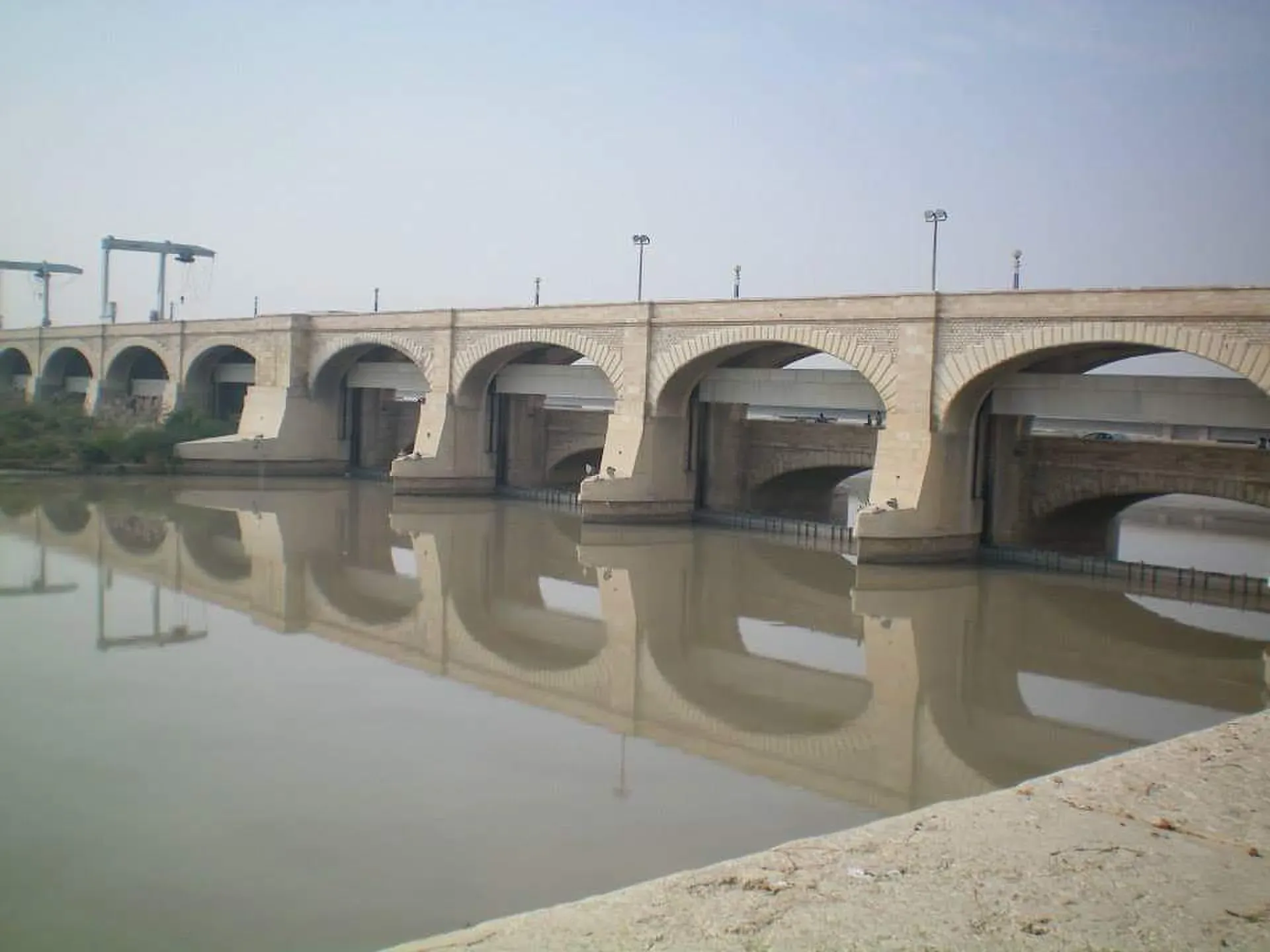
Photo: Ashahid83, with thanks · CC BY-SA 4.0 · via Wikimedia Commons · temporary stand-in photo

Sukkur
Sindh's third-largest city on the Indus, with the 1932 Sukkur Barrage, the 1889 Lansdowne Bridge, Masum Shah's Minaret and the river islands of Rohri.
Overview
Sukkur is a city on the west bank of the Indus, facing the older town of Rohri across the river. It is the third-largest city in Sindh and the gateway between upper and lower Sindh. The name comes from the Sindhi word sakhar, meaning "superior". The 2023 census counted 563,851 people (Wikipedia, citing the census). Other tables give a lower figure for the municipal corporation, so the boundary used matters.
The Indus here squeezes between limestone ridges, and the river islands, barrage and old bridges are the main sights of the city. It is also known for dates. Summers are extremely hot: Wikipedia lists a record high of 50.5 degrees Celsius and says summer temperatures regularly exceed 50.
Plan your visit
- Getting there
Road: Larkana about 84 km (about 1 hour); Multan about 428 km on the M-5 and onward (about 4 hours 40 minutes); Hyderabad about 327 km (about 4 hours 10 minutes). Rail: Sukkur station on the main line. More
Best months
Nov – Feb
- Sukkur
- Related places nearby: Sukkur Barrage (Lloyd Barrage), Ghotki, Lansdowne Bridge (Sukkur), Bukkur Island, Sadh Belo
History in brief
Wikipedia places the city on a small outcrop of Eocene limestone on the Indus, part of the Rohri Hills. The rock outcrops at Sukkur and on Bukkur island once marked the northern edge of Sindh and are known as the "Gate of Sindh" or the Sukkur Gorge. Across the river, Rohri was a busy Indus port by the 1200s. Mir Masum Shah, who died in 1606, wrote Tarikh-i-Masumi, a history of Sindh, and his minaret and shrine date from 1607. The British set up a garrison in 1839, abandoned it in 1845, and formed Sukkur Municipality in 1862. Wikipedia also reports a local belief that the date groves grew from stones discarded by Arab soldiers in the 8th century.
What to see and do
- Sukkur Barrage: built between 1923 and 1932 (originally Lloyd Barrage), designed by Sir Arnold Musto. It is 1,524 m long, built of yellow stone and steel, and feeds seven canals that water nearly 10 million acres.
- Lansdowne Bridge: completed in 1889 between Sukkur and Rohri, an early metal bridge over the Indus, notable for its two large pylons rather than a row of piers. The Ayub Bridge (1962) runs beside it.
- Masum Shah's Minaret: an 86 ft (26 m) tower built in 1607 beside the shrine of Mir Masum Shah. The top gives views over the city and river.
- Sadh Belo: a Hindu shrine complex on an island in the river, reached by boat. Ask permission and dress modestly.
- Bukkur Island and Satyan jo Aastan: the island fort and an old Rohri shrine site, listed in the TDAP guide.
- Lakhan-jo-daro: the Harappan ruins on the edge of the city, about 300 hectares, dating to roughly 2600 to 1900 BCE.
One day in Sukkur
A realistic day built from the sights above: start at the Masum Shah minaret in the morning, when the climb is cooler, then walk or take a rickshaw to the Lansdowne Bridge and cross towards Rohri for the old bazaars. Look at the barrage from the riverbank in the afternoon light. If the river and arrangements allow, the Sadh Belo island is a separate boat trip. In summer, shift everything to early morning and evening.
Food and bazaars
Sukkur is known for dates, fish from the Indus and Sindhi dishes: rice and daal, fish curry and sweet milky tea. The old bazaars of the city and Rohri sell cloth, spices, dates and household goods. Ask for what is fresh that day.
Getting there
- Road: Larkana is about 84 km and 1 hour; Multan about 428 km and 4 hours 40 minutes; Hyderabad about 327 km and 4 hours 10 minutes (OSRM, checked 16 November 2026). The M-5 motorway links Sukkur to Multan. Wikipedia says the Hyderabad to Sukkur M-6 (306 km, foundation stone laid 13 December 2022) is being built, but it reports no confirmed progress or completion date, so use the N-5 for now.
- Rail: Sukkur station is on the main line; Wikipedia lists the Jaffar Express (Rawalpindi to Quetta), Sukkur Express (Karachi to Jacobabad) and Akbar Express (Quetta to Peshawar). Check Pakistan Railways for current trains.
- Air: Sukkur Airport (officially Begum Nusrat Bhutto International Airport, SKZ) is about 8 km from the city. Wikipedia says PIA flies direct to Karachi, Lahore and Islamabad; check current schedules before planning.
Getting around
Rickshaws, taxis and boats cross to the islands. Stay alert on the bridges, which are busy and narrow.
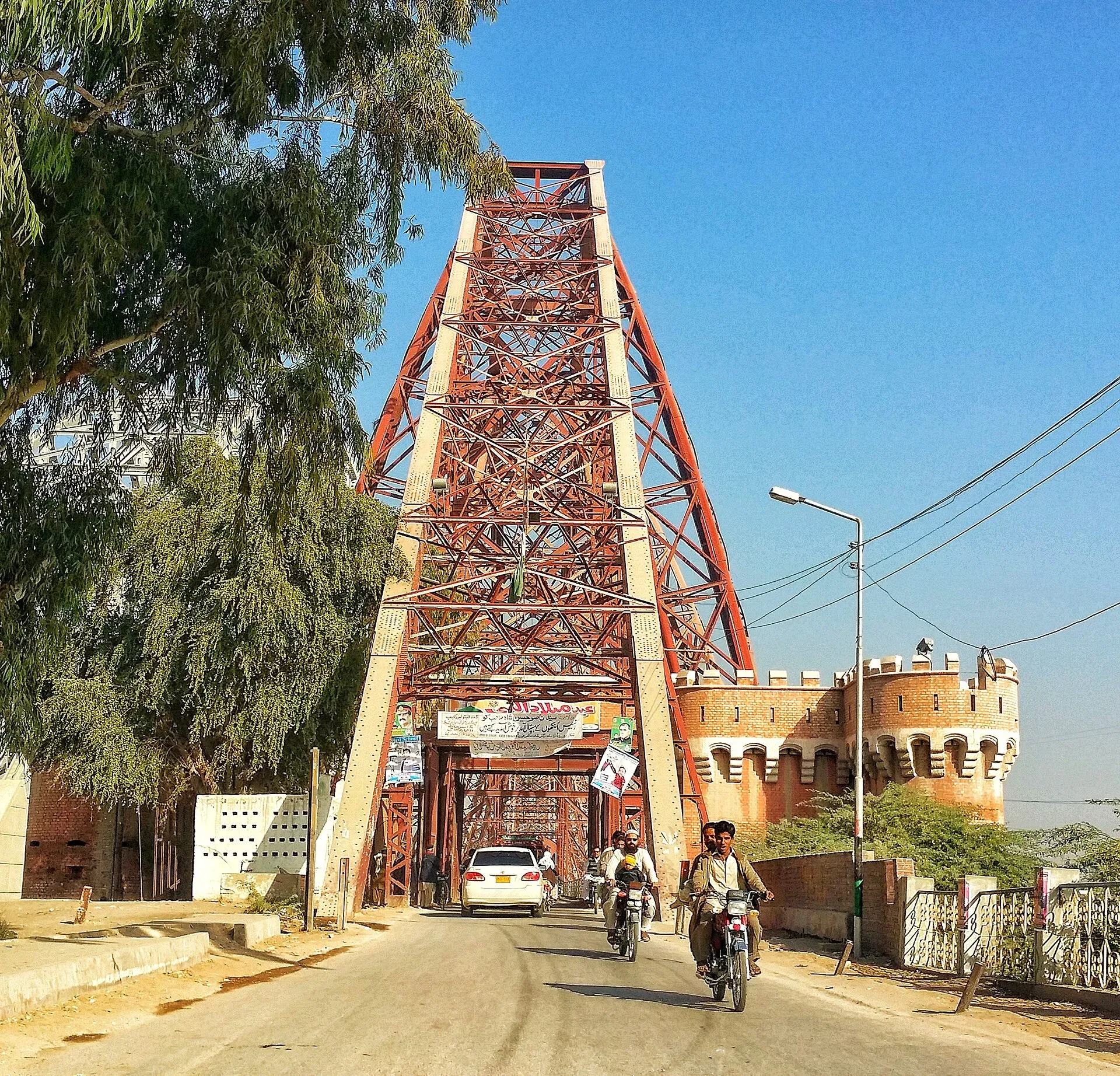
Photo: Fassifarooq, with thanks · CC BY-SA 4.0 · via Wikimedia Commons · temporary stand-in photo

Where to stay
Stay in the main city on the Sukkur side for the widest choice of hotels, or on the Rohri side for simpler lodgings. Choice is wider than in smaller Sindh towns.
Day trips
- Mohenjo-daro: about 75 km from Lakhan-jo-daro by Wikipedia's figure, usually seen via Larkana.
- Kot Diji Fort: about 48 km by road (OSRM, about 45 minutes).
- Larkana: 84 km south-west.
When to visit
November to February is the best time. Sukkur has been described as the hottest city in British India, and summer highs often pass 50 degrees Celsius. The 2010 floods hit the city hard, so avoid the monsoon months of July to September.
Safety
Ask the district administration or local police about current conditions before you go. For foreign visitors: the UK FCDO advises against all but essential travel to Sindh north of and including Nawabshah, which includes Sukkur (page updated 27 October 2026; checked 16 November 2026). It notes an ongoing risk of terrorism across Pakistan, especially at crowded sites and religious gatherings. Check the latest advice and ask locally about security before you travel.
Good to know
Entry arrangements and fees for the barrage, fort and shrines vary. Current fees will be added soon; check on arrival.
Highlights
- Sukkur Barrage (1923-1932)
- Lansdowne Bridge (1889)
- Masum Shah's Minaret (1607)
- Sadh Belo island shrine
Hotels, food, fuel and services in Sukkur
Places to stay
- RT Serene Hotel - Military RoadCall RT Serene Hotel - Military RoadMap of RT Serene Hotel - Military Road in Google Maps
- CHEN INN HOTELCall CHEN INN HOTELMap of CHEN INN HOTEL in Google Maps
- Pakistan Club Inn Hotel SukkurCall Pakistan Club Inn Hotel SukkurMap of Pakistan Club Inn Hotel Sukkur in Google Maps
- RT Grace HotelCall RT Grace HotelMap of RT Grace Hotel in Google Maps
- Hotel Hayatt SukkurCall Hotel Hayatt SukkurMap of Hotel Hayatt Sukkur in Google Maps
- FIVE STAR INN HOTEL SUKKURCall FIVE STAR INN HOTEL SUKKURMap of FIVE STAR INN HOTEL SUKKUR in Google Maps
Places to eat
- Sindhri RestaurantCall Sindhri RestaurantMap of Sindhri Restaurant in Google Maps
- KFC | SukkurCall KFC | SukkurMap of KFC | Sukkur in Google Maps
- Royal Taj Restaurant Rohri SukurCall Royal Taj Restaurant Rohri SukurMap of Royal Taj Restaurant Rohri Sukur in Google Maps
- Sindh Quetta Rangeen Hotel SukkurCall Sindh Quetta Rangeen Hotel SukkurMap of Sindh Quetta Rangeen Hotel Sukkur in Google Maps
- Pizza TownCall Pizza TownMap of Pizza Town in Google Maps
- Royal Taj-SukkurCall Royal Taj-SukkurMap of Royal Taj-Sukkur in Google Maps
Essential services fuel stations, mechanics, pharmacies and hospitals and clinics
Fuel
- Taj CNG StationMap of Taj CNG Station in Google Maps
- TAJ PetroleumMap of TAJ Petroleum in Google Maps
- Taj Petroleum services 71 SukkurMap of Taj Petroleum services 71 Sukkur in Google Maps
- ShellCall ShellMap of Shell in Google Maps
- D. BalochCall D. BalochMap of D. Baloch in Google Maps
- Askari Filling station (Pakistan State Oil)Call Askari Filling station (Pakistan State Oil)Map of Askari Filling station (Pakistan State Oil) in Google Maps
Mechanics and tyre shops
Pharmacies
- BHS Care PharmacyCall BHS Care PharmacyMap of BHS Care Pharmacy in Google Maps
- BHS Care PharmacyCall BHS Care PharmacyMap of BHS Care Pharmacy in Google Maps
Hospitals and clinics
- Sukkur Blood Bank HospitalCall Sukkur Blood Bank HospitalMap of Sukkur Blood Bank Hospital in Google Maps
- River City Hospital SukkurCall River City Hospital SukkurMap of River City Hospital Sukkur in Google Maps
Listings come from Google Maps data and are unverified: phone numbers, opening months and prices may have changed. Report a problem · Own one of these? Claim it
Tips
- Go between November and February.
- Avoid the monsoon and extreme summer heat.
- Dress modestly at shrines and temples.
- Check current FCDO advice before travelling.
Photos we still need: Sukkur bazaar or Rohri old town for the food and bazaars section; dates or Sindhi dishes for the food section. Send us yours
Sources and last checked
Last checked Confidence medium8 sources6 still to check
- Last checked
- Method
- Desk research from published sources
- Confidence
- medium
- Checked by
- trek.pk research team
Researched from published sources; not yet checked on the ground by our team. Spot something out of date? Report a mistake.
Sources
- Sukkur · Wikipedia · checked
- Pakistan Tourism Guide 2021 · TDAP Pakistan · checked
- City populations, 2023 census (compiled from Pakistan Bureau of Statistics) · CityPopulation.de · checked
- OSRM driving routes (road distances and times) · Project OSRM / OpenStreetMap · checked
- Pakistan travel advice (safety and security; updated 27 October 2026) · UK Foreign, Commonwealth & Development Office · checked
- List of airports in Pakistan · Wikipedia · checked
- M-6 motorway (Pakistan) · Wikipedia · checked
- Sukkur (Wikipedia), re-read for history, barrage, bridge and climate · Wikipedia · checked
Still to be checked on the ground (6)
- Whether the listed trains and PIA flights run now (Wikipedia only, undated)
- M-6 construction progress (Wikipedia: foundation stone Dec 2022, no confirmed progress)
- Access and boat arrangements for Sadh Belo and Bukkur Island (Wikipedia silent)
- Barrage and minaret opening times
- City population boundary (Wikipedia: 563,851 at the 2023 census; lower municipal figures not reconciled)
- Whether the Masum Shah minaret can be climbed and its opening hours
Nearby and related

Sindh
Pakistan's south-east: Karachi's beaches and markets, the Indus Valley city of Moenjodaro, Thatta's Makli tombs, Sufi shrines, the Thar desert and the Indus delta.

Karachi
Pakistan's largest city and main port: colonial buildings, museums, beaches, busy bazaars and some of the country's best food.

Multan
The City of Saints in southern Punjab: blue-tiled Sufi shrines, a crowded old city, blue pottery, sohan halwa and mangoes.

Sukkur Barrage (Lloyd Barrage)
A 1932 barrage across the Indus at Sukkur, originally named Lloyd Barrage. About 2 km long, it feeds seven canals and waters a large part of Sindh.
Ghotki
District capital in northern Sindh, known for its date palms. A farm town with few visitor sights, in an area FCDO advises against visiting except for essential travel.

Lansdowne Bridge (Sukkur)
An iron cantilever bridge over the Indus between Sukkur and Rohri, opened in 1889. Trains stopped using it in 1962, when the Ayub Bridge beside it took the railway. It has since carried road traffic and pedestrians.

Bukkur Island
A limestone island fort in the Indus between Sukkur and Rohri, about 730 m long. Interior access is limited; most visitors view it from the bridges and riverbanks.

Sadh Belo
A Hindu temple complex on an Indus island at Sukkur, with nine temples founded in 1823. Visitors need permission; the process is harder for non-Hindus.