

Why this place needs care
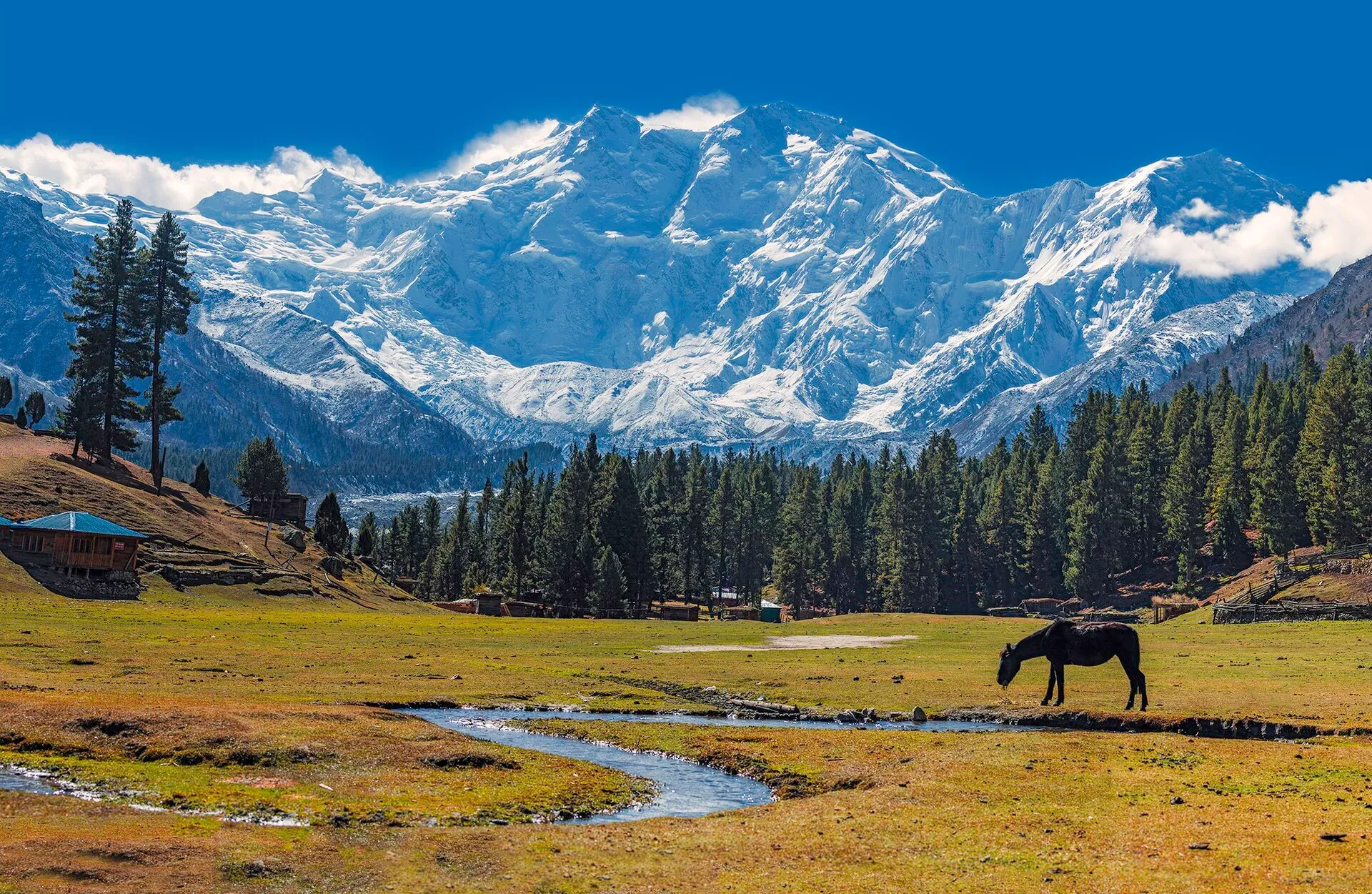
Fairy Meadows (locally Joot) is a grassy terrace at about 3,300 m in Diamer District, Gilgit-Baltistan, facing the north face of Nanga Parbat, the ninth-highest mountain in the world at 8,126 m. It is one of the few places where a short walk puts you face to face with an 8,000 m peak, and that is exactly why it is busy. The meadow was declared a national park in 1995 and has been part of Nanga Parbat National Park since 2021. In summer it is also a working pasture: local families bring livestock up, and in May and June people gather morel mushrooms in the forest.
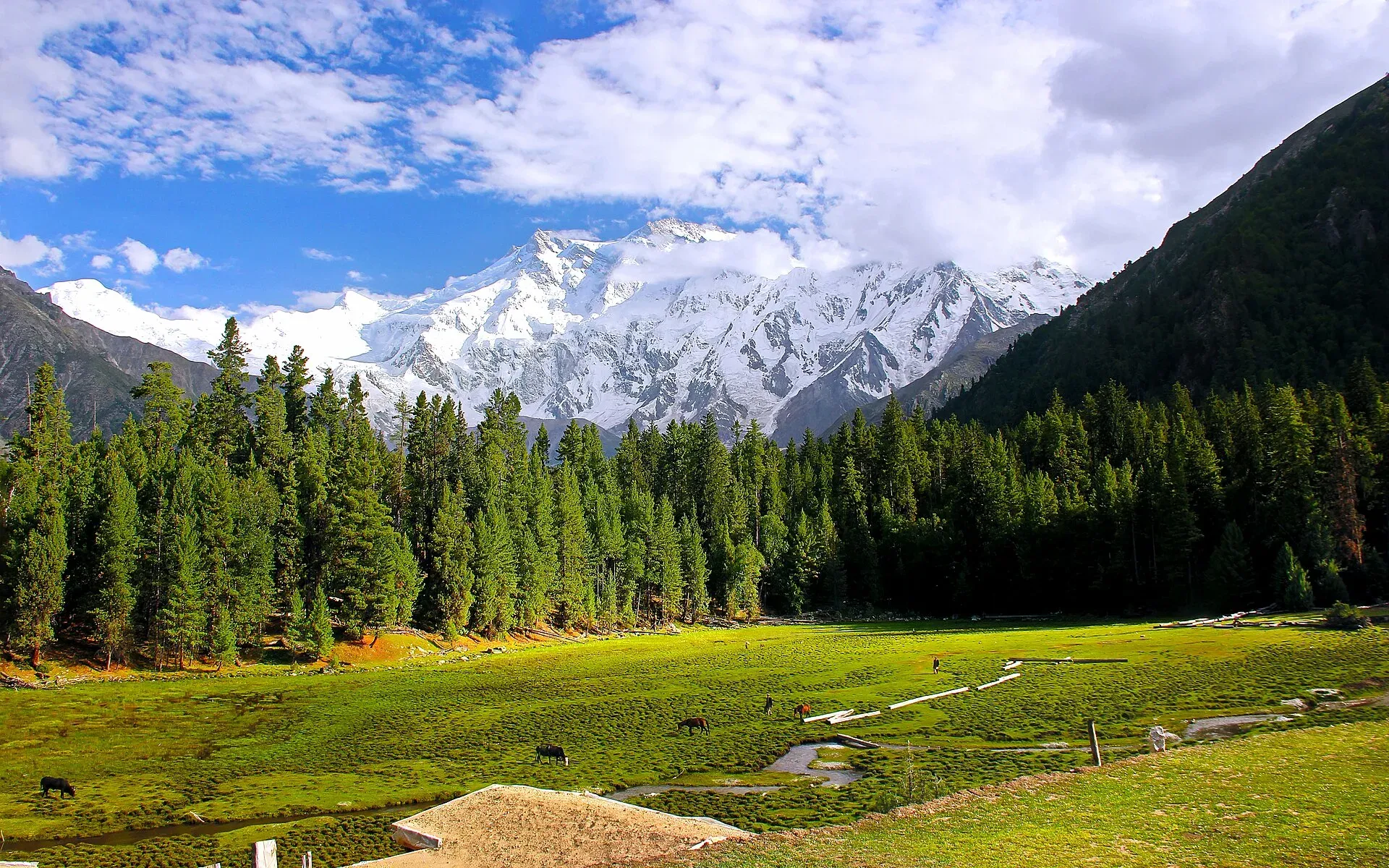
Photo: M.Awais, with thanks · CC BY-SA 4.0 · via Wikimedia Commons · temporary stand-in photo
A site that small, with no road beyond Tato and no rubbish collection, takes damage quickly when hundreds of people arrive in July and August. This guide sets out how to get there, what to expect and how to visit in a way that helps the people who live and work there.
Getting there, in brief
The walk starts from Raikot Bridge on the Karakoram Highway. A local jeep climbs a narrow track of about 15 km to Tato, and you walk about 5 km to the meadows. Sources give two to four hours for the walk, depending on fitness and conditions. Raikot Bridge is about 78 km (roughly 1.5 hours) from Gilgit and about 55 km from Chilas.
Ask the district administration or local police about current conditions before you go. For foreign visitors: the UK FCDO page (updated 27 October 2026, checked 16 November 2026) advises against all travel on the Karakoram Highway between Mansehra and Chilas, and does not list Gilgit-Baltistan among the areas it advises against. For that reason many visitors fly to Gilgit and approach Raikot Bridge from the Gilgit side. Read the live page and your own government's advice before you plan.
The jeep track: the real risk
The jeep track is the most dangerous part of the trip. It is steep, narrow and cut into a hillside. It has often been described as one of the most dangerous roads in the world, and floods and landslides can damage it.
- Only local jeeps run the road, and drivers are from the area. Do not try to bargain the driver into hurrying.
- Do not use the track in heavy rain, after dark or in poor visibility.
- Sit calmly, wear a seatbelt if there is one, and be ready to get out and walk if conditions are bad.
- Jeeps are hired per vehicle for the round trip, so a group can share the cost. There is no known official tariff, so current fares will be added soon. Ask for the price before you set off.
Respect local arrangements
The jeep and porter work is shared among local communities, who have their own rules. Prices for jeeps, porters and mule owners are generally set by their groups, not negotiated person by person. Do not try to bypass them, and do not argue about local rules on the road. Agree the rate for each stage before you start, pay what you agreed and tip for good service.
This is part of the point. Tourism here is a main source of income, and the way you handle money affects how families feel about visitors.
Camp and stay properly
Accommodation is basic: wooden huts, simple cottages and tent camps, all privately run. Fairy Meadows has fenced campsites and huts with toilets, a kitchen and dining area, and Beyal has fenced campsites, one with a year-round spring. Fees change each year, so confirm on arrival. Current accommodation and camping charges will be added soon.
- Camp only in marked areas. Ask the owners before you pitch a tent.
- Book beds or tents early for July and August.
- Bring cash. There are no banks or ATMs.
- Carry warm clothes. Nights are cold even in summer.
Leave no trace
The principles are the same as anywhere in the high mountains. Take back everything you carried up.
- Pack out all rubbish. That includes food waste, wrappers and batteries. Check your campsite before you leave.
- Toilets. Use the toilets at the camps. Where there is none, move well away from water, camps and trails and carry out toilet paper and hygiene products in a sealed bag.
- Water. Streams run at the meadows and along the path. Treat or filter all water. Do not wash or use soap in streams.
- Stay on the path. Cutting switchbacks speeds erosion on the steep slope.
- No fires in the forest, and do not cut branches for firewood.
- Leave what you find. Do not pick flowers or move stones.
- Keep noise down. Early mornings are quiet, and many visitors come for that.
Respect for herders and animals
The land around the meadows is summer pasture, so expect herders' huts, mules, cattle and dogs. Keep your distance from herding dogs and shut gates behind you. Do not feed livestock or wildlife.
Health and altitude
The meadows are at about 3,300 m, and Nanga Parbat Base Camp at about 3,970 m. Headaches are common if you rush. Sleep a night at Fairy Meadows or Beyal before going higher, drink water and descend if headache, nausea or breathlessness gets worse. There is no road rescue above Tato. The nearest hospital is in Chilas, and mobile signal is limited.
When to go
The usual season is late May to mid-October. July and August are busiest and bring the greatest risk of rain and landslides. September and early October are clearer and cooler. The mountain is often clouded by mid-morning, so dawn gives the best view. Snow covers the meadow in winter and ordinary visitors do not use the track.
Permits
Fairy Meadows lies in Nanga Parbat National Park and Pakistan's open trekking zone. Dawn reported on 29 March 2026 that foreign visitors to open-zone areas do not need a trekking permit. Fees are not published, and rules can change, so confirm with a licensed operator or the Gilgit-Baltistan tourism department. Current fees will be added soon.
Checklist
- Check the UK and home-government advice and the road status.
- Book accommodation ahead for July and August.
- Avoid the jeep track in rain or after dark.
- Agree prices for jeeps, porters and rooms in advance.
- Camp only in marked sites.
- Carry out all rubbish and hygiene waste.
- Treat all water.
- Keep distance from animals and take it slowly at altitude.


