

A fruit that shapes a valley
Walk through Karimabad or Altit in early summer and you will see it: wicker trays of split apricots laid out in the sun, on roofs, on terraces and on frames beside the houses. Apricots are not just a fruit in Hunza. They are a source of food, oil, income and hospitality, and the way the valley is farmed makes more sense once you understand the orchard year.
This guide follows that year, explains how the fruit is dried and used, and says how to visit without getting in the way of a working harvest. It is built from published accounts of Hunza and Gilgit-Baltistan, and where sources are thin, we say so.
Why apricots grow so well here
Hunza's main villages lie at over 2,000 m in a dry mountain valley, with little rain but plenty of sunshine and glacier water for irrigation. Aliabad, the valley's main market town at about 2,200 m, receives only about 125 mm of rain a year, with a July mean temperature of 23.6 degrees Celsius (mean daily maximum 30.2) and a January mean of minus 3.0, according to Wikipedia, which takes the figures from Climate-Data.org. Terraced fields watered by channels from the glaciers turn that dry climate into orchards. Apricots, cherries, apples and walnuts all grow, and apricots dominate.
Reports from Gilgit-Baltistan describe about 60 varieties of apricot, with Halman, Karfochuli, Marghulam and Sharakarfa named as prime types. The only Hunza variety named in a source is Alishah Kakas, described as excellent for drying, so treat the 60 as a regional figure.
The orchard year
Blossom, mid-March to mid-April. The Express Tribune reported on 1 April 2026 that Hunza's blossom generally runs from mid-March to mid-April, with each bloom lasting two to three weeks, and that higher villages near Attabad Lake flower later. Cherry blossom is the main draw. Skardu blossoms slightly later. There is no official festival to book. The orchards belong to families, so ask before entering one and keep to the paths.
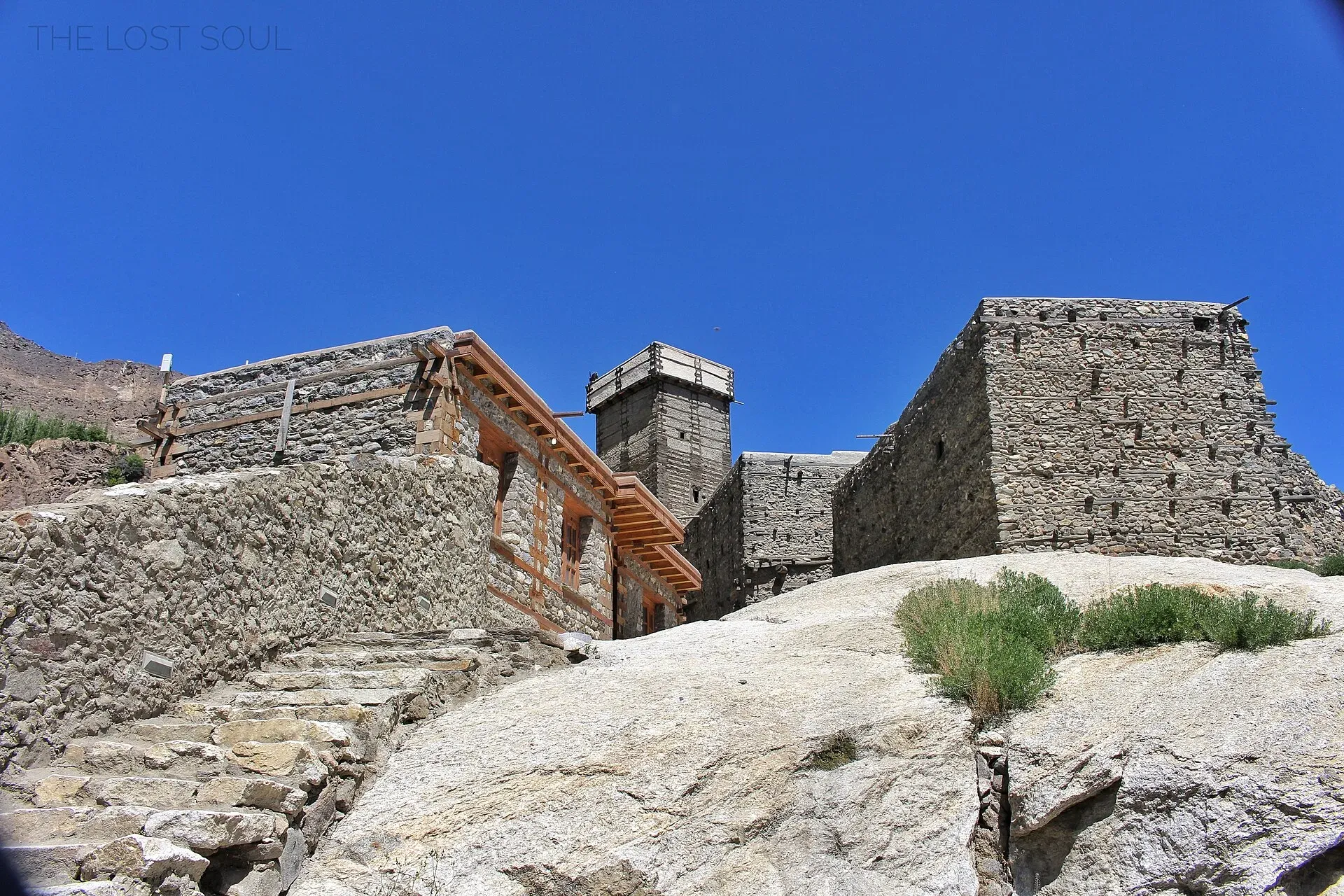
Photo: Fassifarooq, with thanks · CC BY-SA 4.0 · via Wikimedia Commons · temporary stand-in photo
Harvest, summer. One account of Hunza dried apricots says the orchards ripen from late June to mid-July, with fruit picked by hand using ladders and special baskets that prevent bruising. Timing varies by village height and by year, so ask your host what is ripe that week.
Drying, July onward. Pits are removed by splitting the fruit by hand. The halves are spread in a single layer on trays in the sun, then moved into shade, and later collected in larger baskets for further drying. Because monsoon showers can arrive at harvest time, dried fruit is moved into woven baskets with holes for air. The same account says people layer fresh walnut leaves between the dried fruit to protect it from insects during storage. Drying trays are a common sight on roofs and terraces in Karimabad and Altit in summer.
Autumn and winter. Fruit that was dried in summer becomes the winter store. Households soak it for soups and drinks and offer it to guests.
What people make with it
- Dried apricots, eaten as a snack and sold as income.
- Dried-apricot drink and soup. The account above names a dried-apricot juice, chamus, and a dried-apricot soup, bartarin-a-dawdo.
- Kernels and oil. Sweet-kernel apricots yield kernels that are eaten or pressed for oil, which cooks compare to almond oil. Bitter apricot kernels can be poisonous, so do not eat them raw and do not use them for edible oil.
- Dishes with apricot seeds, including giyalin, burus-shapik and mulida, which the account names but we cannot describe in more detail.
- Jam, bread and butter at breakfast.
Hunza cooking is generally mild, with less chilli than most of Pakistan. Wheat, barley, apricots and dairy are the base of village food. Chapshuro, a flat meat-filled pie, and dawdo, a noodle soup, are among the traditional dishes visitors are likely to meet in family guesthouses in Karimabad and Altit. Apricot oil, butter and dried fruit are part of the pantry.
What about the longevity stories?
You may read that Hunza people live extraordinarily long lives because of apricots. There is no known documented source that supports this, and we do not repeat it. The honest picture is a farming community with a good local diet, mountain exercise and a harsh climate, like many valleys in the region.
Visiting respectfully
- Ask before entering an orchard. Most are private.
- Do not pick fruit or blossom or climb on walls and terraces.
- Buy from families. Dried apricots, oil and jam are sold in bazaars and from households. Ask how the fruit was dried, and ask about the price before you buy. Prices vary, so none are given here.
- Photographs. Ask before photographing people, especially women and children, and respect a refusal.
- Do not waste water. Orchard channels are shared.
- Take rubbish away.
When to go
- Blossom: mid-March to mid-April.
- Fresh fruit and drying: summer, roughly June to July at lower villages, with variations by altitude.
- Dried fruit and autumn colour: September to October.
A short checklist
- Pick your month for blossom, fresh fruit or autumn.
- Stay several nights in Karimabad or Altit and move between villages.
- Eat with a family guesthouse at least once. Ask a day ahead.
- Buy dried apricots in sealed packs, and check labels on oil.
- Respect orchards, water and people.
- Check road status on the Karakoram Highway before you travel.


