

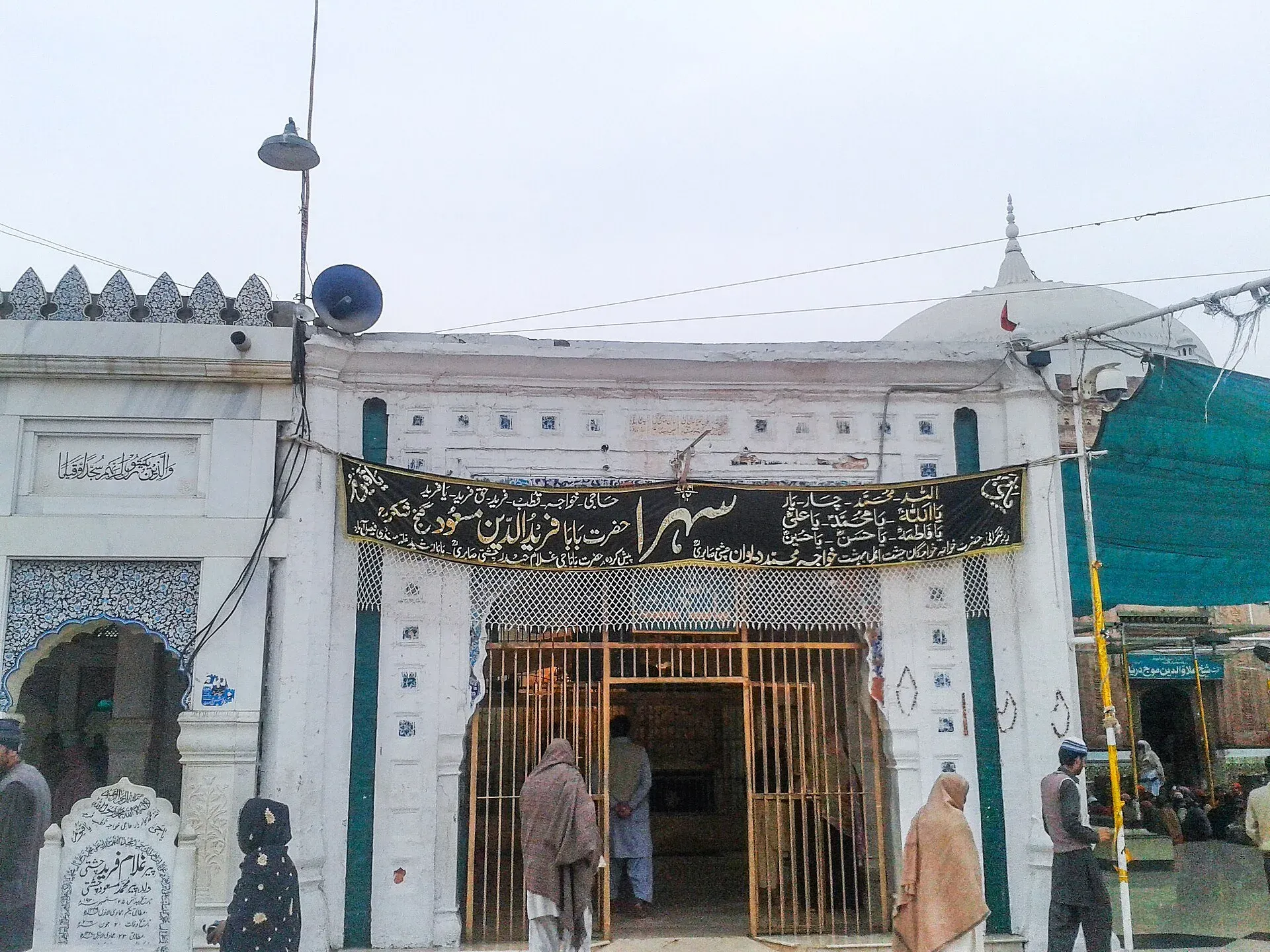
Photo: Sunni Person, with thanks · CC BY-SA 3.0 · via Wikimedia Commons · temporary stand-in photo

Pakpattan and the Shrine of Baba Farid
Pakpattan in southern Punjab is the home of the white marble shrine of Baba Farid (Fariduddin Ganjshakar), a 13th-century Chishti saint and Punjabi poet. Its Bahishti Darwaza opens only during the urs in Muharram.
Overview
Pakpattan is a district town in southern Punjab, close to the old crossing of the Sutlej river. It is known for one thing above all: the shrine of Baba Farid, also called Fariduddin Ganjshakar, one of the great Sufi saints of South Asia. The 2023 census counted 221,280 people, and about 92 per cent speak Punjabi. Pilgrims come all year, and in Muharram the town fills for the annual urs (death-anniversary festival), which the Wikipedia article on the shrine says draws up to two million visitors.
Plan your visit
- Nearest town
- Pakpattan
- Getting there
Pakpattan is about 183 km (about 2 hours 40 minutes) by road from Lahore and about 46 km (about 40 minutes) from Sahiwal (OSRM, checked 16 November 2026). Buses and vans run from both cities. More
Best months
Nov – Feb
History
The town was once called Ajodhan, a Hindu settlement with a ferry across the Sutlej, on the trade road between Multan and Delhi. Sebuktigin captured it in 977 to 978 and Mahmud of Ghazni in 1029 to 1030. The name Pakpattan came into use because of the Baba Farid shrine.
Baba Farid was born near Multan, probably in the 12th century (sources give 1173, 1179 and 1188), and settled in Ajodhan after the death of his teacher Qutbuddin Bakhtiar Kaki in 1235. He died in the 1260s (sources give 1265 or 1266). His verses in early Punjabi are respected by Muslims and Sikhs, and 123 or 134 hymns attributed to him are included in the Guru Granth Sahib. The district website says the shrine was built in 1267, while another source gives 1265. The traveller Ibn Battuta visited in 1333 or 1334, and the conqueror Timur is recorded as visiting in 1398; he is said to have spared the town's remaining residents out of respect for the shrine.
The shrine
The shrine is a small white marble tomb with two doors, the Noori Darwaza (Gate of Light) and the Bahishti Darwaza (Gate of Paradise). The graves of Baba Farid and his son lie inside, and the tomb holds only about ten people at a time. A covered corridor runs round it, and an area is set aside for women. Music and gatherings (qawwali) take place at the shrine, mostly on Thursdays, according to the district website. The district site says the town has over twenty other shrines, including those of Khawaja Aziz Makki and Bibi Raj Kaur.
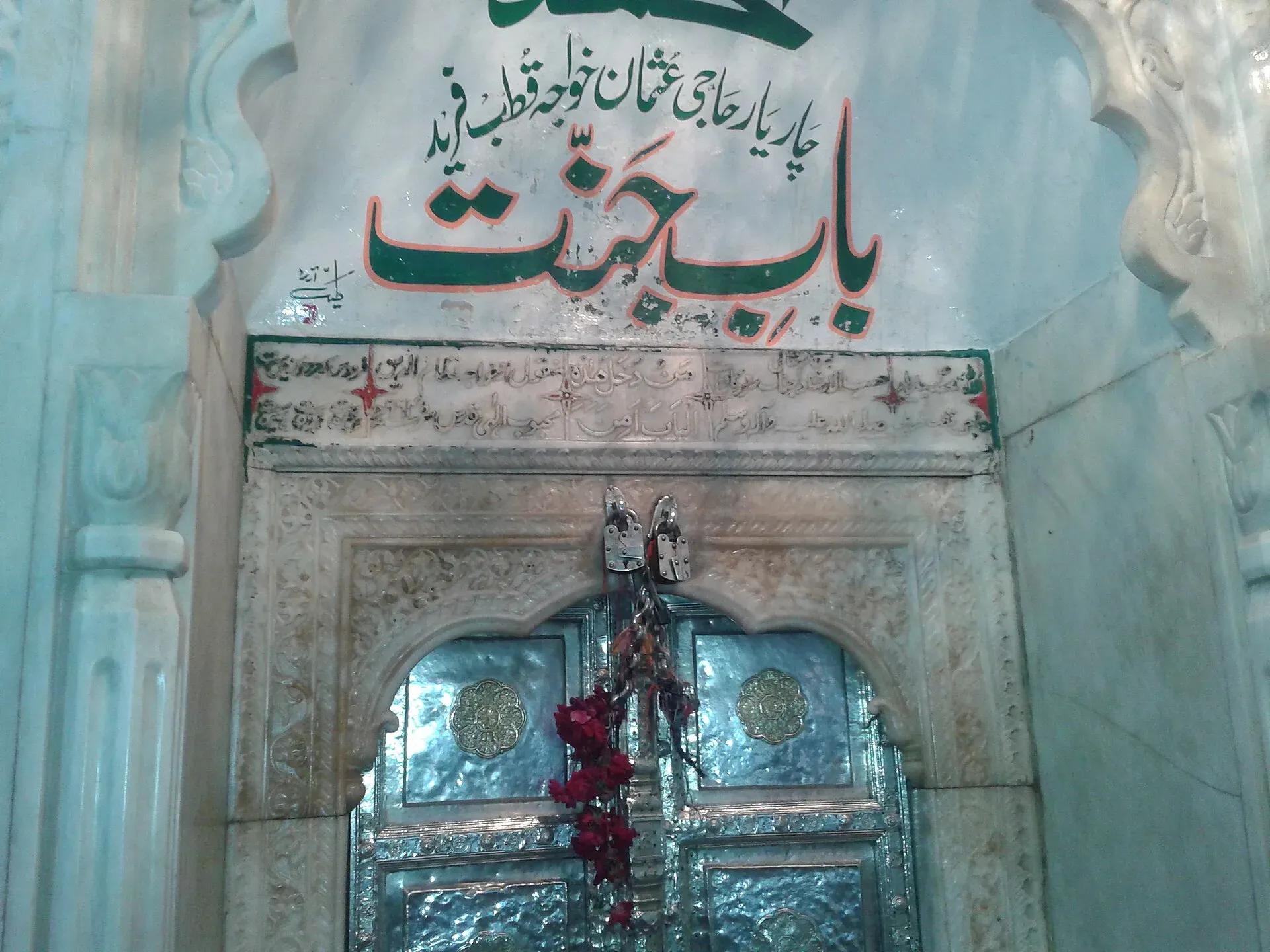
Photo: Sunni Person, with thanks · CC BY-SA 3.0 · via Wikimedia Commons · temporary stand-in photo

The Bahishti Darwaza
The gate is locked all year and opened from sunset to sunrise during the urs. Pilgrims pass through it hoping for forgiveness. The opening ceremony is traditionally performed by local officials.
Dhakki, the old town
Dhakki is the old quarter, with narrow lanes, old brick houses and small street gates. Mohri Gate is said to be over 400 years old, and remnants of the Kacha Burj, associated with Sher Shah Suri, still stand.
The Sikh connection
Guru Nanak is recorded as visiting around 1510 to 1511 to meet Sheikh Ibrahim, a descendant of Baba Farid. Maharaja Ranjit Singh took control of the town in 1810 and gave the shrine an annual allowance.
When to visit
The urs is held in Muharram, the first month of the Islamic calendar, and moves about 11 days earlier each year. Dawn (18 June 2026) reported that the 784th urs began on 17 June 2026, runs until 10 Muharram, and that the Bahishti Darwaza opens on the night of 5 Muharram. Other sources differ on the exact nights, so ask locally. The cooler months, November to February, suit a visit outside the urs. See the page on the urs of Baba Farid for 2026 details.
Where to stay and eat
There are simple eateries around the shrine and in the bazaar. Visitors usually stay in Sahiwal or Lahore and come for the day.
Good to know
- Crowd safety. At least 36 people died in a stampede at the gate in April 2001, and about 89 were injured in 2026 (see the urs page). If you go during the urs, avoid the gate on peak nights, keep near exits and keep children with you.
- Etiquette. Remove shoes, dress modestly, cover your head and keep your voice low. Women should use the area reserved for them. Ask before photographing devotees.
- Hours and fees. The shrine is open at all hours, every day. There is no known official entry fee; current fees will be added soon if any apply. Check with the Auqaf Department.
- Rail. The Lodhran-Khanewal branch line, laid in 1910, serves the town; current services are not verified.
- Safety. For foreign visitors: UK FCDO advice (updated 27 October 2026, checked 16 November 2026) does not list Pakpattan among its areas of warning, but Pakpattan is about 40 km from the India border and the advice covers a 5-mile border zone. Read the live page before you go.
Highlights
- White marble shrine of Baba Farid (Fariduddin Ganjshakar)
- Bahishti Darwaza, opened only during the urs in Muharram
- Honoured by both Muslims and Sikhs
- Thursday qawwali at the shrine
Getting there
Pakpattan is about 183 km (about 2 hours 40 minutes) by road from Lahore and about 46 km (about 40 minutes) from Sahiwal (OSRM, checked 16 November 2026). Buses and vans run from both cities. The nearest big hubs are Lahore and Multan.
Hotels, food, fuel and services in Pakpattan and the Shrine of Baba Farid
Places to eat
- Chaudhary Sweets & BakersCall Chaudhary Sweets & BakersMap of Chaudhary Sweets & Bakers in Google Maps
- Happy Foods PakpattanCall Happy Foods PakpattanMap of Happy Foods Pakpattan in Google Maps
- Sher-e-Rabbani Paan Shop, Jamal Chowk Pakpattan.Call Sher-e-Rabbani Paan Shop, Jamal Chowk Pakpattan.Map of Sher-e-Rabbani Paan Shop, Jamal Chowk Pakpattan. in Google Maps
- Ajwa Sweets & Bakers PakpattanCall Ajwa Sweets & Bakers PakpattanMap of Ajwa Sweets & Bakers Pakpattan in Google Maps
- Delizia Crust PakpattanCall Delizia Crust PakpattanMap of Delizia Crust Pakpattan in Google Maps
- Latif sweets & BakersCall Latif sweets & BakersMap of Latif sweets & Bakers in Google Maps
Essential services fuel stations, mechanics, pharmacies, hospitals and clinics and Rescue 1122
Fuel
- Pak Petroleum Service (PSO)Call Pak Petroleum Service (PSO)Map of Pak Petroleum Service (PSO) in Google Maps
- Hassan Petroleum pakpattanMap of Hassan Petroleum pakpattan in Google Maps
- Karam Fraid CNG StationMap of Karam Fraid CNG Station in Google Maps
- CaltexMap of Caltex in Google Maps
- Petrol Pump 19/SP PakpattanMap of Petrol Pump 19/SP Pakpattan in Google Maps
- Petrol PumpMap of Petrol Pump in Google Maps
Mechanics and tyre shops
- AlMakkah Tyres & Wheel AlignmentCall AlMakkah Tyres & Wheel AlignmentMap of AlMakkah Tyres & Wheel Alignment in Google Maps
- Ijaz number plateCall Ijaz number plateMap of Ijaz number plate in Google Maps
- Al Makkah tire shopCall Al Makkah tire shopMap of Al Makkah tire shop in Google Maps
- City Auto Service ( Mithou)Call City Auto Service ( Mithou)Map of City Auto Service ( Mithou) in Google Maps
Pharmacies
- Bismillah Medical Store PakpattanMap of Bismillah Medical Store Pakpattan in Google Maps
- Shafqat Medical StoreMap of Shafqat Medical Store in Google Maps
- NMP PharmacyCall NMP PharmacyMap of NMP Pharmacy in Google Maps
- Lahore Medical StoreCall Lahore Medical StoreMap of Lahore Medical Store in Google Maps
- City care plus pharmacyCall City care plus pharmacyMap of City care plus pharmacy in Google Maps
- Shahid Medical StoreMap of Shahid Medical Store in Google Maps
Hospitals and clinics
- Dr. Abdul Jabbar Faheem - ENT Specialist & SurgeonCall Dr. Abdul Jabbar Faheem - ENT Specialist & SurgeonMap of Dr. Abdul Jabbar Faheem - ENT Specialist & Surgeon in Google Maps
- Adeel Surgimed HospitalCall Adeel Surgimed HospitalMap of Adeel Surgimed Hospital in Google Maps
- Dr Shahid Mahmood ChaudhryCall Dr Shahid Mahmood ChaudhryMap of Dr Shahid Mahmood Chaudhry in Google Maps
- Muzammal Physiotherapy Centre (MPC)Call Muzammal Physiotherapy Centre (MPC)Map of Muzammal Physiotherapy Centre (MPC) in Google Maps
- Hamza Cardex Hospital PakpattanCall Hamza Cardex Hospital PakpattanMap of Hamza Cardex Hospital Pakpattan in Google Maps
- City HospitalCall City HospitalMap of City Hospital in Google Maps
Rescue 1122
- Rescue 1122 Office PakpattanCall Rescue 1122 Office PakpattanMap of Rescue 1122 Office Pakpattan in Google Maps
Listings come from Google Maps data and are unverified: phone numbers, opening months and prices may have changed. Report a problem · Own one of these? Claim it
Tips
- Visit outside Muharram for a calm experience.
- If you come for the urs, go early in the period, not on the gate night.
- Dress modestly and remove shoes.
- Confirm the urs dates locally; they move with the moon.
Sources and last checked
Last checked Confidence medium8 sources6 still to check
- Last checked
- Method
- Desk research from published sources
- Confidence
- medium
- Checked by
- trek.pk research team
Researched from published sources; not yet checked on the ground by our team. Spot something out of date? Report a mistake.
Sources
- Shrine of Baba Farid · Wikipedia · checked
- Baba Farid · Wikipedia · checked
- Pakpattan · Wikipedia · checked
- Brief history of Pakpattan · District Pakpattan (Lahore High Court district sites) · checked
- Baba Farid's Urs begins amid worsening of shrine succession row · Dawn · checked
- Pakistan Tourism Guide 2021 · TDAP · checked
- OSRM driving route calculation · OSRM (OpenStreetMap routing) · checked
- Pakistan travel advice · UK Foreign, Commonwealth & Development Office · checked
Still to be checked on the ground (6)
- Baba Farid's birth and death years (sources give 1173, 1179 or 1188 for birth, and 1265 or 1266 for death)
- Year the shrine was built (district site 1267; another source 1265)
- Shrine fee (the shrine is reported open 24 hours; no fee information)
- Urs dates for 2027 (Muharram moves about 11 days earlier each year; needs the moon-sighting announcement)
- Year of Ibn Battuta's visit (1333 or 1334)
- Whether the Kacha Burj and Mohri Gate can be visited freely
Nearby and related

Lahore
Punjab's capital and Pakistan's cultural city: Mughal forts, mosques and gardens, a lively Walled City, and some of the best food in the country.

Sahiwal
A canal-colony city between Lahore and Multan, once called Montgomery, famous for the Sahiwal breed of cattle and a short drive from the Bronze Age ruins of Harappa.

Multan
The City of Saints in southern Punjab: blue-tiled Sufi shrines, a crowded old city, blue pottery, sohan halwa and mangoes.

Harappa
The type site of the Indus Valley Civilisation, near Sahiwal in Punjab. Settlement here began about 3300 BCE and the city flourished about 2600-1900 BCE. On UNESCO's tentative list since 2004.

Punjab
Pakistan's most populous province: Mughal Lahore, ancient Taxila and Harappa, Sufi shrines, the Salt Range, the Cholistan desert and the hills of Murree.

Burewala
Large agricultural city in Vehari District on the old Delhi-Multan road, with a local saint's shrine and a war-hero memorial.
Dipalpur
Ancient town on the Ravi in Okara District, with Kushan-era origins, a Tughlaq and Mughal past and several shrines.

Sufi Trail
Follow the great Sufi shrines of Punjab and Sindh: Data Darbar, Pakpattan, Multan, Uch Sharif, Sehwan and Bhit Shah. History, etiquette, urs dates and current safety advice.

Sikh Heritage
A journey through the Sikh holy places of Pakistan: Lahore, Nankana Sahib, Hasan Abdal and Kartarpur. Story, timeline, etiquette, pilgrim quotas and current safety limits.