

Photo: Junaidali88z, with thanks · CC BY-SA 3.0 · via Wikimedia Commons · temporary stand-in photo

Sufi Trail
Follow the great Sufi shrines of Punjab and Sindh: Data Darbar, Pakpattan, Multan, Uch Sharif, Sehwan and Bhit Shah. History, etiquette, urs dates and current safety advice.
Customise this route Change the dates, stops and how you travel in the Road Trip Planner.
The story
Sufism, the mystical tradition of Islam, shaped how many people in Pakistan live their faith. Most Pakistani Sufis belong to the Chishti, Naqshbandi, Qadiri-Razzaqi or Suhrawardi lines. Devotion at the shrines takes the form of prayers, free food (langar) and often qawwali singing. This journey follows the main saints across Punjab and Sindh, with a final stop at the Makli graveyard.
Data Darbar, Lahore
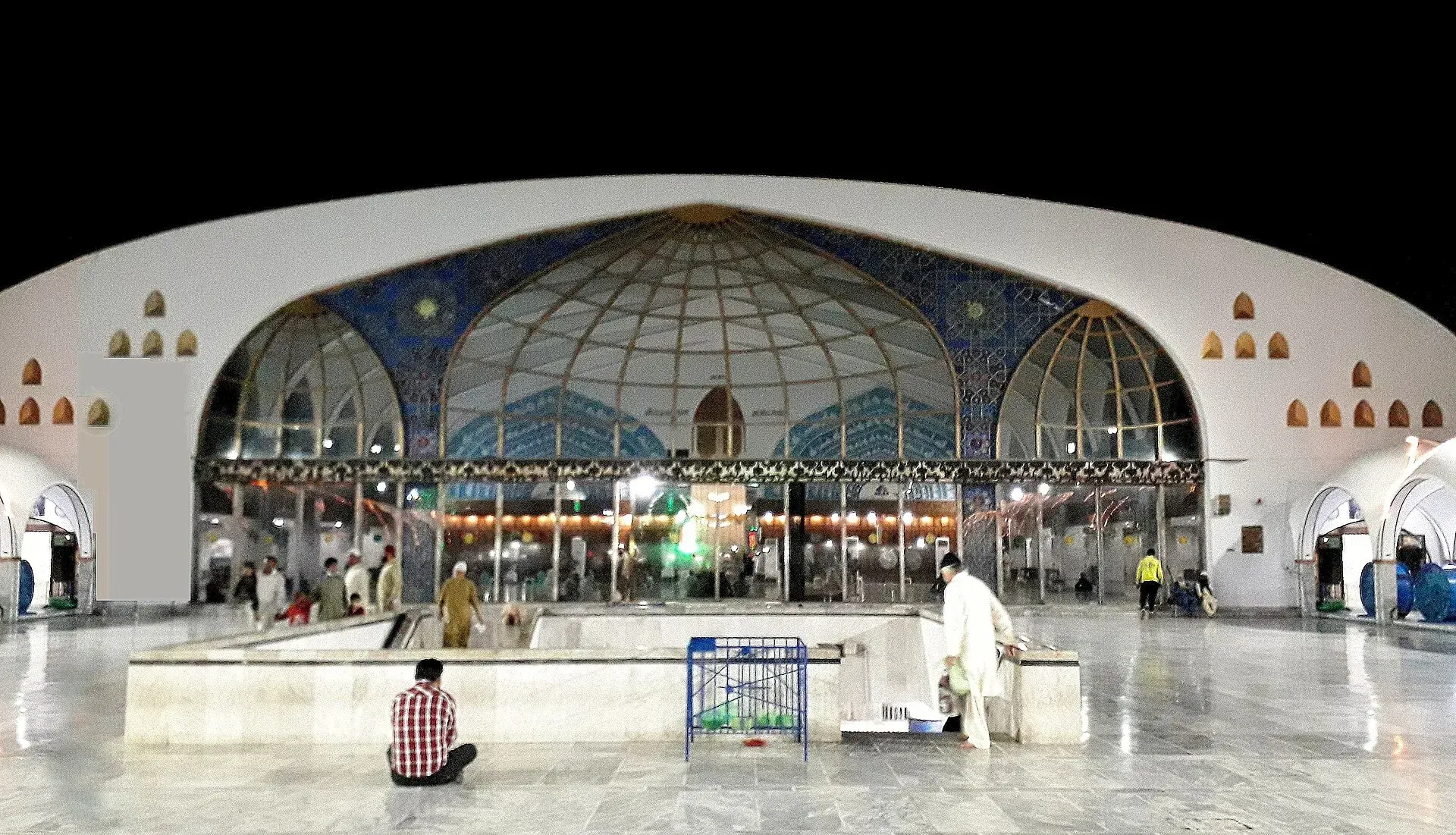
Photo: King Eliot, with thanks · CC BY-SA 4.0 · via Wikimedia Commons · temporary stand-in photo

An 11th-century saint who came from Ghazni to Lahore under the Ghaznavids. His shrine, Data Darbar, has been rebuilt and expanded over the centuries. It stays open at all hours (Wikipedia) and gives free food to up to 50,000 visitors a day. Thursday night, the traditional night for shrine visits, is the busiest. Wikipedia describes a marble tomb in a large marble courtyard, a mosque rebuilt in the 1980s, one dome and four minarets, and daily visits of 30,000 to 60,000 that can double on Thursdays and religious holidays. Visitors enter freely. The free kitchen has run for about 1,000 years by tradition. Qawwali is held regularly, and the Mehfil-e-Sama qawwali festival has run beside the shrine since 1965. The Bhatti Chowk station on the Lahore Metrobus serves it.
Baba Farid, Pakpattan
Born about 1188 near Multan and died about 1266 at Pakpattan. He was a Chishti master and is regarded as the first major Punjabi poet; some of his verses are in the Sikh Guru Granth Sahib. His shrine has the Bahishti Darwaza, the "Gate of Paradise", which opens only during the annual urs in Muharram.
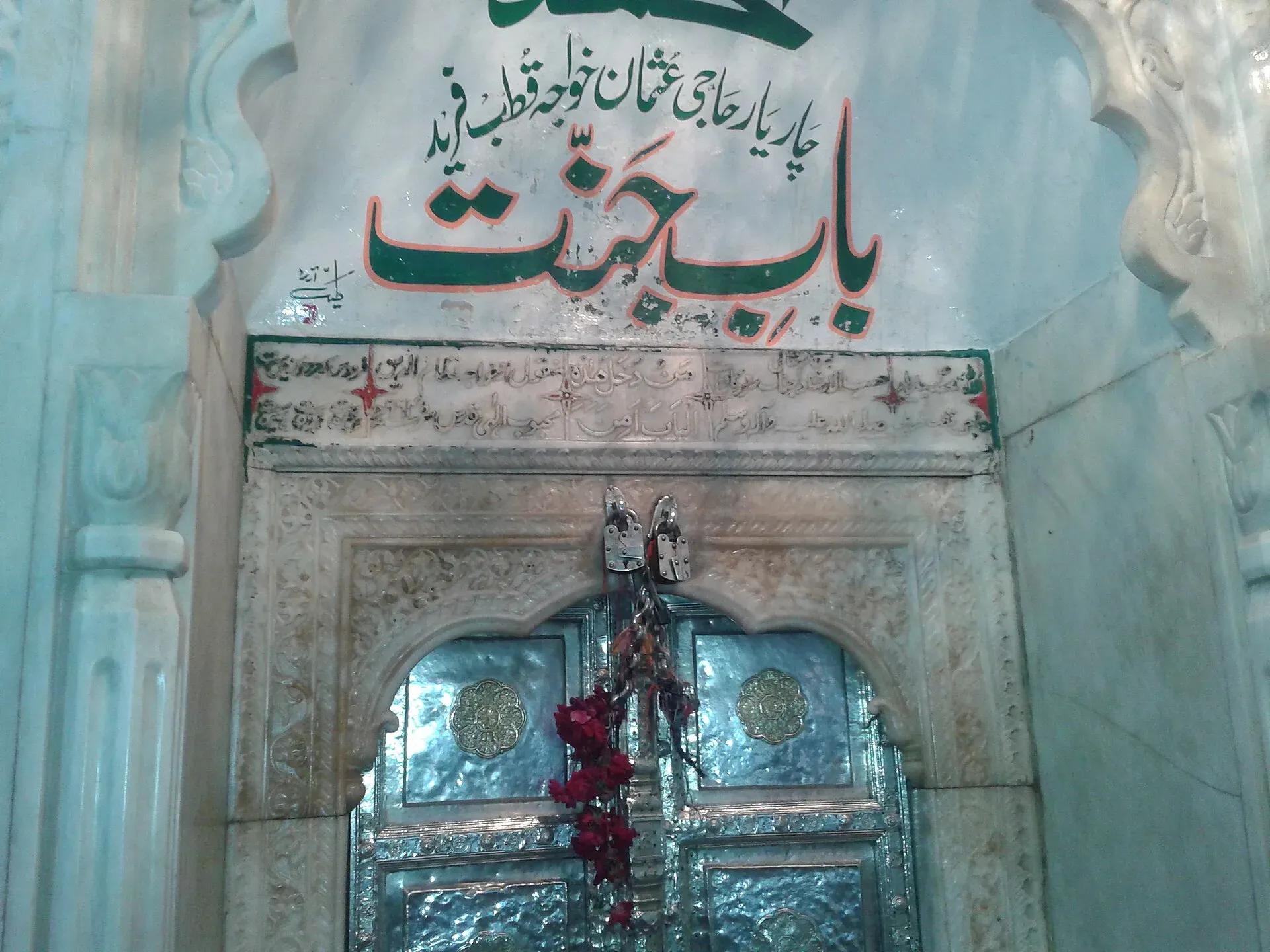
Photo: Sunni Person, with thanks · CC BY-SA 3.0 · via Wikimedia Commons · temporary stand-in photo

Multan
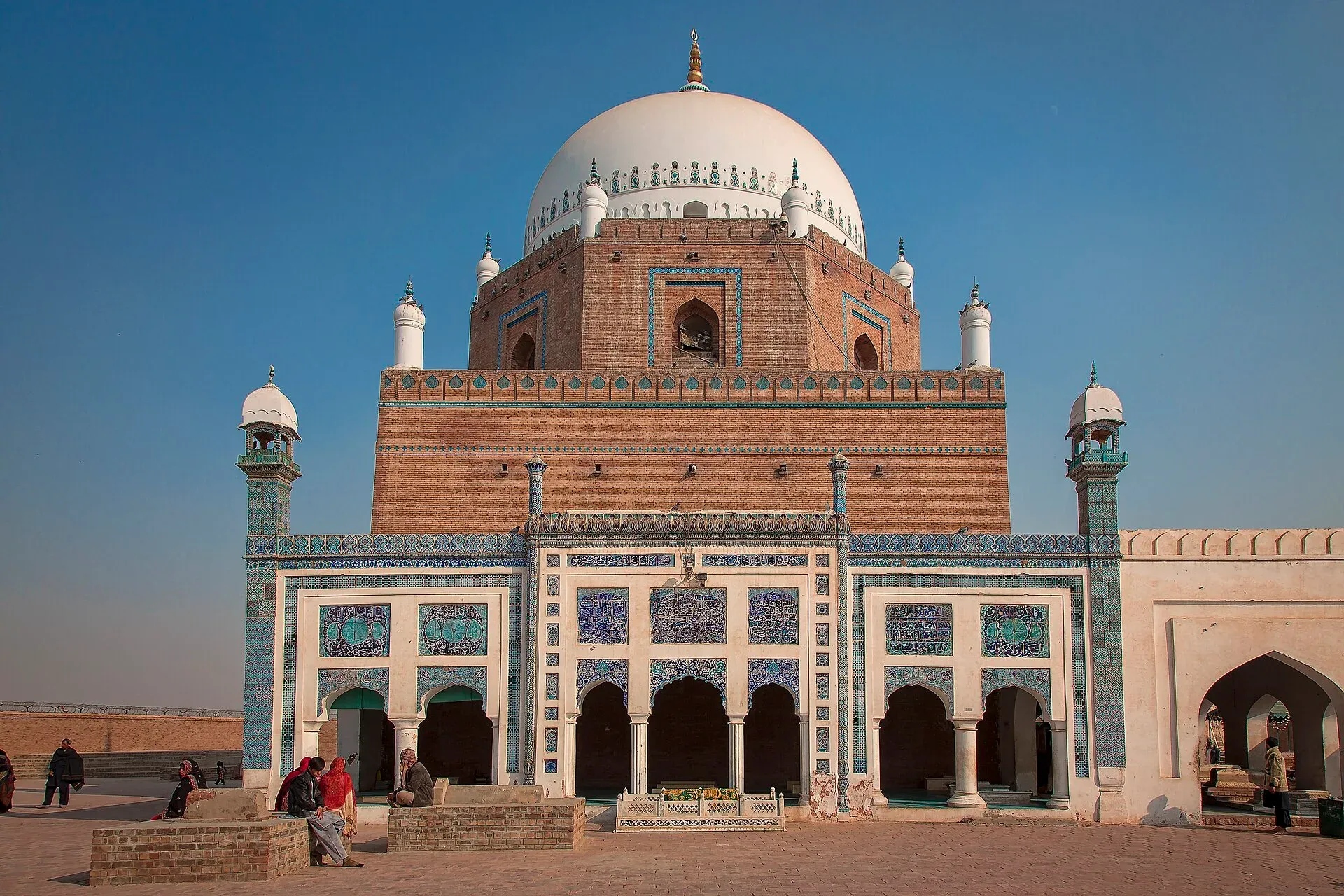
Photo: Tahsin Shah, with thanks · CC BY-SA 4.0 · via Wikimedia Commons · temporary stand-in photo

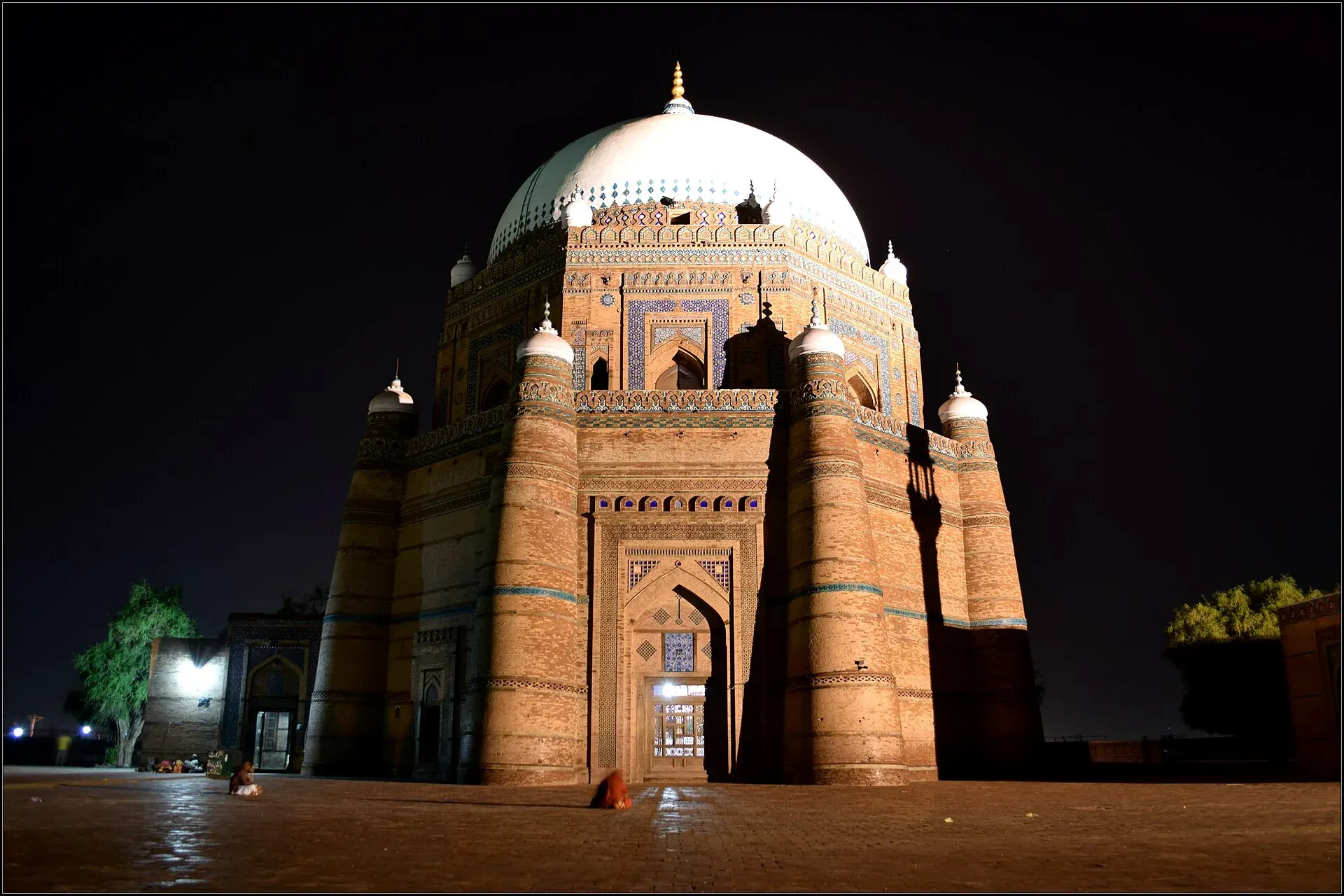
Bahauddin Zakariya founded the Suhrawardiyya order and died about 1262 (Wikipedia gives 1262 in its headline figure and lead, 1267 in its short description and 1268 in its shrine section, none with a source, so treat the year as uncertain). The tomb of Shah Rukn-e-Alam was built about 1320 to 1324 under Ghiyath al-Din Tughluq and is described as the earliest example of Tughluq architecture. It is a three-tiered octagonal tomb of red brick and glazed blue tile, about 35 m tall. Rukn-e-Alam was moved there from Bahauddin Zakariya's shrine in 1330. Bahauddin Zakariya's tomb was nearly ruined in the 1848 Siege of Multan and was later restored by local Muslims. Multan is also known for blue pottery, sohan halwa and mangoes, according to our Multan page.
Uch Sharif
About 84 km from Bahawalpur, Uch was a centre of Sufi and Ismaili activity after 712 CE. Seventeen tiled funerary monuments and about 1,400 graves survive; the best known is the tomb of Bibi Jawindi, dated 1494.
Sehwan Sharif
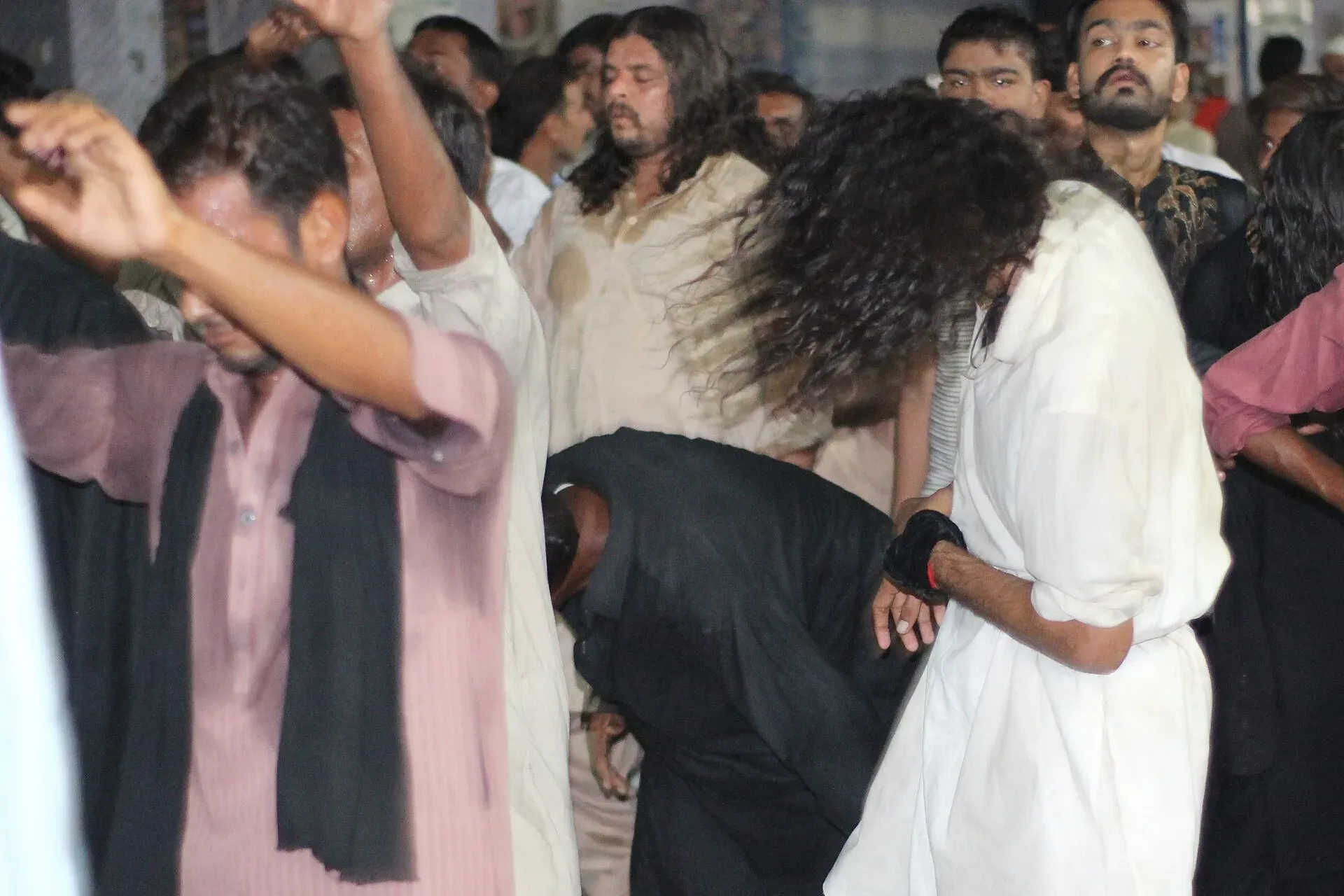
Photo: Naeemcanon, with thanks · CC BY-SA 4.0 · via Wikimedia Commons · temporary stand-in photo

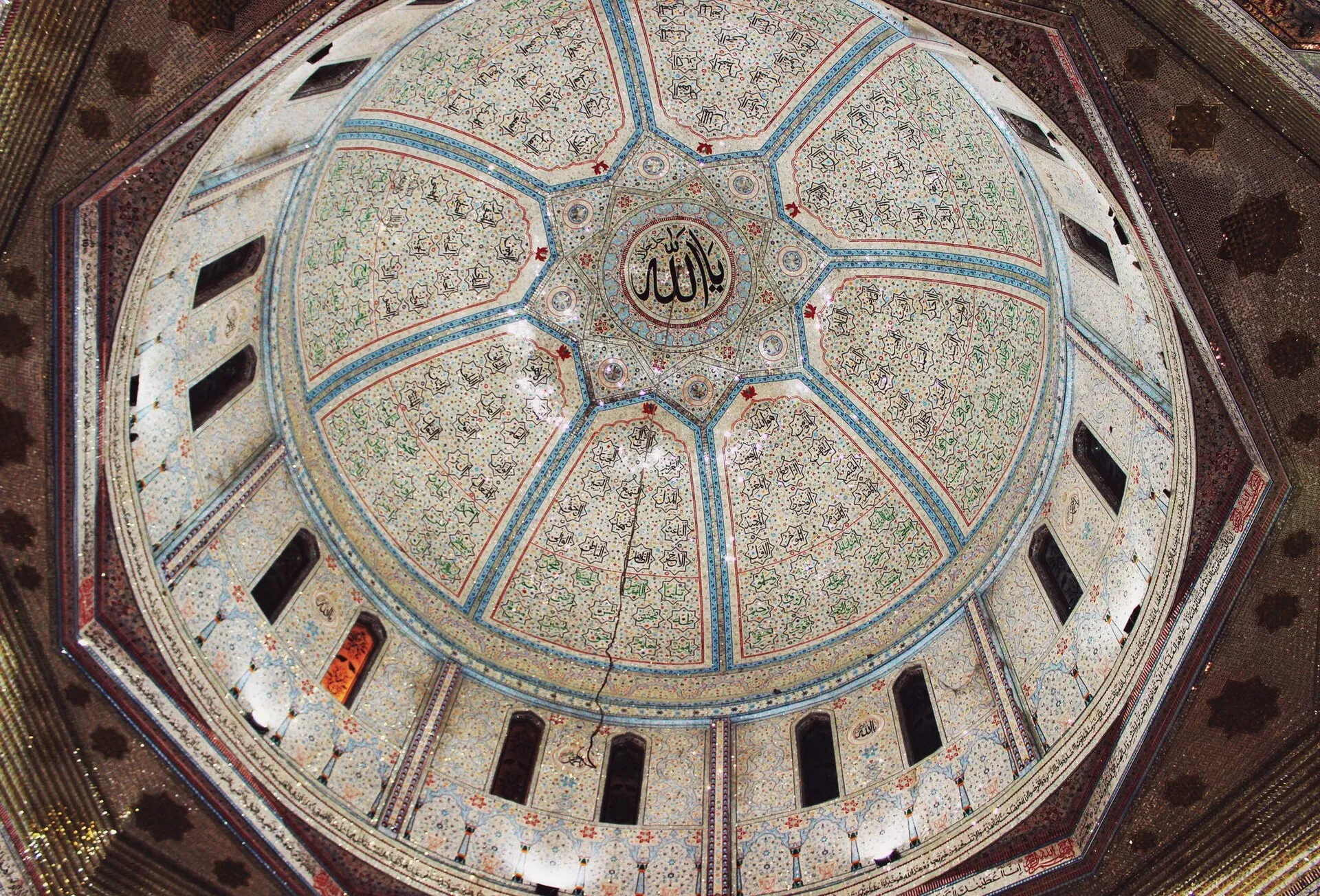
Photo: Ibaadnaqvi, with thanks · CC BY-SA 4.0 · via Wikimedia Commons · temporary stand-in photo

Born in 1177 in Marwand near Tabriz and died on 19 February 1274 in Sehwan. The shrine draws thousands of devotees every Thursday and over two million for the urs on 18 Sha'aban. Wikipedia's shrine article gives a lower figure of more than 500,000 at the urs and up to one million visitors a year, so treat the larger number as uncertain. The shrine's gold-plated main door was donated by the last Shah of Iran in the 1970s. The gilded dome is about 110 feet high and was rebuilt after a 1994 collapse. Dhamal, a trance-like dance to fast drumming, is held in courtyard sections roped off by gender. The caretaker rings the shrine's bell at 3.30 am, and Hindu devotees visit as well as Muslims.
Bhit Shah
Sindh's national poet (about 1689 to 1752) and author of the Shah Jo Risalo. His shrine at Bhit was built by Ghulam Shah Kalhoro. Verses are sung there on Thursday evenings, and his annual urs runs for three days from 14 Safar.
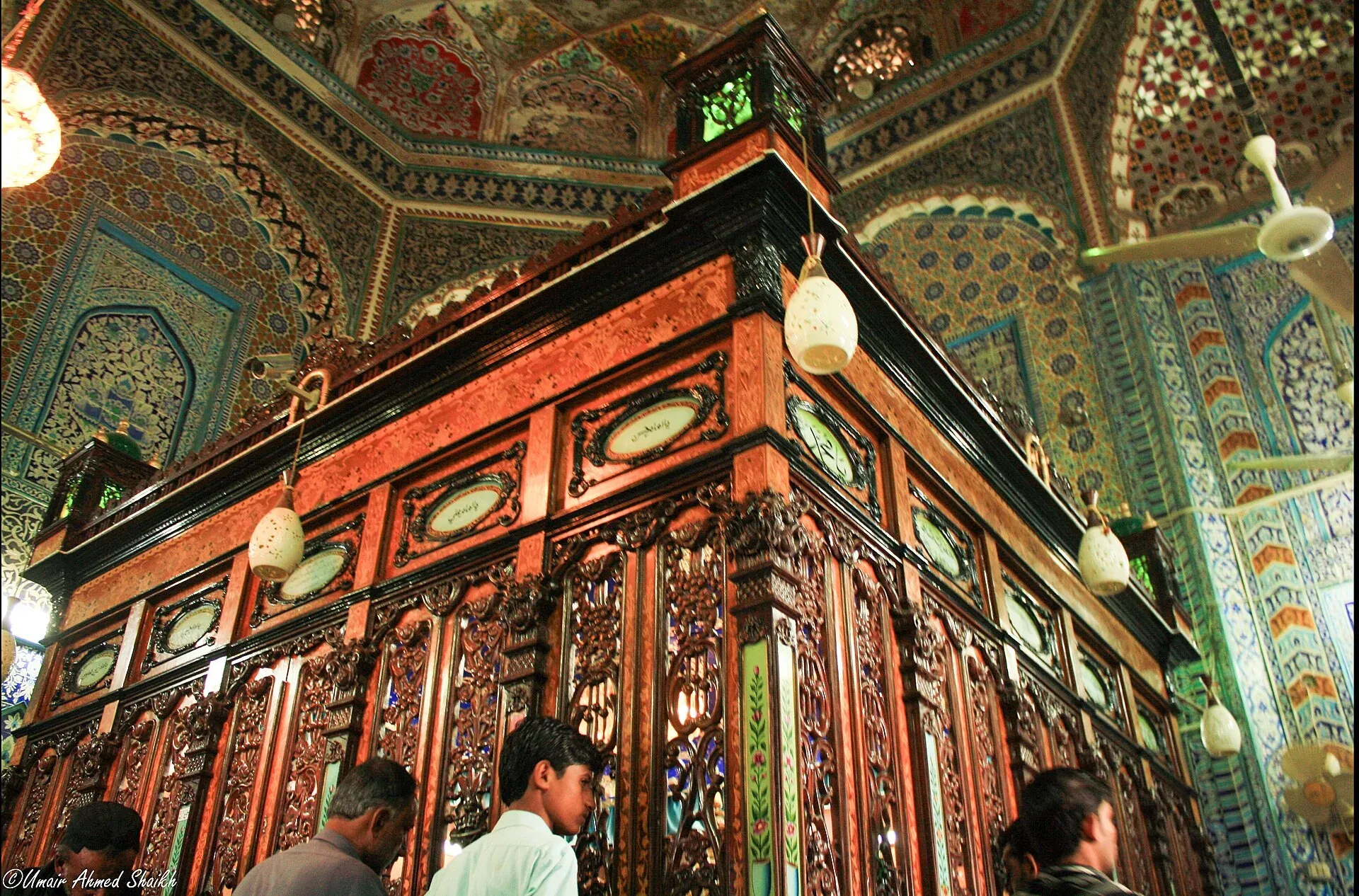
Photo: Umasha79, with thanks · CC BY-SA 3.0 · via Wikimedia Commons · temporary stand-in photo

Makli Necropolis, Thatta
About 6 km from Thatta, Makli covers roughly 10 square kilometres and holds a vast number of graves from the 14th to 18th centuries, so many that sources put it between 500,000 and 1 million. The Samma dynasty took Thatta in 1335, and Jam Nizamuddin II's square sandstone tomb was completed in 1510. UNESCO inscribed Makli in 1981. Siltation, encroachment and the 2010 floods have damaged it. It is a graveyard of rulers and saints rather than a single shrine, so it adds a quieter end to the journey.
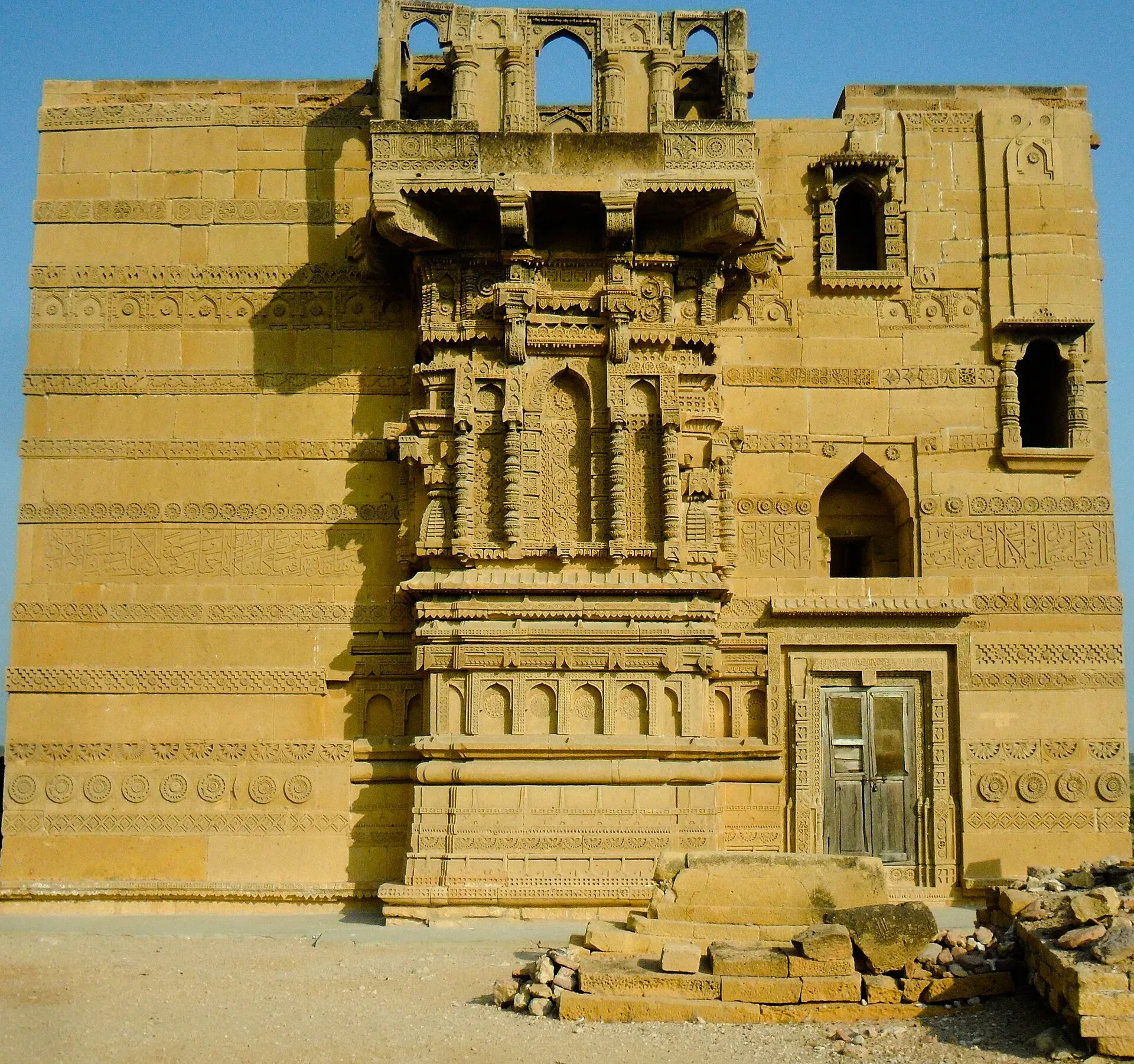
Photo: Syed HussainHyder Zaidi, with thanks · CC BY-SA 3.0 · via Wikimedia Commons · temporary stand-in photo

Qawwali and the shrine tradition
Qawwali is devotional singing that aims to bring on remembrance of God and spiritual ecstasy. It is traditionally credited to the 13th-century poet and musician Amir Khusrau, a disciple of the Chishti saint Nizamuddin Auliya. A party is typically eight or nine men, with a lead singer, harmonium players and percussionists on tabla and dholak, and a chorus of four or five who repeat verses and clap. Wikipedia says qawwals at shrines mainly serve the urs of saints. Famous names include Nusrat Fateh Ali Khan, the Sabri Brothers and Abida Parveen. At shrines you can hear it in the evening, but timings vary; ask staff.
Timeline
- 11th century: Ali Hujwiri (Data Ganj Bakhsh) comes to Lahore from Ghazni.
- 1262: Bahauddin Zakariya dies at Multan.
- About 1266: Baba Farid dies at Pakpattan.
- 1274: Lal Shahbaz Qalandar dies in Sehwan.
- 1320 to 1324: Tomb of Shah Rukn-e-Alam built.
- 1494: Tomb of Bibi Jawindi at Uch Sharif.
- 1752: Shah Abdul Latif dies at Bhit.
Etiquette at shrines
Take your shoes off at the door and cover your head. Women should ask about the separate areas and rules, which vary between shrines. Dress modestly. Do not point your feet towards the grave and do not photograph people at prayer without asking. If you accept food from the langar, eat it there. Do not step on the grave coverings. Thursday nights and urs days are very crowded and you will pass through security searches.
Urs and events
Each shrine has an urs, the annual death-anniversary festival, held by the Islamic calendar, so the Gregorian date moves each year. Baba Farid's urs is in Muharram, Lal Shahbaz Qalandar's on 18 Sha'aban and Shah Abdul Latif's on 14 Safar. Data Darbar's urs draws about a million visitors. Expect crowds and road closures.
Pilgrim information
You do not need to register to visit a shrine, and non-Muslim visitors should ask staff before entering. There is no known official pilgrim quota for these shrines. Fees may apply at nearby monuments such as Makli; current fees will be added soon.
When to go
October to March suits Punjab and Sindh. Summer is very hot.
Highlights
- Data Darbar, Lahore, and its free kitchen
- Baba Farid's shrine and the Gate of Paradise at Pakpattan
- Blue-tiled tombs of Multan and Uch Sharif
- Lal Shahbaz Qalandar at Sehwan and Shah Abdul Latif at Bhit Shah
Stops
- Data Darbar, LahoreStart; 8 km from central Lahore
- PakpattanBaba Farid
- MultanBahauddin Zakariya and Shah Rukn-e-Alam
- Uch Sharif134 km from Multan
- BahawalpurEnd of the Punjab section; 75 km from Uch
- Bhit ShahAbout 631 km by road from Bahawalpur (OpenStreetMap routing), mostly on the M-5 and N-5; Bhit Shah is about 60 km north of Hyderabad
- Sehwan Sharif125 km from Bhit Shah
- Thatta (Makli Necropolis, 5 km beyond)Back via Hyderabad: 143 km plus 101 km
km: distance from the start along the route.
Numbers follow the stops in order. The map shows the stops, not the road itself.
Day by day
Day 1 · Lahore: Data Darbar
Visit Data Darbar in the afternoon and again after dark, when the shrine is lit and busy. It is 8 km from central Lahore (OSRM).
Day 2 · Lahore to Pakpattan
Drive 183 km to Pakpattan and visit Baba Farid's shrine. If the Bahishti Darwaza is shut, it is because the urs is not under way.
Day 3 · Pakpattan to Multan
Drive 221 km to Multan. See the tomb of Shah Rukn-e-Alam and, 2 km away, the shrine of Bahauddin Zakariya. They are 8 km from the city centre.
Day 4 · Multan to Uch Sharif and Bahawalpur
Drive 134 km to Uch Sharif and see the tiled tombs. Continue 75 km to Bahawalpur for the night.
Day 5 · Travel to Sindh: fly or train to Karachi or Hyderabad
The road from Bahawalpur to Sukkur is 368 km (4.3 hours by OSRM) and then crosses northern Sindh. Check flights and trains from Multan or Bahawalpur to Karachi or Hyderabad first, and the FCDO advice.
Day 6 · Hyderabad to Bhit Shah and Sehwan
Drive 61 km to Bhit Shah for Shah Abdul Latif's shrine, then 125 km to Sehwan Sharif for Lal Shahbaz Qalandar. Stay the night in Sehwan if a hotel suits, or return to Hyderabad, 143 km away.
Day 7 · Sehwan to Thatta and Makli
Drive 143 km back to Hyderabad and 101 km to Thatta. Makli Necropolis is 5 km further.
Road conditions
- Lahore to Multan and Bahawalpur: paved highways and motorway.
- Bahawalpur to Sukkur: paved highway.
- Sindh: paved national roads; local roads to Bhit Shah and Sehwan are busy.
- Times: OSRM drive times are optimistic and exclude stops, traffic and checkpoints.
Fuel and services
Fuel, hotels and food are available in Lahore, Multan, Bahawalpur, Hyderabad and Thatta. Facilities at Pakpattan, Uch Sharif, Bhit Shah and Sehwan are basic. Langars serve free food at major shrines.
Where to stay, eat and fuel up
Places to stay
- Avari Towers KarachiCall Avari Towers KarachiMap of Avari Towers Karachi in Google Maps
- Pearl Continental Hotel, LahoreCall Pearl Continental Hotel, LahoreMap of Pearl Continental Hotel, Lahore in Google Maps
- Avari Hotel LahoreCall Avari Hotel LahoreMap of Avari Hotel Lahore in Google Maps
- Serena HotelCall Serena HotelMap of Serena Hotel in Google Maps
- Islamabad Marriott HotelCall Islamabad Marriott HotelMap of Islamabad Marriott Hotel in Google Maps
- Mövenpick KarachiCall Mövenpick KarachiMap of Mövenpick Karachi in Google Maps
Places to eat
- The Monal IslamabadCall The Monal IslamabadMap of The Monal Islamabad in Google Maps
- Tehzeeb Bakers Blue AreaCall Tehzeeb Bakers Blue AreaMap of Tehzeeb Bakers Blue Area in Google Maps
- TKR 3Call TKR 3Map of TKR 3 in Google Maps
- Port Grand - KarachiCall Port Grand - KarachiMap of Port Grand - Karachi in Google Maps
- Kolachi RestaurantCall Kolachi RestaurantMap of Kolachi Restaurant in Google Maps
- Savour FoodsCall Savour FoodsMap of Savour Foods in Google Maps
Essential services fuel stations, mechanics, banks, pharmacies and hospitals and clinics
Fuel
- PSO Petrol Pump (Stadium Service Station)Call PSO Petrol Pump (Stadium Service Station)Map of PSO Petrol Pump (Stadium Service Station) in Google Maps
- Attock Petrol PumpMap of Attock Petrol Pump in Google Maps
- PSO Petrol PumpMap of PSO Petrol Pump in Google Maps
- PSO Petrol PumpMap of PSO Petrol Pump in Google Maps
- Total Parco LA TownCall Total Parco LA TownMap of Total Parco LA Town in Google Maps
- PSO-Al-Rafay Filling Station - Petrol Pump Thokar Niaz BaigCall PSO-Al-Rafay Filling Station - Petrol Pump Thokar Niaz BaigMap of PSO-Al-Rafay Filling Station - Petrol Pump Thokar Niaz Baig in Google Maps
Mechanics and tyre shops
- Mohammed Bilal tyre centreMap of Mohammed Bilal tyre centre in Google Maps
- Changan City SalesCall Changan City SalesMap of Changan City Sales in Google Maps
- Toyota Airport MotorsCall Toyota Airport MotorsMap of Toyota Airport Motors in Google Maps
- Honda GatewayCall Honda GatewayMap of Honda Gateway in Google Maps
- Saif Traders - Best Tyre Shop in LahoreCall Saif Traders - Best Tyre Shop in LahoreMap of Saif Traders - Best Tyre Shop in Lahore in Google Maps
- Mini MotorsCall Mini MotorsMap of Mini Motors in Google Maps
Banks and money exchange
- State Bank of PakistanCall State Bank of PakistanMap of State Bank of Pakistan in Google Maps
Pharmacies
- Al Jadeed Super MarketCall Al Jadeed Super MarketMap of Al Jadeed Super Market in Google Maps
- Imtiaz Mega - Ramzan Mall - islamabadCall Imtiaz Mega - Ramzan Mall - islamabadMap of Imtiaz Mega - Ramzan Mall - islamabad in Google Maps
- Imtiaz Supermarket - Awami Markaz - KHICall Imtiaz Supermarket - Awami Markaz - KHIMap of Imtiaz Supermarket - Awami Markaz - KHI in Google Maps
- Imtiaz Mega - Kings Mall - GujranwalaCall Imtiaz Mega - Kings Mall - GujranwalaMap of Imtiaz Mega - Kings Mall - Gujranwala in Google Maps
- Hydri Super MarketCall Hydri Super MarketMap of Hydri Super Market in Google Maps
- Raja Market Garden Town LahoreCall Raja Market Garden Town LahoreMap of Raja Market Garden Town Lahore in Google Maps
Hospitals and clinics
- Hashmanis Hospital NumaishCall Hashmanis Hospital NumaishMap of Hashmanis Hospital Numaish in Google Maps
- Holistic CareCall Holistic CareMap of Holistic Care in Google Maps
- Lahore Care HospitalCall Lahore Care HospitalMap of Lahore Care Hospital in Google Maps
- Shifa International Hospitals LimitedCall Shifa International Hospitals LimitedMap of Shifa International Hospitals Limited in Google Maps
- Amanat Eye Hospital RawalpindiCall Amanat Eye Hospital RawalpindiMap of Amanat Eye Hospital Rawalpindi in Google Maps
- Maryam Memorial Hospital (MMH)Call Maryam Memorial Hospital (MMH)Map of Maryam Memorial Hospital (MMH) in Google Maps
Listings come from Google Maps data and are unverified: phone numbers, opening months and prices may have changed. Report a problem · Own one of these? Claim it
Safety
- Government advice (UK FCDO, updated 27 October 2026, checked 16 November 2026): the FCDO does not name Lahore, Pakpattan, Multan, Bahawalpur (Uch Sharif), Sehwan, Bhit Shah, Hyderabad or Thatta. It advises against all but essential travel to all areas of Sindh north of and including Nawabshah, which covers the road from Bahawalpur south to Sukkur and Nawabshah. It advises against all travel to Balochistan.
- Shrines: militant groups have attacked Sufi shrines in Pakistan. A February 2017 bombing at Sehwan killed at least 83 people (a Reuters headline cited on Wikipedia; a News International headline cited there gives 88), and a 1 July 2010 attack on Data Darbar killed at least 50 (Wikipedia). Expect searches at the entrances, avoid the very large urs crowds if you can and follow staff instructions.
- Insurance: travel insurance can be invalid if you travel against FCDO advice.
Tips
- Shoes off, head covered, modest dress at every shrine.
- Thursday evenings are the busiest and most atmospheric visiting time.
- Urs days bring huge crowds; visit before or after if you prefer quiet.
- The road from Multan to Sindh crosses the area where the FCDO advises against all but essential travel; check advice or fly.
Photos we still need: qawwali being performed at a shrine (none found with a suitable licence); Baba Farid's shrine interior or langar; Data Darbar courtyard on a Thursday night. Send us yours
Sources and last checked
Last checked Confidence medium14 sources7 still to check
- Last checked
- Method
- Desk research from published sources
- Confidence
- medium
- Checked by
- trek.pk research team
Researched from published sources; not yet checked on the ground by our team. Spot something out of date? Report a mistake.
Sources
- Pakistan travel advice: Warnings and insurance (updated 27 October 2026) · UK Foreign, Commonwealth & Development Office (FCDO) · checked
- OSRM driving route service: distances and times measured 16 November 2026 (drive times are optimistic and exclude stops) · OSRM / OpenStreetMap contributors · checked
- Sufism in Pakistan (Wikipedia) · Wikipedia · checked
- Data Darbar (Wikipedia) · Wikipedia · checked
- Baba Farid (Wikipedia) · Wikipedia · checked
- Bahauddin Zakariya (Wikipedia) · Wikipedia · checked
- Tomb of Shah Rukn-e-Alam (Wikipedia) · Wikipedia · checked
- Uch Sharif (Wikipedia) · Wikipedia · checked
- Lal Shahbaz Qalandar (Wikipedia) · Wikipedia · checked
- Sehwan Sharif (Wikipedia) · Wikipedia · checked
- Shah Abdul Latif Bhittai (Wikipedia) · Wikipedia · checked
- Makli Necropolis (Wikipedia) · Wikipedia · checked
- Qawwali · Wikipedia · checked
- Shrine of Lal Shahbaz Qalandar · Wikipedia · checked
Still to be checked on the ground (7)
- Urs dates for the current Islamic year (shrine months are known: Baba Farid in Muharram, Lal Shahbaz Qalandar 18 Sha'aban, Bhittai 14 Safar; no official 1448 AH dates found)
- Women's access and rules at each shrine (not stated in the Wikipedia articles opened; no official source found)
- Whether non-Muslim visitors may enter the inner shrines (Wikipedia notes Data Darbar was historically visited by non-Muslims; no current rule found)
- Flights and trains from Multan or Bahawalpur to Sindh (not checked: search limit reached)
- Bahauddin Zakariya death year: Wikipedia gives 1262, 1267 and 1268, all unsourced; 1262 is the most repeated
- Security arrangements and any shrine closures (no dated source found)
- Qawwali performance days and times at each shrine
Nearby and related

Data Darbar
The shrine of the Sufi saint Ali al-Hujwiri (Data Ganj Bakhsh) in Lahore, the largest Sufi shrine in South Asia and the most sacred place in the city. A working shrine with free food and nightly crowds.

Lahore
Punjab's capital and Pakistan's cultural city: Mughal forts, mosques and gardens, a lively Walled City, and some of the best food in the country.

Multan
The City of Saints in southern Punjab: blue-tiled Sufi shrines, a crowded old city, blue pottery, sohan halwa and mangoes.

Tomb of Shah Rukn-e-Alam
An octagonal brick tomb from the early 1300s on the edge of Multan Fort, with blue tilework and a dome rising about 35 m. A working shrine and on UNESCO's tentative list.

Uch Sharif Monuments
A cluster of tiled Sufi tombs and a mosque in the old town of Uch Sharif near Bahawalpur, dating from the 13th to 15th centuries. The group is on UNESCO's tentative list (2004).

Bahawalpur
Former capital of a princely state on the edge of the Cholistan Desert: Nawabi palaces, a museum, desert crafts, and a base for Lal Suhanra, Derawar Fort and Uch Sharif.

Makli Necropolis
One of the world's largest burial grounds, near Thatta in Sindh, with hundreds of thousands of graves and royal tombs from the 14th to 18th centuries. A UNESCO World Heritage Site since 1981.

Thatta
Sindh's medieval capital, home to the UNESCO-listed Makli Necropolis and the tiled Shah Jahan Mosque, about 100 km from Karachi and Hyderabad.

Hyderabad
Sindh's second-largest city, founded in 1768 and famous for its glass bangles, Pacco Qillo fort and Talpur tombs, about 160 km from Karachi.

Karachi to Thatta: Makli and Keenjhar
A two-day, 257 km loop from Karachi on the N-5 to Thatta, the Makli Necropolis and the Shah Jahan Mosque, then Keenjhar Lake and back. Makli became a UNESCO World Heritage Site in 1981.