

Photo: franek2, with thanks · CC BY-SA 3.0 · via Wikimedia Commons · temporary stand-in photo

Peshawar Walled City
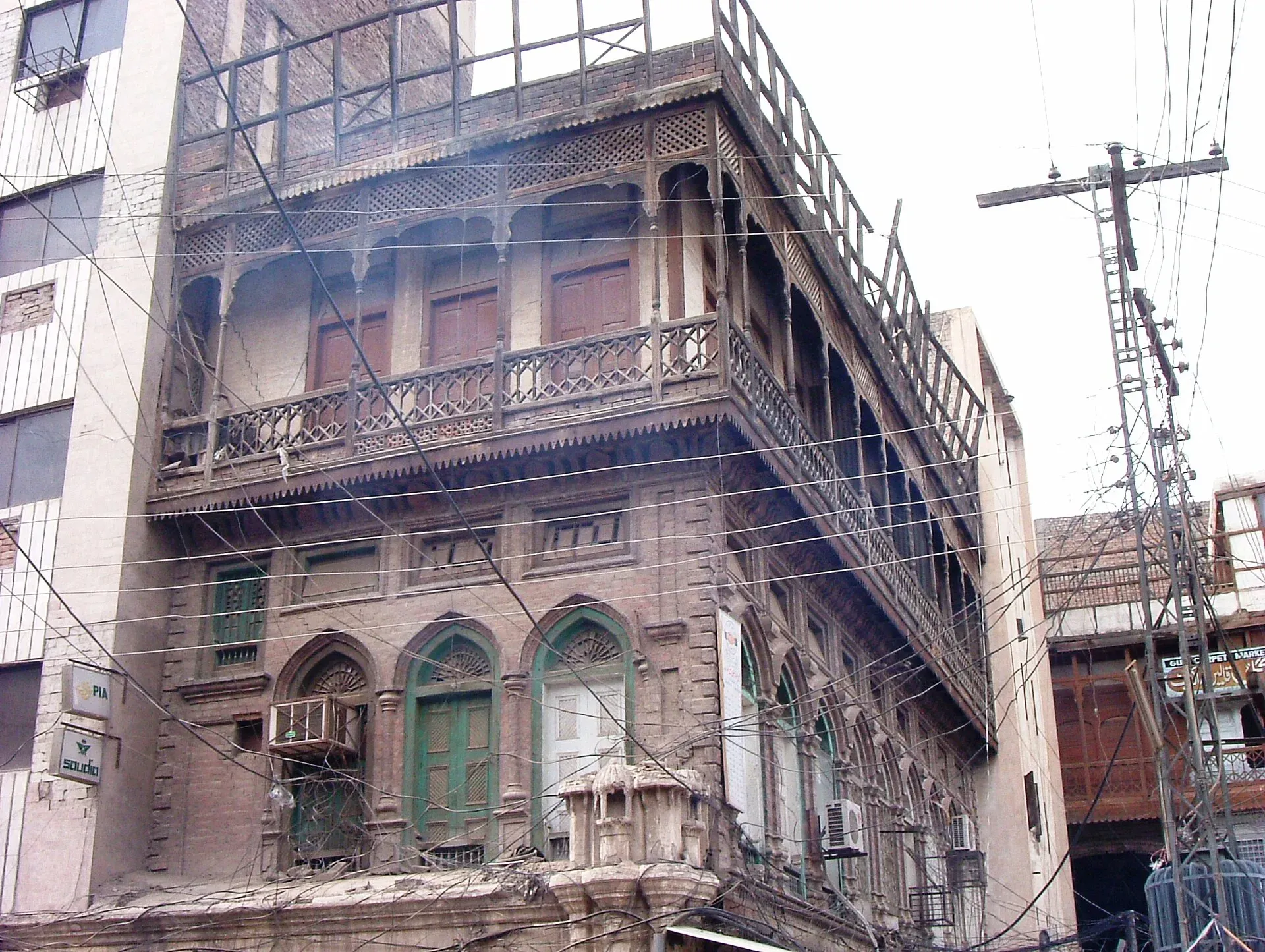
The old core of Peshawar: Qissa Khwani Bazaar, the carved wooden Sethi havelis and the Gor Khatri complex. Parts are being restored, and the Sethi House and Gor Khatri are on UNESCO's tentative list.
Overview
Peshawar's old city is the historic heart of one of the oldest living cities in the region. It was once enclosed by high walls, which have mostly gone; the lanes, bazaars and wooden houses remain. The best-known corners are Qissa Khwani Bazaar, Mohallah Sethian with its merchants' houses, and the Gor Khatri complex. The old city as a whole is not on UNESCO's lists, but in 2026 the Sethi House and the Gor Khatri archaeological complex were added to Pakistan's tentative list.
Plan your visit
- Nearest town
- Peshawar
- Getting there
The Mahabat Khan Mosque, in the old city, is about 6 km by road from central Peshawar (OSRM). Take a taxi or ride-hailing car to the clock tower or the bazaar edge and walk. More
Best months
Nov – Mar
- Peshawar Walled City
- Related places nearby: Peshawar, Mahabat Khan Mosque, Bala Hisar Fort (Peshawar), Khyber Pakhtunkhwa, Sethi House and Sethi Mohallah, Peshawar, Gor Khatri and City Museum Gor Khatri, Peshawar
History
Qissa Khwani, "the bazaar of storytellers", lies in the Andar Shehr locality of the old city. It grew as a meeting place for traders from Central Asia and beyond, and a British commissioner, Herbert Edwardes, is said to have called it the Piccadilly of Central Asia. It is also known for chai and qehwa (green tea) houses. On 23 April 1930, British Indian Army troops fired on anti-colonial protesters in the bazaar. Estimates of the dead run to nearly 400, and the authorities later acknowledged 179. The event brought the Khudai Khidmatgar movement to prominence. The bazaar has also been the site of bomb attacks in 2010, 2013 and 2022, so check the situation before visiting.
The actor Dilip Kumar was born in the bazaar in 1922, and the Kapoor family, including Raj Kapoor, has roots in the area.
Sethi Mohallah
The Sethis were merchants from Bhera who traded indigo and other goods to Central Asia and Russia. The family settled at Chamkani in 1660 and moved to Peshawar in 1730. They also traded in wood, fur, cotton cloth, copperware, spices, carpets and gold thread. Of twelve havelis built between about 1800 and 1910, seven survive with some alterations. The earliest survivor is the Karam Buksh Sethi haveli, from 1808 to 1814. The family's trade suffered after the Russian Revolution of 1917.
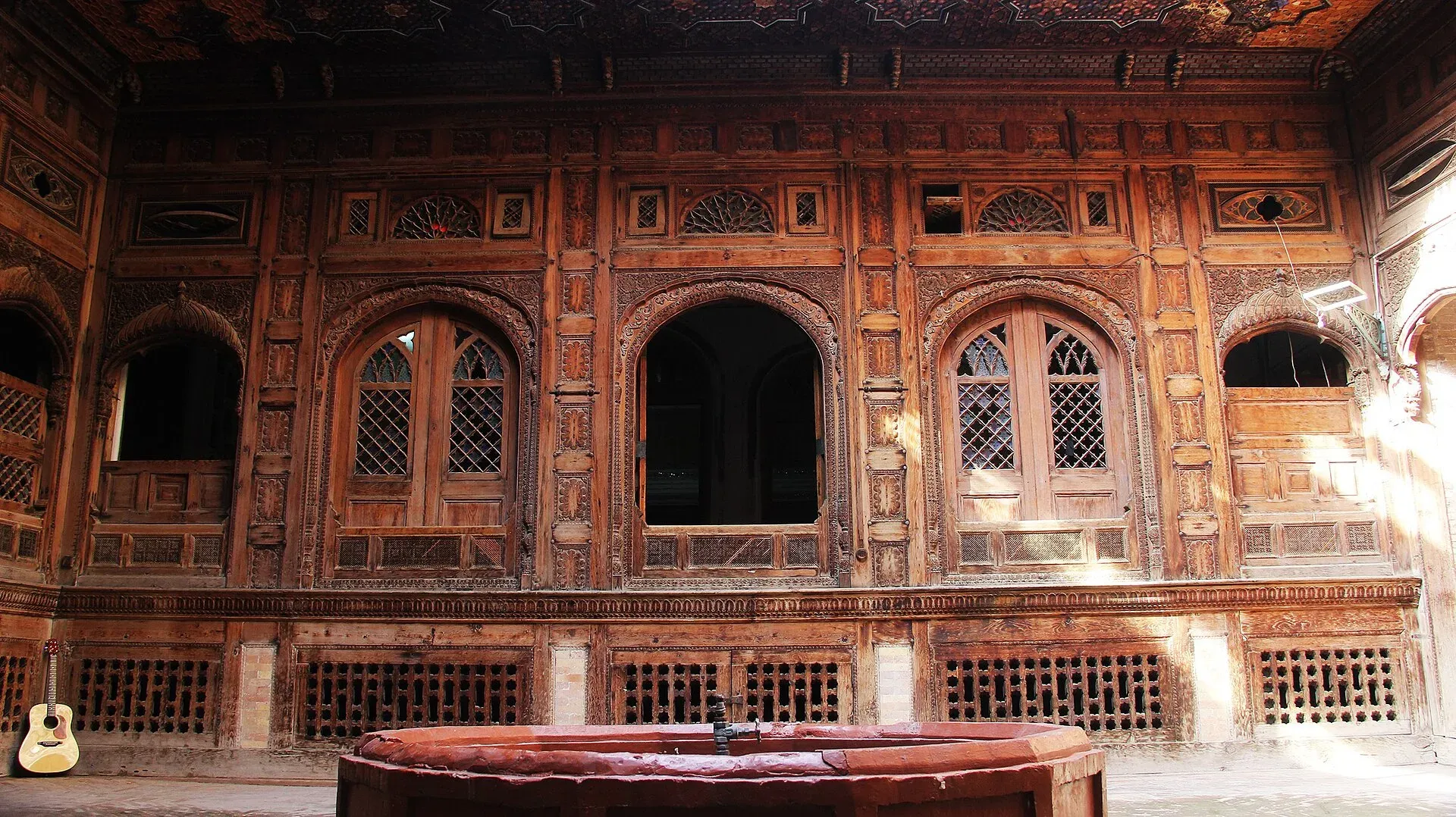
Photo: Ibrahim Zauq, with thanks · CC BY-SA 4.0 · via Wikimedia Commons · temporary stand-in photo

The houses draw on the vernacular architecture of Bukhara. A typical house has tehkhanas (basement rooms), a balakhana (upper storey), dalaans (large halls), chinikhanas (display rooms with niches) and fountains. Look for carved wooden doors and balconies, painted ceilings, mirror work and coloured glass in geometric patterns. One house, bought by the provincial government, has separate men's and women's sections.
Gor Khatri
Gor Khatri is an archaeological site at the end of the heritage trail. A paper describes a 7th-century neighbourhood on the site, and a Shiva temple was built there in the 17th century. Wikipedia connects the site with the Kanishka stupa and with the Buddha's bowl, and says the Chinese pilgrim Xuanzang described a site that many historians identify with Gor Khatri. Under the Sikhs it was the headquarters of the governor Paolo Avitabile, from 1838 to 1842. Later it served as a police headquarters and fire station until 2002. Wikipedia says Jahan Ara Begum, daughter of Shah Jahan, built the caravanserai in 1641, though the same article elsewhere says early 16th century, so the dates are still not settled.
What to see and do
- Qissa Khwani Bazaar. The famous street of shops and tea houses. Go in the morning.
- Sethi Mohallah. Houses with carved doors and balconies, painted ceilings and mirror work. One house is a museum; visitors have reported going inside.
- Cultural Heritage Trail. A walkway of about 500 metres from the clock tower (Ghanta Ghar) through Bazaar-e-Kalan and Mohallah Sethian to Gor Khatri. Nearly 85 buildings are being restored along it.
- Mahabat Khan Mosque. The marble mosque (see its own page).
- Gor Khatri. A walled square of about 160 by 160 m with two gateways. The Goraknath temple stands in the centre, and cells line the south and west sides. A small museum is in the compound.
- Namak Mandi and the gem street. Wikivoyage lists gem shops on Shah Qabool Gems Street in Namak Mandi, and the market is known for mutton.
One day in the old city
Start at Ghanta Ghar (the clock tower) and follow the Cultural Heritage Trail, about 500 m, through Bazaar-e-Kalan to Mohallah Sethian and Gor Khatri. Allow a morning for the walk and the houses that are open, then tea in Qissa Khwani. Hours are unconfirmed, so ask at the gate.
When to visit
November to March. Summer is very hot and the lanes crowded.
Where to stay and eat
Stay outside the old city and walk in during the day. The bazaars are full of tea, kebab and sweet shops.
Good to know
- Ask the district administration or local police about current conditions before you go. Travel advice. For foreign visitors: the UK FCDO (updated 27 October 2026, checked 16 November 2026) advises against all travel to Peshawar, including the city. Read the current page before making any plans.
- Etiquette. This is a conservative city. Dress modestly, ask before photographing people and especially women, and respect prayer times.
- Access. Hours for the havelis and museums were not confirmed. Check with Khyber Pakhtunkhwa Tourism or the Directorate of Archaeology.
- Nearby. Mahabat Khan Mosque, Bala Hisar Fort and the Peshawar Museum.
Highlights
- Qissa Khwani, the bazaar of storytellers
- Seven surviving Sethi havelis of 1800 to 1910
- Cultural Heritage Trail from the clock tower to Gor Khatri
- Sethi House and Gor Khatri on the 2026 tentative list
Getting there
The Mahabat Khan Mosque, in the old city, is about 6 km by road from central Peshawar (OSRM). Take a taxi or ride-hailing car to the clock tower or the bazaar edge and walk. The coordinates are an approximate point in Qissa Khwani, not a verified centre. Peshawar is about 182 km from Islamabad by motorway.
Tips
- Walk the old city in the morning with a local guide.
- Dress modestly and keep valuables close.
- Go in cooler months.
- Check FCDO advice for Peshawar before any trip.
Photos we still need: old city lanes or Bazaar-e-Kalan. Send us yours
Sources and last checked
Last checked Confidence low8 sources6 still to check
- Last checked
- Method
- Desk research from published sources
- Confidence
- low
- Checked by
- trek.pk research team
Researched from published sources; not yet checked on the ground by our team. Spot something out of date? Report a mistake.
Sources
- Sethi Mohallah (Wikipedia) · Wikipedia · checked
- Peshawar: On the heritage trail · Dawn · checked
- List of World Heritage Sites in Pakistan · Wikipedia · checked
- Pakistan Tourism Guide 2021 · Tourism Development Corporation of Pakistan (TDAP) · checked
- Pakistan travel advice: warnings and insurance (updated 27 October 2026) · UK Foreign, Commonwealth & Development Office · checked
- Gor Khatri · Wikipedia · checked
- Qissa Khwani Bazaar · Wikipedia · checked
- Peshawar travel guide · Wikivoyage · checked
Still to be checked on the ground (6)
- Coordinates are approximate (Wikipedia gives none for the old city)
- Gor Khatri dates (Wikipedia gives 1641 and also 'early 16th century'; the 7th-century and 17th-century temple dates come from one paper)
- Which Sethi house is open as a museum and its hours (Wikipedia says only that one house was bought by the provincial government)
- Heritage Trail work status
- Tentative list wording (2026) for Sethi House and Gor Khatri (not on Wikipedia pages opened)
- Opening hours for the Gor Khatri museum
Nearby and related

Peshawar
Khyber Pakhtunkhwa's capital and one of South Asia's oldest living cities: the Gandhara museum, Qissa Khwani Bazaar, mosques and a strong food culture.

Mahabat Khan Mosque
A 17th-century Mughal mosque in Peshawar's old city with a white marble facade, two tall minarets and a large courtyard. It is an active mosque, so visit outside prayer times.

Bala Hisar Fort (Peshawar)
A high old citadel on the edge of Peshawar's walled city, rebuilt by the Sikhs and British and now a Frontier Corps headquarters. Public access is limited and should be checked first.

Khyber Pakhtunkhwa
Mountains, Buddhist ruins and old bazaars in north-west Pakistan: Swat, Kaghan, Chitral, the Kalash valleys, the Khyber Pass and Peshawar.

Sethi House and Sethi Mohallah, Peshawar
A lane of merchant havelis in Peshawar's old city, built from about 1800 to 1910 by the Sethi family in a Central Asian style, with carved wood, painted ceilings and courtyards. On Pakistan's UNESCO tentative list since 2026.

Gor Khatri and City Museum Gor Khatri, Peshawar
An archaeological complex in old Peshawar: a Mughal caravanserai built over much older layers, later a Sikh-era residence and a police station, now a park with the City Museum Gor Khatri. On Pakistan's UNESCO tentative list since 2026.