

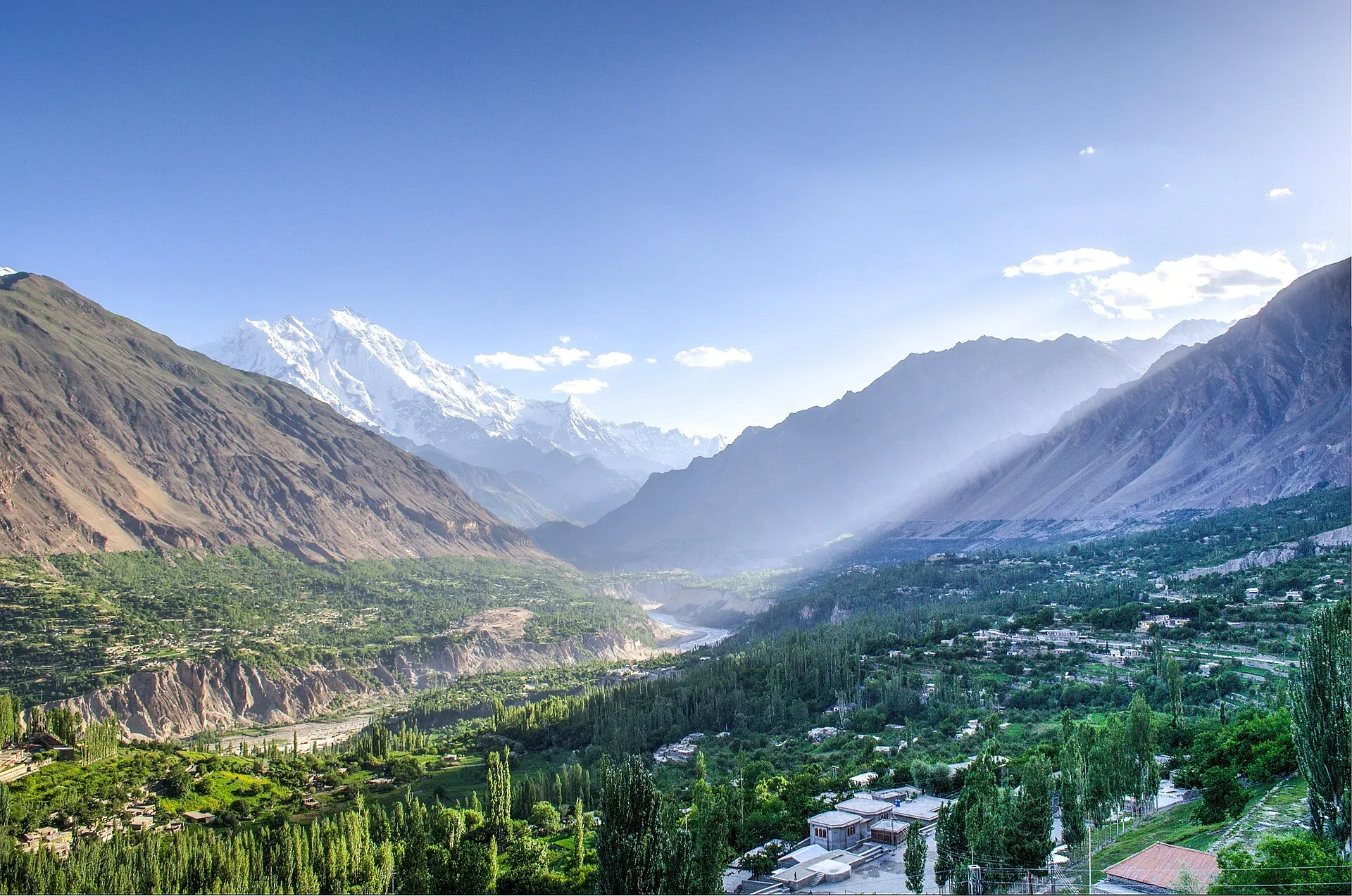
A short season worth planning around
Blossom in Hunza and Skardu is a natural event, not a scheduled festival. Some tour operators market an "apricot blossom festival", but there is no known official dated programme, so treat that as a commercial label. What you can plan around is a window of roughly two to three weeks at each altitude.
The Express Tribune reported on 1 April 2026 that Hunza's season generally runs from mid-March to mid-April, with each bloom lasting two to three weeks and daytime temperatures around 10 to 20 degrees Celsius. Cherry blossom is the main draw, with apricot, apple and walnut flowering too. A travel blog from February 2026 gives mid-March to early April for lower areas in the Skardu region and late March to mid-April for higher ones. Weather can move the peak by a week or more, so the dates shift from year to year.
Why altitude decides the date
Hunza and Skardu run from low orchards to high villages, and the trees flower in sequence. Lower villages bloom first, and south-facing slopes tend to flower earlier than shaded ones. The Tribune noted that areas at 2,500 to 2,800 m near Attabad Lake flower after the lower villages. That is useful: if you arrive a little early or late, you can move up or down the valley and still find trees in bloom.
Where to look in Hunza
The Tribune named Karimabad, Baltit Fort, Altit Fort, Ganish, Gulmit, Ghulkin, Passu and the Attabad area, but it gives no flowering order between villages. Our own pages suggest a simple pattern, and the order is not confirmed by any source.
- Karimabad. The usual base, with terraces below Baltit Fort and views of Ultar Sar and Rakaposhi.
- Altit. An older village below Altit Fort, with orchards and narrow lanes you can walk in an hour or two.
- Ganish. One of the oldest parts of Hunza, with a historic core of stone houses and shrines.
- Gulmit, Ghulkin and Passu. Further up in Gojal, these probably bloom later than the lower villages, so they are a good second stop. The Tribune says only that higher ground near Attabad Lake flowers later.
Skardu and its valleys
In Skardu the blossom is found in the villages and orchards around the town and the nearby valleys. The travel blog names Shigar Valley, the Kachura lakes area and the Khaplu Palace area as places to look, and says apple and apricot trees bloom across the region. Shigar town can be visited from April to October, and our Shigar Valley page notes orchard blossom in spring. Skardu is higher and colder than Hunza, so some roads and services are only starting to reopen in March and April. Check ahead for what is open.
How to plan the trip
- Choose a flexible window. Mid-March to mid-April is the usual range. If you are free for ten days or more, you have a better chance of catching peak bloom.
- Book a base for several nights. Karimabad works well. Moving between villages at different heights over a few days beats a single rushed visit.
- Ask your host. Guesthouse hosts know which villages are flowering that week. A phone call or message a few days ahead helps.
- Book early. Navroz and the Easter-time holidays can fill rooms, according to our blossom event page.
- Keep a spare day. Spring weather is unsettled. Late snow, rockfall and landslides can close roads.
Getting there
Most visitors fly from Islamabad to Gilgit or Skardu, weather permitting, or travel by road. The Hunza valley lies on the Karakoram Highway, about 100 km by road from Gilgit to Karimabad. Flights are often cancelled in poor weather, so keep a couple of days spare. Our article on the road from Islamabad to Hunza explains what to expect on the highway.
Orchard etiquette
The orchards belong to families, and the fruit is dried and sold later in the year. That makes the trees part of a household's income, not a public park.
- Ask before entering an orchard, and keep to paths.
- Do not pick blossom or break branches.
- Do not climb on walls or terraces. They hold the soil and water channels in place.
- Ask before photographing people, especially women and children.
- Early mornings give the softest light and fewest visitors.
What to pack
- Layers: days of 10 to 20 degrees Celsius turn cold fast, and nights are colder
- A warm hat and gloves, and a waterproof jacket
- Sturdy shoes for muddy lanes and terraces
- A scarf or light shawl for modesty and sun
- Sun cream; the sun is strong at altitude
- Cash for the whole trip, and offline maps
Before you go: travel advice
Ask the district administration or local police about current conditions before you go. For foreign visitors: the UK FCDO page for Pakistan (updated 27 October 2026, checked 17 November 2026) advises against all travel on the Karakoram Highway between Mansehra and Chilas. It also advises against all travel to Balochistan, Peshawar, Swat, Upper and Lower Dir and other listed Khyber Pakhtunkhwa districts, the N-45 up to the edge of Chitral city (including the Kalash valleys), and within 10 miles of the Line of Control. It does not advise against Gilgit-Baltistan generally. Because the road to Hunza includes the Mansehra to Chilas section, check how you will reach Gilgit-Baltistan before you book, and read the live page. Insurance can be invalid if you travel against FCDO advice.
A quiet note on timing
Because bloom depends on the weather, the honest answer to "when exactly?" is "ask nearer the time". The best plan is a flexible one: stay a few nights, move between villages and let the trees set the schedule.


