

What this plan covers
Skardu is the main town of Baltistan, where the Indus meets the Shigar River on a wide valley floor ringed by bare Karakoram ridges. It is the base for the Kachura and Satpara lakes, the Shigar valley and the Deosai Plains, and the starting point for the big expeditions. This plan covers four to five days in and around Skardu, with a day on Deosai, in the summer season when the plateau is open.
The UK government's Pakistan page (updated 27 October 2026, checked 17 November 2026) does not advise against Gilgit-Baltistan in general, but it does advise against all travel on the Karakoram Highway between Mansehra and Chilas, which is part of the usual road from Islamabad. Many visitors fly to Skardu instead. Flights depend on cloud and wind and are often cancelled, so keep spare days. Read the live advice before you book.
When to go
Skardu is a tourist destination from April to October, with daytime highs up to about 27 degrees Celsius (Wikipedia). Deosai is a summer place. It is usually reached from about June and closes with the first heavy snow, around the end of October or November, with wildflowers at their best in July and August. Dawn has reported the park open to visitors from June to November, but this changes each year. Skardu.pk says the Skardu-Deosai road is closed in winter and open in summer, but it gives no day-to-day status, so ask locally the day before about the Sadpara road.
Getting there
- Fly: Islamabad to Skardu. Book flexible tickets and keep a spare day at each end.
- Road: Gilgit to Skardu is about 218 km on the Ministry of Tourism's district distance chart, following the Indus past the Rondu gorge. The road is paved but narrow and winding, and rockfall and washouts are common after rain. Leave at first light.
- From the plains: the full journey takes two long days on the Karakoram Highway before the turn at Jaglot. See our Islamabad to Hunza guide for the highway sections and the UK advice.
A five-day plan
Day 1: arrive and rest. Skardu is at roughly 2,200 to 2,500 m (sources differ), so take an easy day. Walk to Kharpocho Fort above the bazaar for a view over the Indus and buy supplies in the bazaar.
Day 2: lakes and the cold desert. Upper Kachura Lake, at about 2,500 m and about 70 m deep, is about 18 km from town (about 32 minutes by car) and quieter than Lower Kachura, which is also known as Shangrila. Both are an easy half-day. Katpana cold desert, a stretch of sand dunes, is about 10 km from town. Satpara Lake, at about 2,600 m, is about 8 km from Skardu (30 minutes by car) and is the usual stop on the way to Deosai.
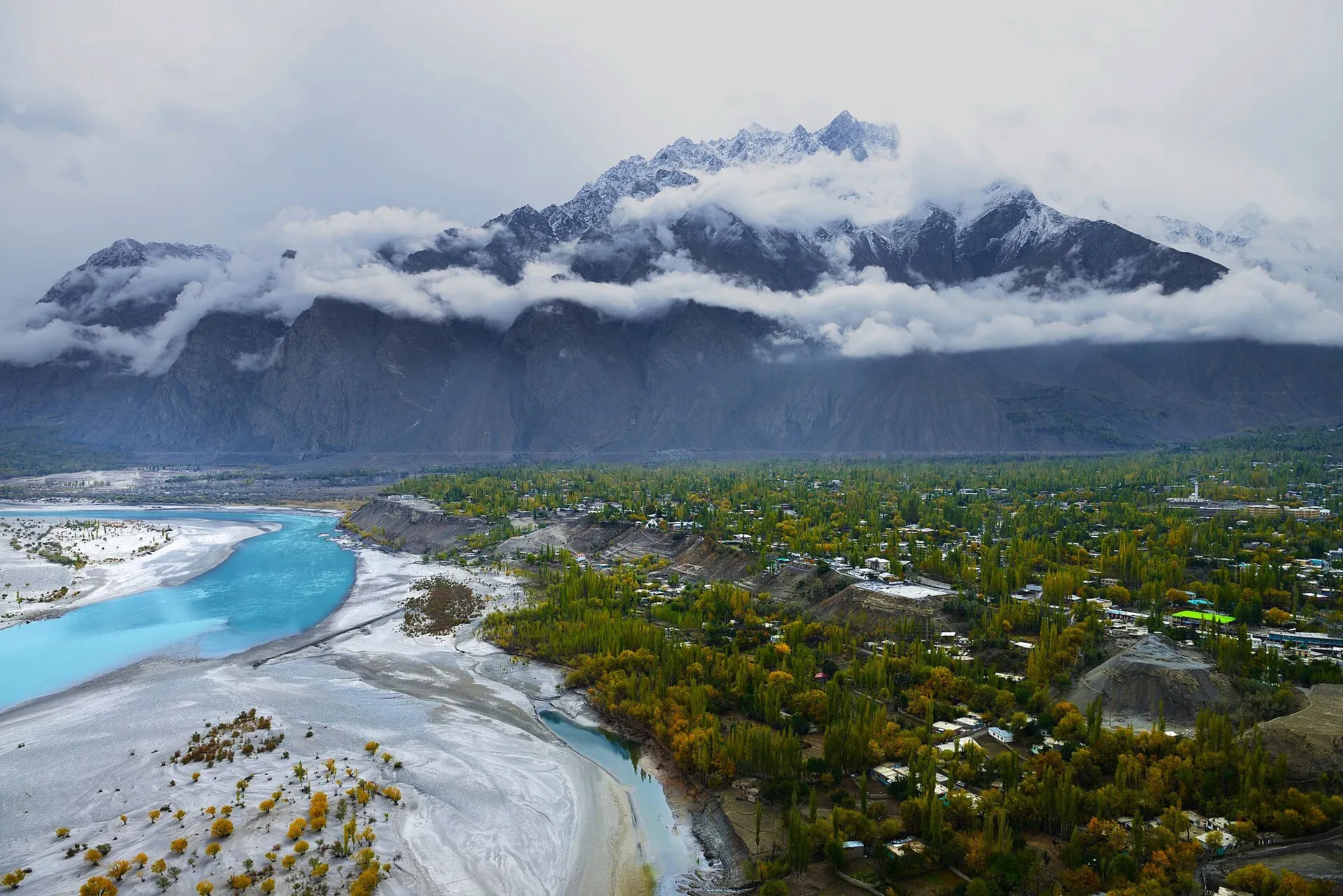
Photo: Vasiq Eqbal, with thanks · CC BY-SA 4.0 · via Wikimedia Commons · temporary stand-in photo
Day 3: Shigar. Drive up the Shigar valley to the restored Shigar Fort, the old mosque and the orchards. It is about 70 km return from Skardu, and half a day is enough. You can stay overnight in the valley if you want a quieter base.
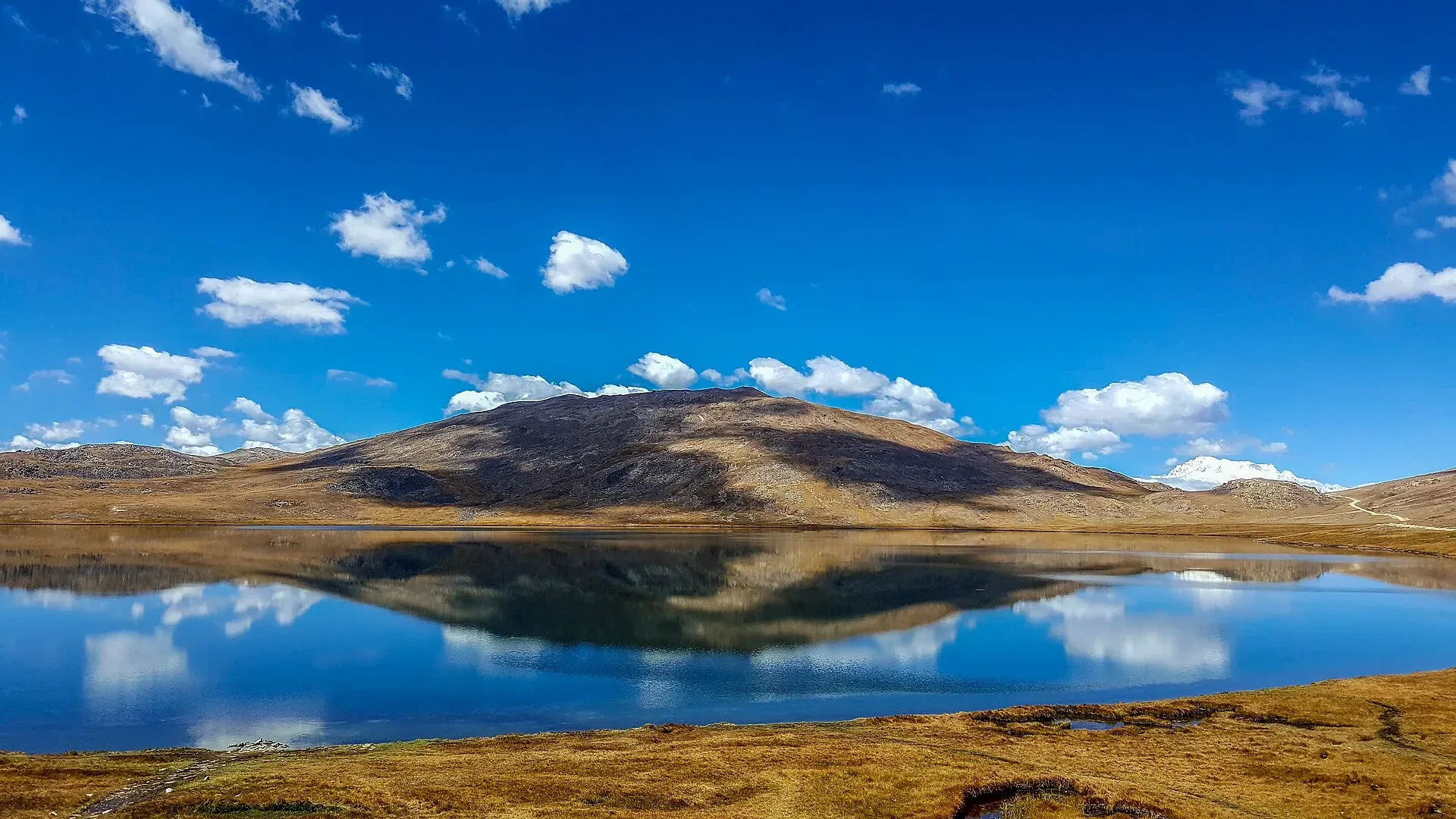
Day 4: Deosai Plains. Go with a driver who knows the track and a 4x4 with high clearance. The Ministry of Tourism's Skardu district sheet gives 41 km from Skardu to the top of Deosai, about 1 hour 30 minutes by car or jeep, and 51 km to Sheosar Lake; allow more time for stops and rough track. Deosai averages about 4,114 m, and the Gilgit-Baltistan Forest, Wildlife and Environment Department gives the park's area as 358,400 hectares (about 3,584 square kilometres). The park was declared in 1993 to protect the Himalayan brown bear. Wikipedia reports that the park's bear population was 78 in 2022, up from 19 in 1993. Sheosar Lake, on the western side, is the best-known stop, and on a clear day you can see Nanga Parbat from the shore. Return by the same road before dusk.
Day 5: spare day, or onward. Use it for weather, a short walk, or to head back to Gilgit.
Deosai: what to expect
- Altitude. Everything is above 4,000 m. Go slowly, drink water and do not sleep high if you feel unwell.
- Weather. Nights are cold even in July. Snow and storms can arrive in any month. Turn back if the sky darkens.
- Accommodation. In December 2025 the Gilgit-Baltistan government banned seasonal hotels and other commercial ventures inside the park, so plan to sleep in Skardu or the villages at either end, or camp only where park rules allow.
- Wildlife. Himalayan brown bears are rare to see and should never be approached. Marmots are common and easy to watch. Keep food sealed and away from tents.
- Rules. Take litter out, do not light fires outside marked sites and do not pick plants. Ask the park office before flying a drone.
- Fees. A fee may apply to the park. Current fees will be added soon; check with the park office or the provincial wildlife department.
- Road. The road is rough and steep in places and closed by snow in winter. River water rises in the afternoon in July and August, so do not cross if you are unsure.
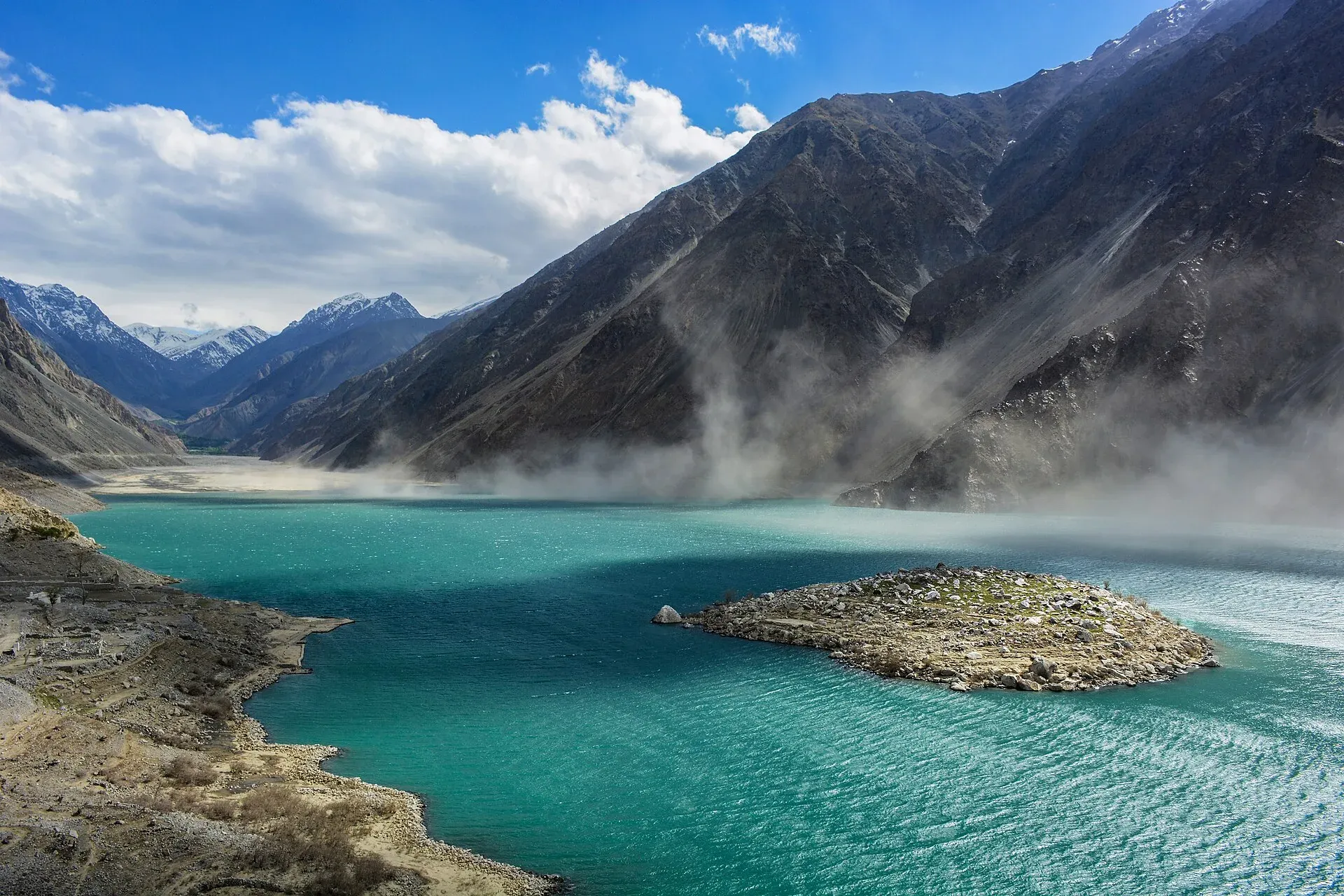
Photo: Qammer Wazir, with thanks · CC BY-SA 4.0 · via Wikimedia Commons · temporary stand-in photo
What to pack
- warm layers and a windproof jacket, even in July;
- sunscreen, sunglasses and a hat for high-altitude light;
- sturdy shoes for the plateau;
- cash, since ATMs can be out of order;
- water bottle and snacks;
- a charged phone with offline maps;
- motion-sickness tablets for the road.
Culture and manners
Baltistan is mainly Balti-speaking and Shia Muslim. Shigar Fort and Khaplu Palace are examples of Balti wooden building. Women travellers generally find Skardu relaxed, but modest dress is expected. Ask before photographing people and carry your passport or national ID.
Quick checklist
- Read the UK advice and decide how you will reach Skardu.
- Book a flexible flight or leave spare road days.
- Hire a local driver with a 4x4 for Deosai.
- Check that the Sadpara road is open that week.
- Take altitude seriously above 4,000 m.
- Respect park rules and take litter home.


