

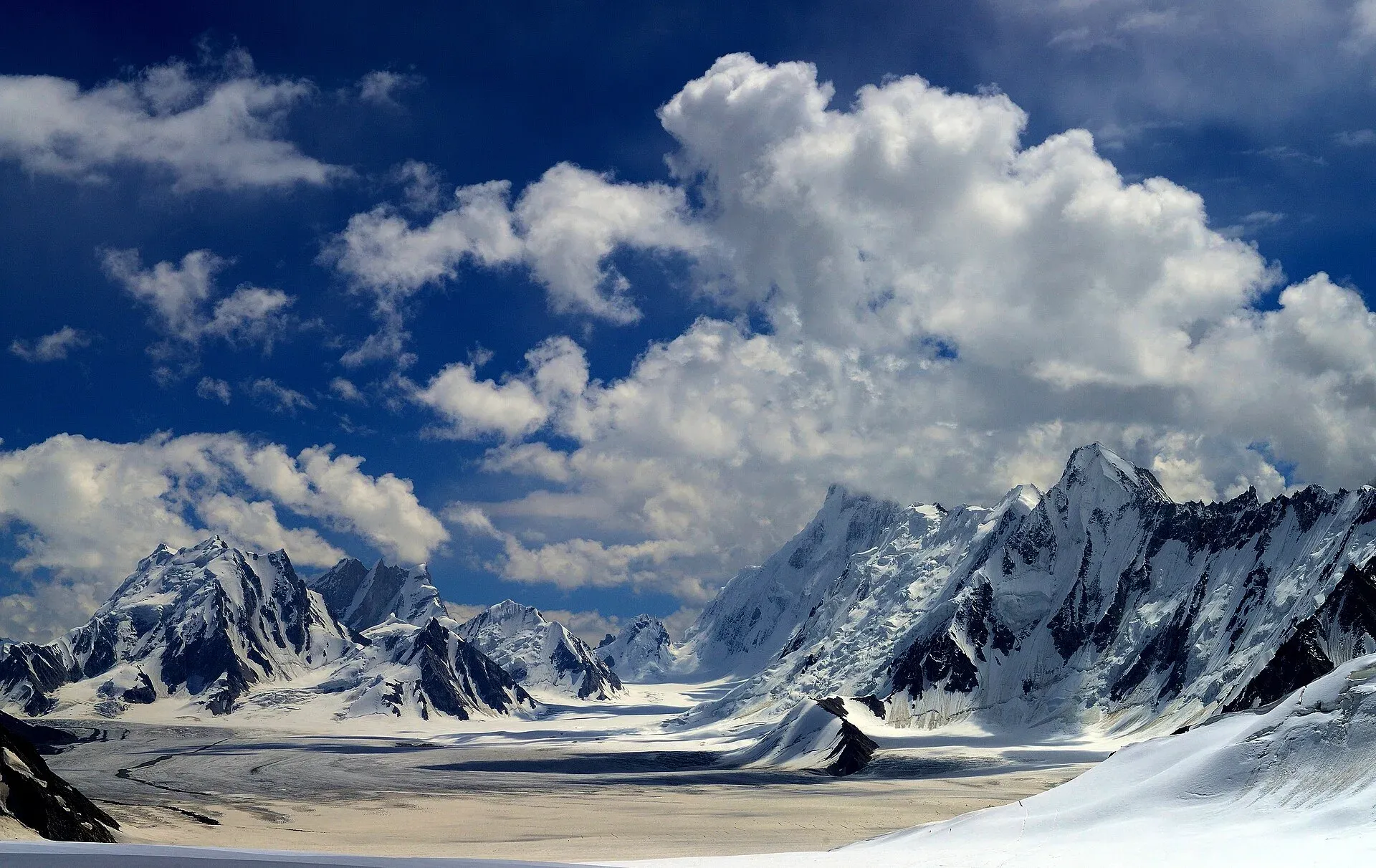
Photo: Vasiq Eqbal, with thanks · CC BY-SA 4.0 · via Wikimedia Commons · temporary stand-in photo
Ecology and Environment
Protected areas, retreating glaciers and glacial lake floods, conservation successes, threats to forests and wetlands, and simple Leave No Trace habits for travellers in Pakistan.
Key facts
- 37 national parks and 19 Ramsar wetlands
- More glacier ice than any country outside the polar regions
- 3,044 glacial lakes in the north; 33 at high risk of bursting
- Khyber Pakhtunkhwa reported one billion trees planted by 2017
- Simple Leave No Trace habits protect fragile mountains
Overview
Pakistan's nature is both rich and under pressure. Its mountains hold more glacier ice than any country outside the polar regions, its rivers feed one of the world's largest irrigation systems, and its parks protect snow leopards, bears and dolphins. At the same time, forests are scarce, wetlands are drying, glaciers are changing and floods are more frequent. Travellers can help by choosing responsible habits.
Protected areas
A reference list counts 37 national parks as of 2023, plus about 15 wildlife sanctuaries and many game reserves. The parks cover very different places:
- Khunjerab National Park (Gilgit-Baltistan, established 1975, about 2,269 sq km): high mountain park protecting snow leopards, Marco Polo sheep and ibex.
- Central Karakoram National Park (1993, about 10,557 sq km): the park that holds K2, Gasherbrum I and II, Broad Peak, and the Baltoro, Panmah, Biafo and Hispar glaciers. After about twenty years without a plan, a management plan was agreed in February 2015.
- Deosai National Park (1993): a plateau at about 4,114 m on average, set up to protect the Himalayan brown bear.
- Hingol National Park (Balochistan, 1988): about 6,100 sq km on the Makran coast, often described as the largest national park in Pakistan, although the Central Karakoram park is larger on the figures above.
- Margalla Hills National Park (Islamabad): hills just north of the capital with leopards and more than 430 bird species.
- Ayubia National Park (Khyber Pakhtunkhwa, 1984) and Machiara National Park (Azad Kashmir, 1996) protect Himalayan forests.
- Ziarat Juniper Forest (Balochistan): a biosphere reserve of about 111,852 hectares, designated in 2013.
Pakistan also has 19 Ramsar wetlands of international importance, including the Indus Delta and the Indus Dolphin Reserve. See the full list in National parks and wildlife sanctuaries of Pakistan. Park rules and entry arrangements differ from park to park. Ask the park office or provincial wildlife department what applies. An entry fee may be charged; current fees will be added soon.
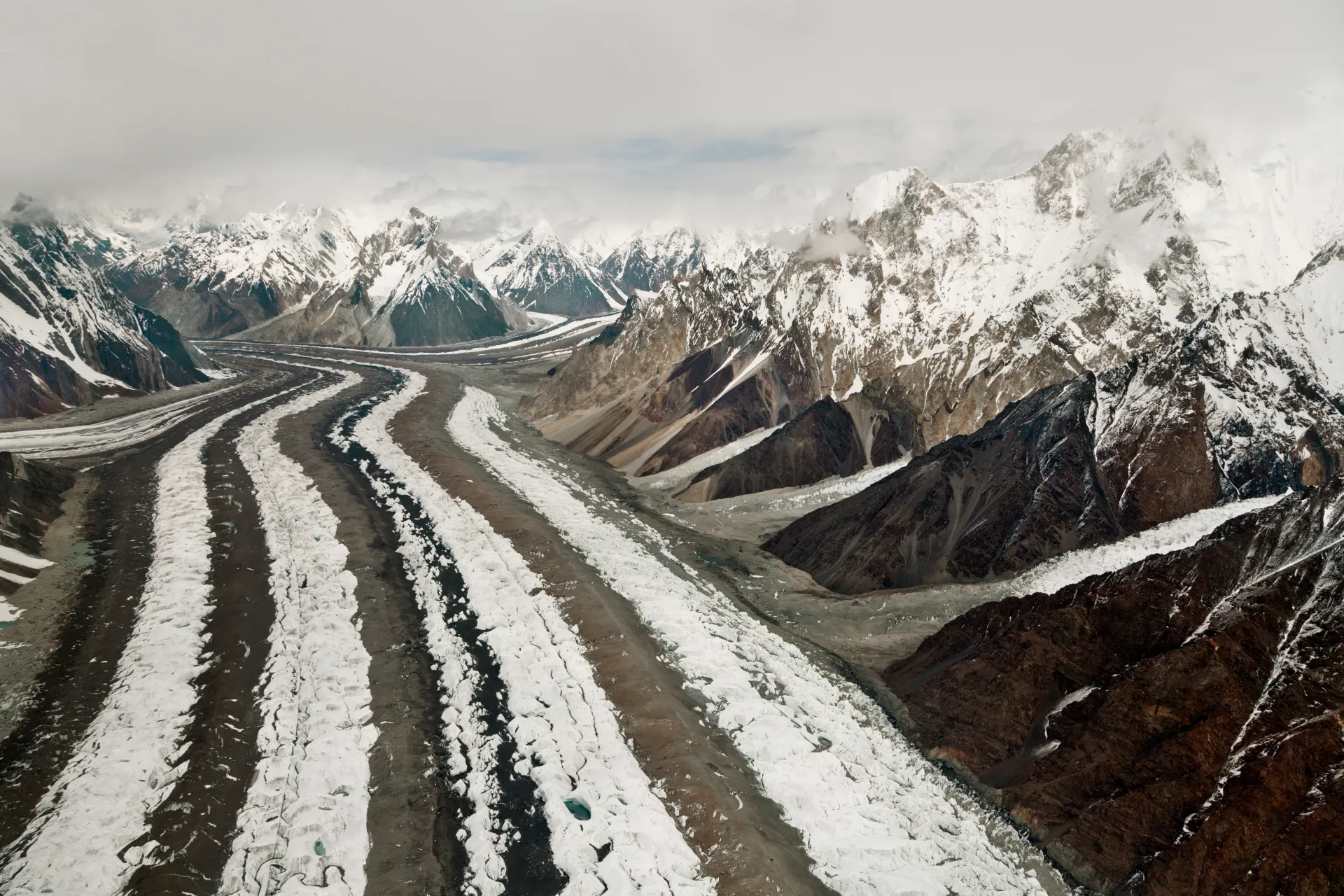
Photo: Thsulemani, with thanks · CC BY-SA 3.0 · via Wikimedia Commons · temporary stand-in photo
Glaciers and climate change
One count lists 7,253 known glaciers in Pakistan, and a newer study by the Ministry of Climate Change and EvK2CNR found more than 13,000. Almost all lie in Gilgit-Baltistan and Khyber Pakhtunkhwa. The picture is mixed. Some studies report stable or slightly growing glaciers in the central and western Karakoram, called the Karakoram anomaly, while the Hindu Kush region has warmed by about 0.2 °C per decade over the last 50 years and most glaciers in the Hindu Kush Himalaya have been retreating since the 1970s, apart from those in the Karakoram, eastern Pamir and western Kunlun.
Melting brings a hazard called a glacial lake outburst flood (GLOF), when a lake dammed by ice or rubble bursts. The United Nations Development Programme (UNDP) reports that 3,044 glacial lakes have formed in Gilgit-Baltistan and Khyber Pakhtunkhwa and 33 are at high risk of bursting, putting about 7.1 million people in danger. A UNDP-backed project that began in 2017 planned at least 250 small protective structures, 50 weather stations and 408 river sensors, and a June 2026 Global Voices report cites UNDP as saying 284 early-warning systems have been installed in high-risk valleys. If you trek, ask locals about flood warnings and never camp in a dry stream bed below a glacier.
In 2022, monsoon floods from mid-June to October affected 33 million people, and the heat wave before them triggered glacier floods in Gilgit-Baltistan. A study cited by Wikipedia says global heating made the flooding up to 50 per cent worse.
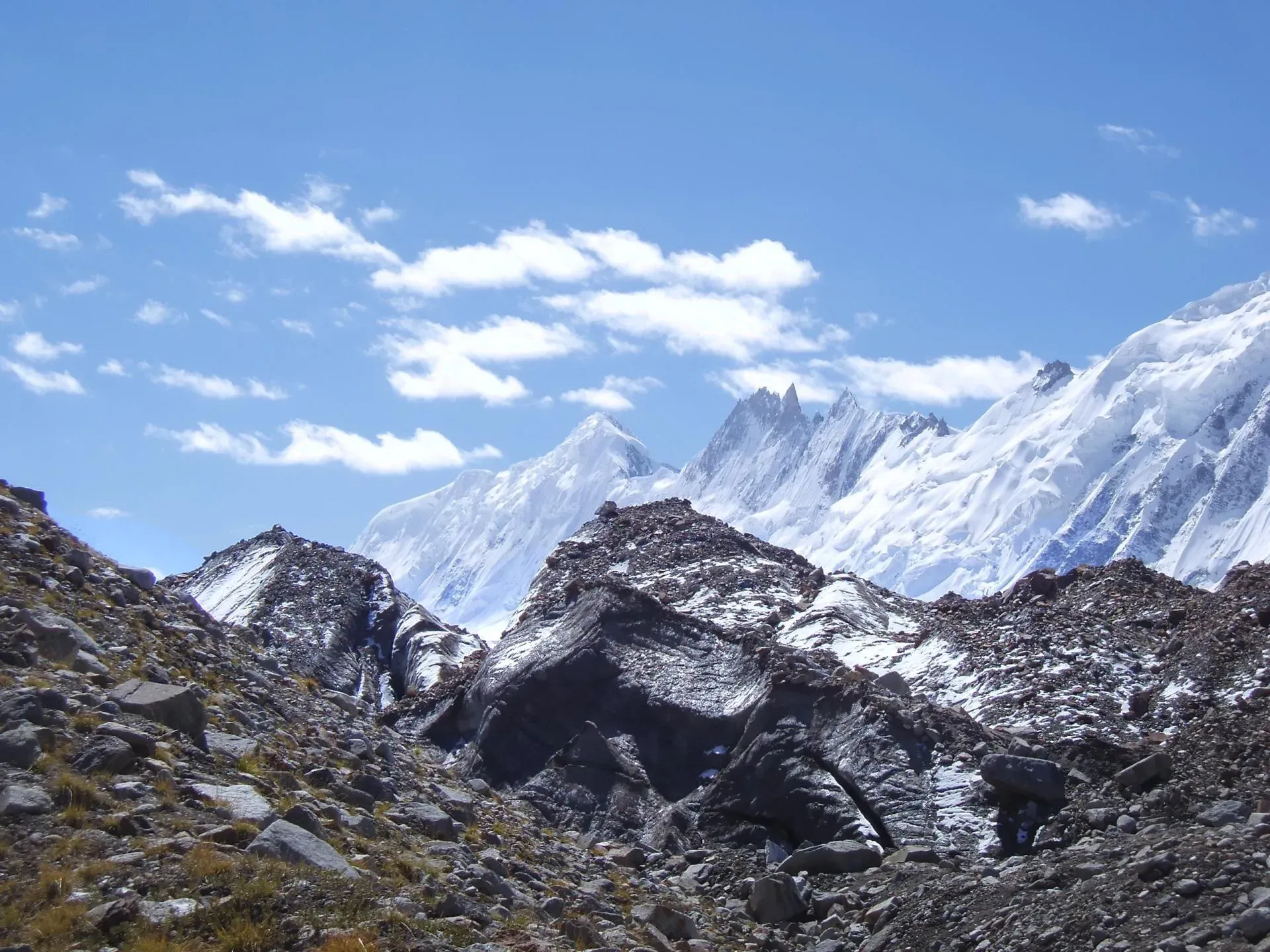
Photo: Black Zero, with thanks · CC BY 2.0 · via Wikimedia Commons · temporary stand-in photo
Conservation successes
- Billion Tree Tsunami. Khyber Pakhtunkhwa reported reaching its one-billion-tree target under the Bonn Challenge. A September 2018 Gulf News report quotes the IUCN calling it the first Bonn Challenge pledge to reach its restoration goal, and gives a provincial spending figure of US$123 million. That report is unclear on exactly when the target was met, so we do not give a date. Survival figures vary by source.
- Brown bears at Deosai. Counts rose from 19 in 1993 to 78 in 2022 in one source; another gives 66 for 2022.
- Markhor. The IUCN lists the species as Near Threatened (since 2015), and Chitral National Park holds the largest population.
- Community conservation. Parks work best when villages share the benefit, through guiding, homestays and community programmes.
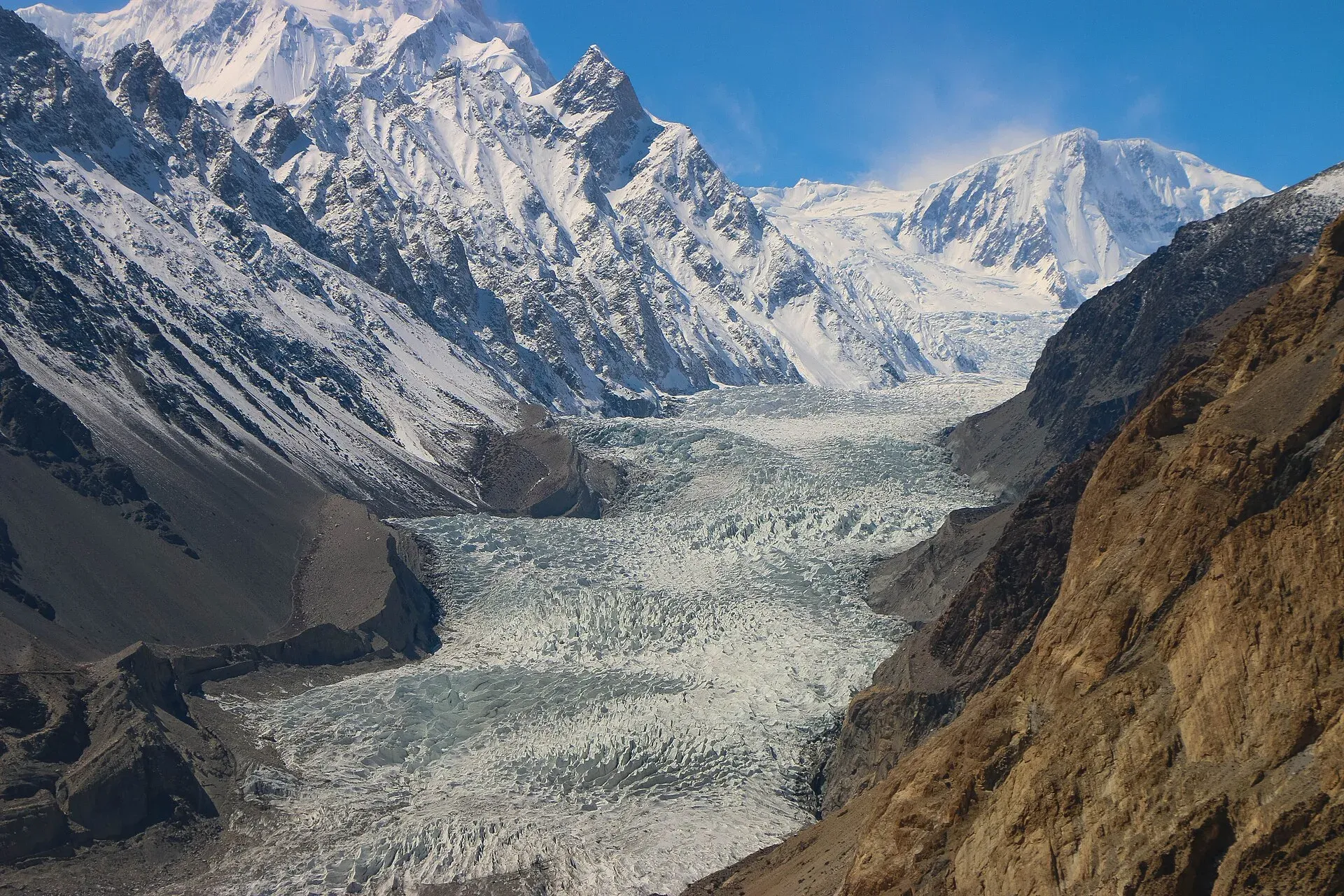
Photo: Akbar Khan Niazi, with thanks · CC BY-SA 3.0 · via Wikimedia Commons · temporary stand-in photo
Threats
- Forest loss. Forest covers only about 4.7 per cent of the land, and a 2026 report says about 11,000 hectares are lost every year.
- Wetlands. The Sindh Wildlife Department counted 14.68 per cent fewer migratory waterbirds in 2024-25 than the season before, linked to shrinking water bodies and climate change.
- Rivers and dolphins. Irrigation barrages have split the Indus river dolphin in Pakistan into five small sub-populations.
- Poaching and conflict. Shepherds sometimes kill bears to protect livestock, and illegal trade in bear fat and pelts is a threat.
- Waste. Tourism brings plastic and human waste to high valleys and trek routes.
Leave No Trace for travellers
- Plan ahead. Check weather, permits and park rules with the park office.
- Stay on paths and camp on durable ground. Meadow flowers and mountain soil recover slowly.
- Carry out all rubbish, including food scraps, tissue and plastic bottles. Carry a refillable bottle and filter or purification tablets.
- Dispose of human waste at least 60 m from streams and camps, in a small hole, or use toilet facilities where they exist.
- Leave what you find. Do not pick flowers or take stones, horns or artefacts.
- Cook with a stove, not wood.
- Respect wildlife and people. Keep distance, never feed animals, and ask before photographing villagers.
- Hire local guides, stay in local guesthouses, and buy local goods.
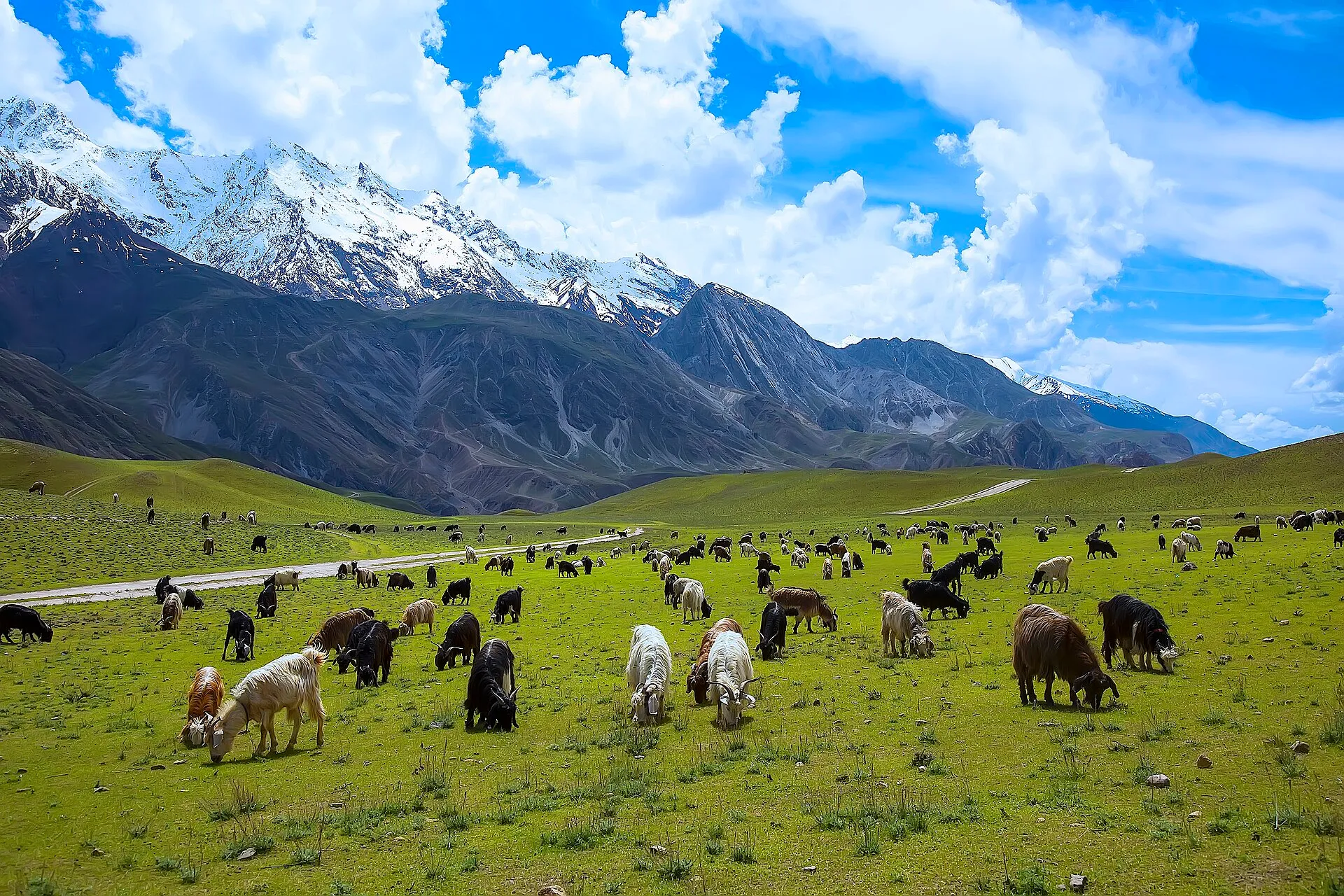
Photo: Tahsin A Shah, with thanks · CC BY-SA 4.0 · via Wikimedia Commons · temporary stand-in photo
What to see and do
- Visit a national park with a local guide.
- Join a village clean-up or support a community conservation project.
- Take part in tree planting only through organised, local schemes.
Sources and last checked
Last checked Confidence medium21 sources7 still to check
- Last checked
- Method
- Desk research from published sources
- Confidence
- medium
- Checked by
- trek.pk research team
Researched from published sources; not yet checked on the ground by our team. Spot something out of date? Report a mistake.
Sources
- List of national parks of Pakistan · Wikipedia · checked
- Khunjerab National Park · Wikipedia · checked
- Central Karakoram National Park · Wikipedia · checked
- Deosai National Park · Wikipedia · checked
- Hingol National Park · Wikipedia · checked
- Ziarat Juniper Forest · Wikipedia · checked
- Ramsar sites in Pakistan · Wikipedia · checked
- Glaciers of Pakistan · Wikipedia · checked
- Karakoram · Wikipedia · checked
- Hindu Kush · Wikipedia · checked
- Scaling-up of glacial lake outburst flood risk reduction in northern Pakistan · UNDP Adaptation · checked
- Glacial lake outburst floods in Gilgit-Baltistan (33 lakes prone to outburst) · Forest, Wildlife & Environment Department, Gilgit-Baltistan · checked
- The lakes that should not exist in Pakistan's mountain ranges · Global Voices · checked
- 2022 Pakistan floods · Wikipedia (citing NDMA figures) · checked
- Pakistan's Billion Tree Tsunami surpasses Bonn challenge commitment · Gulf News · checked
- Markhor · Wikipedia · checked
- Himalayan brown bear · Wikipedia · checked
- Indus river dolphin · Wikipedia · checked
- Pakistan loses 11,000 hectares of forest area every year · ProPakistani · checked
- Sindh Wildlife Department reports nearly 15% drop in migratory birds amid drying wetlands · Arab News · checked
- Margalla Hills · Wikipedia · checked
Still to be checked on the ground (7)
- Number of national parks: Wikipedia's lead says 37 (2023) but its table lists 38
- Glacier counts: 7,253 versus more than 13,000 depending on study
- GLOF figures: UNDP and the GB Forest department give 33 high-risk lakes; older reports say 36. The 250 structures were planned, not confirmed built
- Brown bear count for 2022: 78 (Wikipedia, Deosai page) versus 66 (Wikipedia, brown bear page)
- Park rules and fees not confirmed from official park pages
- Leave No Trace distances are standard practice, not from a Pakistan authority
- Billion Tree Tsunami completion date: the Gulf News report is internally inconsistent


