

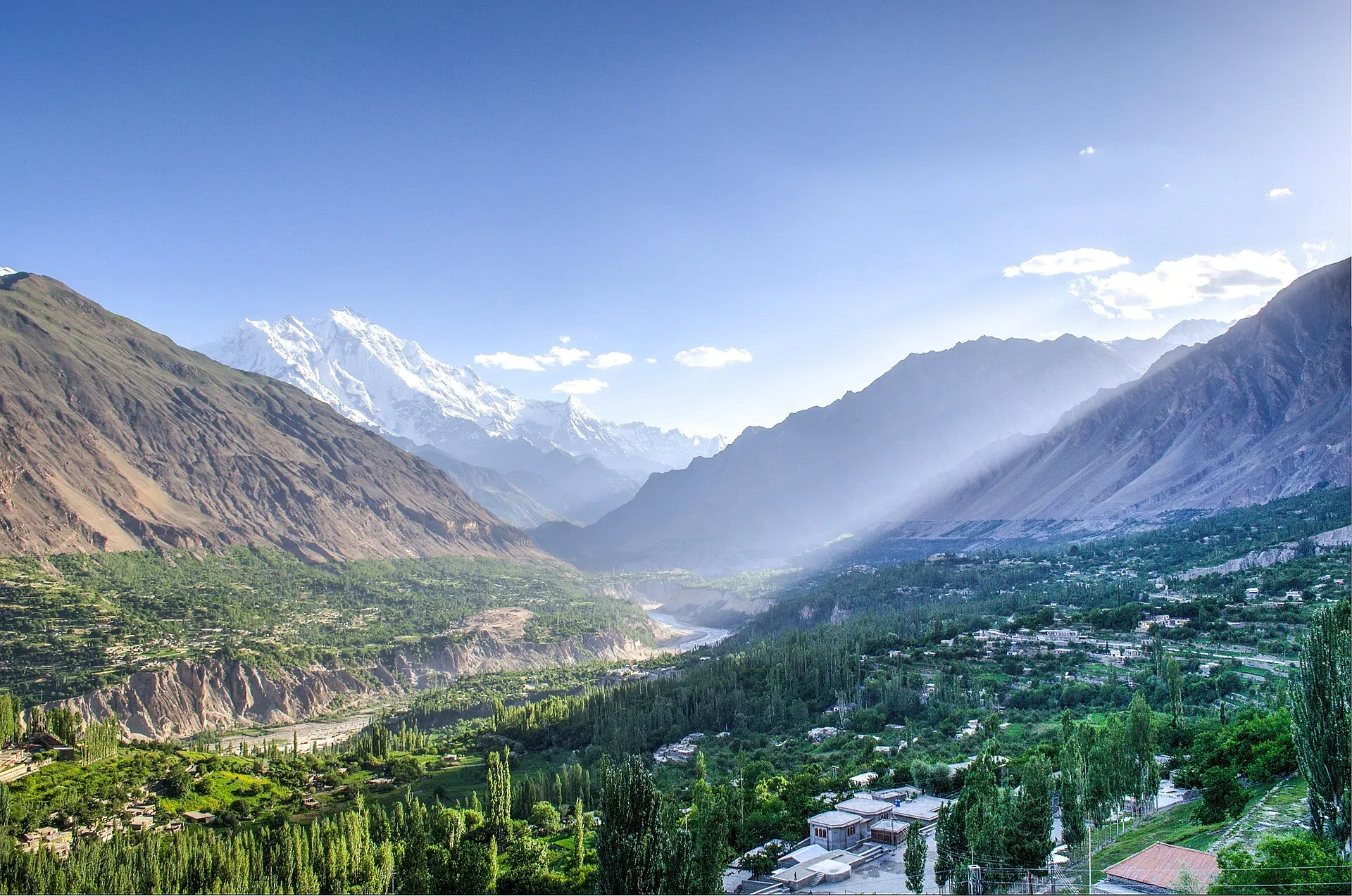
How to read this guide
"Northern Pakistan" covers several different climates: the Karakoram valleys of Gilgit-Baltistan, the Hindu Kush around Chitral, and the green hills of Swat, Kaghan and the Galyat. Altitude matters more than latitude. A village at 2,400 m can be sunny in April while a pass at 4,000 m is still under snow in June. The months below are typical patterns, not promises, and weather has become harder to predict. Always check road and weather reports a few days ahead.
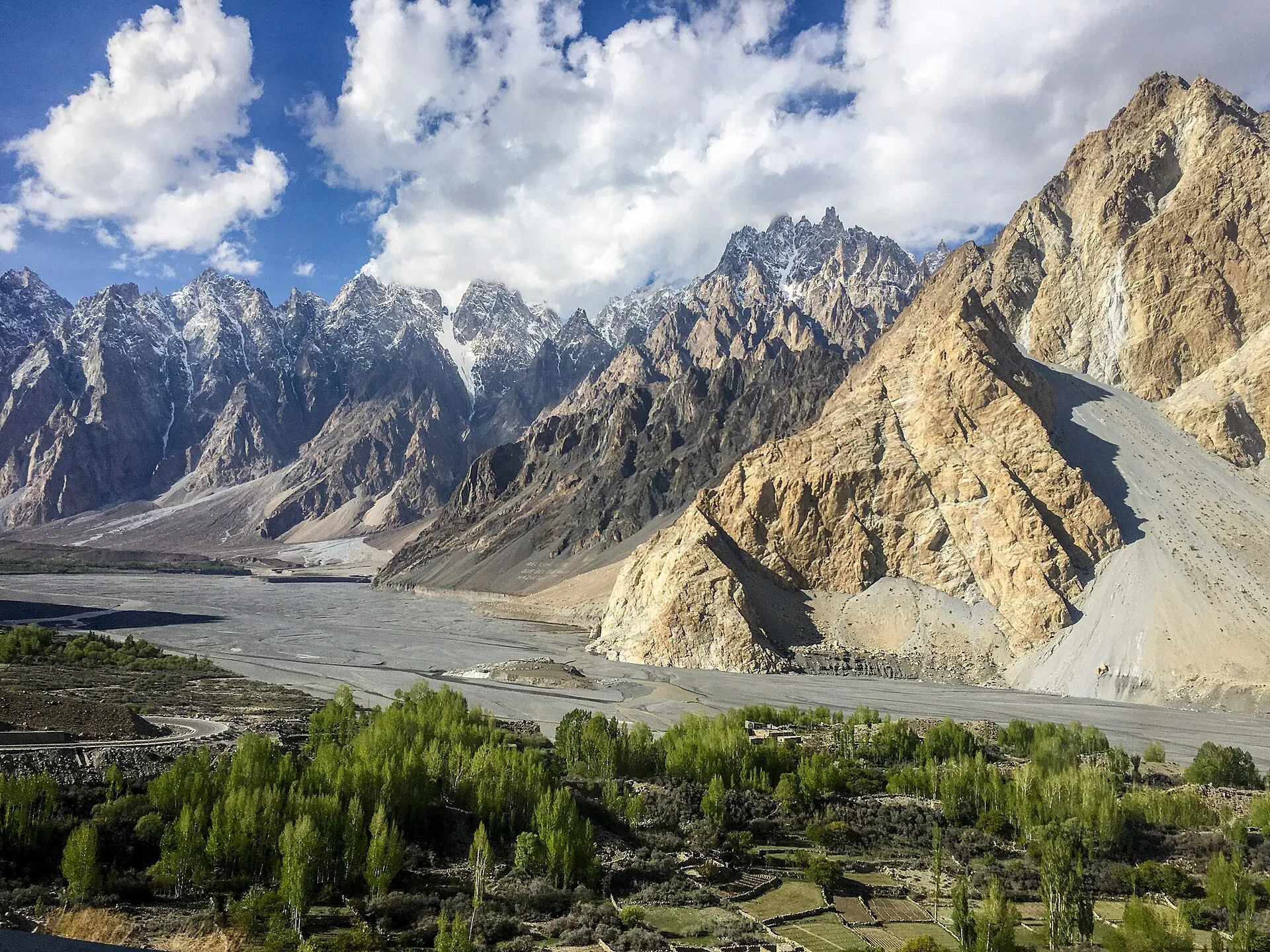
Photo: Mehrunisa Reimoo, with thanks · CC BY-SA 4.0 · via Wikimedia Commons · temporary stand-in photo
One note on safety: the northern valleys are not all treated the same way by foreign governments. Ask the district administration or local police about current conditions before you go. For foreign visitors: the UK FCDO page for Pakistan (updated 27 October 2026, checked 17 November 2026) advises against all travel on the Karakoram Highway between Mansehra and Chilas, and against all travel to Balochistan, Peshawar, Swat, Upper and Lower Dir and other listed parts of Khyber Pakhtunkhwa, the N45 highway to the edge of Chitral City (including the Kalash valley) and within 10 miles of the Line of Control. It advises against all but essential travel to Malakand, Mardan, Nowshera, Shangla, Swabi, Azad Jammu and Kashmir, Sindh north of and including Nawabshah, and Dera Ghazi Khan. It does not advise against Gilgit-Baltistan generally. It also notes that emergency measures and Governor's Rule were introduced in Khyber Pakhtunkhwa on 11 October. Read the live page before you book.
Quick answer
- Best all-round months: May to early July, and September to mid-October.
- Best for blossom: mid-March to mid-April in Hunza (we have no source for Skardu).
- Best for high plateaus and passes: July and August, with September for clearer air.
- Best for autumn colour: October.
- Hardest months for a visit: December to February, when many high roads close, and July to August when the monsoon can close roads in the lower hills.
Winter: December to February
Cold, quiet and often snowbound. Many guesthouses in Hunza and Passu close, and the high passes are shut. Naltar valley is deep in snow and is visited mainly for skiing. Flights to Gilgit and Skardu still run when the cloud allows, but cancellations are common. The Kalash valleys hold the Chaumos winter festival for about two weeks around the solstice, usually in the second half of December. It is a religious event, parts of it are closed to outsiders, and access in winter can be affected by snow. If you are in Pakistan in these months, Lahore, Taxila and the south are more comfortable than the mountains.
March and April: blossom and thaw
This is the shortest and most photogenic season. The Express Tribune reported on 1 April 2026 that Hunza's blossom generally runs from mid-March to mid-April, with each bloom lasting two to three weeks, and that higher villages near Attabad Lake flower later than the lower ones. There is no known source for Skardu's blossom timing. Days are around 10 to 20 degrees Celsius, nights are cold, and some services are only starting to reopen. Weather can shift the peak by a week or more, so book flexible rooms and plan to stay a few nights. There is no official "festival" programme to book.
May: roads and passes open
May is when the north starts to feel open. Lower valleys such as Hunza, Skardu and Swat are pleasant, and the Karakoram Highway is usually clear of snow apart from the very top. The road to the Khunjerab Pass and Khunjerab Top is practical for sightseeing from about May to October. Chilimjusht, the Kalash spring festival, is held in mid-May in Bumburet, Rumbur and Birir (reports for 2026 gave 12 to 16 May). Fairy Meadows opens in late May for walkers, though snow can linger. ProPakistani reported on 25 May 2026 that the Babusar road had reopened after about seven months of snow closure, and that it shuts every year in November and December, so do not rely on a fixed date.
June and July: the main season
Most operators run their high-season trips from June. Passes open as snow melts, and the Deosai Plains become accessible. Deosai is a summer place, usually reached from about June and closed by the first heavy snow around the end of October, with wildflowers at their best in July and August. The road over Babusar is usually dependable from late June to September, and the Shandur crossing between Ghizer and Chitral is a June to September road. Fairy Meadows, Naran and Kumrat are busy in July and August and book out at Eid.
The catch is the monsoon. It usually arrives in the plains in late June or July. In the mountains it brings less rain than in the south, but it brings landslides, flash floods and river-side camp risks. Dawn reported that heavy rain closed the Karakoram Highway between Gunar Farm and Lal Padi in the Chilas area on 17 June 2026. Keep a spare day in every plan.
August: high summer, high risk
August is warm and green, and it is the peak for trekking in the Karakoram. It is also the heaviest month for floods and slides in the hills. For treks, check weather the day before each stage, avoid camping beside streams and do not push through a washed-out section. The Kalash harvest festival, Uchaw, usually falls in August. In 2026 it ended on 23 August.
September and October: clear air and colour
Many repeat visitors prefer these months. Skies are clearer, nights are cold, and the poplars and orchards of Hunza, Skardu and Chitral turn gold in October. Autumn is also the best time for treks that cross glaciers or high passes in settled weather. The higher passes start to close late in October, and snow can arrive early. Book ahead for the first half of October, which is a popular time for photographers.
November: the last window
Cold and quiet, with the last of the colour in the lower valleys. Roads start to close, services shut down and the days are short. It is a good month for Lahore and the plains and a poor one for anything above 3,000 m.
Other things that move your dates
- Ramadan. Fasting hours shape the day, and some restaurants close or serve behind screens in daylight. Hotels serve guests. Dates move about eleven days earlier each year, so check the current announcement.
- Eid holidays. Roads, buses and northern hotels are very full, prices rise and many businesses close for several days.
- Landslide warnings. The NDMA and the Pakistan Meteorological Department publish alerts. Use them.
A simple planning checklist
- Pick the one or two things you most want to see, then choose the month for those.
- Add two buffer days for flights or road closures.
- Check that the passes, plateaus or festivals you want are open that week.
- Book rooms early for July, August, Eid and the first half of October.
- Pack for the altitude, not for the date. Nights above 3,000 m are cold in every season.
- Re-read your government's travel advice before you fly.


