

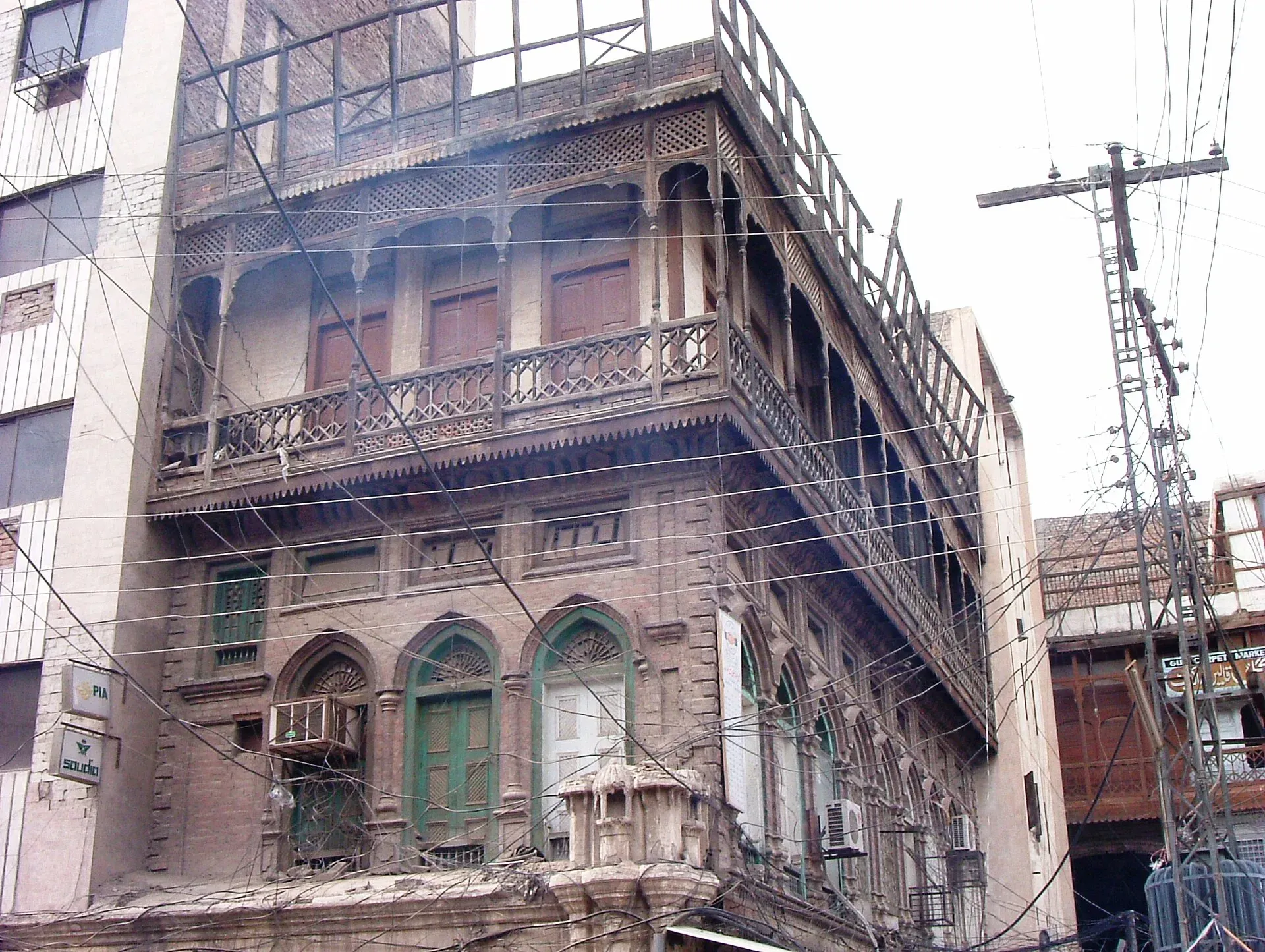
Photo: franek2, with thanks · CC BY-SA 3.0 · via Wikimedia Commons · temporary stand-in photo

Qissa Khwani Bazaar
Peshawar's old 'street of storytellers': a lively bazaar of tea houses, qehwa shops and traders in the walled city, with a long history as a caravan meeting place. Check FCDO advice before any visit.
Overview
Qissa Khwani, usually translated as the "street of storytellers", is one of the best-known bazaars in Peshawar. It lies in the Andar Shehr (inner city) part of the old walled city and is known for its tea and qehwa (green tea) houses. Traders and travellers once gathered here, and it earned a reputation as a social and commercial meeting point for Central Asia. Many Peshawar families trace their roots to its lanes, including relatives of several famous Hindi-film actors.
Plan your visit
- Nearest town
- Peshawar
- Getting there
From central Peshawar the bazaar is about 6.2 km by road (OSRM, roughly 11 minutes without traffic). Take a taxi or ride-hailing car to the edge of the old city and walk in. More
Best months
Nov – Mar
- Qissa Khwani Bazaar
- Related places nearby: Peshawar, Peshawar Walled City, Mahabat Khan Mosque, Cunningham Clock Tower, Bala Hisar Fort (Peshawar), Peshawar Museum, Sethi House and Sethi Mohallah, Peshawar, Gor Khatri and City Museum Gor Khatri, Peshawar
Name and reputation
Qissa Khwani is Pashto and Urdu for "storytellers' market". British writers called it the "Piccadilly of Central Asia"; the phrase is attributed to gazetteer writers, the traveller Lowell Thomas and Peshawar's commissioner Herbert Edwardes. It is best known for its chai and qehwa houses.
Why visit
It is the easiest way to feel the old city's rhythm: tea shops, dried-fruit and spice stalls, tailors and money changers, with older wooden buildings above street level. Some buildings have been altered or rebuilt, so go for the atmosphere rather than for a single monument. It is also the starting area for the walk along the old city's heritage trail (see Peshawar Walled City).
History
On 23 April 1930, British Indian troops fired on anti-colonial protesters in the bazaar. Estimates of the dead range from the 179 later acknowledged by the colonial authorities to figures near 400. The event helped bring the Khudai Khidmatgar movement to national attention. In more recent years the bazaar has also been hit by bomb attacks (in 2010, when 25 people were killed, and in 2013, when over 40 died and several historic wooden buildings burned) and a suicide attack on a mosque during Friday prayers on 4 March 2022, which killed 63 people, which is part of why current safety advice matters here.
Food and drink
Qehwa is Peshawar's green tea and is usually served sweet. Falooda, a cold sweet dish, is commonly found in the markets here, and kulfa (a cold dessert) is traditionally sold from April to September when the weather is hot. Samosas and pakoras are widely available. Chapli kebab, a flat beef kebab, is one of Peshawar's best-known dishes. Nearby Namak Mandi is known for mutton cooked as roast, barbecue and karahi.
What to see and do
- Sit in a tea house for qehwa and watch the street.
- Walk the lane in the morning, when it is cooler and less crowded.
- Browse dried fruit, nuts, spices, caps and cloth.
- Continue towards Mohallah Sethian and Gor Khatri on foot.
People linked to the bazaar
The actor Dilip Kumar was born in the area on 11 December 1922, and the Kapoor family, including the actors Raj Kapoor and Trilok Kapoor, has roots here. Other film families are also linked to the bazaar.
How to spend a day
A short walk, if the security position allows a visit at all, could start with qehwa at the bazaar in the morning, then continue on foot to Gor Khatri and the Sethi Mohallah mansions (late 19th-century houses with carved wooden details), the Mahabat Khan Mosque (1630, known for its white marble facade) and the Cunningham Clock Tower (1900). Taxis and auto-rickshaws are the usual way to reach the old city; walking is best inside it.
When to visit
November to March is comfortable. Summer is very hot. Shops are busy from late morning until evening and slow down around Friday prayers.
Good to know
- Ask the district administration or local police about current conditions before you go. Travel advice. For foreign visitors: the UK FCDO (updated 27 October 2026, checked 16 November 2026) advises against all travel to Peshawar, including the city. Read the current page before making any plans.
- Etiquette. This is a conservative area. Dress modestly, ask before photographing people (especially women), and respect prayer times.
- Nearby. Peshawar Walled City, Mahabat Khan Mosque, Cunningham Clock Tower, Bala Hisar Fort and Peshawar Museum.
Highlights
- Tea and qehwa houses in the old city
- Traditional meeting place of traders from Central Asia
- Starting point for the old-city heritage walk
- Site of the 23 April 1930 shooting
Getting there
From central Peshawar the bazaar is about 6.2 km by road (OSRM, roughly 11 minutes without traffic). Take a taxi or ride-hailing car to the edge of the old city and walk in. Peshawar is about 182 km from Islamabad by road (OSRM). The map point is approximate, a point in the bazaar, not a surveyed centre.
Tips
- Go in the morning and keep a local guide or host with you.
- Dress modestly and ask before taking photographs of people.
- Check FCDO advice for Peshawar before planning any visit.
- Keep valuables out of sight in crowded lanes.
Photos we still need: qehwa tea house in the bazaar; Sethi Mohallah mansions or carved wooden facades. Send us yours
Sources and last checked
Last checked Confidence medium6 sources3 still to check
- Last checked
- Method
- Desk research from published sources
- Confidence
- medium
- Checked by
- trek.pk research team
Researched from published sources; not yet checked on the ground by our team. Spot something out of date? Report a mistake.
Sources
- Qissa Khwani Bazaar · Wikipedia · checked
- Pakistan travel advice: warnings and insurance (updated 27 October 2026) · UK FCDO · checked
- OSRM driving route service: distances and times measured 16 November 2026 (times are optimistic, without stops) · OSRM · checked
- Peshawar (old trek.pk page, facts only) · trek.pk · checked
- Peshawar (Wikivoyage): bazaars, food, sights · Wikivoyage · checked
- Qissa Khwani Bazaar: name, history, people (text read again) · Wikipedia · checked
Still to be checked on the ground (3)
- Opening pattern and crowds; shop hours not found in any source
- Current security situation and access (only FCDO)
- Whether kulfa and falooda are still sold in the bazaar itself (Wikivoyage, undated)
Nearby and related

Peshawar
Khyber Pakhtunkhwa's capital and one of South Asia's oldest living cities: the Gandhara museum, Qissa Khwani Bazaar, mosques and a strong food culture.

Peshawar Walled City
The old core of Peshawar: Qissa Khwani Bazaar, the carved wooden Sethi havelis and the Gor Khatri complex. Parts are being restored, and the Sethi House and Gor Khatri are on UNESCO's tentative list.

Mahabat Khan Mosque
A 17th-century Mughal mosque in Peshawar's old city with a white marble facade, two tall minarets and a large courtyard. It is an active mosque, so visit outside prayer times.

Cunningham Clock Tower
A tall brick clock tower in Peshawar's old city, completed in 1900 to mark Queen Victoria's Diamond Jubilee. Locals call it Ghanta Ghar; it is a handy landmark at the edge of the old bazaars.

Bala Hisar Fort (Peshawar)
A high old citadel on the edge of Peshawar's walled city, rebuilt by the Sikhs and British and now a Frontier Corps headquarters. Public access is limited and should be checked first.
Peshawar Museum
Founded in 1907 in the Victoria Hall, the Peshawar Museum holds one of the world's great collections of Gandharan Buddhist sculpture, plus coins, Islamic art and Kalash material.

Sethi House and Sethi Mohallah, Peshawar
A lane of merchant havelis in Peshawar's old city, built from about 1800 to 1910 by the Sethi family in a Central Asian style, with carved wood, painted ceilings and courtyards. On Pakistan's UNESCO tentative list since 2026.

Gor Khatri and City Museum Gor Khatri, Peshawar
An archaeological complex in old Peshawar: a Mughal caravanserai built over much older layers, later a Sikh-era residence and a police station, now a park with the City Museum Gor Khatri. On Pakistan's UNESCO tentative list since 2026.