

One valley, several peoples
Hunza is the best-known valley in Gilgit-Baltistan, with the Hunza River running through it and the Karakoram Highway following the river for most of its length. It is usually split into three parts: Lower Hunza (Shinaki), Central Hunza around Karimabad, and Upper Hunza, or Gojal, towards the Chinese border. Several communities live along it. This article introduces them as a guide: who they are, what they celebrate and how to be a good guest. It does not speak for them, and anything about faith or customs is best learnt from your hosts.
The Burusho
The Burusho speak Burushaski, a language isolate with no proven relatives. They live mainly in Hunza, Nagar and the Yasin valley. People of Hunza are sometimes called Hunzakuts, and people of Nagar Nagarkuts, though those terms also include non-Burushaski speakers living in the valleys. Most Burusho in Hunza and Yasin are Ismaili Muslims, and most in Nagar are Shia, according to our sources. Villages run along the Hunza River: Karimabad, Altit, Ganish and Aliabad in Hunza, and Nagar on the opposite bank, known for terraced fields and irrigation channels. Hunza's literacy rate is reported to be above 95 per cent, which Wikipedia links to community schools.
The Wakhi
The Wakhi call themselves Khik and their language Khik zik. They speak an Eastern Iranian language and are predominantly Nizari Ismaili Muslims. An academic estimate puts the Wakhi in Pakistan at about 22,500 in 2018. In Pakistan they live in Gojal (upper Hunza), in the Ishkoman valley and a few Yasin villages, and in Broghil in Chitral. Villages include Gulmit, Passu, Chapursan, Shimshal and Sost. Wakhi villages sit at the upper limit of cultivation. Livestock, including yaks, are central, and families often keep summer and winter homes. Wakhi men are known as guides and high-altitude porters, and Shimshal is nicknamed the Valley of Mountaineers. Wakhi music uses the rubab and the ghizhek, a bowed instrument.
Festivals through the year
- Ginani, a harvest festival held on the summer solstice, 21 June, in Hunza and Nagar, according to Wikipedia. It describes music played at Altit Fort for about ten days before it, wheat cooked and mixed into a lassi-like drink offered to all, and dancing.
- Navroz, the spring new year, is celebrated across Gilgit-Baltistan and Chitral.
- Woolyo, a yak race and festival held at Shimshal Pass in the last week of July or the first week of August, according to Wikipedia. Check the date locally.
- Blossom time in spring, when the whole valley turns out for the orchards. See our blossom article.
Food and craft
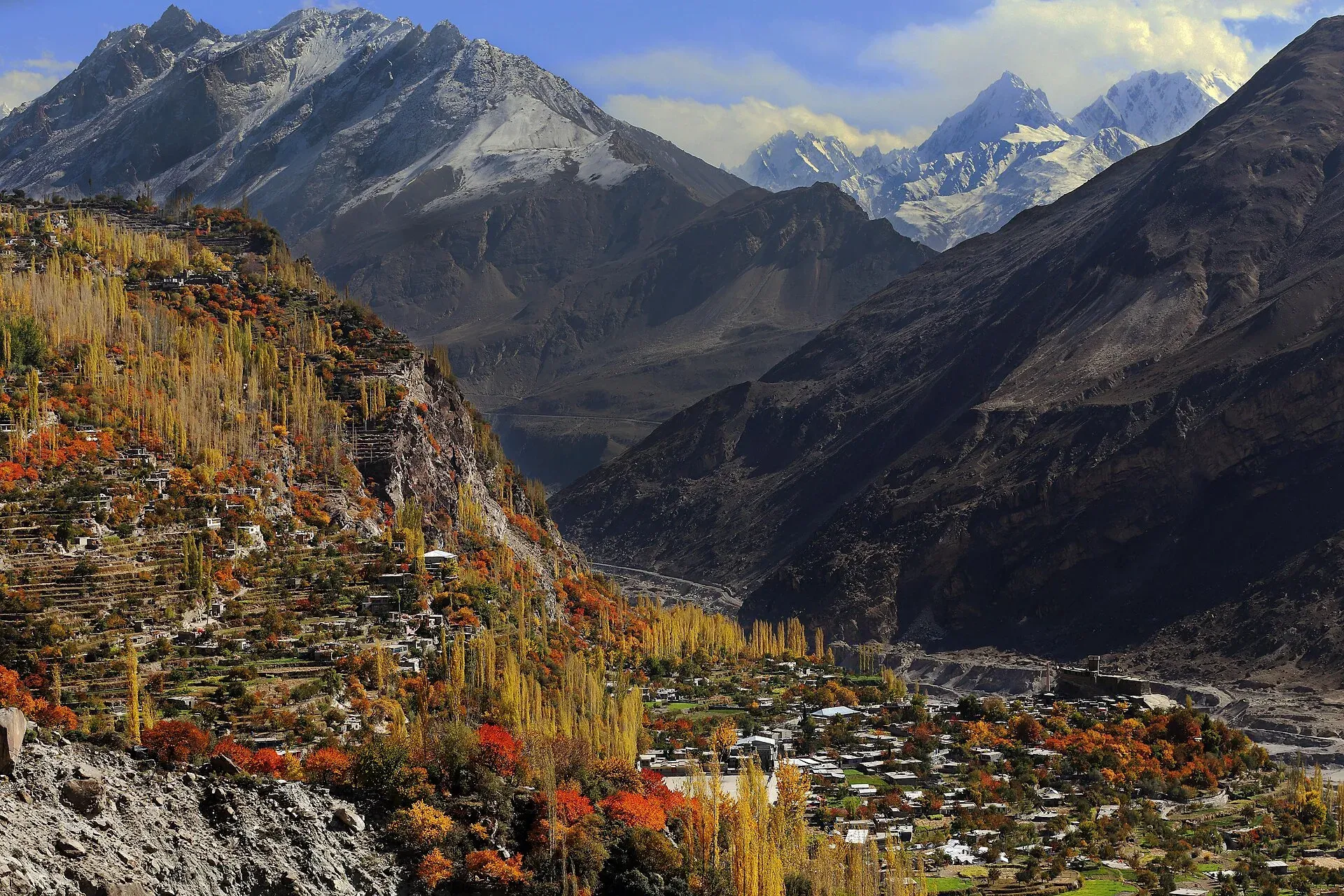
Photo: Usmanmiski, with thanks · CC BY-SA 3.0 · via Wikimedia Commons · temporary stand-in photo
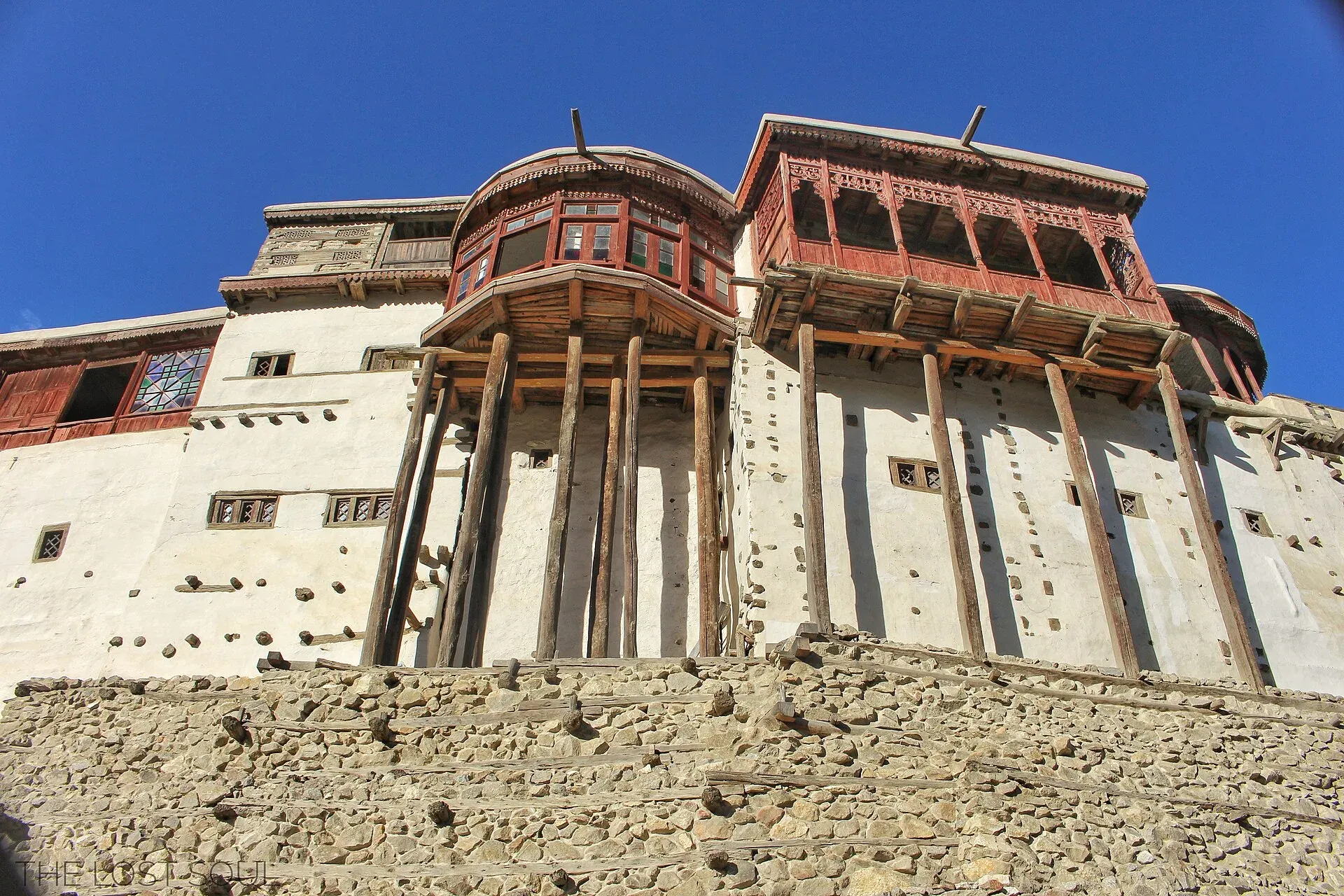
Hunza food is mild, simple and tied to the seasons. Wheat, barley, apricots and dairy have long been the base of village life, and cooks use apricot oil, butter and dried fruit rather than heavy chilli. Chapshuro is a flat pie filled with minced meat and onion, and dawdo is a thick noodle soup of hand-cut noodles. Neither dish has a documented history; local people simply describe them as traditional Hunza food. The best versions are often cooked at home. In craft, wood carving is a long-standing tradition seen in old houses and in Baltit Fort, and today it is a cottage industry making smaller items. Carpets and woollen shawls are made too. A women's carpentry workshop near Altit Fort has been covered in media. Ask who made an item, and buy from workshops and women's groups where you can.
Forts and landmarks
Baltit Fort above Karimabad was the seat of the Mirs of Hunza. It was restored with support from the Aga Khan Trust for Culture, restoration was completed in 1996 and it now runs as a museum, and it has been on UNESCO's Tentative List since 2004. Altit Fort, below Karimabad, is older, and Wikipedia gives its restoration as finished in 2007 in one place and 2010 in another. The Sacred Rock of Hunza carries ancient inscriptions. An entry fee applies at the forts. Current fees will be added soon.
A note on the longevity myth
Western writers in the 20th century described Hunza as a place of extraordinary long life. The trekking book calls this fiction, and Wikipedia notes there is no reliable documentation of the ages claimed. Please do not ask people their age as a curiosity.
How to be a good guest
- Greet people warmly and accept tea if it is offered.
- Dress modestly, especially in villages. Women should wear a long top and scarf.
- Ask before photographing people, women and children, and homes.
- Do not enter a jamatkhana, the Ismaili prayer place, unless invited.
- Hire local guides and porters, agree rates and loads in advance, and treat them fairly.
- Choose family guesthouses and homestays, and eat where local people eat. Our article on homestays and responsible travel has ideas.
- Do not walk into orchards or fields for a photograph.
- Shimshal has limited electricity, so charge devices where you can and be patient.
Getting there
Hunza lies on the Karakoram Highway, about 100 km by road from Gilgit to Karimabad, and roughly 575 km from Islamabad by the OSRM routing service, which is optimistic for mountain roads. Minibuses run between Gilgit and Aliabad, the valley's business centre. Flights between Islamabad and Gilgit are often cancelled in poor weather, so keep spare days. The main season is May to October.
Before you go: travel advice
For foreign visitors: the UK FCDO page for Pakistan (updated 27 October 2026, checked 17 November 2026) does not advise against Gilgit-Baltistan generally. It does advise against all travel on the Karakoram Highway between Mansehra and Chilas, which affects the road route from Islamabad, so check how you will reach Gilgit before you book. Read the live page.


