

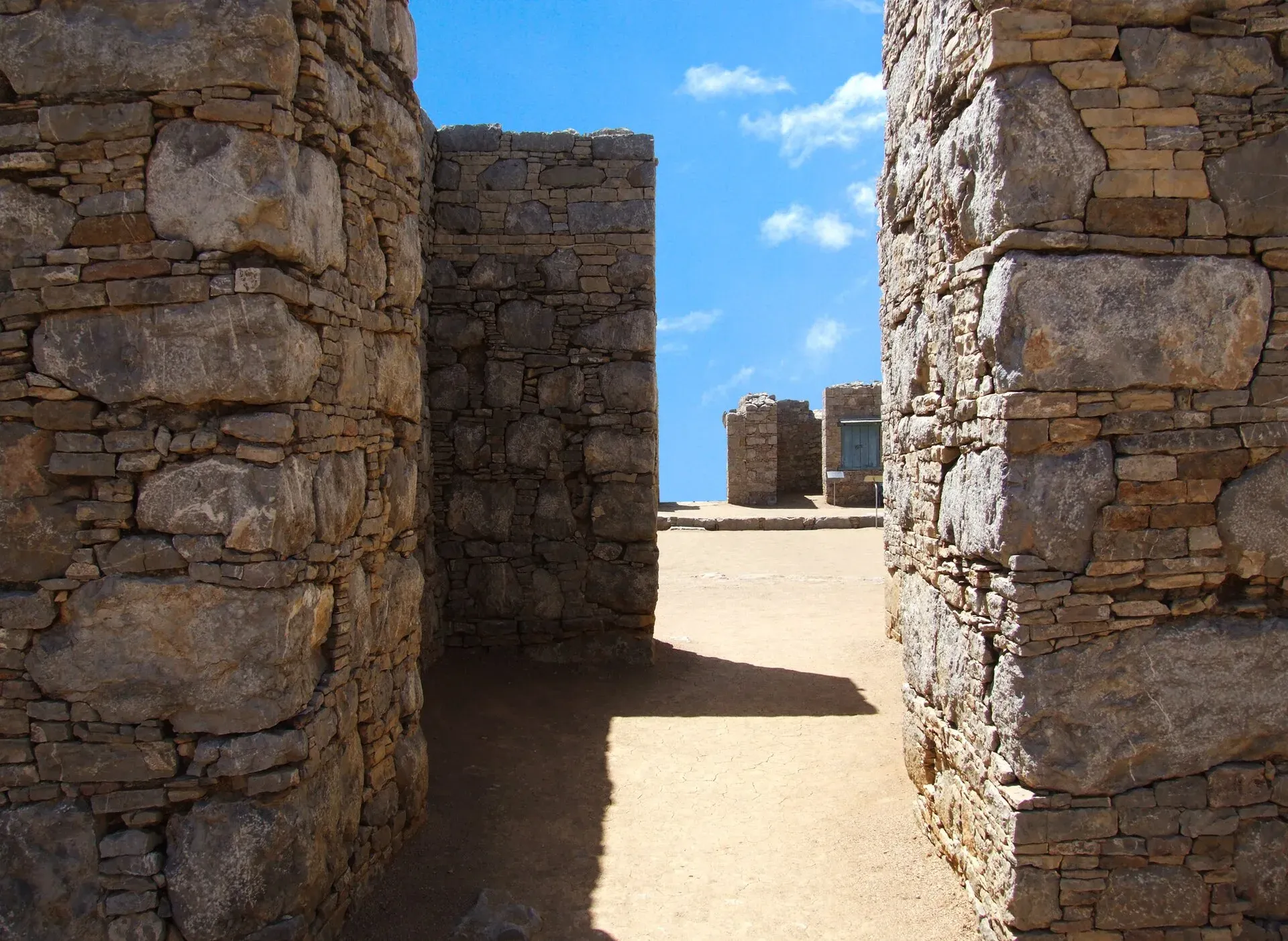
Where the story begins
Gandhara was the name of a kingdom and later a region around the Peshawar valley, Swat and Taxila. It sat where roads from Central Asia, Persia and the Indian plains met, and a long line of rulers passed through it. The Achaemenids set up a Gandhara satrapy in 518 BCE. Alexander the Great took Taxila in 326 BCE, when its king, Taxiles, surrendered without a fight. Gandhara joined the Maurya Empire in 321 BCE, and Buddhist texts say that Ashoka served as governor at Taxila before he became emperor.
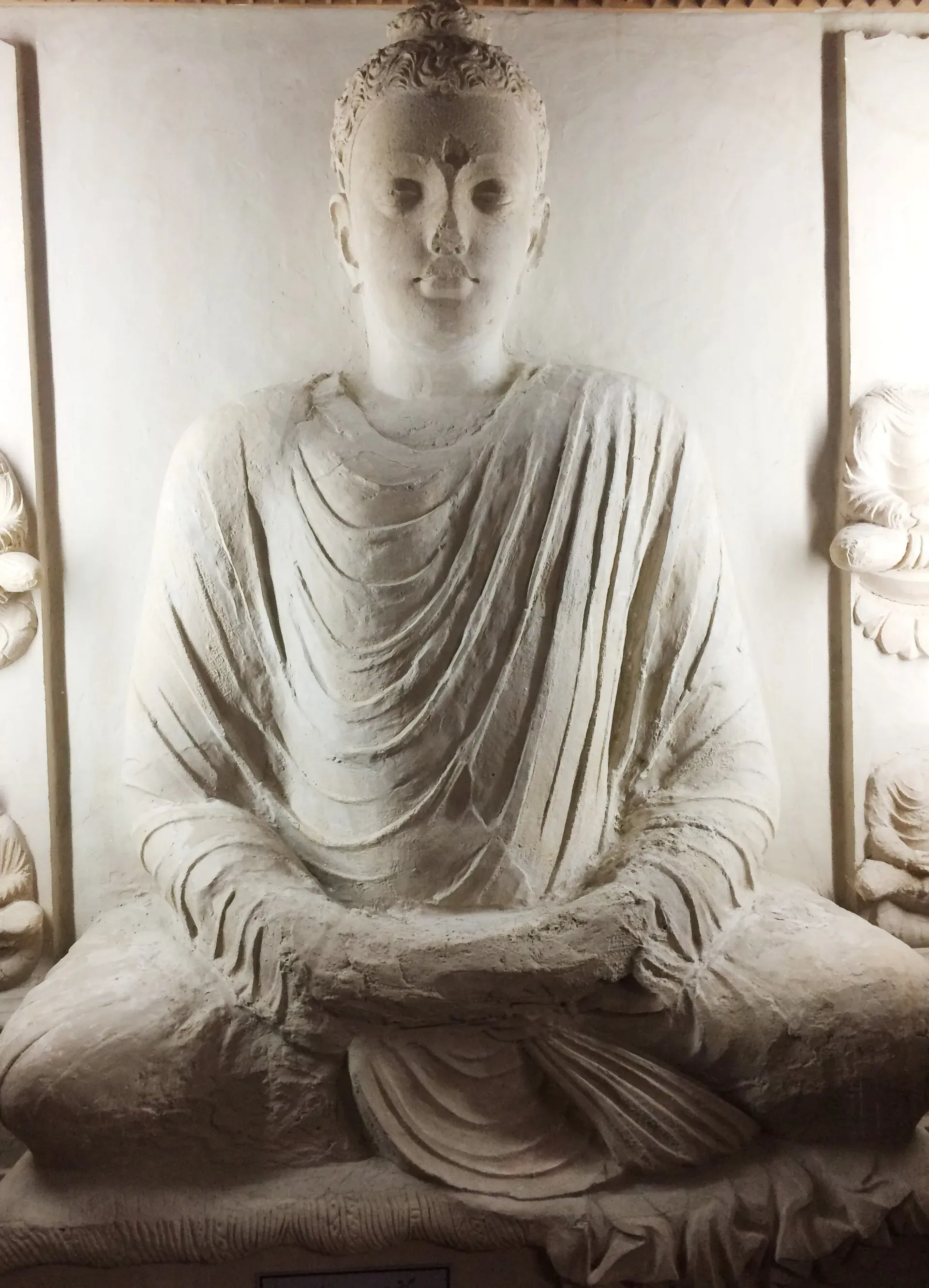
Photo: CR Guru PK, with thanks · CC BY-SA 4.0 · via Wikimedia Commons · temporary stand-in photo
Buddhism grew strong here under the Indo-Greeks and above all under the Kushans. Kanishka's reign, beginning around 127 CE, is described as the high point of Gandharan culture. Monasteries and stupas filled the hills around Taxila, in Swat and in Buner. Then the Alchon Huns swept through in the 460s CE and destroyed Buddhist monasteries and stupas at Taxila. When the Chinese monk Xuanzang came in 630 CE he found Taxila half ruined and Buddhism in decline.
What you can visit now
Taxila Museum. Start here. It stands near the Bhir Mound and is the site museum for the ancient cities and monasteries of the valley. Its official website lists galleries for Gandhara art, household objects, tools and weapons, jewellery and stucco sculpture, with about 7,000 objects on display (Wikipedia gives a smaller figure, about 4,000). A 4th-century meditating Buddha is the piece most often photographed. Building began in 1918 and the museum was completed in 1928. The official site's header gives Saturday to Thursday, 9 am to 4 pm, while its footer says the museum is open every day except the first Monday of each month and Islamic holidays, with winter hours of 9 am to 4 pm and summer hours of 8:30 am to 5 pm. Confirm before you go. Tickets are charged, and our Taxila Museum page lists the figures from the official site.
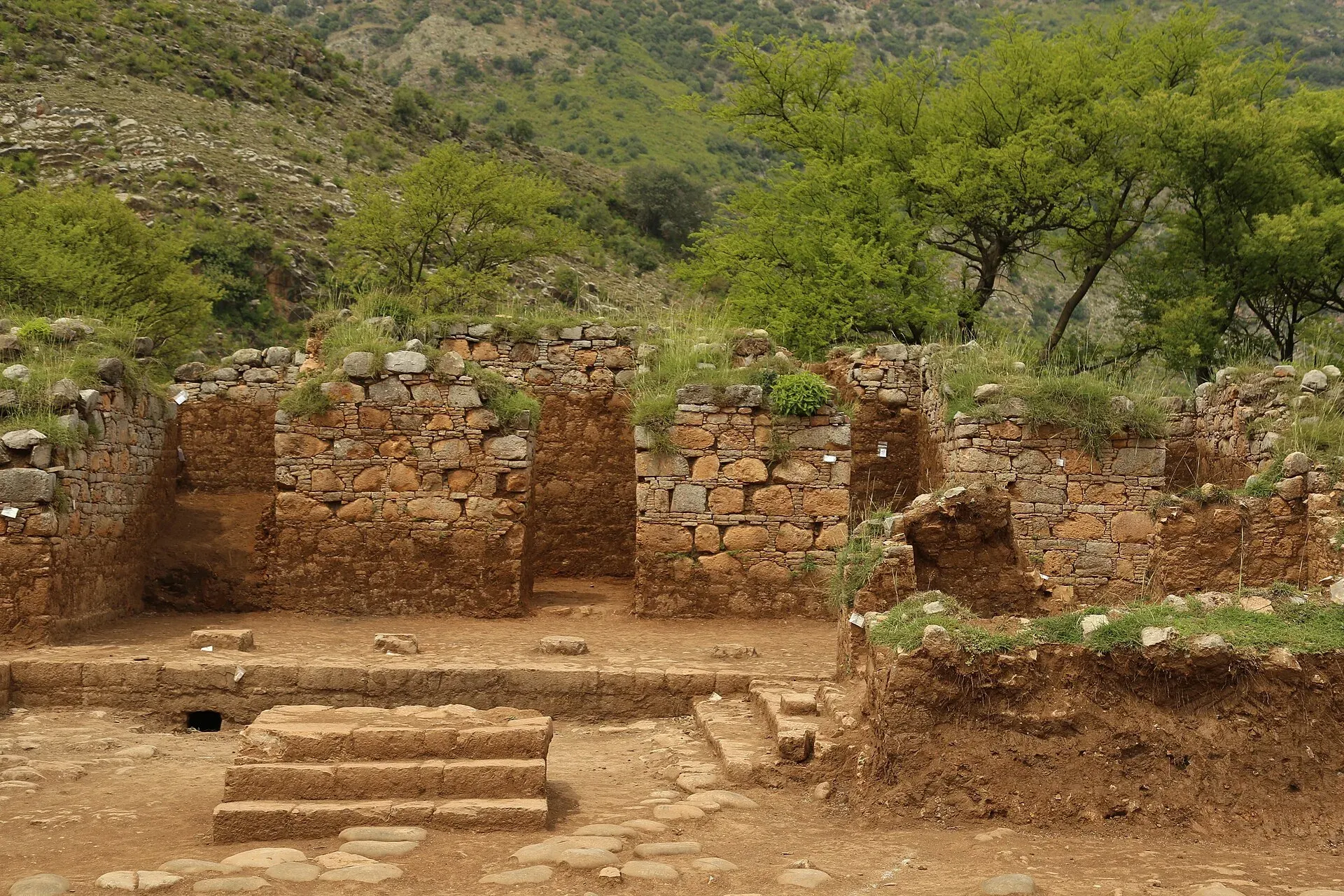
Photo: Ibrahimzauq, with thanks · CC BY-SA 4.0 · via Wikimedia Commons · temporary stand-in photo
Sirkap and Dharmarajika. Sirkap is a planned city of the 2nd century BCE. Dharmarajika is the largest stupa in the Taxila area. Tradition links it to Ashoka, though the Department of Archaeology and Museums is careful to say this is a claim. A silver casket inscribed in Kharosthi records relics placed there in 78 CE.
Jaulian. A hilltop monastery of the 2nd century CE, with many small stupas and chapels, stucco carvings and two courtyards of monks' cells. Wear sturdy shoes; there are steps and little shade.
Bhamala. Beside the Haro River near Khanpur Dam in Haripur, Bhamala has a rare cross-shaped stupa with stairs on all four sides, and about nineteen small votive stupas. Wikipedia's list of World Heritage Sites in Pakistan shows it added to UNESCO's tentative list in 2026 (check UNESCO's tentative list for the current status). A tentative listing is a first step only and not World Heritage status.
Mankiala. A large stupa near Rawalpindi, linked by tradition to Kanishka.
UNESCO listed Taxila and Takht-i-Bahi in 1980. Taxila is an easy day trip: Taxila Museum is about 33 km from Islamabad, and Bhamala is about 52 km.
The sites that are currently advised against
The famous hilltop monastery of Takht-i-Bahi near Mardan, Ranigat in Buner, the stupa and museum at Saidu Sharif in Swat and the Gandharan collection of the Peshawar Museum are the heart of the story. UNESCO dates Takht-i-Bahi's foundation to the early 1st century CE, and monks appear to have used it until about the 7th century. These places lie in areas covered by UK advice (see below), so we describe them for history and for the day they can be visited again, not as a plan.
Far outposts: Gilgit-Baltistan
At the far end of the Buddhist world, the Kargah Buddha near Gilgit is carved into a cliff, and a Buddha is carved on a boulder at Manthal near Skardu. Both are usually reached by flying to Gilgit or Skardu.
A suggested day from Islamabad
- Leave early; the sites have little shade and the museum is quietest on weekday mornings.
- Visit Taxila Museum first for context.
- Drive to Dharmarajika and Sirkap, then climb Jaulian.
- Have lunch in Taxila, then, if you have time, continue to Bhamala or Mankiala on another day.
Hire a car with a driver for the day; the ruins are spread over several kilometres, and buses on the Grand Trunk Road stop at Taxila only.
Etiquette at Buddhist sites
These are archaeological sites, and many Buddhist visitors treat them as holy.
- Do not climb on stupas or sit on carvings.
- Do not touch stucco or remove loose stones, however small.
- Walk on marked paths and keep your voice low.
- Dress modestly: covered shoulders and knees are a sensible rule at every site in Pakistan.
- Ask site staff before flying a drone or using a tripod, as the Department of Archaeology controls both.
There is no known special registration scheme for Buddhist visitors. Check the visa rules for your nationality with the nearest Pakistani mission.
When to go
October to April is the comfortable season on the plains, and the ruins are quiet in the winter weeks. Summer afternoons are hot and exposed. The Gilgit-Baltistan sites are best from April to October.
Packing checklist
- Hat, sun cream and a scarf for sun and modesty
- Water and snacks; there is little shade or food at the ruins
- Comfortable closed shoes for uneven stone and steps
- A small torch for dim chapels
- Offline maps; signage can be limited
Before you go: travel advice
Ask the district administration or local police about current conditions before you go. For foreign visitors: the UK FCDO page for Pakistan (updated 27 October 2026, checked 17 November 2026) advises against all travel to Peshawar, Swat, Buner, Kohat, Khyber, Charsadda, Upper and Lower Dir and other listed Khyber Pakhtunkhwa districts, and against all but essential travel to Malakand, Mardan, Nowshera, Shangla and Swabi. Takht-i-Bahi, Ranigat, Saidu Sharif and the Peshawar Museum sit in those areas. The Taxila sites are in Punjab and are not listed. Bhamala is in Haripur district, which we have not found named in the advice, but check the live page and local news, because the FCDO page says emergency measures and Governor's Rule were introduced in Khyber Pakhtunkhwa on 11 October.


