

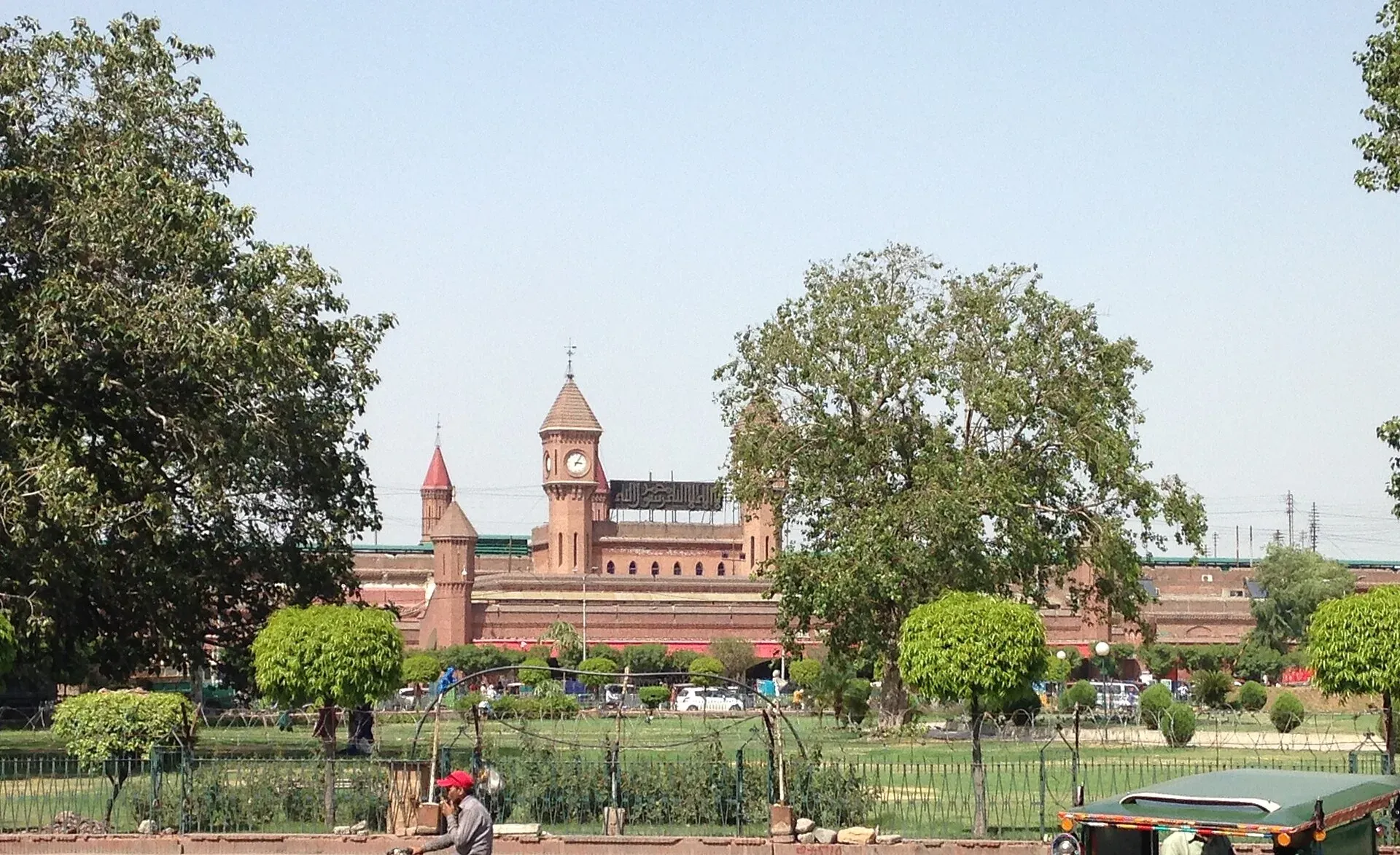
Photo: KamranRashied, with thanks · CC BY-SA 4.0 · via Wikimedia Commons · temporary stand-in photo

ML-1 Karachi-Peshawar Main Line (via Lahore)
ML-1 is Pakistan's busiest railway: about 1,687 km from Karachi through Hyderabad, Multan, Lahore and Rawalpindi to Peshawar. Named trains, stations, upgrade plans, safety and booking.
The journey
Last verified: 16 November 2026.
Overview
ML-1 is Pakistan's busiest railway. It runs from Kiamari in Karachi to Peshawar Cantonment, about 1,687 km on Wikipedia's line page (its headline figure gives 1,872 km, but Dawn, 1 July 2026, quotes the railways minister as saying the Peshawar to Karachi route is 1,680 km, so about 1,680 to 1,690 km is the better figure). It is broad gauge, has 173 stations and carries roughly three-quarters of the country's rail traffic. It was built in sections between 1861 and 1900. Karachi to Peshawar takes about 30 to 32 hours.
The line is double track from Keamari to Shahdara Bagh near Lahore, and from Chaklala to Golra Sharif near Rawalpindi. The rest is mostly single track.
Main stations
The stops list gives distances from Kiamari. The main ones are Karachi Cantt, Hyderabad, Nawabshah, Rohri (for Sukkur), Bahawalpur, Multan Cantt, Lahore, Gujranwala, Rawalpindi, Attock City and Peshawar Cantt. Faisalabad is not on ML-1. It is on the separate Khanewal to Wazirabad branch line, about 325 km long.
What the line passes, in order
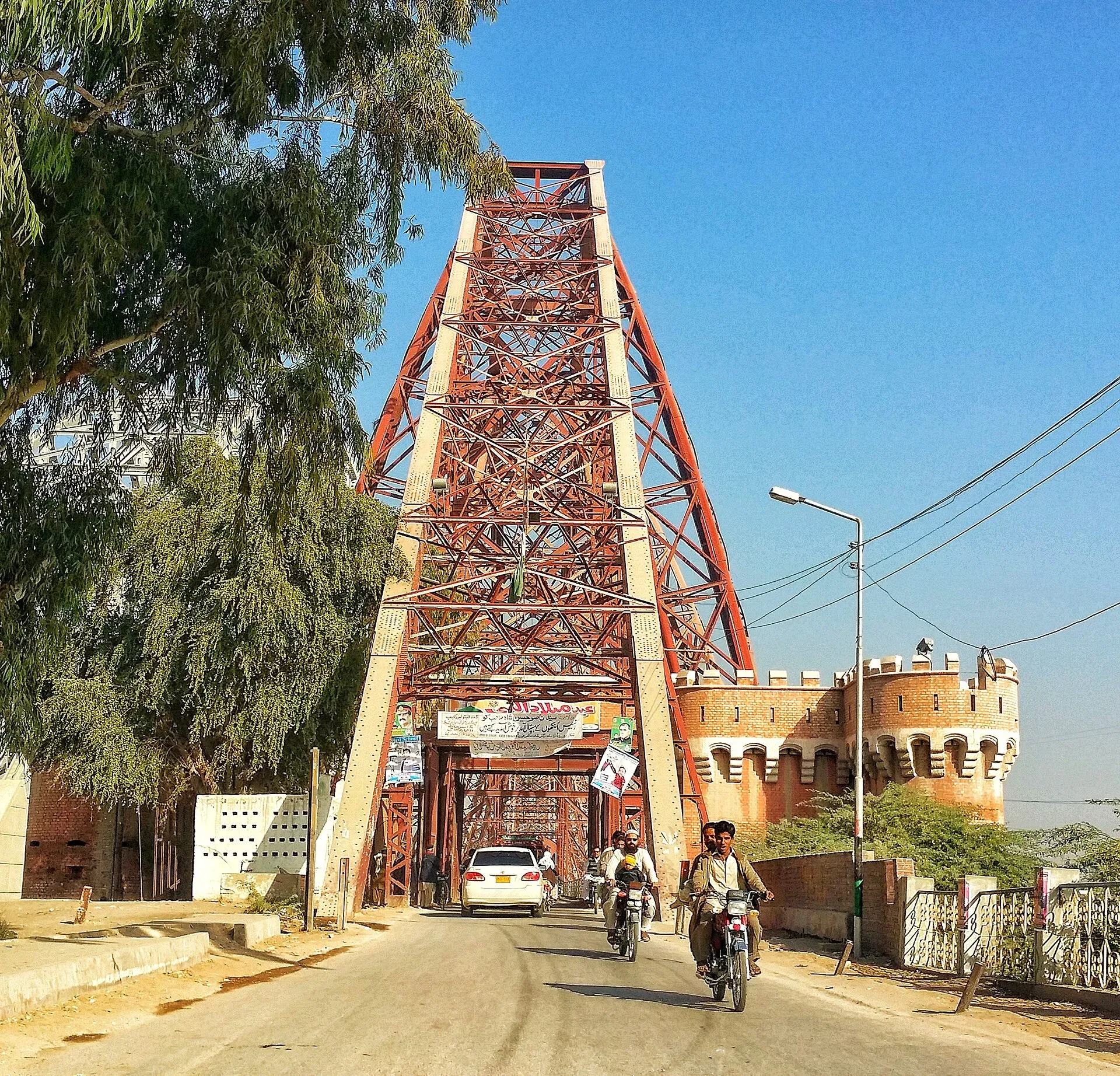
Photo: Fassifarooq, with thanks · CC BY-SA 4.0 · via Wikimedia Commons · temporary stand-in photo

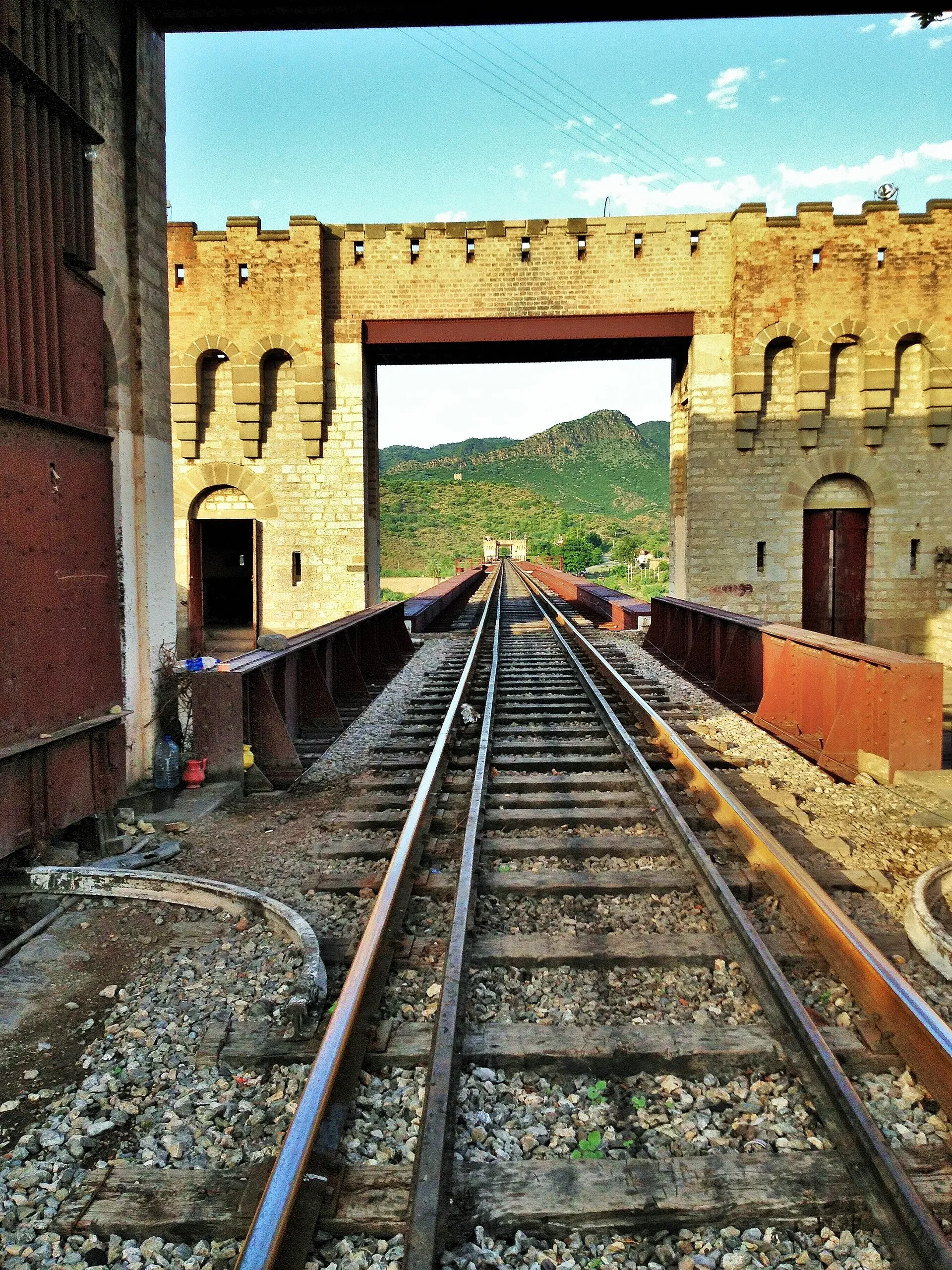
Photo: Fahad hassan 555, with thanks · CC BY-SA 4.0 · via Wikimedia Commons · temporary stand-in photo

Wikipedia dates the sections as follows. Karachi to Kotri opened in 1861, and the Kotri Bridge over the Indus followed in 1899, with Rohri to Kotri completed in 1900. Multan to Lahore also opened in 1861. The Empress Bridge over the Sutlej near Bahawalpur opened in 1878, and Rohri to Multan in 1879. Lahore to Peshawar opened in 1876, with the Attock Bridge over the Indus in 1883. Before the Lansdowne Bridge opened in 1889, a steam ferry carried rail carriages across the Indus at Rohri and Sukkur.
- Karachi to Hyderabad (km 0 to 183): Karachi Cantt, Kotri Junction (the ML-2 branch) and Hyderabad Junction, where most trains stop briefly.
- Hyderabad to Rohri (km 183 to 481): Nawabshah Junction, then the Rohri Junction stop for Sukkur and the Lansdowne Bridge. Sukkur is Sindh's third-largest city (Wikivoyage).
- Rohri to Multan (km 481 to 934): the Sutlej crossing at the Empress Bridge near Bahawalpur, then Multan Cantt.
- Multan to Lahore (km 934 to 1,223): Khanewal Junction (the branch to Faisalabad and Wazirabad) and Sahiwal. Dual tracking between Lodhran and Shahdara was completed in January 2016.
- Lahore to Rawalpindi (km 1,223 to 1,512): Gujranwala and Jhelum. The line is double track from Keamari to Shahdara Bagh and from Chaklala to Golra Sharif.
- Rawalpindi to Peshawar (km 1,512 to 1,687): Taxila Cantonment Junction is near the Taxila Museum, which makes the Gandhara sites reachable from the line, though Wikivoyage says only a couple of economy trains from Karachi stop there. Then Attock City Junction (the Indus crossing), Nowshera Junction and Peshawar Cantt.
Trains
The Pakistan Railways FAQ lists these named trains as carrying dining cars: Khyber Mail (1UP/2DN), Green Line (5UP/6DN), Tezgam (7UP/8DN), Allama Iqbal Express (9UP/10DN), Hazara Express (11UP/12DN), Awam Express (13UP/14DN), Karachi Express (15UP/16DN) and Pak Business Express (33UP/34DN). Wikipedia gives their ends as: Khyber Mail and Awam Express, Karachi to Peshawar; Tezgam, Karachi to Rawalpindi; Green Line, Karachi to Margalla near Islamabad; Allama Iqbal Express, Karachi to Sialkot; Hazara Express, Karachi to Havelian; Karachi Express and Pak Business Express, Karachi to Lahore. Check the official timetable for days and times, which change by season. Wikipedia lists the Karakoram Express (41UP/42DN, Karachi Cantt to Lahore) as running, but it is not named on the Pakistan Railways FAQ, so we have not confirmed it on the official site.
Classes on the official list are AC Sleeper, AC Parlour, AC Business, AC Standard and Economy. Not every train has all of them.
Status and closures
There is no known 2026 report of a closure of the whole line. Delays are common. Services on the northern end are affected by security in Khyber Pakhtunkhwa. The Khyber Pass branch from Peshawar toward Landi Kotal has no regular passenger service. Wikipedia says the revived Khyber train safari was planned for other routes from Peshawar. Treat any tourist train as unconfirmed until Pakistan Railways or the Khyber Pakhtunkhwa tourism body announces it.
Upgrade (CPEC and ADB)
A plan to double the track, signal it and raise speeds has been discussed since 2015 as part of CPEC. It has been delayed repeatedly. Wikipedia reports that financing for the first phase with the Asian Development Bank was finalised in December 2025. Dawn reported on 1 July 2026 that the railways minister expects the first phase to start with the Rohri to Karachi section and break ground early in 2027, with an ADB loan package of about 2 billion US dollars, and that the full line would cost about 10 billion dollars. Later reports also say January 2027. No construction had started when we checked. Pakistan Railways lists a consultancy contract for the 480 km Karachi to Rohri upgrade on its site.
What to see and do
The long crossings of the Indus and the Sutlej are the highlights: the Lansdowne Bridge between Rohri and Sukkur (1889), the Attock Bridge (1883) and the Empress Bridge near Bahawalpur (1878). The big stations at Karachi Cantt, Lahore and Rawalpindi are worth a look.
Safety
Take food and water, keep valuables in a day bag and use AC Sleeper for overnight runs. Ask the district administration or local police about current conditions before you go. For foreign visitors: the UK FCDO page (updated 27 October 2026) advises against all travel to Peshawar. It advises against all but essential travel to Nowshera and to Sindh north of and including Nawabshah. Rail passes through these places. Read the current page and your insurance terms before you decide.
How to book
Book on the Pakistan Railways website, in the RABTA app, or at a computerised reservation office. The official FAQ does not say whether foreign-issued cards work online, so ask the helpline or book at a station. It lists a 25 per cent concession for overseas tourists on named trains such as Khyber Mail, Allama Iqbal Express and Awam Express. Seats can be reserved up to 90 days ahead. The helpline is 051-9201100. Current fares are on the official site and app, so we do not list them here.
Highlights
- Pakistan's busiest line, 1,687 km from Karachi to Peshawar
- Indus crossings at Rohri-Sukkur and Attock
- Named trains such as Green Line, Khyber Mail and Tezgam
- Upgrade first phase (Karachi to Rohri) planned to start in early 2027
Stops
- Kiamari (Karachi)Southern terminus
- Karachi CantonmentMain station for most long-distance trains
- Kotri JunctionJunction for the ML-2 line
- Hyderabad Junction
- Nawabshah Junction
- Rohri JunctionFor Sukkur; ML-3 branches off here
- Bahawalpur
- Multan Cantonment
- Khanewal JunctionBranch to Faisalabad and Wazirabad
- Sahiwal
- Lahore JunctionMajor interchange
- Gujranwala
- Jhelum
- Rawalpindi
- Taxila Cantonment Junction
- Attock City JunctionAttock Bridge over the Indus
- Nowshera Junction
- Peshawar CantonmentNorthern terminus
km: distance from the start along the route.
Numbers follow the stops in order. The map shows the 16 stops that have a trek.pk page, not the road itself.
Road conditions
Broad gauge (1,676 mm). Double track Keamari to Shahdara Bagh and Chaklala to Golra Sharif; mostly single track elsewhere. Speeds on the line are about 60 to 115 km/h. Delays are common, and the timetable changes by season.
Fuel and services
Dining cars run on the trains listed on the official FAQ. Major stations have waiting rooms, food stalls, drinking water and first aid. Retiring rooms at big stations are booked through the Station Master. Wheelchair help: ask the Station Master or call the Railway Police helpline 1333.
Where to stay, eat and fuel up
Places to stay
- Avari Towers KarachiCall Avari Towers KarachiMap of Avari Towers Karachi in Google Maps
- Pearl Continental Hotel, LahoreCall Pearl Continental Hotel, LahoreMap of Pearl Continental Hotel, Lahore in Google Maps
- Avari Hotel LahoreCall Avari Hotel LahoreMap of Avari Hotel Lahore in Google Maps
- Serena HotelCall Serena HotelMap of Serena Hotel in Google Maps
- Islamabad Marriott HotelCall Islamabad Marriott HotelMap of Islamabad Marriott Hotel in Google Maps
- Mövenpick KarachiCall Mövenpick KarachiMap of Mövenpick Karachi in Google Maps
Places to eat
- The Monal IslamabadCall The Monal IslamabadMap of The Monal Islamabad in Google Maps
- Tehzeeb Bakers Blue AreaCall Tehzeeb Bakers Blue AreaMap of Tehzeeb Bakers Blue Area in Google Maps
- TKR 3Call TKR 3Map of TKR 3 in Google Maps
- Port Grand - KarachiCall Port Grand - KarachiMap of Port Grand - Karachi in Google Maps
- Kolachi RestaurantCall Kolachi RestaurantMap of Kolachi Restaurant in Google Maps
- Savour FoodsCall Savour FoodsMap of Savour Foods in Google Maps
Essential services fuel stations, mechanics, banks, pharmacies and hospitals and clinics
Fuel
- PSO Petrol Pump (Stadium Service Station)Call PSO Petrol Pump (Stadium Service Station)Map of PSO Petrol Pump (Stadium Service Station) in Google Maps
- Attock Petrol PumpMap of Attock Petrol Pump in Google Maps
- PSO Petrol PumpMap of PSO Petrol Pump in Google Maps
- PSO Petrol PumpMap of PSO Petrol Pump in Google Maps
- Total Parco LA TownCall Total Parco LA TownMap of Total Parco LA Town in Google Maps
- PSO-Al-Rafay Filling Station - Petrol Pump Thokar Niaz BaigCall PSO-Al-Rafay Filling Station - Petrol Pump Thokar Niaz BaigMap of PSO-Al-Rafay Filling Station - Petrol Pump Thokar Niaz Baig in Google Maps
Mechanics and tyre shops
- Mohammed Bilal tyre centreMap of Mohammed Bilal tyre centre in Google Maps
- Changan City SalesCall Changan City SalesMap of Changan City Sales in Google Maps
- Toyota Airport MotorsCall Toyota Airport MotorsMap of Toyota Airport Motors in Google Maps
- Honda GatewayCall Honda GatewayMap of Honda Gateway in Google Maps
- Saif Traders - Best Tyre Shop in LahoreCall Saif Traders - Best Tyre Shop in LahoreMap of Saif Traders - Best Tyre Shop in Lahore in Google Maps
- Mini MotorsCall Mini MotorsMap of Mini Motors in Google Maps
Banks and money exchange
- State Bank of PakistanCall State Bank of PakistanMap of State Bank of Pakistan in Google Maps
Pharmacies
- Al Jadeed Super MarketCall Al Jadeed Super MarketMap of Al Jadeed Super Market in Google Maps
- Imtiaz Mega - Ramzan Mall - islamabadCall Imtiaz Mega - Ramzan Mall - islamabadMap of Imtiaz Mega - Ramzan Mall - islamabad in Google Maps
- Imtiaz Supermarket - Awami Markaz - KHICall Imtiaz Supermarket - Awami Markaz - KHIMap of Imtiaz Supermarket - Awami Markaz - KHI in Google Maps
- Imtiaz Mega - Kings Mall - GujranwalaCall Imtiaz Mega - Kings Mall - GujranwalaMap of Imtiaz Mega - Kings Mall - Gujranwala in Google Maps
- Hydri Super MarketCall Hydri Super MarketMap of Hydri Super Market in Google Maps
- Raja Market Garden Town LahoreCall Raja Market Garden Town LahoreMap of Raja Market Garden Town Lahore in Google Maps
Hospitals and clinics
- Hashmanis Hospital NumaishCall Hashmanis Hospital NumaishMap of Hashmanis Hospital Numaish in Google Maps
- Holistic CareCall Holistic CareMap of Holistic Care in Google Maps
- Lahore Care HospitalCall Lahore Care HospitalMap of Lahore Care Hospital in Google Maps
- Shifa International Hospitals LimitedCall Shifa International Hospitals LimitedMap of Shifa International Hospitals Limited in Google Maps
- Amanat Eye Hospital RawalpindiCall Amanat Eye Hospital RawalpindiMap of Amanat Eye Hospital Rawalpindi in Google Maps
- Maryam Memorial Hospital (MMH)Call Maryam Memorial Hospital (MMH)Map of Maryam Memorial Hospital (MMH) in Google Maps
Listings come from Google Maps data and are unverified: phone numbers, opening months and prices may have changed. Report a problem · Own one of these? Claim it
More safety notes
Keep valuables with you and bags in sight. AC Sleeper has a locked compartment. Follow the UK FCDO advice for the areas the line crosses; Peshawar and Sindh north of Nawabshah are covered by its warnings (page updated 27 October 2026). Do not board without a valid ticket.
Tips
- Check the official timetable for the day you travel; names, days and times change.
- Book AC classes early for Eid and winter holidays.
- Take food and water; dining-car quality varies.
- Carry your passport.
Photos we still need: a long-distance train on the line. Send us yours
Sources and last checked
Last checked Confidence medium12 sources4 still to check
- Last checked
- Method
- Desk research from published sources
- Confidence
- medium
- Checked by
- trek.pk research team
Researched from published sources; not yet checked on the ground by our team. Spot something out of date? Report a mistake.
Sources
- List of railway lines in Pakistan · Wikipedia · checked
- Karachi-Peshawar Railway Line (ML-1) · Wikipedia · checked
- Khanewal-Wazirabad Branch Line · Wikipedia · checked
- Pakistan Railways official website · Pakistan Railways · checked
- Frequently asked questions (booking, catering trains, helpline) · Pakistan Railways · checked
- Available classes in trains · Pakistan Railways · checked
- List of named passenger trains of Pakistan · Wikipedia · checked
- Groundbreaking of ML-1 early next year: minister · Dawn, 1 July 2026 · checked
- ML-1 groundbreaking set for next year · The Express Tribune · checked
- Khyber train safari · Wikipedia · checked
- Pakistan travel advice · UK Foreign, Commonwealth & Development Office · checked
- Taxila (rail access to the museum) · Wikivoyage · checked
Still to be checked on the ground (4)
- Which named trains run today, their days and times (names from the official FAQ and Wikipedia; no timetable opened)
- Whether the Karakoram Express still runs (Wikipedia says yes; not on the official FAQ)
- Status of any Khyber Pass tourist train (Wikipedia is inconsistent: infobox defunct, text says Peshawar to Attock safari operating; no dated report found)
- Whether foreign cards work on the booking portal (official FAQ is silent)
Nearby and related

Karachi
Pakistan's largest city and main port: colonial buildings, museums, beaches, busy bazaars and some of the country's best food.

Hyderabad
Sindh's second-largest city, founded in 1768 and famous for its glass bangles, Pacco Qillo fort and Talpur tombs, about 160 km from Karachi.

Sukkur
Sindh's third-largest city on the Indus, with the 1932 Sukkur Barrage, the 1889 Lansdowne Bridge, Masum Shah's Minaret and the river islands of Rohri.

Multan
The City of Saints in southern Punjab: blue-tiled Sufi shrines, a crowded old city, blue pottery, sohan halwa and mangoes.

Lahore
Punjab's capital and Pakistan's cultural city: Mughal forts, mosques and gardens, a lively Walled City, and some of the best food in the country.

Rawalpindi
Islamabad's older twin city: a busy bazaar and cantonment, the north's main rail and bus hub, and an easy base for Taxila and Murree.

Attock
District capital on the Grand Trunk Road near the Indus, about 86 km from Islamabad. A practical stop with the Mughal-era Attock Fort nearby.

Peshawar
Khyber Pakhtunkhwa's capital and one of South Asia's oldest living cities: the Gandhara museum, Qissa Khwani Bazaar, mosques and a strong food culture.

ML-2 Kotri-Attock City Line
ML-2 runs about 1,246 km from Kotri near Hyderabad to Attock City through Larkana, Jacobabad, Dera Ghazi Khan and Mianwali. A quieter alternative to ML-1, with an upgrade planned.

ML-3 Rohri-Quetta-Chaman Line (Bolan Pass)
ML-3 runs 526 km from Rohri through Jacobabad, Sibi and the Bolan Pass to Quetta and Chaman. Services have been repeatedly suspended in 2026 and FCDO advises against travel to Balochistan.