

Photo: Faisalrazamalik, with thanks · CC BY-SA 4.0 · via Wikimedia Commons · temporary stand-in photo

Mughal Lahore and the Grand Trunk Road
A four-day journey from Lahore's Mughal monuments up the Grand Trunk Road to Rohtas Fort. History from Akbar to Aurangzeb, OSRM-measured day plan and current safety notes.
Customise this route Change the dates, stops and how you travel in the Road Trip Planner.
The story
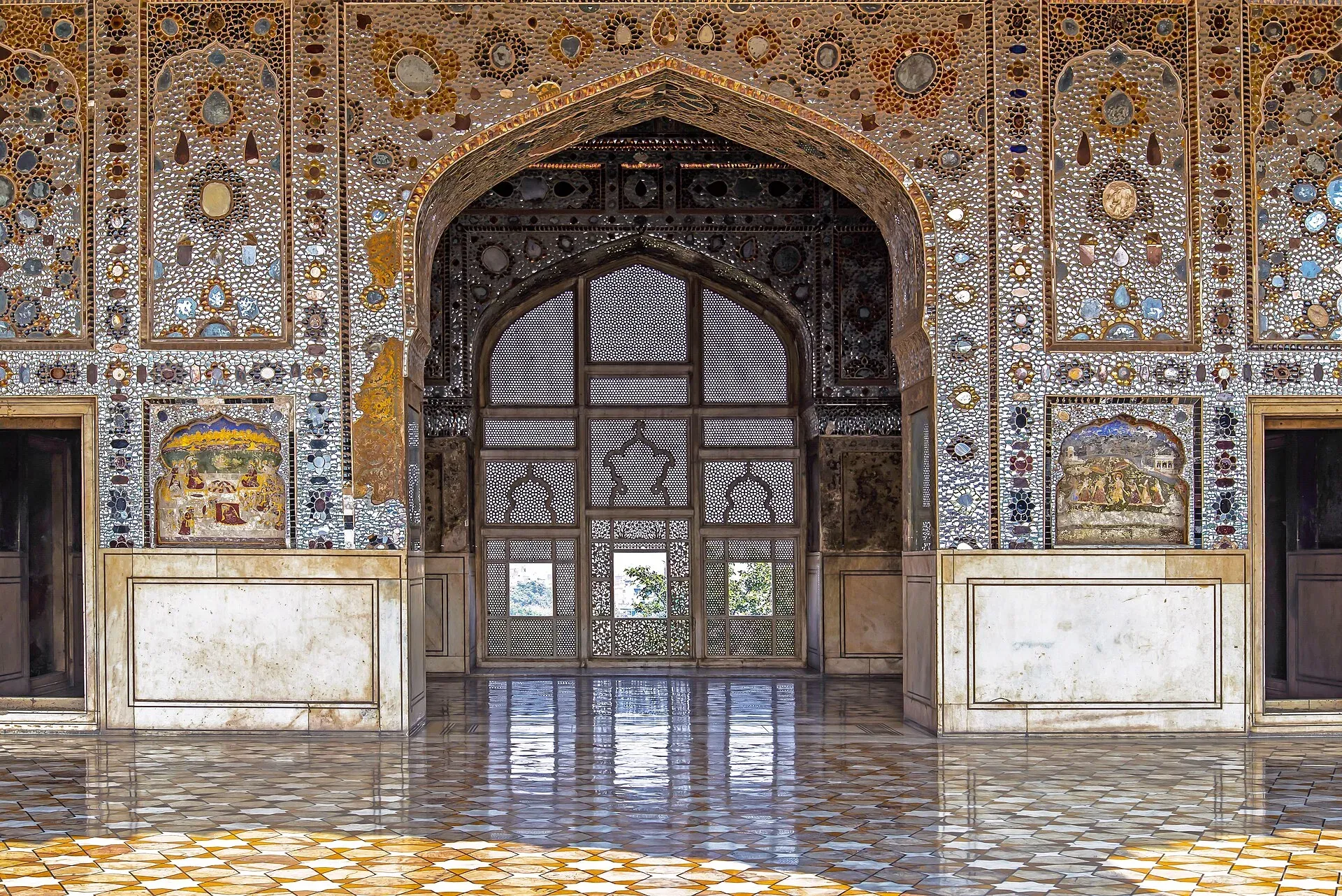
Lahore became a Mughal showpiece because it sat on the road to Kabul. Akbar began rebuilding Lahore Fort in brick in 1566 as a guard post on the north-west frontier. His son Jahangir added the Picture Wall of glazed tile and the Kala Burj pavilion. Shah Jahan built the Sheesh Mahal (1631 to 1632), the white marble Naulakha Pavilion (1633) and the Moti Masjid. Aurangzeb added the Alamgiri Gate in 1674, facing the Badshahi Mosque that he built between 1671 and 1673.
The road matters as much as the monuments. The Grand Trunk Road follows the much older Uttarapatha, the "northern road", and a Mauryan-era route that linked Purushapura (Peshawar) with the east. Sher Shah Suri rerouted and widened it in the 16th century, at Rohtas and elsewhere, and built sarais (rest houses), kos minars (milestone pillars) and baolis (stepwells). The Mughals added more sarais, planted trees and built bridges. In 1575 Akbar ordered a minar at every kos, about 3.2 km, from Agra to Ajmer, and later emperors extended the network until about 600 minars stood from Peshawar to Bengal. The British largely rebuilt the road between 1833 and 1860.
Today the Pakistani section runs from Wagah through Lahore, Gujranwala, Gujrat, Lalamusa, Kharian and Jhelum to Rawalpindi, Peshawar and the Khyber Pass, as the N-5. In April 2025 the federal government approved upgrading it to three lanes.
Timeline
- 1541: Sher Shah Suri begins Rohtas Fort to hold the Gakhars; he dies in 1545 before it is finished.
- 1566: Akbar begins rebuilding Lahore Fort.
- 1581 to 1583: Akbar builds Attock Fort on the Indus.
- 1606: Jahangir builds the Hiran Minar for his antelope, Mansraj.
- 1627 to 1637: Jahangir dies in 1627; his tomb at Shahdara is finished in 1637.
- 1631 to 1632: Sheesh Mahal built in Lahore Fort.
- 1634 or 1635 to 1641: Wazir Khan Mosque built.
- 1641 to 1642: Shalimar Gardens laid out.
- 1671 to 1673: Badshahi Mosque built; Alamgiri Gate follows in 1674.
- 1981: Lahore Fort and Shalimar Gardens become a World Heritage Site; Rohtas follows in 1997.
What you will see
- Lahore Fort (more than 20 hectares, 21 notable monuments) and the Badshahi Mosque, which can hold 100,000 worshippers in its courtyard and is faced across the Hazuri Bagh by the fort.
- Wazir Khan Mosque, about 260 m west of Delhi Gate, noted for its tilework (kashi-kari) and painted interior. It has been restored by the Aga Khan Trust for Culture and the Government of Punjab since 2009.
- Shalimar Gardens, about 16 hectares of terraces and, by one count, 414 fountains, begun on 6 June 1641 and finished in about 17 months.
- Tomb of Jahangir at Shahdara, commissioned by his son Shah Jahan according to Wikipedia (a popular story credits Nur Jahan; the sources we opened do not settle this beyond that), red sandstone and white marble with four minarets about 30 m high and no central dome, with the Akbari Sarai and the tomb of Asif Khan beside it.
- Hiran Minar near Sheikhupura, a 30 m minaret, a large tank and a pavilion on a causeway.
- Rohtas Fort near Jhelum, about 4 km of walls and 68 bastions on a hill at 819 m. It is a World Heritage Site and a Sur-dynasty fort rather than a Mughal one, but it sits on the same road.
- Attock Fort, built to guard the Indus. It is a military base and visitors cannot go inside, but it can be seen from outside.
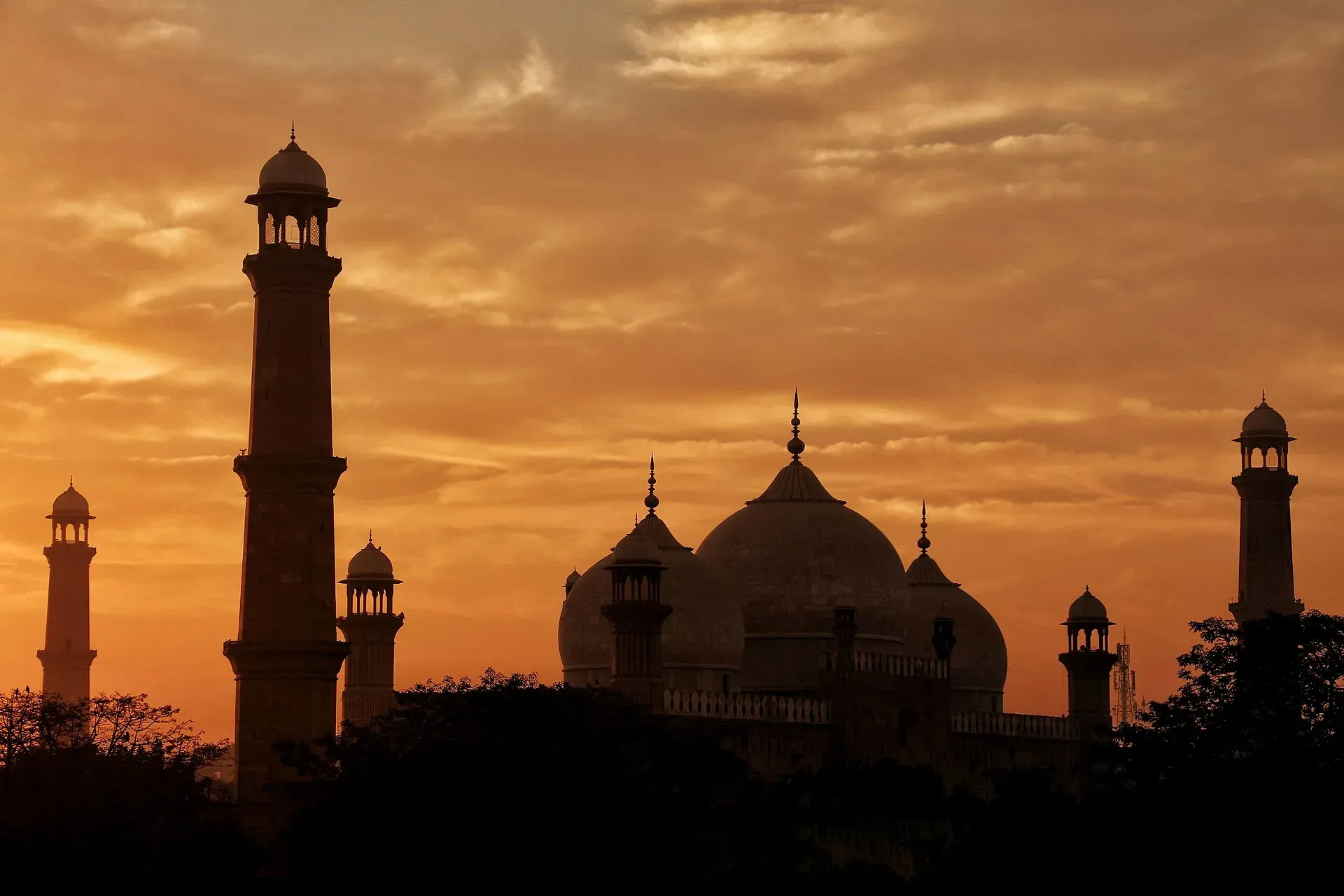
Photo: Fassifarooq, with thanks · CC BY-SA 4.0 · via Wikimedia Commons · temporary stand-in photo

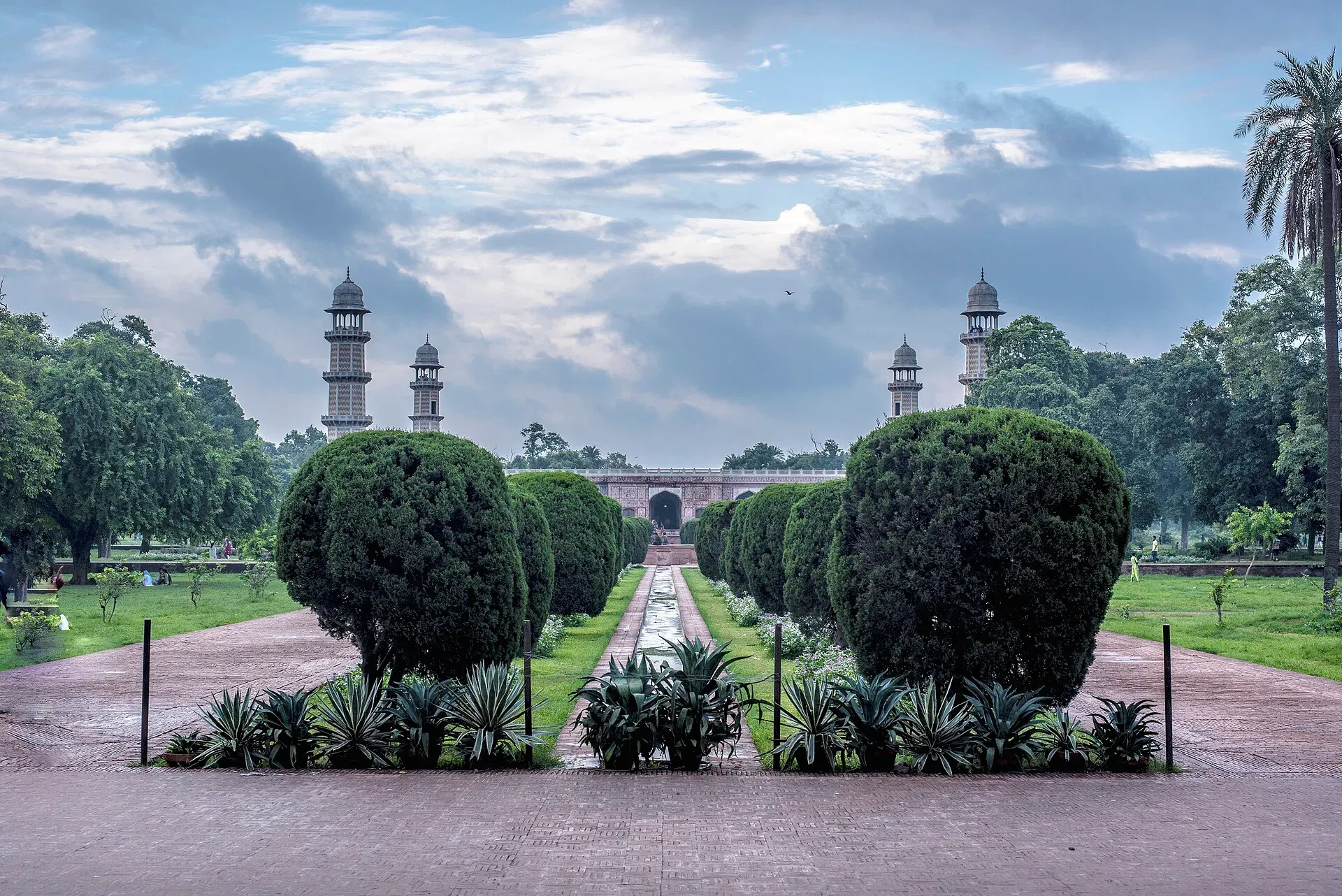
Photo: Shaguftakarim, with thanks · CC BY-SA 4.0 · via Wikimedia Commons · temporary stand-in photo

Detail on the main stops
Wazir Khan Mosque. Hakim Ilam-ud-din Ansari, the royal physician who became governor of the Punjab and was known as Wazir Khan, commissioned it. Work began in 1634 or 1635 and finished in 1641. Craftsmen from Chiniot, a town known for woodcarving and stonework, worked on it. Its brick walls are covered in kashi-kari (tile mosaic) in cobalt blue, turquoise, white, green, orange, yellow and purple, and the interior has plaster frescoes, which is unusual for a Mughal-era mosque. Four minarets, each about 33 m high, stand at the corners of the courtyard. A row of shops for calligraphers and bookbinders forms the Calligrapher's Bazaar in front, and an octagonal chamber in it is described as the first four-axis (charsu) bazaar in South Asia. It lies about 260 m west of Delhi Gate in the Walled City.
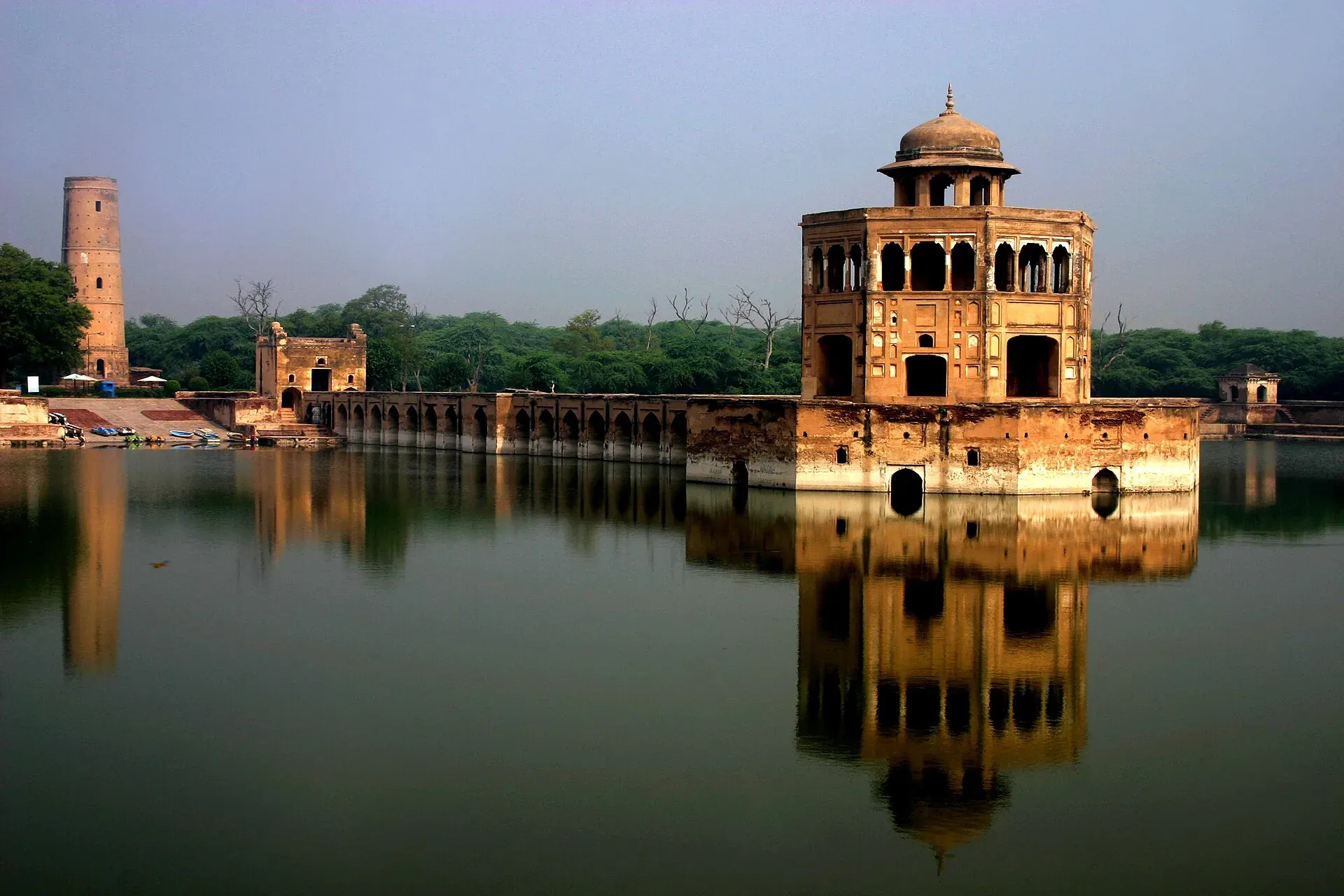
Photo: Shaista bukhari, with thanks · CC BY-SA 3.0 · via Wikimedia Commons · temporary stand-in photo

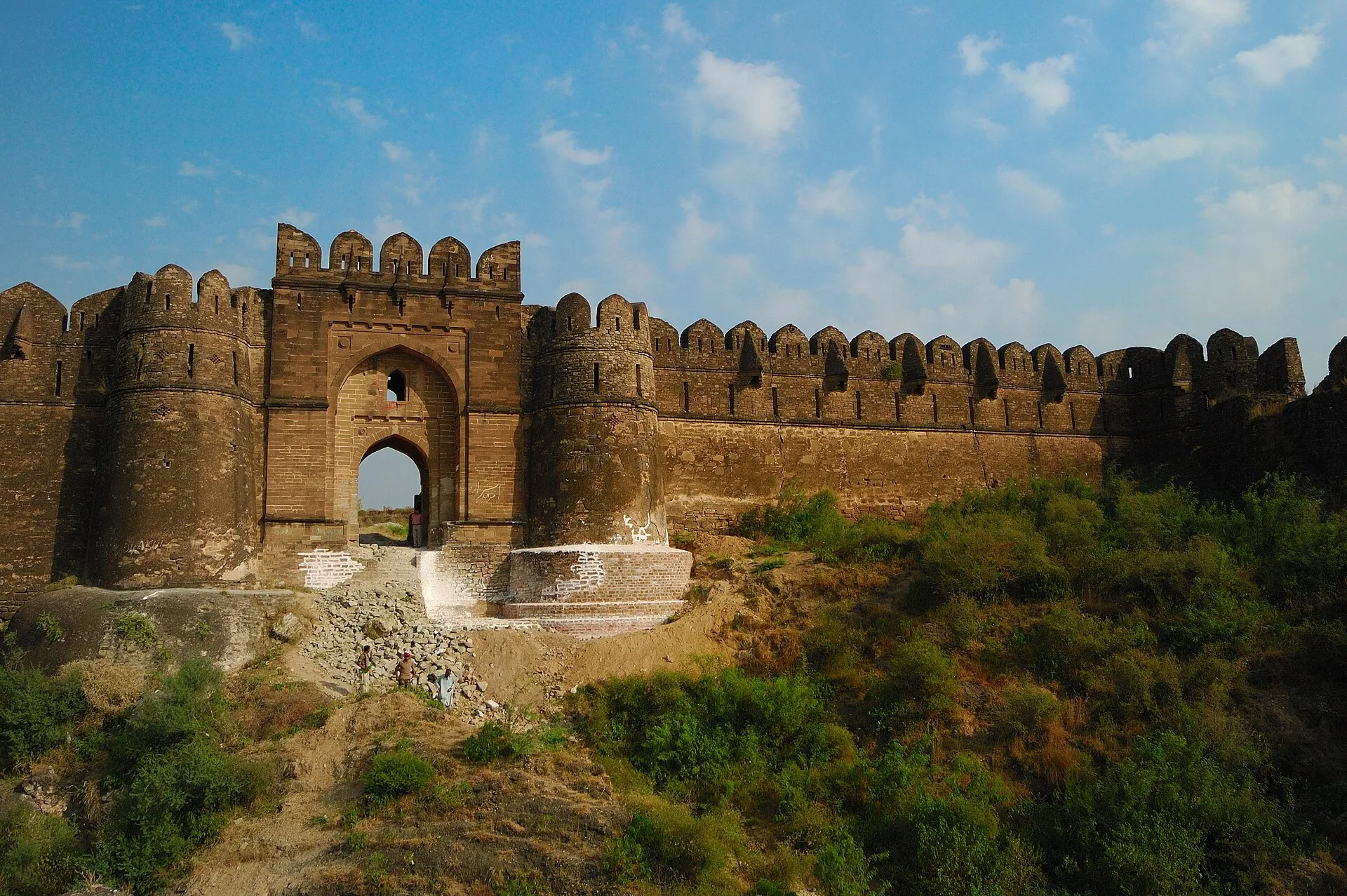
Photo: Usman.pg, with thanks · CC BY-SA 3.0 · via Wikimedia Commons · temporary stand-in photo

Walled City and food. Wikivoyage describes the Walled City as roughly one square kilometre at the heart of Lahore, with 13 gates in the Mughal-era wall, of which the British destroyed much after 1857. It is best explored on foot, and taxis are impractical in the narrow lanes. Gawalmandi Food Street is a dinner area set in old houses with traditional balconies, and Anarkali has another food street.
Hiran Minar. The minaret is about 30 m high with 108 steps inside. The tank is 229 m by 273 m, and an octagonal pavilion stands in the middle on a causeway of 21 arches. Wikipedia notes that sources differ on whether Jahangir or Shah Jahan built the pavilion.
Rohtas Fort. Sher Shah Suri began it in 1541 under Todar Mal's supervision, about 16 km north-west of Jhelum, near Dina. The walls are about 4 km long with 68 bastions, 10 to 18 m high and 10 to 13 m thick. Notable gates include Sohail, Talaqi (15.25 m high) and the double Khwas Khani gate, once the main entrance from the Grand Trunk Road. Kabuli Gate, facing Kabul, now houses a small visitor centre and museum run by the Himalayan Wildlife Foundation. Inside are the Shahi Masjid, the Rani Mahal, the Raja Man Singh Haveli and three baolis (stepwells), the central one with 148 steps. UNESCO inscribed it in 1997 as an exceptional example of Muslim military architecture.
Shalimar and Shahdara. Wikivoyage says Shalimar's three terraces lie along the Grand Trunk Road towards Wagah. The tombs of Jahangir and Nur Jahan are both at Shahdara, on the outskirts of Lahore.
A suggested order
One day covers the Walled City: Lahore Fort and Badshahi Mosque in the morning, Wazir Khan Mosque and the bazaars after. Shalimar and Shahdara fit into a second morning. Hiran Minar is a half-day trip from Lahore towards Sheikhupura. Rohtas is on the road to Islamabad and needs half a day on its own, so a traveller driving north can break the journey at Jhelum. The stop table lists distances from Lahore Fort.
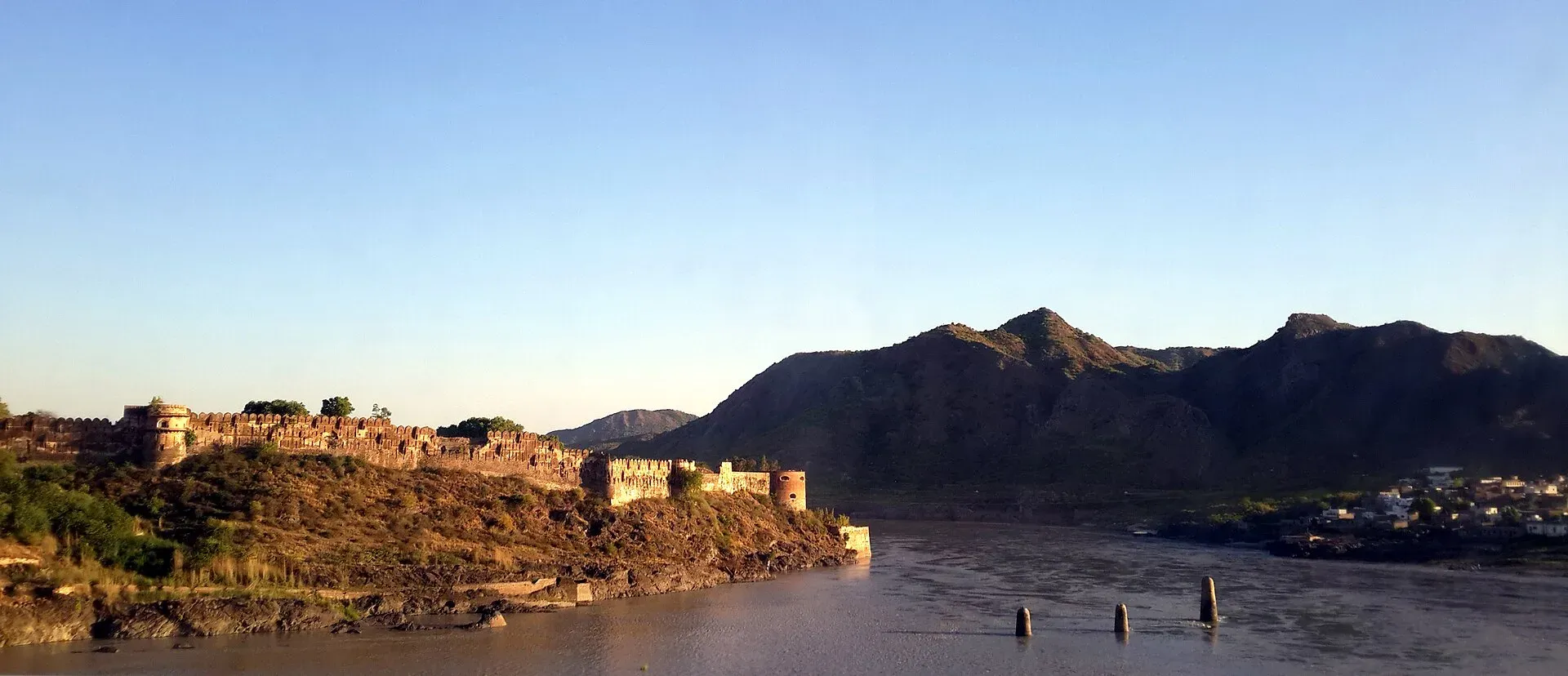
Photo: Mahnoorraja, with thanks · CC BY-SA 3.0 · via Wikimedia Commons · temporary stand-in photo

Etiquette
The Badshahi and Wazir Khan mosques are places of worship. Take your shoes off, cover your arms and legs and keep voices low. Women should cover their heads. Avoid prayer times, especially around the Friday midday prayer. Ask before using a tripod, drone or flash. At tombs, do not touch frescoes or inlay.
Visitor information
This is a sightseeing journey with no pilgrimage requirement. Entry fees apply at Lahore Fort, the Shalimar Gardens, Rohtas and other monuments; current fees will be added soon. Hours and closures change, so check with the Walled City of Lahore Authority and the Department of Archaeology. The Walled City authority's monuments page lists no hours or fees; it gives +92 42 99204238 and +92 42 99204237 (checked 16 November 2026).
Conservation is under way at several sites. The Aga Khan Cultural Service and the Walled City authority are restoring Wazir Khan Mosque, and work continues on the Sheesh Mahal and Picture Wall at Lahore Fort (The Express Tribune, 11 April 2026). That report mentions no closure. At Rohtas, the Punjab archaeology directorate is carrying out restoration, and UNESCO made a technical visit in July 2026 after a complaint about the methods; UNESCO said it had reached no finding against the work (Dawn, 23 July 2026). Neither report mentions a closure, but expect scaffolding and ask before a long drive.
When to go
October to March. Summer is very hot and the gardens and forts have little shade. The Wagah flag-lowering ceremony takes place daily; the FCDO says visitors can still attend it though the crossing is closed. Wagah is about 33 km by road from Lahore Fort (OpenStreetMap routing). The Punjab government opened an expanded arena on 1 January 2026, with seating raised from 7,500 to 25,000 (Dawn, 2 January 2026). There is no known dated report of the Pakistan-side start time or any format change in 2026, so confirm the time locally. In 2025, ceremonies were suspended after the May conflict and resumed without the usual handshake and gate opening (Dawn, 21 May 2025, India side).
Events
None confirmed. Ask locally about festivals in the Walled City.
Highlights
- Lahore Fort and Shalimar Gardens, UNESCO World Heritage (1981)
- Badshahi Mosque and Wazir Khan Mosque
- Tomb of Jahangir and Hiran Minar
- Rohtas Fort, World Heritage (1997), on the Grand Trunk Road
Stops
- Lahore FortStart; UNESCO
- Badshahi MosqueFaces the fort
- Wazir Khan MosqueWalled City
- Shalimar GardensUNESCO; from Lahore Fort
- Tomb of Jahangir, ShahdaraAfter Shalimar (11 km)
- Hiran Minar, SheikhupuraAfter Shahdara (46 km)
- Rohtas FortFrom Lahore Fort by the GT Road (OSRM)
- IslamabadRohtas to Islamabad is 110 km
km: distance from the start along the route.
Numbers follow the stops in order. The map shows the stops, not the road itself.
Day by day
Day 1 · Lahore Fort, Badshahi Mosque and the Walled City
Start at the fort (Akbar, Jahangir, Shah Jahan). Cross to the Badshahi Mosque, 3 km by road but a short walk, then walk 2 km to the Wazir Khan Mosque and the bazaars around Delhi Gate.
Day 2 · Shalimar, Shahdara and Hiran Minar
Drive 12 km to the Shalimar Gardens, then 11 km to Shahdara for Jahangir's tomb. Drive 46 km to Hiran Minar near Sheikhupura and return to Lahore (42 km).
Day 3 · Lahore to Rohtas along the Grand Trunk Road
Take the N-5 through Gujranwala and Gujrat to Jhelum and on to Rohtas Fort (191 km, about 2 hours 40 minutes by OSRM). The old road is busy; leave early. Stay in Jhelum, which is 23 km from the fort.
Day 4 · Rohtas to Islamabad
Drive 110 km to Islamabad. If you have time, see Attock Fort from outside (96 km from Islamabad) or the Mughal-era gardens at Hasan Abdal.
Road conditions
- GT Road (N-5): paved, busy with trucks and local traffic. Federal approval for three lanes was announced in April 2025.
- Motorway M-2: faster, tolled alternative between Lahore and Islamabad.
- Walled City: lanes too narrow for cars; walk or use a rickshaw.
- Times: OSRM drive times are optimistic and exclude stops, traffic and checkpoints.
Fuel and services
Lahore, Gujranwala, Gujrat and Jhelum have fuel, hotels and food. Facilities at Rohtas are basic; bring water. Fort interiors have limited toilets.
Where to stay, eat and fuel up
Places to stay
- Avari Towers KarachiCall Avari Towers KarachiMap of Avari Towers Karachi in Google Maps
- Pearl Continental Hotel, LahoreCall Pearl Continental Hotel, LahoreMap of Pearl Continental Hotel, Lahore in Google Maps
- Avari Hotel LahoreCall Avari Hotel LahoreMap of Avari Hotel Lahore in Google Maps
- Serena HotelCall Serena HotelMap of Serena Hotel in Google Maps
- Islamabad Marriott HotelCall Islamabad Marriott HotelMap of Islamabad Marriott Hotel in Google Maps
- Mövenpick KarachiCall Mövenpick KarachiMap of Mövenpick Karachi in Google Maps
Places to eat
- The Monal IslamabadCall The Monal IslamabadMap of The Monal Islamabad in Google Maps
- Tehzeeb Bakers Blue AreaCall Tehzeeb Bakers Blue AreaMap of Tehzeeb Bakers Blue Area in Google Maps
- TKR 3Call TKR 3Map of TKR 3 in Google Maps
- Port Grand - KarachiCall Port Grand - KarachiMap of Port Grand - Karachi in Google Maps
- Kolachi RestaurantCall Kolachi RestaurantMap of Kolachi Restaurant in Google Maps
- Savour FoodsCall Savour FoodsMap of Savour Foods in Google Maps
Essential services fuel stations, mechanics, banks, pharmacies and hospitals and clinics
Fuel
- PSO Petrol Pump (Stadium Service Station)Call PSO Petrol Pump (Stadium Service Station)Map of PSO Petrol Pump (Stadium Service Station) in Google Maps
- Attock Petrol PumpMap of Attock Petrol Pump in Google Maps
- PSO Petrol PumpMap of PSO Petrol Pump in Google Maps
- PSO Petrol PumpMap of PSO Petrol Pump in Google Maps
- Total Parco LA TownCall Total Parco LA TownMap of Total Parco LA Town in Google Maps
- PSO-Al-Rafay Filling Station - Petrol Pump Thokar Niaz BaigCall PSO-Al-Rafay Filling Station - Petrol Pump Thokar Niaz BaigMap of PSO-Al-Rafay Filling Station - Petrol Pump Thokar Niaz Baig in Google Maps
Mechanics and tyre shops
- Mohammed Bilal tyre centreMap of Mohammed Bilal tyre centre in Google Maps
- Changan City SalesCall Changan City SalesMap of Changan City Sales in Google Maps
- Toyota Airport MotorsCall Toyota Airport MotorsMap of Toyota Airport Motors in Google Maps
- Honda GatewayCall Honda GatewayMap of Honda Gateway in Google Maps
- Saif Traders - Best Tyre Shop in LahoreCall Saif Traders - Best Tyre Shop in LahoreMap of Saif Traders - Best Tyre Shop in Lahore in Google Maps
- Mini MotorsCall Mini MotorsMap of Mini Motors in Google Maps
Banks and money exchange
- State Bank of PakistanCall State Bank of PakistanMap of State Bank of Pakistan in Google Maps
Pharmacies
- Al Jadeed Super MarketCall Al Jadeed Super MarketMap of Al Jadeed Super Market in Google Maps
- Imtiaz Mega - Ramzan Mall - islamabadCall Imtiaz Mega - Ramzan Mall - islamabadMap of Imtiaz Mega - Ramzan Mall - islamabad in Google Maps
- Imtiaz Supermarket - Awami Markaz - KHICall Imtiaz Supermarket - Awami Markaz - KHIMap of Imtiaz Supermarket - Awami Markaz - KHI in Google Maps
- Imtiaz Mega - Kings Mall - GujranwalaCall Imtiaz Mega - Kings Mall - GujranwalaMap of Imtiaz Mega - Kings Mall - Gujranwala in Google Maps
- Hydri Super MarketCall Hydri Super MarketMap of Hydri Super Market in Google Maps
- Raja Market Garden Town LahoreCall Raja Market Garden Town LahoreMap of Raja Market Garden Town Lahore in Google Maps
Hospitals and clinics
- Hashmanis Hospital NumaishCall Hashmanis Hospital NumaishMap of Hashmanis Hospital Numaish in Google Maps
- Holistic CareCall Holistic CareMap of Holistic Care in Google Maps
- Lahore Care HospitalCall Lahore Care HospitalMap of Lahore Care Hospital in Google Maps
- Shifa International Hospitals LimitedCall Shifa International Hospitals LimitedMap of Shifa International Hospitals Limited in Google Maps
- Amanat Eye Hospital RawalpindiCall Amanat Eye Hospital RawalpindiMap of Amanat Eye Hospital Rawalpindi in Google Maps
- Maryam Memorial Hospital (MMH)Call Maryam Memorial Hospital (MMH)Map of Maryam Memorial Hospital (MMH) in Google Maps
Listings come from Google Maps data and are unverified: phone numbers, opening months and prices may have changed. Report a problem · Own one of these? Claim it
Safety
- Government advice (UK FCDO, updated 27 October 2026, checked 16 November 2026): the FCDO does not name Lahore, Sheikhupura, Jhelum or Attock. It advises against all but essential travel within 5 miles of the India border, with an exception for the Grand Trunk highway via Wagah (the crossing is closed, but the daily Wagah ceremony can still be attended).
- Ask the district administration or local police about current conditions before you go. Karakoram Highway: For foreign visitors: the UK FCDO advises against all travel on the KKH between Mansehra and Chilas; do not extend this journey north on that road.
- Insurance: travel insurance can be invalid if you travel against FCDO advice.
- Conservation: parts of Rohtas, including the Talaqi and Gatali gates, have suffered collapses from rain and neglect, so stay clear of cordoned areas.
- Crowds: the Walled City is busy; keep valuables close.
Tips
- See the Walled City on foot early in the morning.
- Wear clothes that cover arms and legs and are easy to remove shoes with.
- Carry passport or CNIC for checkpoints, particularly at Wagah.
- Allow a full day for Rohtas; it is large and uneven underfoot.
- Wagah is about 33 km from Lahore Fort by road; confirm the ceremony time and access on the day.
Sources and last checked
Last checked Confidence medium18 sources4 still to check
- Last checked
- Method
- Desk research from published sources
- Confidence
- medium
- Checked by
- trek.pk research team
Researched from published sources; not yet checked on the ground by our team. Spot something out of date? Report a mistake.
Sources
- Pakistan travel advice: Warnings and insurance (updated 27 October 2026) · UK Foreign, Commonwealth & Development Office (FCDO) · checked
- OSRM driving route service: distances and times measured 16 November 2026 (drive times are optimistic and exclude stops) · OSRM / OpenStreetMap contributors · checked
- Lahore Fort (Wikipedia) · Wikipedia · checked
- Badshahi Mosque (Wikipedia) · Wikipedia · checked
- Wazir Khan Mosque (Wikipedia) · Wikipedia · checked
- Shalimar Gardens, Lahore (Wikipedia) · Wikipedia · checked
- Tomb of Jahangir (Wikipedia) · Wikipedia · checked
- Hiran Minar (Wikipedia) · Wikipedia · checked
- Rohtas Fort (Wikipedia) · Wikipedia · checked
- Attock Fort (Wikipedia) · Wikipedia · checked
- Grand Trunk Road (Wikipedia) · Wikipedia · checked
- Kos Minar (Wikipedia) · Wikipedia · checked
- Restoring Lahore's timeless beauty · The Express Tribune, 11 April 2026 · checked
- UNESCO inspects ongoing restoration works at Rohtas Fort · Dawn, 23 July 2026 · checked
- Wagah joint check post seating capacity enhanced · Dawn, 2 January 2026 · checked
- Pakistan, India resume Wagah border ceremonies · Dawn, 21 May 2025 · checked
- Monuments · Walled City of Lahore Authority · checked
- Lahore · Wikivoyage · checked
Still to be checked on the ground (4)
- Opening hours and fees at the Lahore Fort, Shalimar, Rohtas and the tombs (the Walled City authority page lists none; no official fee notice found)
- Whether any part of Rohtas or Wazir Khan is closed for conservation (works are under way at both; no closure reported)
- Pakistan-side Wagah ceremony start time and any 2026 change to the format (arena expanded January 2026)
- Jahangir's tomb: Wikipedia says Shah Jahan commissioned it; a popular story credits Nur Jahan; no authoritative source opened
Nearby and related

Lahore
Punjab's capital and Pakistan's cultural city: Mughal forts, mosques and gardens, a lively Walled City, and some of the best food in the country.

Badshahi Mosque
Lahore's great Mughal mosque, built for Emperor Aurangzeb in 1671-73 from red sandstone and marble. It faces Lahore Fort and has been on UNESCO's tentative list since 1993.

Wazir Khan Mosque
A Mughal mosque in Lahore's Walled City, built 1634 to 1641, famous for its tilework and painted interior. On Pakistan's UNESCO tentative list since 1993, and still an active place of worship.

Tomb of Jahangir and Akbari Sarai
The Mughal emperor Jahangir's mausoleum at Shahdara in Lahore, finished in 1637, with the Akbari Sarai gateway and the tomb of Asif Khan. The group is on UNESCO's tentative list (1993).

Hiran Minar and Tank
A Mughal hunting retreat near Sheikhupura: a tall brick minaret built by Jahangir for his pet antelope, a large tank and a pavilion on a causeway. On UNESCO's tentative list since 1993.

Attock Fort
A Mughal fort on the Indus at Attock, built by Akbar in 1581-83 with six gates and eight bastions. It is run by the army and is not open to the public.

Walled City of Lahore
Lahore's old core: lanes, gates and Mughal and Sikh-era monuments around the Royal Road, including Wazir Khan Mosque, Delhi Gate and the Shahi Hammam. Its lanes are best explored on foot.

Islamabad
Pakistan's green, planned capital at the foot of the Margalla Hills: Faisal Mosque, hillside trails, cafes and the gateway to the north.

Lahore Heritage and Wagah
A two to three day city trip: Lahore Fort, the Badshahi Mosque and old city, the Shalimar Gardens, and the evening flag-lowering at Wagah, 33 km from the fort. Measured distances and current notes on the new Wagah arena.