

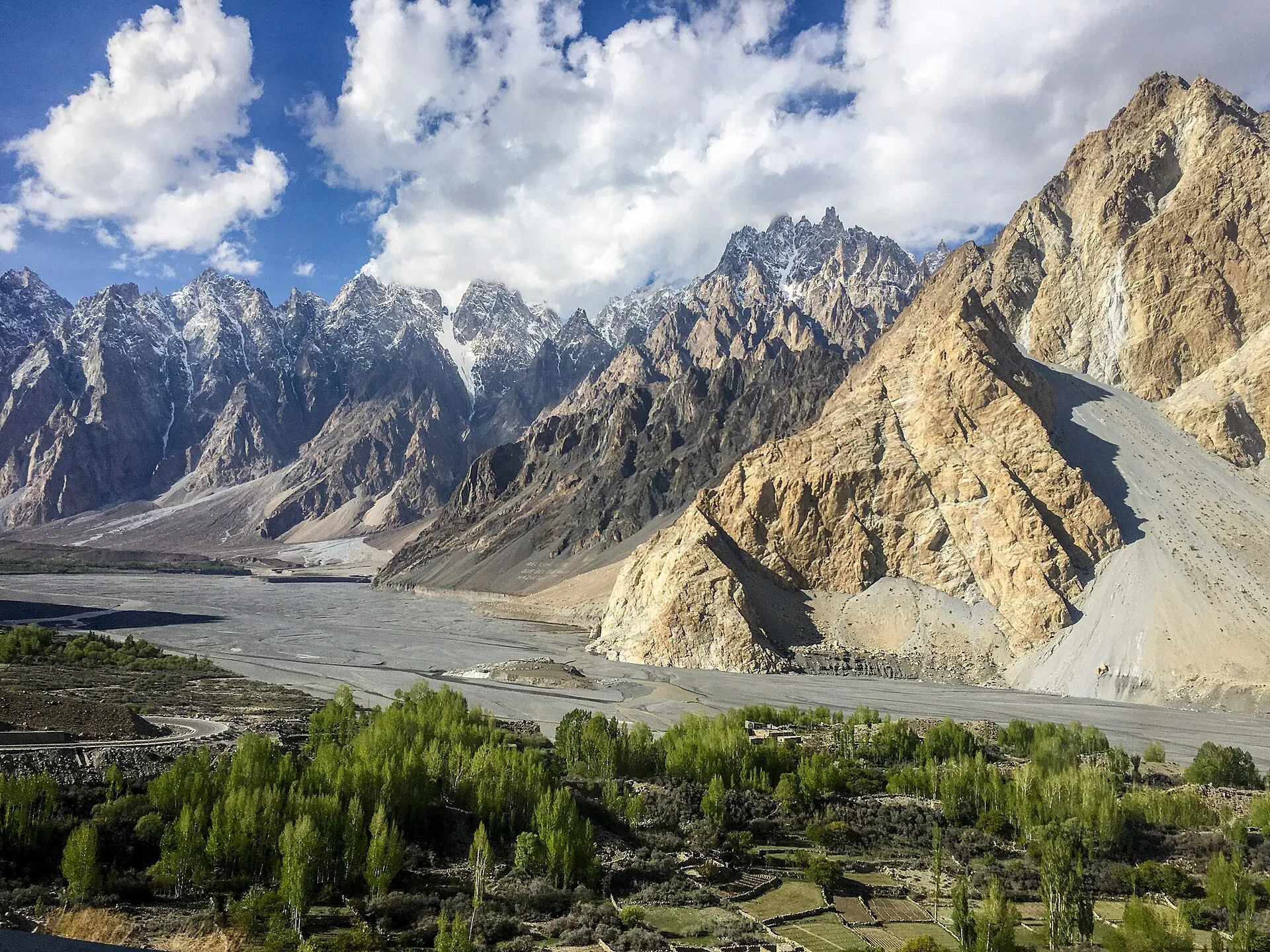
Why October
By late September the monsoon is gone, the air is clear and the poplars, orchards and larches of the northern valleys begin to turn. Our month-by-month article on the best time to visit northern Pakistan puts autumn colour in October, with the clear skies of September and October favoured by many repeat visitors. Colour arrives earlier at height and later in the lower valleys, so the season is a few weeks long rather than a single weekend.
The catch is that autumn is also the last good window. Nights are cold, the higher passes start to close late in October, and snow can arrive early. Plan with a margin.
Hunza and Nagar
Hunza is the classic autumn valley. Our Hunza Valley page describes the main season as May to October, ending with the golden leaves of October. Karimabad and Altit have terraced orchards, and the Altit Fort page notes golden orchards and clear air in autumn. Further up, Passu has golden poplars, and Gojal's pages say October brings autumn colour. Across the river, Nagar has strong autumn colour in October, with terraced villages below Rakaposhi. Attabad Lake and the Karakoram Highway between the villages also show good colour, though the highway is a working road, so stop only where it is safe.
Naltar valley
Naltar valley, about 34 to 40 km from Gilgit, is a favourite for photographers. Its pine and larch forest surrounds the lakes, and our Naltar pages give October as the month for autumn colour, with June to September for the lakes and high meadows. Wikipedia describes the road to the lakes as unpaved and narrow, so ask locally whether you need a 4x4, use an experienced local driver and travel in daylight. Altitude near the lakes is high enough for headaches, so go slowly.
Skardu, Shigar and Kachura
Shigar Valley, near Skardu, colours in October according to our page. Upper Kachura Lake is another good spot: calm mornings and autumn colour give the best reflections of the ridges. Skardu is higher and colder than Hunza, and December and January can fall below minus 10 degrees Celsius, so October is the last comfortable month, and visits get colder as it ends.
Chitral and Swat
Chitral valley's page notes autumn colour in October, and Swat's page says the same. Both are in Khyber Pakhtunkhwa, and the travel advice later in this article matters a great deal for them. The Kalash valleys are also in the area: the Uchaw harvest festival falls in late summer rather than autumn, usually in August.
Choosing where to go
- Easiest logistics: Hunza. A good road, many guesthouses and short distances between villages.
- Best for forest colour and photographs: Naltar valley, if you accept a rough road.
- Quietest: the Shigar and Kachura area, and villages in Nagar.
- Most affected by advice: Chitral and Swat; read the FCDO line below before planning.
When exactly?
Early October is popular with photographers, so book ahead for the first half of the month. The leaves usually peak in the second half of the month in valleys around 2,400 m, but colour comes and goes with each year's weather, so we do not give fixed dates. Ask your host a week ahead which villages are at their best.
What to pack
- Layers, including a down or synthetic jacket for evenings
- Warm hat and gloves; a buff helps on windy viewpoints
- Waterproof shell for early storms
- Comfortable walking shoes with grip
- A polarising filter or a spare memory card if you photograph
- Water bottle and snacks; services are fewer than in summer
- Cash and offline maps
Practical tips
- Book accommodation early for the first half of October, and confirm that your guesthouse is still open; some close as the season ends.
- Leave spare days for flights to Gilgit and Skardu. Cancellations are common when cloud sits in the valleys.
- Check road and weather reports for the Karakoram Highway and any pass. The NDMA and the Pakistan Meteorological Department publish alerts.
- Start early. Autumn days are short and cold falls quickly after sunset.
- Ask before photographing people, and do not step into orchards or fields for a better angle.
Before you go: travel advice
Ask the district administration or local police about current conditions before you go. For foreign visitors: the UK FCDO page for Pakistan (updated 27 October 2026, checked 17 November 2026) advises against all travel on the Karakoram Highway between Mansehra and Chilas, to Swat, Upper and Lower Dir and other listed Khyber Pakhtunkhwa districts, to Balochistan, and on the N45 highway to the edge of Chitral City, including the Kalash valley. It does not advise against Gilgit-Baltistan generally. It also notes that emergency measures and Governor's Rule were introduced in Khyber Pakhtunkhwa on 11 October. That means Hunza, Nagar, Naltar and Skardu are in Gilgit-Baltistan, but the road to them can pass through advised-against areas, and Swat and Chitral are directly covered. Read the live page, and check that your insurance covers your route.
Leaving room for the weather
October is generous but not guaranteed. A late storm can close a pass or cancel a flight, and an early freeze can strip a valley in days. Build a plan with buffer days and a second choice, and enjoy whatever colour the week gives you.


