

Photo: Fassifarooq, with thanks · CC BY-SA 4.0 · via Wikimedia Commons · temporary stand-in photo

Forts of Pakistan
A journey through Pakistan's forts: Lahore, Rohtas and Attock on the Grand Trunk Road, Derawar and Ranikot in the south, and the palace-forts of Hunza and Baltistan. Two-season plan with measured distances.
Customise this route Change the dates, stops and how you travel in the Road Trip Planner.
The story
Pakistan's forts tell the story of who held the roads. On the Grand Trunk Road, Akbar rebuilt Lahore Fort from 1566 and built Attock Fort in 1581 to 1583 to guard the Indus crossing. Sher Shah Suri started Rohtas Fort in 1541 to hold down the Gakhars, who resisted his rule; work stalled until higher wages brought labourers back, and he died in 1545 before it was complete. The Mughals hardly used it, and it later passed to the Durranis, the Sikhs and the British, who took it in 1849.
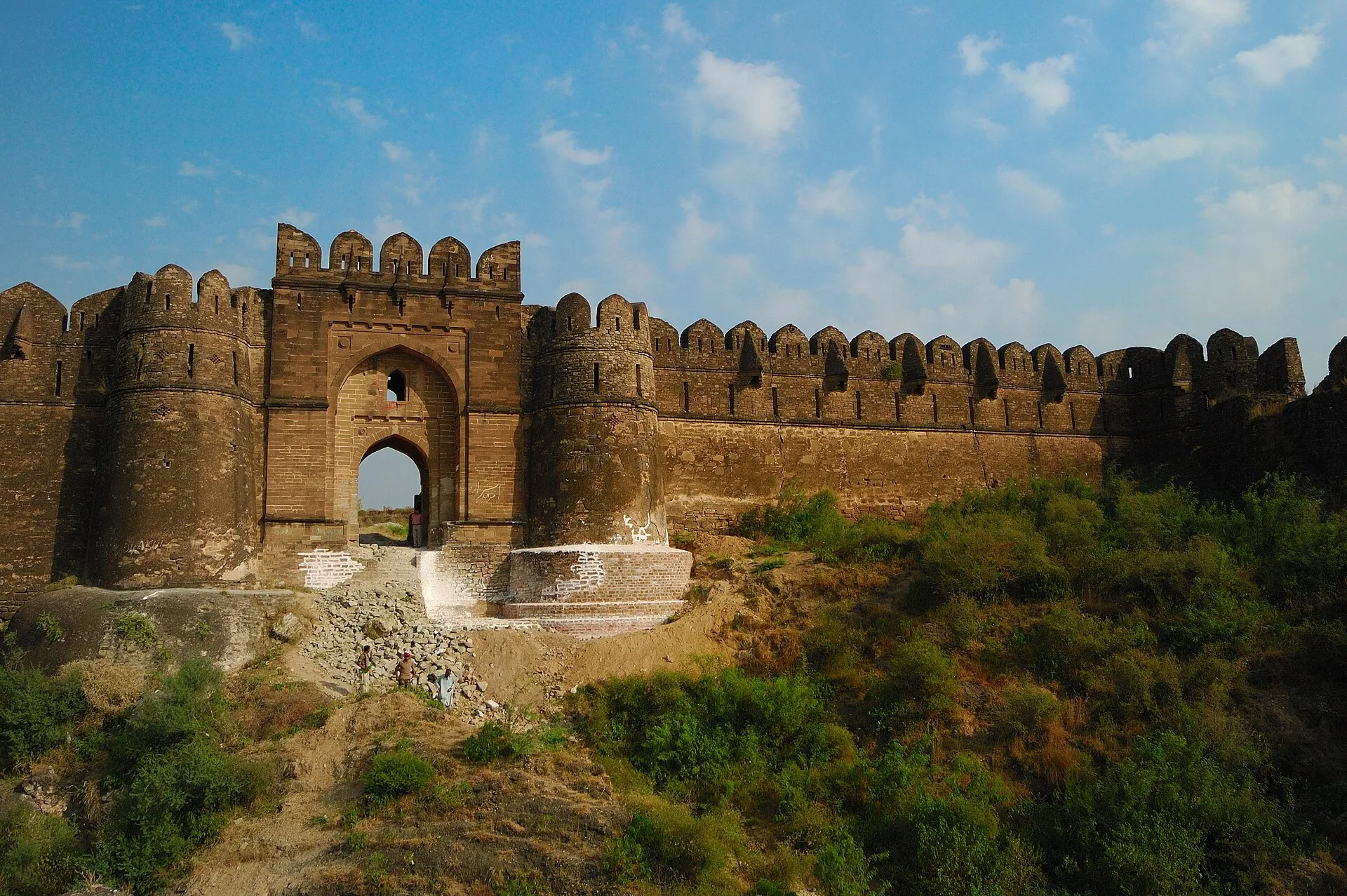
Photo: Usman.pg, with thanks · CC BY-SA 3.0 · via Wikimedia Commons · temporary stand-in photo

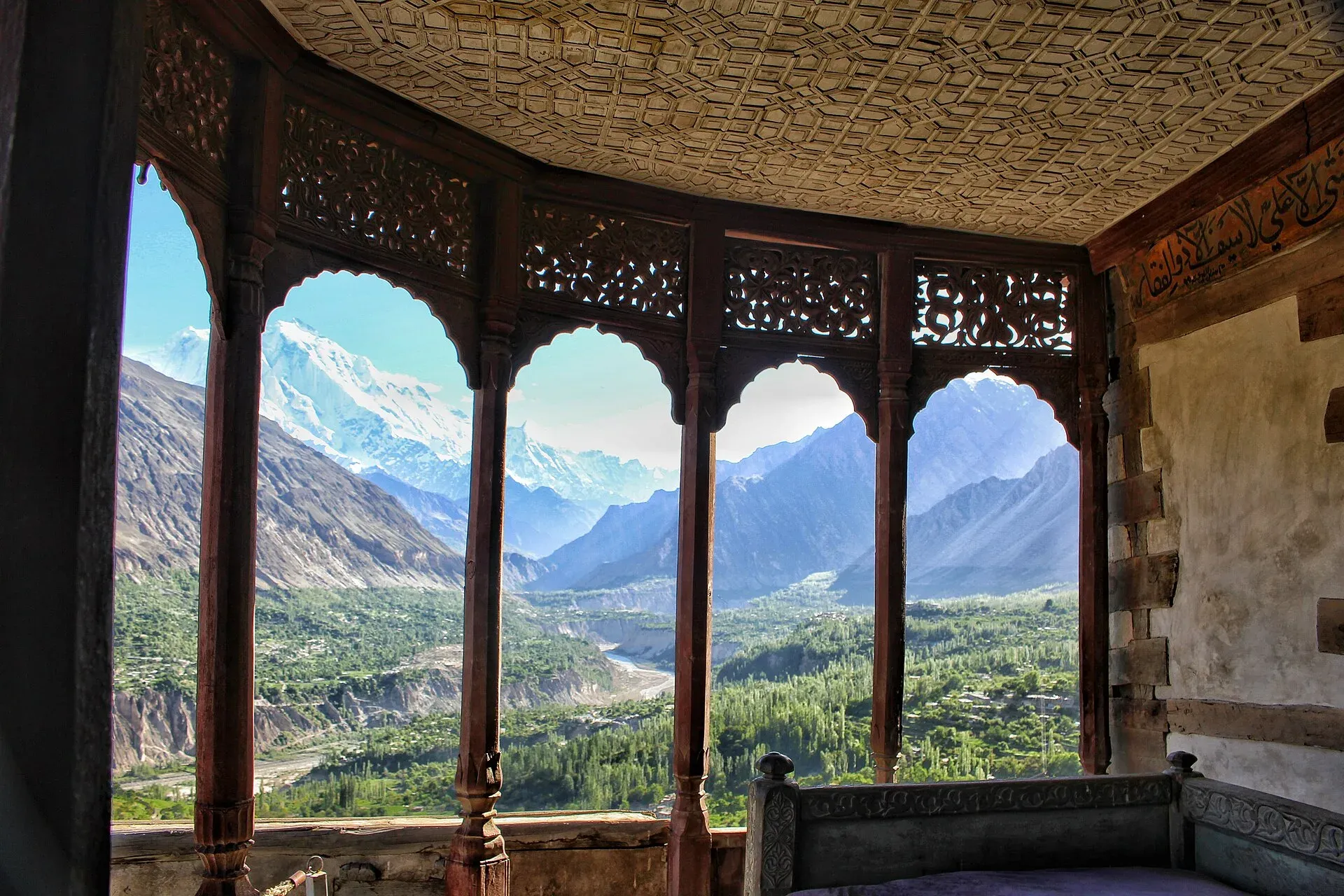
Photo: Fassifarooq, with thanks · CC BY-SA 4.0 · via Wikimedia Commons · temporary stand-in photo

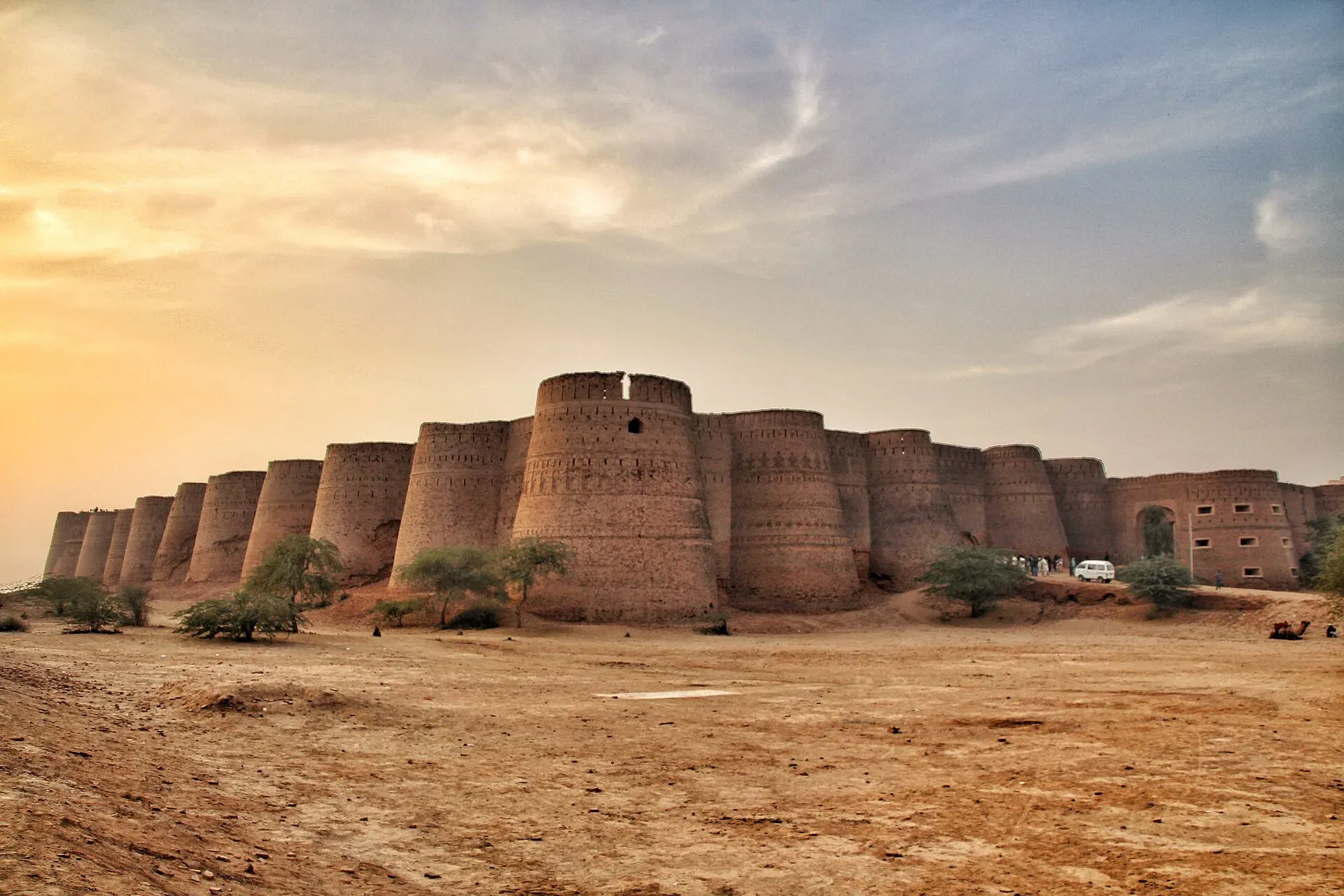
In the desert, the Bahawalpur rulers kept Derawar Fort, first built in 858 by Rai Jajja Bhati, a Rajput of the Bhati clan, and renovated in 1732 by Nawab Sadeq Muhammad. Forty round bastions stand around a perimeter of 1,500 m, with walls up to 30 m high. In Sindh, Ranikot is claimed as the world's largest fort. Its walls run for about 31 km, but its origins are uncertain, and some of what you see was rebuilt by the Talpurs in 1812. Umerkot Fort was where, on 15 October 1542, Akbar was born while his father Humayun was in flight from Sher Shah Suri. Kot Diji Fort was built about 1790 by Mir Suhrab, a Talpur ruler.
In the mountains, the forts were the homes of kings. Baltit Fort in Hunza has a core that Wikipedia dates to the 8th century CE, though the Aga Khan Development Network calls it "over 700 years old". The 16th-century marriage of the Mir of Hunza to a Balti princess brought craftsmen from Baltistan to rebuild it, and a cannon dated 1539 came as part of her dowry. The Mirs left the fort in 1945, and a restoration supported by the Aga Khan Trust for Culture finished in 1996. Altit Fort, nearby, is described as the oldest monument in Gilgit-Baltistan. Its age is given as about 1,100 years by Wikipedia and about 900 years by the Aga Khan Development Network, so we do not give one figure. It was restored by the same trust, with aid from Norway, and has been open to visitors since 2007 (the AKDN gives 2010 for the completion of the restoration). Shigar and Khaplu are palace-forts of local rajas, restored and now used as museums and heritage hotels. Khaplu Palace (Yabgo Khar) was built in 1840 by the Yabgo raja Daulat Ali Khan, with Kashmiri and Balti craftsmen using timber, mud brick and clay. Wikipedia lists a carved wooden gate taken from a fort in Skardu and a ceiling assembled without nails. The Aga Khan Trust for Culture restored it between 2005 and 2011 with Norwegian funding, and it now holds a hotel and a museum of Baltistan's history and culture. Kharpocho at Skardu is a ruin above the Indus.
Timeline
- 858: Derawar Fort built (later renovated 1732).
- 8th century CE: Core of Baltit Fort.
- 1541: Rohtas Fort begun by Sher Shah Suri.
- 1566: Akbar begins rebuilding Lahore Fort.
- 1581 to 1583: Attock Fort.
- About 1790: Kot Diji Fort.
- 1812: Talpur rebuilding at Ranikot.
- 1945: Baltit abandoned by the Mir of Hunza.
- 1981, 1997: Lahore Fort and Rohtas become World Heritage Sites.
What you will see
Open and straightforward: Lahore Fort (UNESCO, 1981); Rohtas Fort near Jhelum, about 4 km of walls and 68 bastions, partly lived in by Rohtas village, with Kabuli Gate, a mosque, stepwells and a museum; Derawar Fort in the Cholistan Desert, about 50 km by road south of Ahmadpur East (OSRM estimate; Wikipedia's 20 km looks too low); Baltit and Altit forts at Karimabad; Shigar Fort and Khaplu Palace.
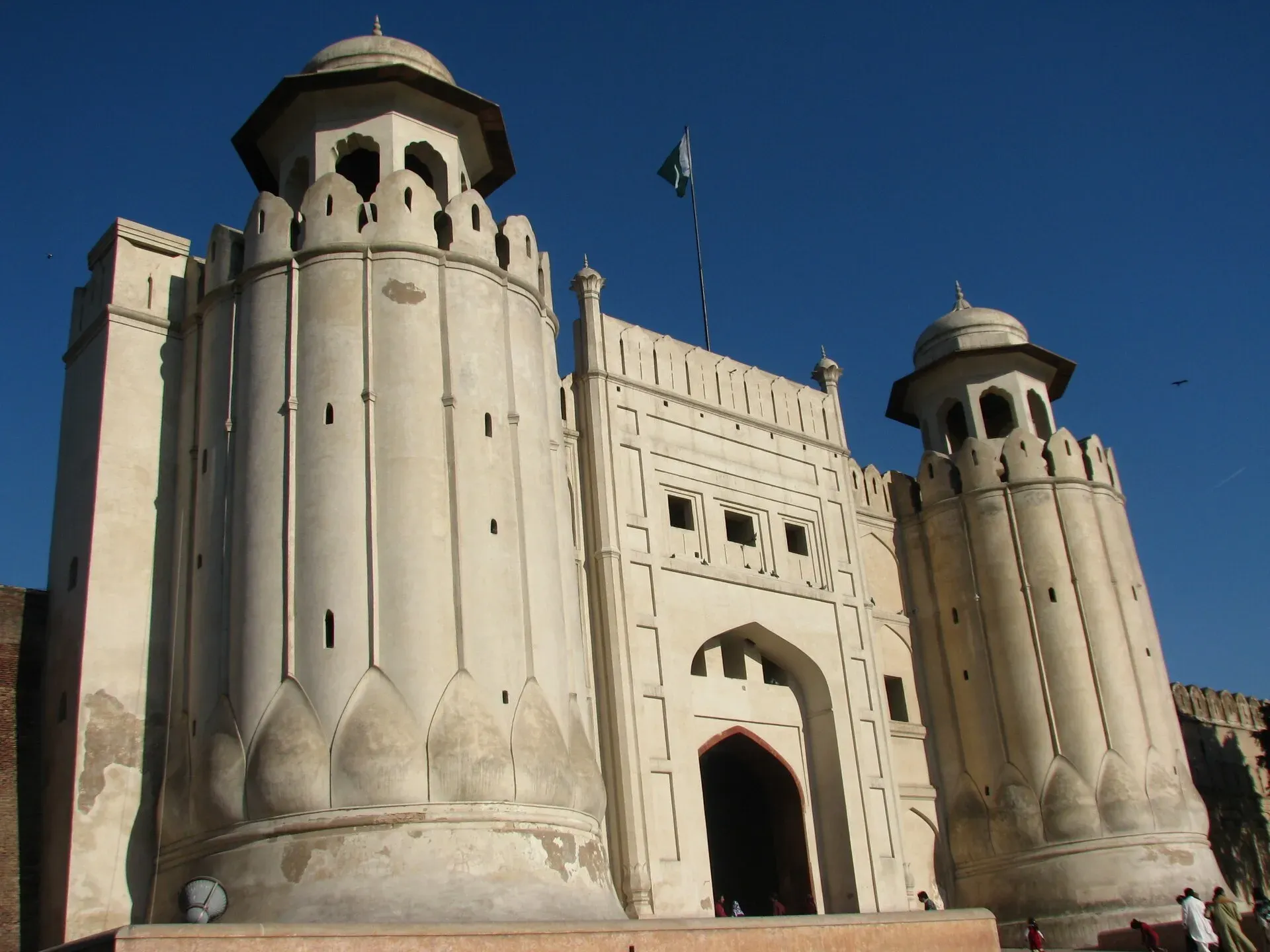
Photo: S.hassanjawad, with thanks · CC BY-SA 3.0 · via Wikimedia Commons · temporary stand-in photo

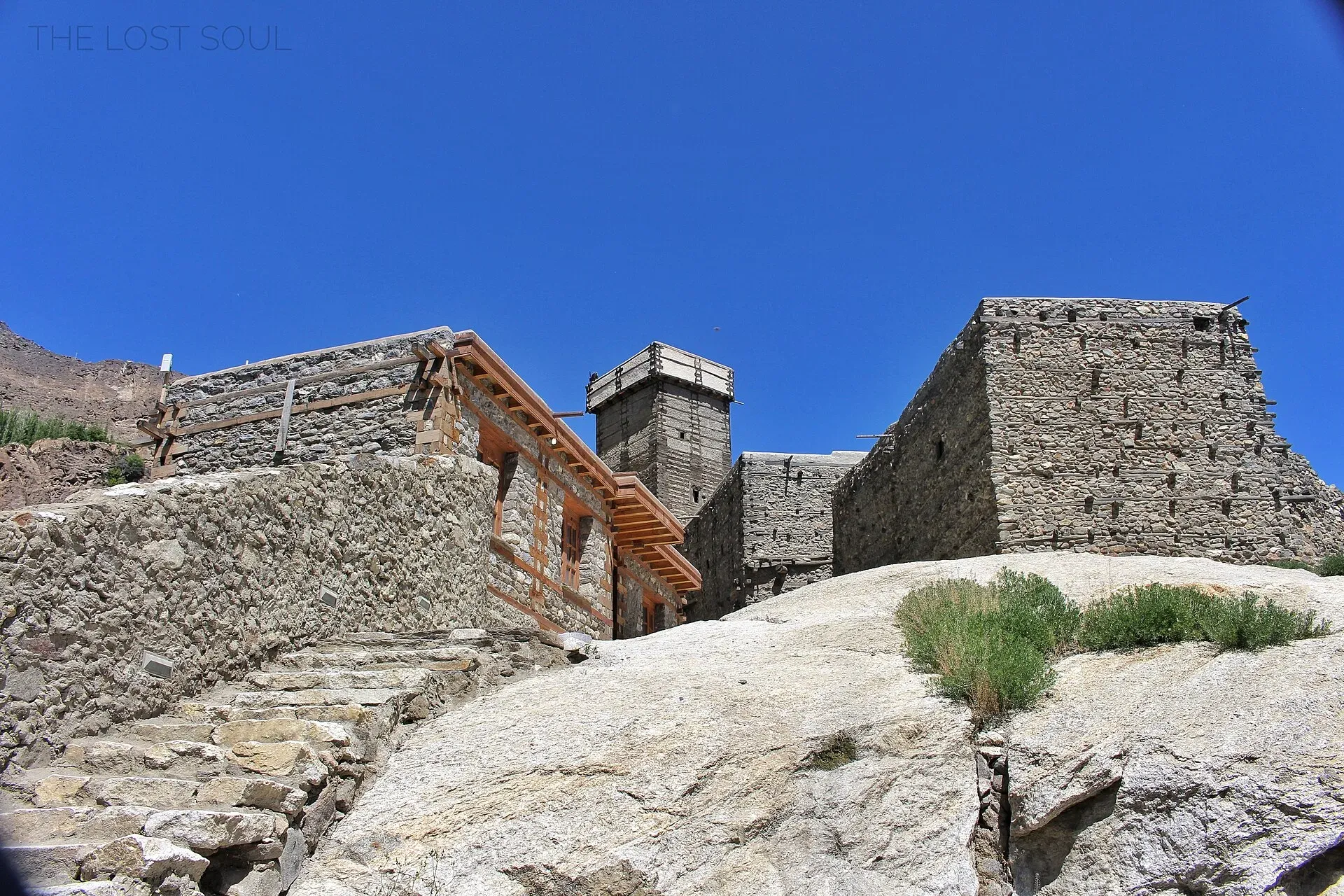
Photo: Fassifarooq, with thanks · CC BY-SA 4.0 · via Wikimedia Commons · temporary stand-in photo

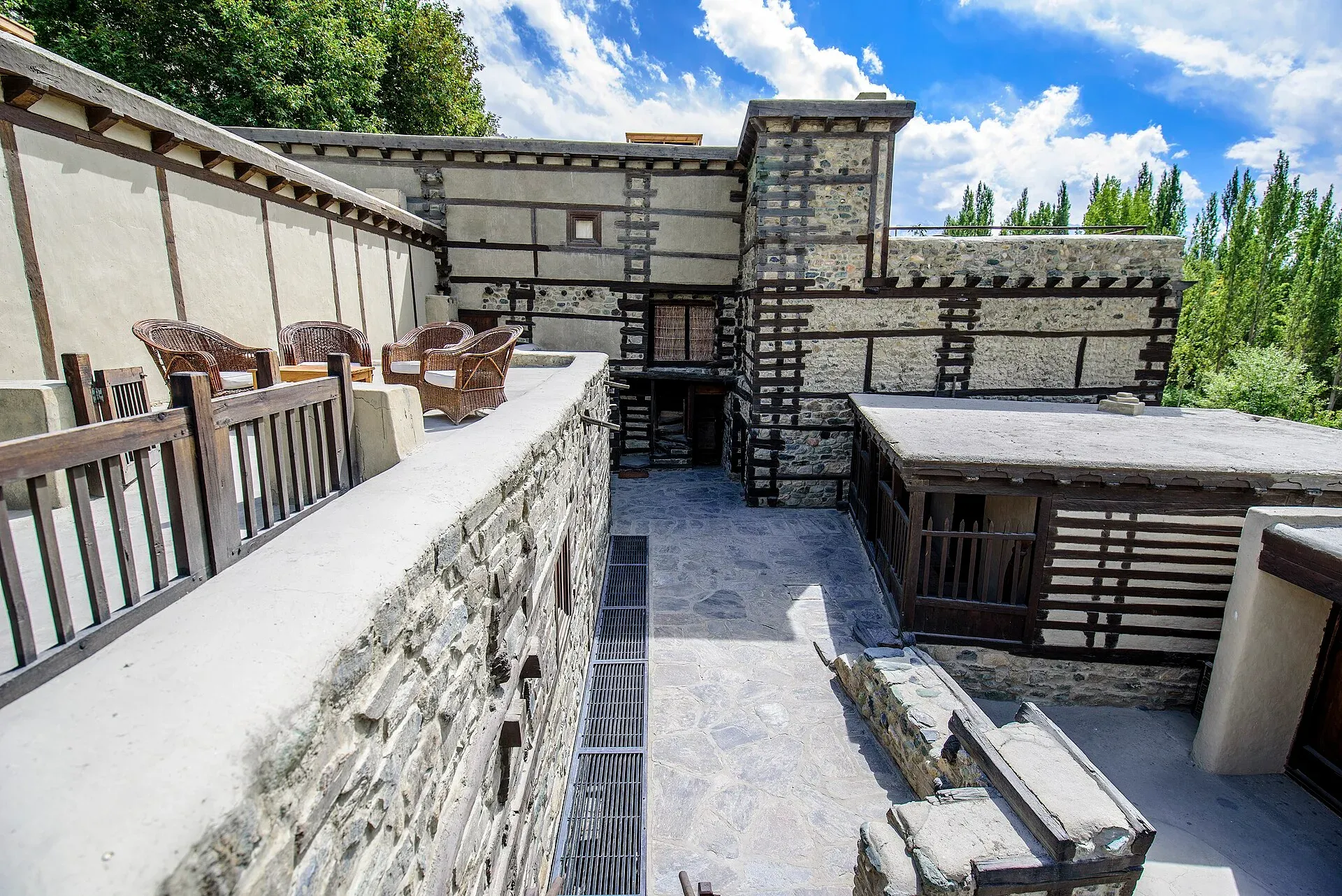
Photo: ZILL NIAZI, with thanks · CC BY-SA 4.0 · via Wikimedia Commons · temporary stand-in photo

Look from outside: Attock Fort is a military base and visitors cannot enter, though you can see its walls from the Peshawar road, which runs between the fort and the Indus.
Further afield: Ranikot (inside Kirthar National Park, a 21 km diversion road from Sann), Kot Diji Fort and Umerkot Fort are all in Sindh. The great forts at Peshawar (Bala Hisar) and Chitral lie in areas where the FCDO advises against travel.
Etiquette and care
Forts are often fragile. Do not climb unstable walls. Rohtas has had collapses at the Talaqi and Gatali gates from rain and neglect. Dawn (23 July 2026) reported that restoration work by the Punjab archaeology department was under way and that UNESCO had sent a team to inspect it after a complaint that the work broke international standards; UNESCO said it had made no finding. At forts that contain mosques or palaces used for worship, dress modestly and take shoes off. Photograph the soldiers or posts at Attock only if you have permission. Do not remove bricks or stones. Take your rubbish with you in the desert.
Practical details
Entry fees apply at several forts; current fees will be added soon. The lowland forts are best from October to March. The Gilgit-Baltistan forts are best from May to October, so do this journey in two trips, not one. Check roads and flights for each part.
Extensions
Three forts need separate trips. Derawar is 96 km from Bahawalpur (about 1 hour 35 minutes by OSRM; Dawn, 11 February 2025, says about 70 km, so allow for different start points) and 70 km from Uch Sharif. Ranikot is 119 km from Hyderabad (1.9 hours by OSRM to the fort point on our map; the road goes through Sann, so confirm the route locally). Umerkot is 149 km from Hyderabad (2 hours), and Kot Diji Fort is 48 km from Sukkur, in the area where the FCDO advises against all but essential travel.
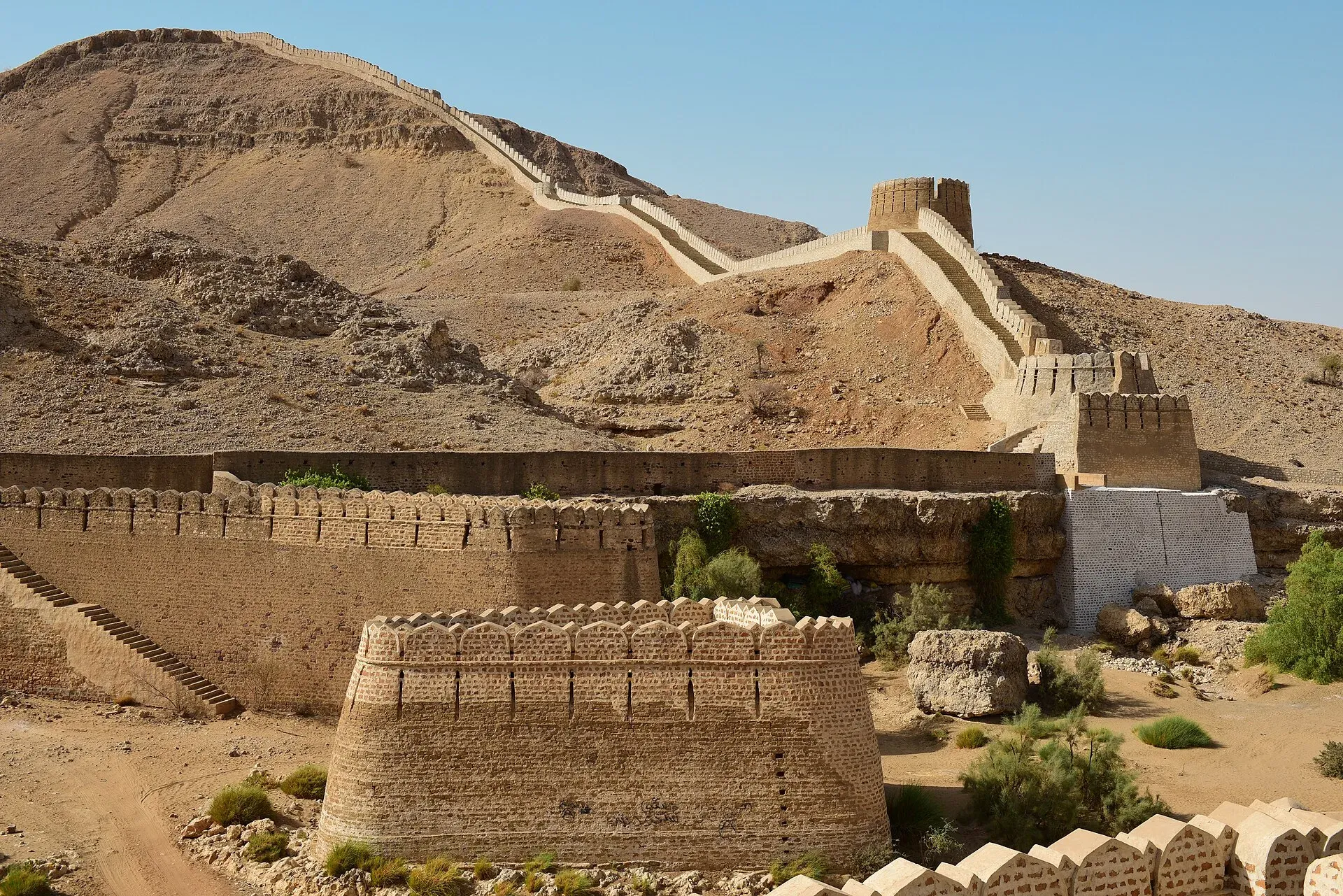
Photo: Adrian Leslie Lobo, with thanks · CC BY-SA 3.0 · via Wikimedia Commons · temporary stand-in photo

Events
We have confirmed no annual events. Local festivals in Hunza and Baltistan may coincide with visits; check with Gilgit-Baltistan tourism offices.
Highlights
- Lahore Fort and Rohtas Fort (UNESCO)
- Derawar Fort: forty bastions in the Cholistan desert
- Baltit and Altit forts above the Hunza River
- Shigar Fort and Khaplu Palace in Baltistan
Stops
- Lahore FortStart
- Rohtas FortFrom Lahore Fort by road
- Islamabad110 km from Rohtas; base for flights
- Skardu (Kharpocho Fort)Reached by flight; Kharpocho is 1 km from Skardu centre
- Shigar Fort30 km from Skardu
- Khaplu Palace118 km from Shigar
- GilgitKhaplu to Skardu 112 km, then 210 km to Gilgit
- Karimabad (Baltit Fort)100 km from Gilgit
- Altit Fort5 km from Karimabad
km: distance from the start along the route.
Numbers follow the stops in order. The map shows the stops, not the road itself.
Day by day
Day 1 · Part A: Lahore Fort
Spend a half day inside Lahore Fort: the Alamgiri Gate, Sheesh Mahal, Naulakha Pavilion and Picture Wall.
Day 2 · Lahore to Rohtas
Take the Grand Trunk Road to Rohtas Fort near Jhelum (191 km). Stay in Jhelum, 23 km away.
Day 3 · Rohtas to Islamabad
Drive 110 km to Islamabad. Attock Fort is 96 km from Islamabad and cannot be entered; see it from outside only if time allows.
Day 4 · Part B: Fly to Skardu, Kharpocho Fort
Fly to Skardu if flights are operating. Kharpocho Fort and the Manthal Buddha rock are within 4 km of the town.
Day 5 · Skardu to Shigar
Drive 30 km to Shigar Fort, a palace of the Amacha rajas, restored in 1999 to 2004.
Day 6 · Shigar to Khaplu
Drive 118 km to Khaplu Palace, built in 1840 and restored from 2005 to 2011.
Day 7 · Khaplu to Skardu
Return to Skardu or fly out; or continue by road.
Day 8 · Skardu to Gilgit
A long mountain road day. Check conditions before you leave.
Day 9 · Gilgit to Karimabad: Baltit and Altit
Drive 100 km up the Karakoram Highway to Karimabad. Visit Baltit Fort and then Altit Fort (5 km). Fly out of Gilgit or retrace your route.
Road conditions
- Lahore to Rohtas (N-5): paved, busy.
- Skardu to Shigar and Khaplu: paved but narrow, with landslide risk in summer.
- Skardu to Gilgit: a long mountain road; check conditions.
- Gilgit to Karimabad (KKH): paved, with rockfall risk.
- Times: OSRM drive times are optimistic and exclude stops, traffic and checkpoints.
Fuel and services
Lahore, Jhelum, Islamabad, Skardu, Gilgit and Karimabad have fuel and hotels. Shigar and Khaplu have heritage hotels and basic guesthouses. Rohtas and Derawar have few services.
Where to stay, eat and fuel up
Places to stay
- Avari Towers KarachiCall Avari Towers KarachiMap of Avari Towers Karachi in Google Maps
- Pearl Continental Hotel, LahoreCall Pearl Continental Hotel, LahoreMap of Pearl Continental Hotel, Lahore in Google Maps
- Avari Hotel LahoreCall Avari Hotel LahoreMap of Avari Hotel Lahore in Google Maps
- Serena HotelCall Serena HotelMap of Serena Hotel in Google Maps
- Islamabad Marriott HotelCall Islamabad Marriott HotelMap of Islamabad Marriott Hotel in Google Maps
- Mövenpick KarachiCall Mövenpick KarachiMap of Mövenpick Karachi in Google Maps
Places to eat
- The Monal IslamabadCall The Monal IslamabadMap of The Monal Islamabad in Google Maps
- Tehzeeb Bakers Blue AreaCall Tehzeeb Bakers Blue AreaMap of Tehzeeb Bakers Blue Area in Google Maps
- TKR 3Call TKR 3Map of TKR 3 in Google Maps
- Port Grand - KarachiCall Port Grand - KarachiMap of Port Grand - Karachi in Google Maps
- Kolachi RestaurantCall Kolachi RestaurantMap of Kolachi Restaurant in Google Maps
- Savour FoodsCall Savour FoodsMap of Savour Foods in Google Maps
Essential services fuel stations, mechanics, banks, pharmacies and hospitals and clinics
Fuel
- PSO Petrol Pump (Stadium Service Station)Call PSO Petrol Pump (Stadium Service Station)Map of PSO Petrol Pump (Stadium Service Station) in Google Maps
- Attock Petrol PumpMap of Attock Petrol Pump in Google Maps
- PSO Petrol PumpMap of PSO Petrol Pump in Google Maps
- PSO Petrol PumpMap of PSO Petrol Pump in Google Maps
- Total Parco LA TownCall Total Parco LA TownMap of Total Parco LA Town in Google Maps
- PSO-Al-Rafay Filling Station - Petrol Pump Thokar Niaz BaigCall PSO-Al-Rafay Filling Station - Petrol Pump Thokar Niaz BaigMap of PSO-Al-Rafay Filling Station - Petrol Pump Thokar Niaz Baig in Google Maps
Mechanics and tyre shops
- Mohammed Bilal tyre centreMap of Mohammed Bilal tyre centre in Google Maps
- Changan City SalesCall Changan City SalesMap of Changan City Sales in Google Maps
- Toyota Airport MotorsCall Toyota Airport MotorsMap of Toyota Airport Motors in Google Maps
- Honda GatewayCall Honda GatewayMap of Honda Gateway in Google Maps
- Saif Traders - Best Tyre Shop in LahoreCall Saif Traders - Best Tyre Shop in LahoreMap of Saif Traders - Best Tyre Shop in Lahore in Google Maps
- Mini MotorsCall Mini MotorsMap of Mini Motors in Google Maps
Banks and money exchange
- State Bank of PakistanCall State Bank of PakistanMap of State Bank of Pakistan in Google Maps
Pharmacies
- Al Jadeed Super MarketCall Al Jadeed Super MarketMap of Al Jadeed Super Market in Google Maps
- Imtiaz Mega - Ramzan Mall - islamabadCall Imtiaz Mega - Ramzan Mall - islamabadMap of Imtiaz Mega - Ramzan Mall - islamabad in Google Maps
- Imtiaz Supermarket - Awami Markaz - KHICall Imtiaz Supermarket - Awami Markaz - KHIMap of Imtiaz Supermarket - Awami Markaz - KHI in Google Maps
- Imtiaz Mega - Kings Mall - GujranwalaCall Imtiaz Mega - Kings Mall - GujranwalaMap of Imtiaz Mega - Kings Mall - Gujranwala in Google Maps
- Hydri Super MarketCall Hydri Super MarketMap of Hydri Super Market in Google Maps
- Raja Market Garden Town LahoreCall Raja Market Garden Town LahoreMap of Raja Market Garden Town Lahore in Google Maps
Hospitals and clinics
- Hashmanis Hospital NumaishCall Hashmanis Hospital NumaishMap of Hashmanis Hospital Numaish in Google Maps
- Holistic CareCall Holistic CareMap of Holistic Care in Google Maps
- Lahore Care HospitalCall Lahore Care HospitalMap of Lahore Care Hospital in Google Maps
- Shifa International Hospitals LimitedCall Shifa International Hospitals LimitedMap of Shifa International Hospitals Limited in Google Maps
- Amanat Eye Hospital RawalpindiCall Amanat Eye Hospital RawalpindiMap of Amanat Eye Hospital Rawalpindi in Google Maps
- Maryam Memorial Hospital (MMH)Call Maryam Memorial Hospital (MMH)Map of Maryam Memorial Hospital (MMH) in Google Maps
Listings come from Google Maps data and are unverified: phone numbers, opening months and prices may have changed. Report a problem · Own one of these? Claim it
Safety
- Government advice (UK FCDO, updated 27 October 2026, checked 16 November 2026): the FCDO advises against all travel on the Karakoram Highway between Mansehra and Chilas. It does not cover Gilgit-Baltistan generally. For the other forts: Lahore, Rohtas (Jhelum), Attock, Derawar, Ranikot and Umerkot are not named. Kot Diji (Khairpur) is in northern Sindh, where the FCDO advises against all but essential travel (north of and including Nawabshah). Ask the district administration or local police about current conditions before you go. For foreign visitors: the UK FCDO advises against all travel to Peshawar (including Bala Hisar), to the N45 highway north of Mardan to the edge of Chitral City (including Chitral Fort), and to all of Balochistan. It advises against all but essential travel in Azad Jammu and Kashmir (Ramkot and Muzaffarabad).
- Gilgit-Baltistan: fly rather than drive the KKH south of Chilas; check flights and local security.
- Insurance: travel insurance can be invalid if you travel against FCDO advice.
- Border: For foreign visitors: the UK FCDO advises against all but essential travel within 5 miles of the India border; confirm distances for any Cholistan fort.
Tips
- Do this journey in two trips: lowland forts October to March, mountain forts May to October.
- Do not climb on unstable walls.
- Attock Fort cannot be entered.
- Carry water; many forts have no shade or shops.
More photos
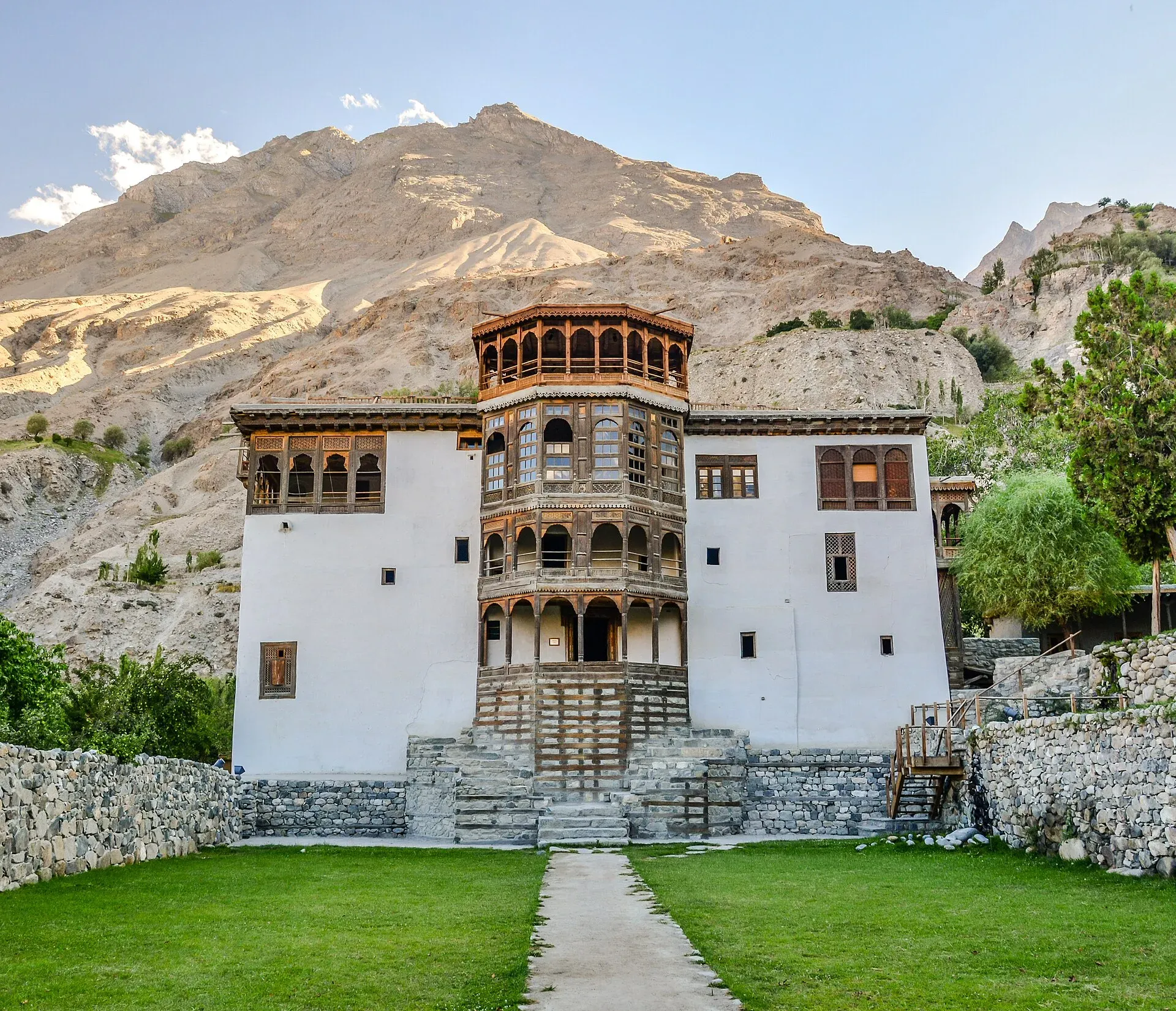
Photo: Muhammad Ashar, with thanks · CC BY-SA 3.0 · via Wikimedia Commons · temporary stand-in photo

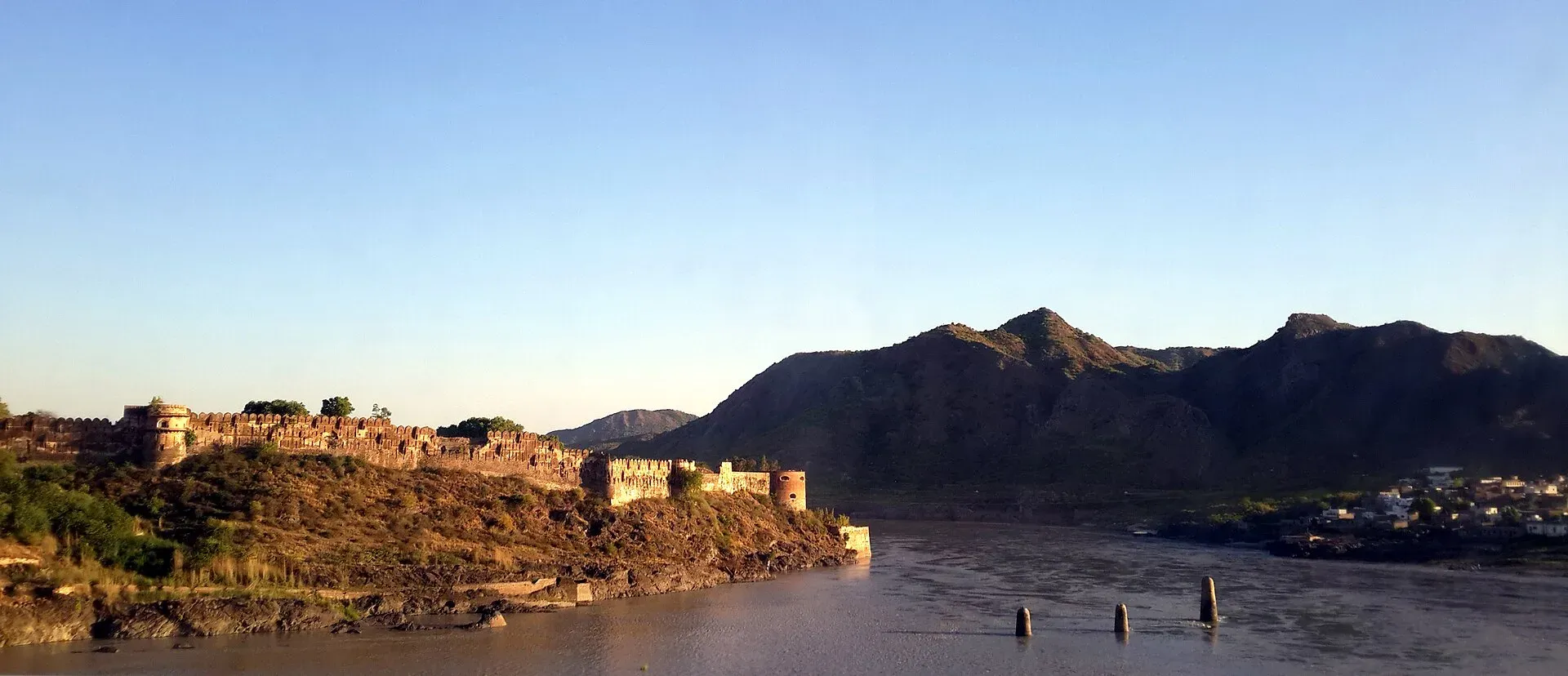
Photo: Mahnoorraja, with thanks · CC BY-SA 3.0 · via Wikimedia Commons · temporary stand-in photo

Sources and last checked
Last checked Confidence medium17 sources6 still to check
- Last checked
- Method
- Desk research from published sources
- Confidence
- medium
- Checked by
- trek.pk research team
Researched from published sources; not yet checked on the ground by our team. Spot something out of date? Report a mistake.
Sources
- Pakistan travel advice: Warnings and insurance (updated 27 October 2026) · UK Foreign, Commonwealth & Development Office (FCDO) · checked
- OSRM driving route service: distances and times measured 16 November 2026 (drive times are optimistic and exclude stops) · OSRM / OpenStreetMap contributors · checked
- Lahore Fort (Wikipedia) · Wikipedia · checked
- Rohtas Fort (Wikipedia) · Wikipedia · checked
- Attock Fort (Wikipedia) · Wikipedia · checked
- Derawar Fort (Wikipedia) · Wikipedia · checked
- Ranikot Fort (Wikipedia) · Wikipedia · checked
- Umerkot Fort (Wikipedia) · Wikipedia · checked
- Kot Diji (Wikipedia) · Wikipedia · checked
- Baltit Fort (Wikipedia) · Wikipedia · checked
- Altit Fort (Wikipedia) · Wikipedia · checked
- Shigar Fort (Wikipedia) · Wikipedia · checked
- Khaplu Palace (Wikipedia) · Wikipedia · checked
- Kharpocho Fort (Wikipedia) · Wikipedia · checked
- Unesco inspects ongoing restoration works at Rohtas Fort (23 Jul 2026) · Dawn · checked
- Conservation and development in Gilgit-Baltistan (Baltit and Altit ages, restoration dates) · Aga Khan Development Network · checked
- Cholistan Jeep Rally begins (11 Feb 2025) · Dawn · checked
Still to be checked on the ground (6)
- Opening hours and fees at each fort (no official notice found)
- Current state of Ranikot (no 2025-2026 report found; 2022 floods damaged parts of the walls and the Sann link road)
- Whether any Rohtas walls have collapsed in 2026 (Dawn reports restoration, not a collapse)
- Flights to Skardu and Gilgit: aggregators suggest about 8 a week to Skardu and 3 a week to Gilgit, unconfirmed; check PIA
- Distance of Derawar Fort from the India border (no source found)
- Whether Derawar and Ranikot need permits: older pages say the Derawar interior needs the owners' permission; Ranikot may need Sindh Wildlife Department permission, unconfirmed
Nearby and related

Attock Fort
A Mughal fort on the Indus at Attock, built by Akbar in 1581-83 with six gates and eight bastions. It is run by the army and is not open to the public.

Derawar Fort
A square mud-brick fort of 40 round bastions in the Cholistan Desert, south of Ahmedpur East. Dated to the 9th century, rebuilt in 1732, and on UNESCO's tentative list since 2016.

Ranikot Fort
A huge hill-top wall in the Kirthar hills of Sindh, often called the Great Wall of Sindh, with four gates and a smaller inner fort. On Pakistan's UNESCO tentative list since 1993.

Pharwala Fort
A ruined Gakhar fort above the Soan River, about 35 to 40 km from Rawalpindi. Added to Pakistan's UNESCO tentative list in 2026. Access is rough and the site is still fragile.

Baltit Fort
A restored fort and museum above Karimabad in Hunza, once the home of the Mirs of Hunza. Its core is centuries old and it has been on UNESCO's tentative list since 2004.

Altit Fort
An old fort above the Hunza River at Altit, restored by the Aga Khan Trust for Culture and open to visitors since 2007. Often described as the oldest monument in Gilgit-Baltistan.

Shigar Fort (Fong-Khar)
A 17th-century palace of the Amacha rajas of Shigar, restored by the Aga Khan Cultural Service Pakistan in 1999-2004 and now a museum and heritage hotel.

Khaplu Palace (Yabgo Khar)
The 1840 palace of the Yabgo rajas of Khaplu, restored by the Aga Khan Trust for Culture (2005-2011) and now a museum and heritage hotel facing the Karakoram.

Kharpocho Fort
A ruined hilltop fort above the Indus at Skardu, linked to the Maqpon rulers of Baltistan and to a 1840 Dogra attack. Visit for the history and the view over the valley.

Hunza Valley
A long Karakoram valley on the Karakoram Highway, with Karimabad, Baltit and Altit forts, Ganish village and Attabad Lake, below Rakaposhi and Ultar Sar. About 100 km from Gilgit.
Cholistan and Derawar Fort
A 2-3 day road trip from Multan to Bahawalpur and on to Derawar Fort in the Cholistan Desert: 185 km one way. Derawar's 40 bastions are best seen in the cool season, around the February jeep rally.

Skardu, Shigar and Deosai
A 7-day road trip from Islamabad to Skardu, the Shigar valley and the high Deosai Plains, with day-by-day distances, road conditions and the summer-only Deosai season.
Hunza and Khunjerab (KKH)
A 7-8 day road trip from Islamabad up the Karakoram Highway to Hunza and on to Khunjerab Pass (4,693 m), with overnight stops at Besham, Chilas and Gilgit.